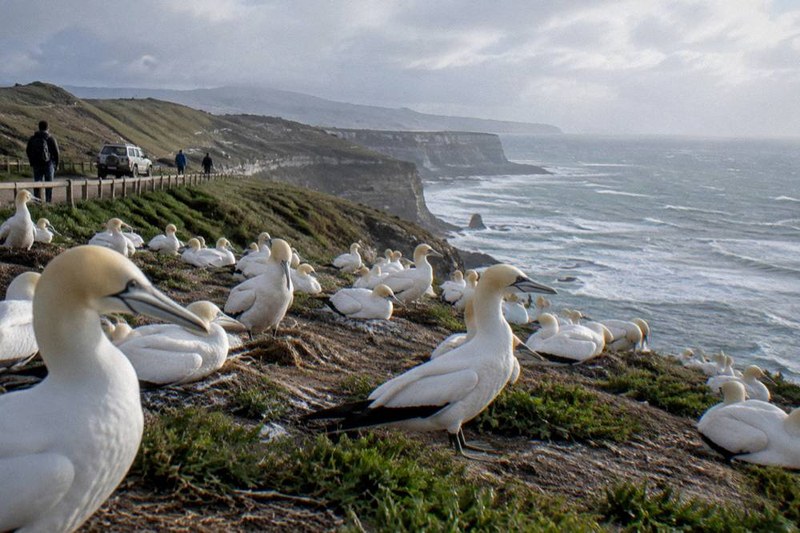
Is Cape Kidnappers Open To The Public?
Cape Kidnappers is open to the public, with two legitimate ways in: the free DOC beach walk and a guided overland tour. Here is how access, closures and the rules actually work.
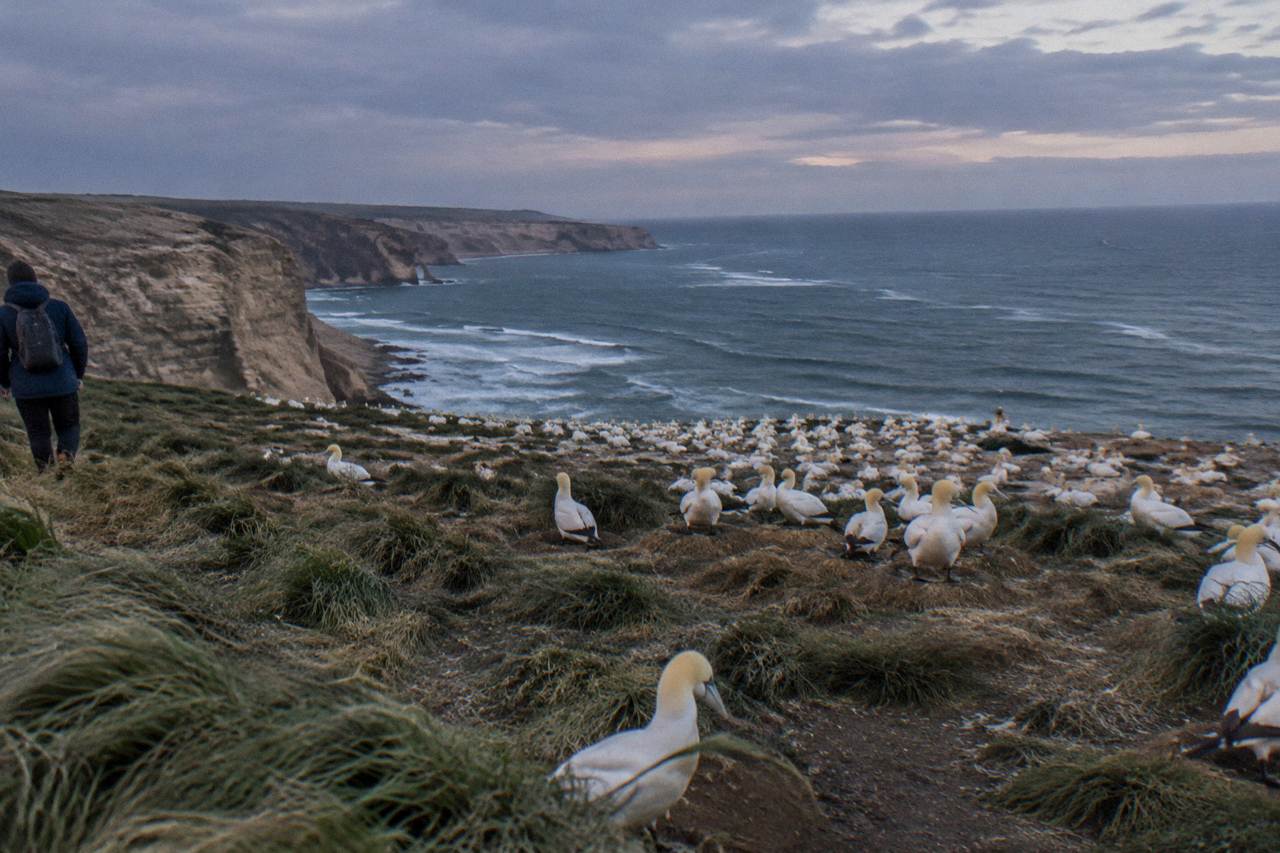
Cape Kidnappers, the headland south of Napier where Australasian gannets have nested since the 1870s, is public land with a twist. The reserve itself is managed by the Department of Conservation, DOC puts the colony at 6,500 pairs and calls it the largest and most accessible mainland gannet colony in the world, but the best viewing spot, the Plateau colony, sits on private land inside a working farm. That single fact shapes everything about visiting: you can come on your own two feet along a 19 km return beach walk, or you can ride across the farm in a 4WD with the tour operator that holds access. Both are legitimate. What trips people up is the timing, the tides and the seasonal closures, so this page sets out exactly what is open, to whom, and when.
Yes, Cape Kidnappers is open to the public, and there is no entry fee to walk the beach route from Clifton, 21 km south of Napier. Access comes with two conditions: the walk is possible only around low tide, and the track from the beach to the Plateau colony is closed each year from July to the week before Labour Weekend. The guided overland tours run a longer season, 1 August to 30 April.
Those two access routes are the whole story, and they suit very different visitors. The beach walk is free, spectacular and demanding: DOC grades it Expert, says to allow at least 5 hours for a comfortable return walk, and warns that about 7 km of the route lies under cliffs subject to significant landslide hazard. The overland tour, by contrast, is a 4WD ride across a working farm of roughly 2,500 hectares and through native bush to a privately owned nature reserve above the cliffs. The operator says the overland tours are not governed by the tides because they travel above the cliff tops, which removes the single biggest constraint on the walk.
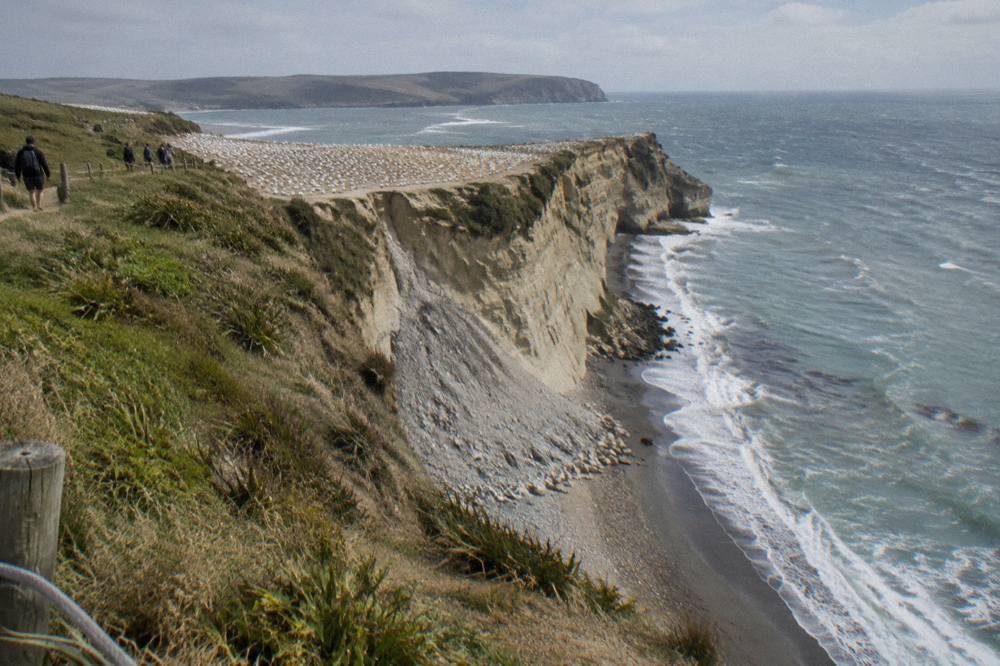
There is a third and fourth way to reach the cape that people sometimes confuse with these two. Gannet Bikes runs a self-guided fat-bike ride from 475 Clifton Road, 3.5 to 4 hours in total, needing at least intermediate fitness, and finishing with a short walk up to the plateau colony. Gannet Beach Adventures has run a tide-dependent tractor-trailer ride along the beach from Clifton in the past; check its own site for whether and when it operates. Neither of those is the DOC walk, and neither is the overland tour, and the details below apply only to the routes they are stated for.
Before diving into each option, this is how the two main access routes compare on the things people actually decide on:
| DOC beach walk | Overland tour | |
|---|---|---|
| Cost | Free | From $55.00 per person |
| Distance or duration | 19 km return, at least 5 hours | 3 hours for the standard versions |
| Start point | Clifton, Scotmans Point, 21 km south of Napier | 396 Clifton Road, Te Awanga, about a 25 minute drive from Napier |
| Tide dependence | Possible only around low tide | Not governed by the tides |
| Season | Plateau track opens the week before Labour Weekend | 1 August to 30 April |
| Fitness needed | Expert grade, steep and rough in places | Little or no walking required |
If riding to the colony in comfort sounds like the better fit, these are the three overland options most visitors compare:
Can You Walk To The Gannet Colony Yourself?
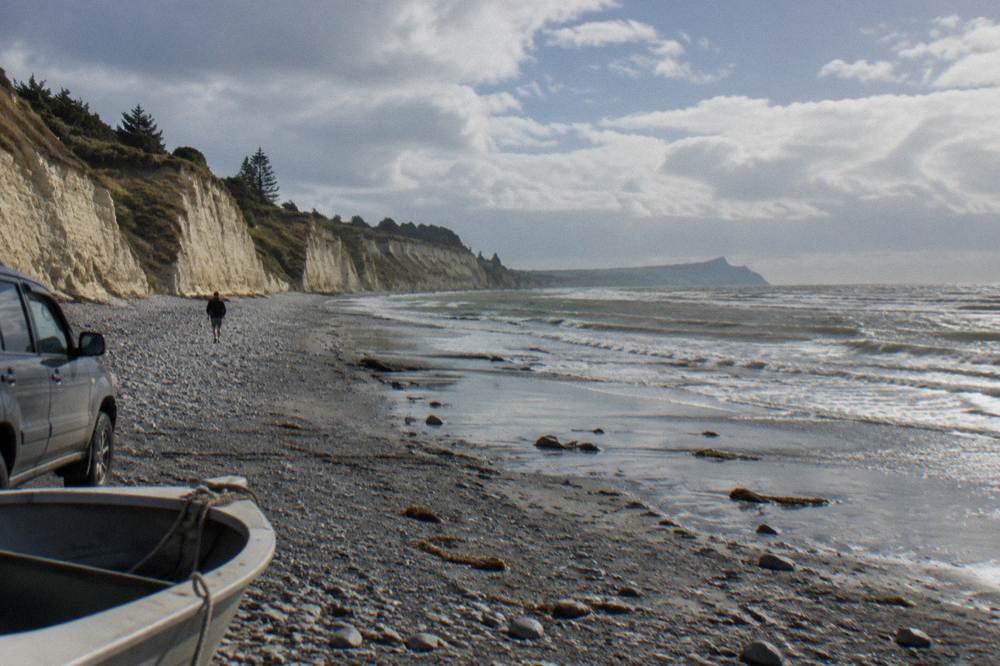
Yes, you can walk to the gannets without a guide or a ticket. The route runs 19 km return from Clifton, also called Scotmans Point, and DOC grades it Expert with a recommended allowance of at least 5 hours. It is free, but it is only possible around low tide: high tides and big seas block the beach, so check the tide table before going.
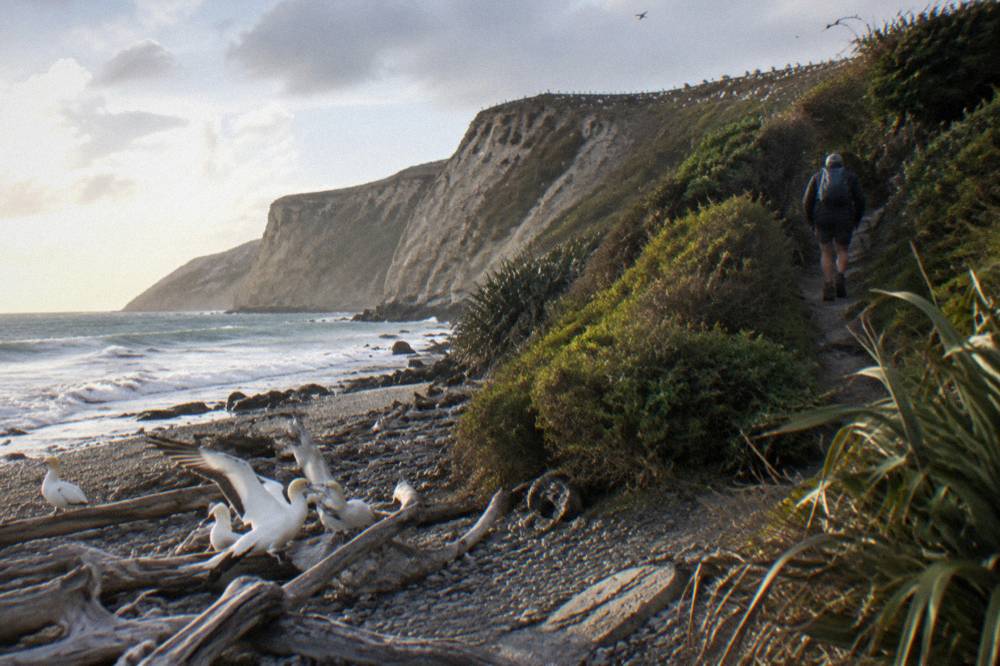
The walk has a rhythm worth understanding before you commit. Black Reef, the first nesting site, sits 7.5 km from Clifton, and close-up views of nesting gannets are possible there. A steep, rough, muddy climb of about 1 km then leads on to the second colony. DOC says the best place to view nesting gannets is the Plateau colony, which is on private land reached through the farm station. The tide rule that matters most: leave the Cape no later than 1.5 hours after low tide, because the return leg covers the same beach you came in on.
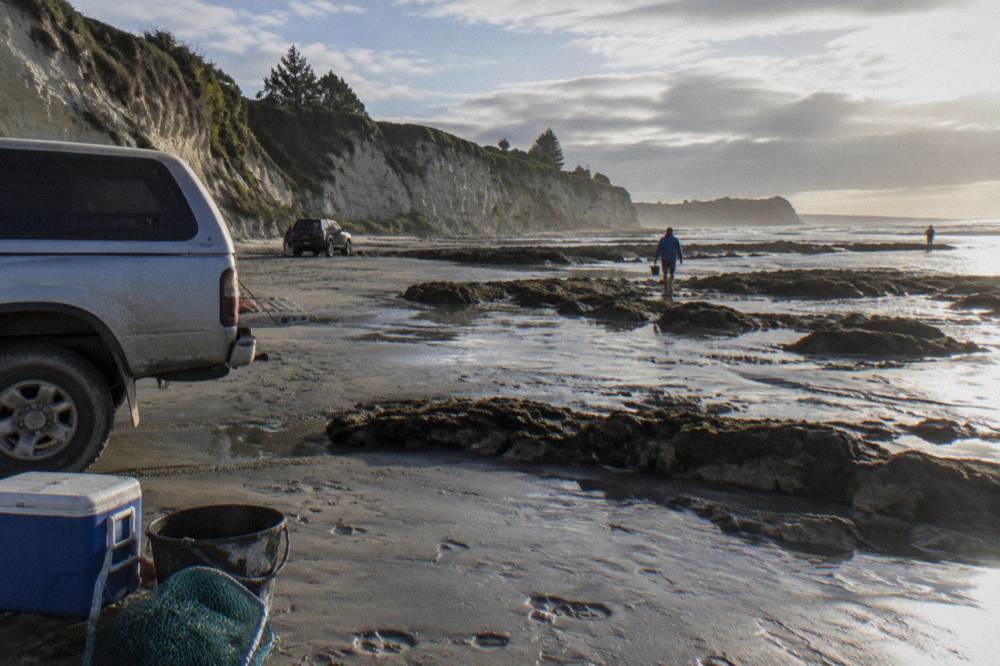
The cliffs are the other serious consideration. A landslide seriously injured two tourists in January 2019, and another large landslide in February 2020 led to a closure of the beach before the track was later reopened. DOC reports three serious injury landslide events in the past 50 years and large landslides every year, and says the status of the track can change at any time, so check the safety alert on its Cape Kidnappers Gannet Reserve page before setting out. Hastings District Council says Clifton beach is open but may close if there is unstable activity; check the signage at the start.
One recent change matters to walkers and bike riders. Clifton Motor Camp was closed in February 2026 after a geotechnical assessment found unstable land above it, permanently closed in July 2026, and in August 2026 Hastings District Council voted to close a section of Clifton Road to vehicles at the former campground. Pedestrian access to Clifton Beach and the walking route stays open, so the walk itself is unaffected, but plan parking around the road changes. The fuller story of the walking route is in the guide to the current DOC alerts and in how the walk compares to the tour.
When Is The Cape Kidnappers Track Closed?
The track from the beach to the Plateau gannet colony closes each year from July to the week before Labour Weekend, to limit disturbance to returning birds. The tours run a wider season, 1 August to 30 April, including Christmas Day. Best viewing is early November to late February, when DOC says nesting activity peaks.
The logic of the closure is the birds. Adults return to the cape from around July for courtship and nest building, and DOC shuts the beach-to-plateau track during that early period so the returning birds settle without foot traffic through the reserve. Gannets lay a single egg, both parents incubate it on their webbed feet, and pairs stay together over many seasons, so a disturbed colony is an expensive thing. The overland tours reach the plateau colony across private farmland rather than the DOC track, and their season runs from 1 August to 30 April.
Timing a visit inside the open window still matters. DOC names early November to late February as the best viewing period at the colony. If your dates are fixed by a cruise call, note that Napier cruise ships visit from October to April, which sits neatly inside the tour season.
Wondering which dates still have seats? Free cancellation up to 24 hours before start applies to the overland tours, so you can lock in a day now and adjust if your plans shift.
How Can You See The Gannets Without The Long Walk?
The overland tour is the answer for most visitors who want the gannets without a 19 km Expert-graded walk. A 4WD vehicle crosses the working farm to the clifftop reserve, the operator says little or no walking is required, and everything can be seen from the vehicle. Two versions run 3 hours, from $55.00 and from $56.23 per person.
The standard 3-hour tour that meets at the operator's base at 396 Clifton Road in Te Awanga costs from $56.23 per person and is rated 4.9 across 1,052 reviews, more feedback than any other tour the operator runs to the cape. Hotel pickup is an optional add-on chosen at booking; otherwise you meet at the start. Transport is by air-conditioned minivan, and coffee or tea is included. It is not a cruise-passenger product.
- Standard Overland Gannet Tours$55
- Cruise Shore Excursions$93
- Private And Sunrise Tours$604 per group
The other 3-hour version, from $55.00 per person and rated 4.8 across 378 reviews, has no hotel pickup: everyone meets at 396 Clifton Road, Te Awanga. On the $56.23 tour, hotel pickup is an optional extra added at booking, so the cheaper ticket stays cheaper either way. Both are among the most reviewed options at the cape, and between those two alone the $55.00 version that meets at the base (378 reviews) is the lower headline price, while the $56.23 one (1,052 reviews) runs a little higher and lists hotel pickup as an optional add-on at booking. Neither suits cruise passengers; the shore excursions are separate products.
For a private day, a 4-hour private tour runs from $704.30 per group for up to 4 people, with 45 minutes at the colony per its itinerary and coffee or tea included. Its per-group basis means it should never be compared line-for-line with a per-person fare.
At the plateau itself, the operator describes flat ground with bench seats, walking that is safe and easy if you want it, and the option to see everything from the vehicle. A guest needs to be able to get on and off the vehicle unaided. There are no toilets on the tour; the last ones are at the base, which has good bathroom facilities and a large off-road car park with room for several motorhomes. Tea, coffee and a biscuit are served at the colony. A jacket is advised on the sightseeing version, sensible anyway on an exposed clifftop where cool sea breezes are the norm rather than the exception.
Is The Gannet Colony Accessible For Cruise Passengers?
Yes, but only through the shore excursion versions. Cruise passengers cannot use the standard 3-hour tours. The dedicated shore excursions run about 4 hours, meet at 100 Marine Parade on the Napier waterfront, and are timed to the ship, with departure set per vessel. Prices start from $95.42 and from $93.00 per person.
The meeting point is the practical detail. Ships dock inside the working port, passengers can walk down the gangway onto the wharf but cannot walk out of the port, and taxis cannot enter. A shuttle runs to two stops, the Napier i-SITE at 100 Marine Parade and the National Aquarium of New Zealand, and the return shuttle leaves from the i-SITE. One shore excursion meets opposite the Napier Museum on 100 Marine Parade, about 200 m from the shuttle drop. The other departs from the pink-flag area in front of the Sound Shell next to the i-SITE, with an operator sign. On some ship days the operator collects passengers directly from the port because of short port times.
The 4-hour length is the thing to check against your ship. One excursion version, from $95.42 per person, states 45 minutes at the colony per its itinerary and carries coffee or tea on an air-conditioned vehicle. The other, from $93.00 per person, includes a 25-minute coach ride each way and a 4WD safari vehicle for the farm section, with hot drinks included. Both offer free cancellation up to 24 hours before start. Compare the tour's 4 hours against the ship's all-aboard time before booking. The fuller cruise picture is in the guide to Napier shore excursions for gannets.
What Rules Apply At The Cape Kidnappers Reserve?
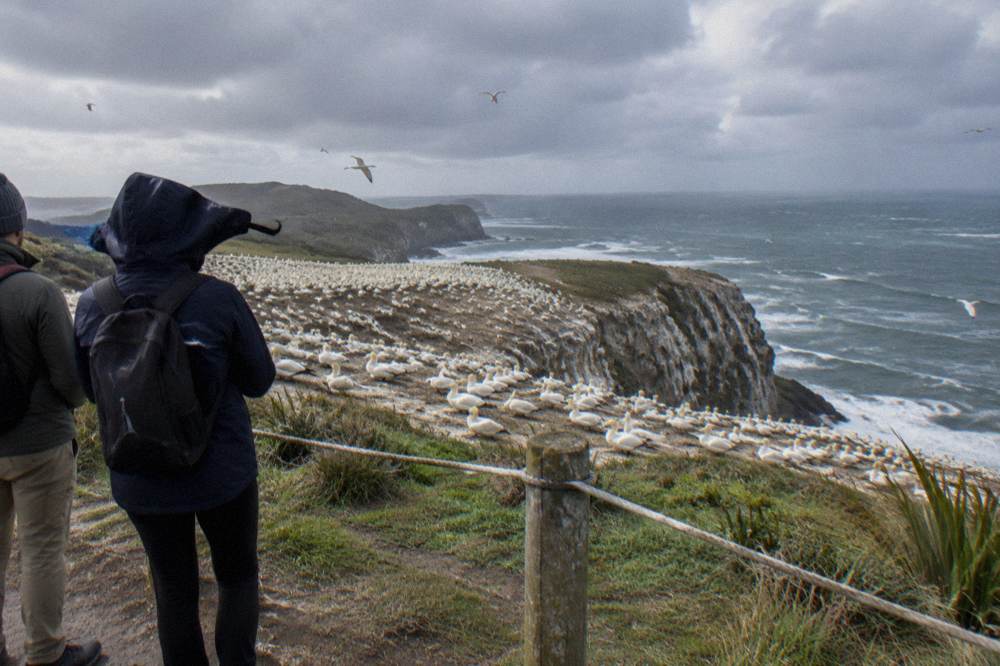
Whether you walk or ride, the reserve rules are the same: no dogs or horses, no motorbikes or vehicles off the beach into the reserve, no fires or camping, keep behind barriers or at least five metres from nesting gannets, and keep to the track through private land. Drones on conservation land need a DOC permit. Nesting birds dislike loud noises and fast movement.
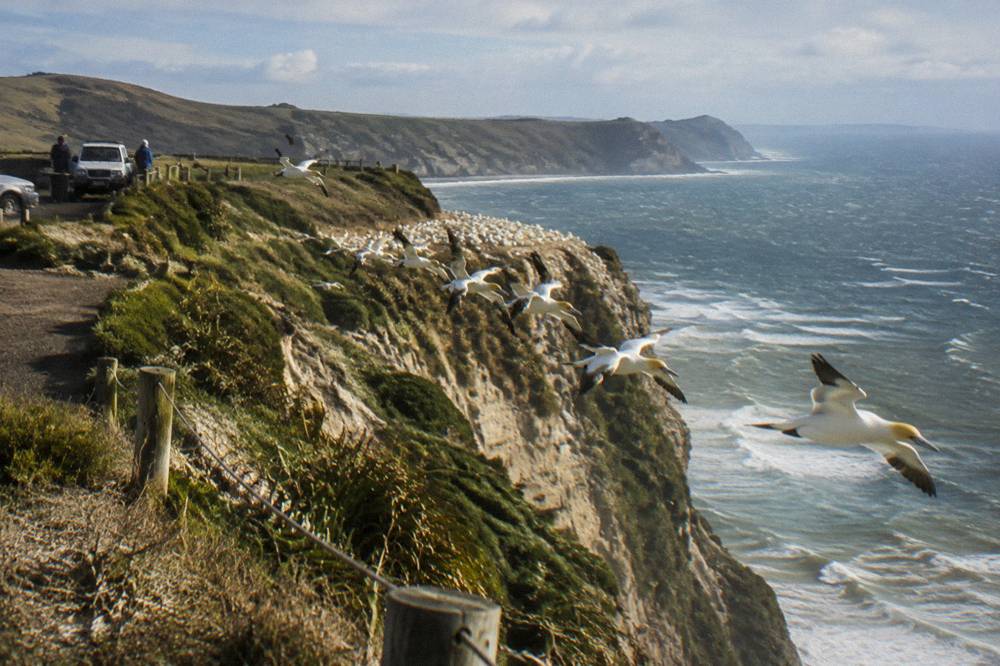
The five-metre rule is the one people break by accident. Gannets nest densely on the plateau, a group of nesting gannets is a colony, sometimes called a gannetry, and the barriers are placed so the birds have room to court, incubate and raise chicks without people at wing's length. An adult Australasian gannet has a wingspan of about 1.8 m and can live 25 to 40 years, and young birds make a Tasman Sea crossing to Australia of about 2,800 km before returning two to three years later, so each nesting pair represents a serious investment of distance and time.
For walkers, DOC's kit list is worth taking seriously: sturdy footwear, food and water, sunscreen and hats, extra clothing for cool sea breezes, a water and windproof jacket, gloves, a head torch and a communication device. There is a DOC rest shelter with toilets a short way up the track from the beach end, but no drinking water. The area is susceptible to tsunami; if a siren or alert sounds, move to higher ground.
Dogs are a hard no on the tours too, not just the reserve: it is a wildlife sanctuary and a DOC reserve, and the operator does not allow them. For anyone weighing whether the day suits children or limited mobility, the tour-with-kids guide covers the practical side, and the meet-at-base tour is pushchair accessible, though not wheelchair accessible.
What Should You Actually Choose?
Choose the free walk if you are a confident, tide-aware tramper with 5-plus hours and the right gear, and the overland tour if you want the gannets without the risk, the tides or the distance. For most first-time visitors to Hawke's Bay, the 3-hour tour is the practical answer: it runs above the cliff tops, ignores the tide entirely, and starts from $56.23 per person.
The decision usually comes down to three trade-offs. Cost: the walk is free and the tour is not, though from $55 to $56 per person is modest against a full day's holiday budget. Risk: about 7 km of the walk sits under landslide-prone cliffs, while the overland route across private farmland is the option DOC itself describes as lower-risk. DOC treats beach transport as a high-risk operation by comparison, which is worth knowing, without detracting from the operators who run it. Time: 5 hours of walking against 3 hours riding, with the same clifftop destination.
There is a fourth trade-off that gets less attention: what you can see and from where. Walkers can make the trip only around low tide, while overland tours are not tide-governed. Walkers also carry everything they need for a half-day on an exposed coast, while tour passengers get tea, coffee and a biscuit served at the colony itself. Neither is the better experience in the abstract; they are different days entirely.
Season and sightings should shape the date more than the mode. Tours run 1 August to 30 April, the walking track's plateau section opens around Labour Weekend, and the best viewing window is early November to late February. No one can promise a bird count or a chick stage on a given day; weather can cancel or reschedule a tour, and the colony is wild. What you can count on is that Napier Gannet Tour pages keep the tour figures, prices, durations and meeting points in one place, so the choice you make is a choice between real options rather than guesswork.
Common Questions About Cape Kidnappers Access
Is Cape Kidnappers Open To The Public?
Yes. The DOC-managed reserve is open to the public, with access either by the free 19 km return beach walk from Clifton or by the guided overland tours across private farmland, which run 1 August to 30 April.
Do You Need A Permit Or Ticket To Visit Cape Kidnappers?
No permit or entry fee is needed for the beach walk. The Plateau colony is on private land, and the overland tours that cross the farm are ticketed products starting from $55.00 per person.
When Is The Cape Kidnappers Walking Track Closed?
The track from the beach to the Plateau colony closes from July to the week before Labour Weekend each year, to limit disturbance to returning birds. The beach itself can also close after landslide activity, so check the DOC safety alert and the signage at Clifton before going.
Can You Drive To The Cape Kidnappers Gannet Colony?
No public road reaches the colony. You can drive about 25 minutes from Napier to Clifton or the tour operator's base at 396 Clifton Road, Te Awanga, but from there the colony is reached on foot or by the operator's 4WD tour.
Are The Cape Kidnappers Tours Affected By The Tides?
The overland tours are not governed by the tides because they travel above the cliff tops. The beach walk is tide-dependent: it is possible only around low tide, high tides and big seas block the beach, and you should leave the Cape no later than 1.5 hours after low tide.
Can Cruise Passengers Visit The Cape Kidnappers Gannets?
Yes, via the shore excursion versions, which run about 4 hours and meet at 100 Marine Parade next to the Napier i-SITE. The standard 3-hour tours are not for cruise passengers, so book the shore excursion if you are arriving by ship.