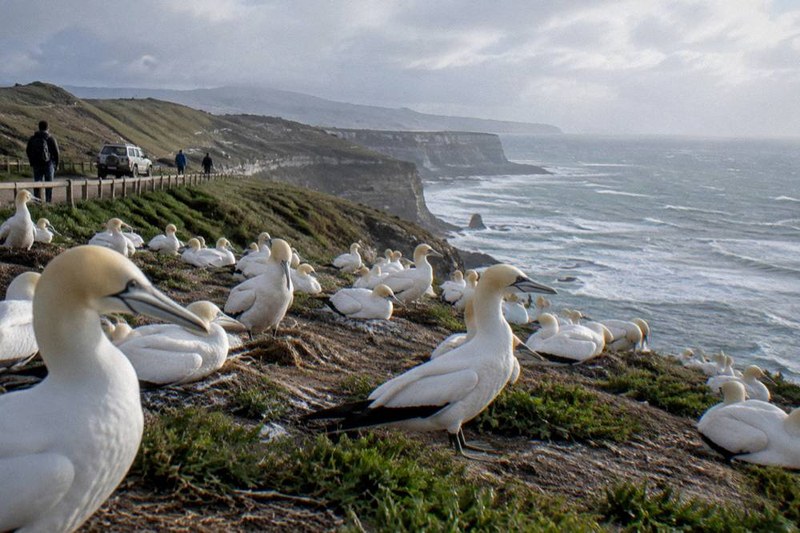
Can You Walk To The Gannet Colony?
Yes, you can walk to the Cape Kidnappers gannet colony: the DOC beach walk is 19 km return, Expert grade, at least 5 hours, only around low tide. Here is how it works, and how the overland tours compare.
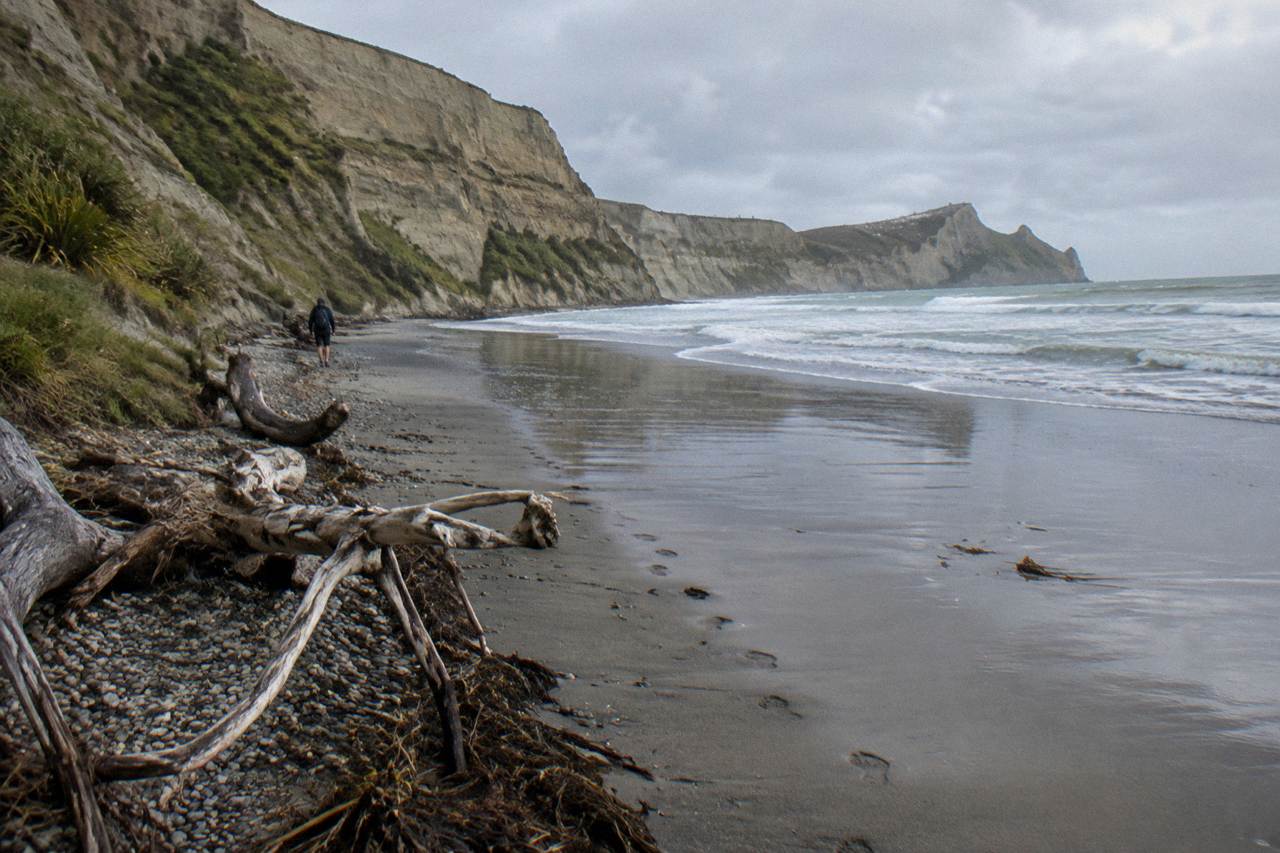
Yes, you can walk to the gannet colony at Cape Kidnappers. The Department of Conservation beach walk runs 19 km return from Clifton, is graded Expert, and DOC says to allow at least 5 hours for a comfortable return trip. The walk is only possible around low tide, and high tides and big seas block the beach. Walking is free; it is the planning, not the price, that makes it demanding.
The route starts at Clifton, at Scotmans Point, 21 km south of Napier and 18 km east of Hastings. From there you head south along the shore beneath the cliffs. Black Reef, the first nesting site, sits 7.5 km from Clifton. A steep, rough, muddy climb of about 1 km then leads on to the second colony. DOC names the Plateau colony as the best place to view nesting gannets, and that colony is on private land. Close-up views of nesting gannets are possible at the Plateau and Black Reef colonies.
The other way to answer the same question is to not walk at all. The overland tours run by Gannet Safaris Overland cross a working farm and native bush to a privately owned nature reserve above the cliffs, and the operator says little or no walking is required because everything can be seen from the vehicle. Cape Kidnappers Station is a working farm of roughly 2,500 hectares with a predator-proof fenced conservation area, and the vehicle route crosses it well above the shoreline. For a full breakdown of that choice, read the Cape Kidnappers walk versus overland tour comparison, which sets the two options side by side.
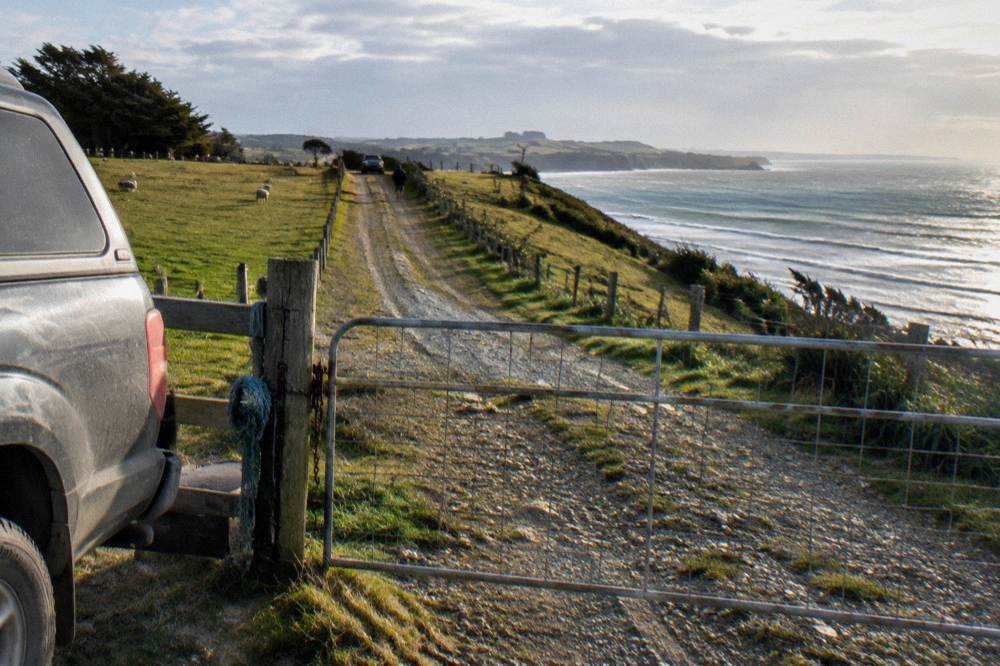
For many readers the answer is: you can walk, and you should know exactly what that commits you to before you lace up. The rest of this page covers the tide rules, the hazard under the cliffs, the seasonal closure of the plateau track, the gear the walk demands, and what the tour alternatives cost if the walk does not suit your day.
How Long Is The Walk To The Cape Kidnappers Colony?
The walk is 19 km return and DOC grades it Expert, advising at least 5 hours for a comfortable return trip. The first nesting site, Black Reef, is 7.5 km from the start at Clifton, and a steep, muddy climb of about 1 km leads from there toward the second colony. The tide sets the schedule on foot: walk only around low tide and leave the Cape no later than 1.5 hours after; overland tours are not tide-governed.
Distance is the easy part of the arithmetic. Nineteen kilometres return on sand is a solid half-day for a fit walker, and DOC's 5 hour allowance is described as the comfortable minimum, not a challenge time. Add stops for the birds, which is the entire point of going, and the realistic day stretches well past that figure. The 1 km climb between Black Reef and the second colony is steep, rough and muddy, and it is the section that catches walkers who set out expecting a flat beach stroll.
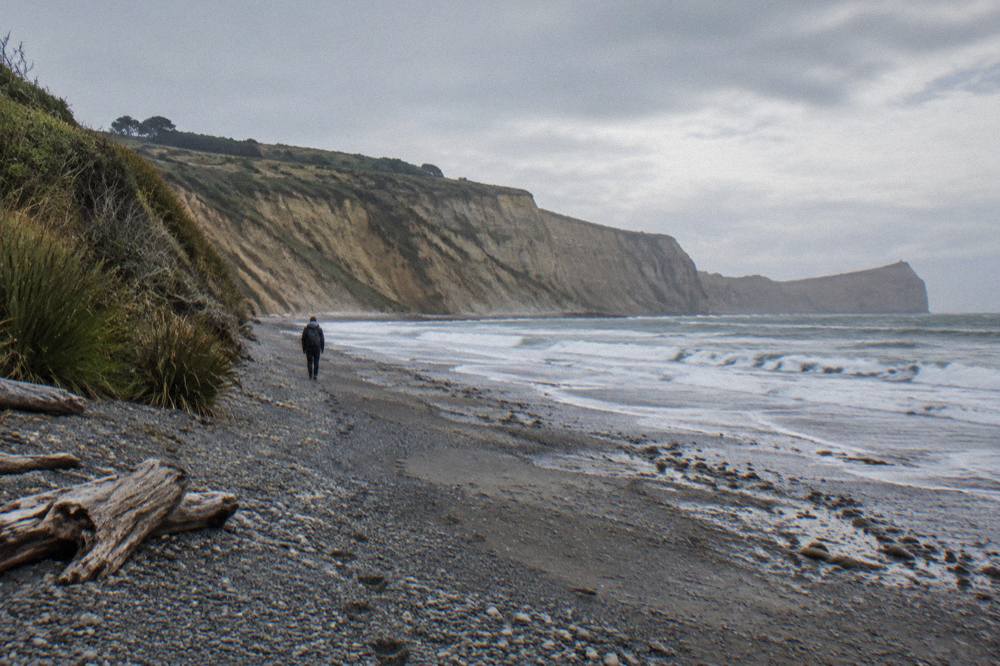
Timing matters as much as distance. The walk is possible only around low tide, high tides and big seas block the beach, and you must leave the Cape no later than 1.5 hours after low tide. Check the tide table before going. A morning low tide in November is a very different day from a mid-afternoon low tide in the same month, because the second half of the walk is the one you cannot rush. The Cape Kidnappers tide times guide explains how to read the table and plan a start time around it.
The scale of the day is exactly why the overland tours exist. The 3-Hour Tour, Meet at Base runs from $56.23 per person, is rated 4.9 across 1,052 reviews, and covers the distance in an air-conditioned minivan across the farm above the cliffs. The operator serves coffee or tea and a biscuit at the colony, and the tours are not governed by the tides because they travel above the cliff tops. You can check availability beside the 3-hour overland tour page if that trade suits your day.
Is The Beach Walk To Cape Kidnappers Safe?
The walk carries a real, documented hazard: about 7 km of the beach lies under cliffs subject to significant landslide and rockfall. A landslide seriously injured two tourists in January 2019, and another large landslide in February 2020 closed the beach before it reopened. DOC reports three serious injury landslide events in the past 50 years and large landslides every year, and says track status can change at any time.
That is not a reason to stay home, but it is a reason to treat the walk with respect. DOC asks walkers to check the safety alert on its page before setting out, and Hastings District Council says Clifton beach is open but may close if there is unstable activity, so check the signage at the access point. Do not linger beneath the cliffs, keep moving through the 7 km of cliff-lined shore, and do not stop for lunch under them.
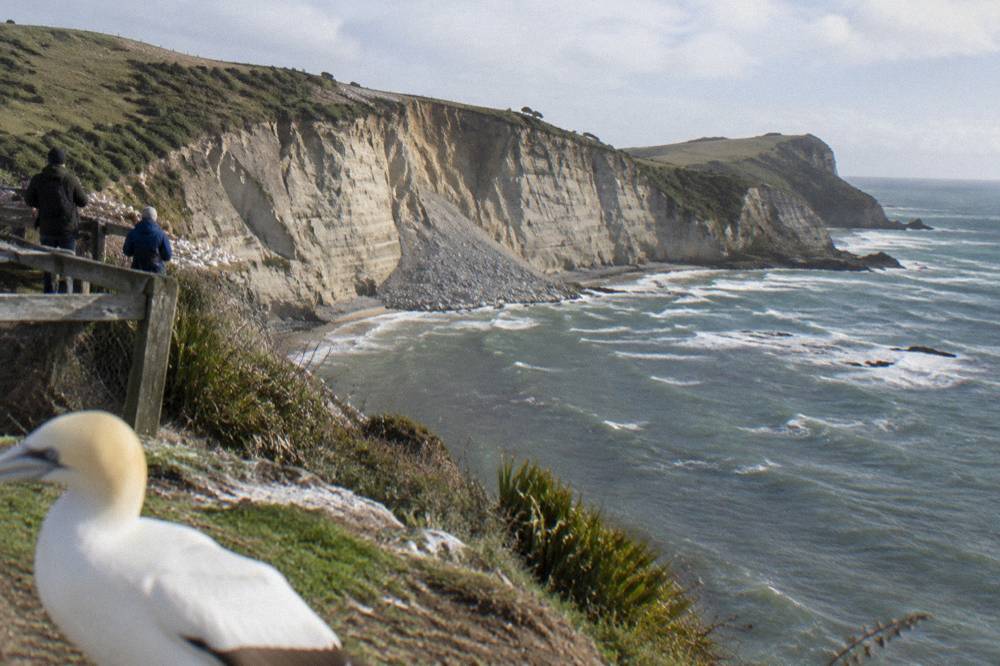
The area is also susceptible to tsunami. If a siren or alert sounds, move to higher ground immediately. DOC's gear list for the walk is blunt about the conditions: sturdy footwear, food and water, sunscreen and hats, extra clothing for cool sea breezes, a water and windproof jacket, gloves, a head torch, and a communication device. There is a DOC rest shelter with toilets a short way up the track from the beach end, but no drinking water.
One recent local change matters to walkers arriving at Clifton. Clifton Motor Camp was closed in February 2026 after a geotechnical assessment found unstable land above it and permanently closed in July 2026, and in August 2026 Hastings District Council voted to close a section of Clifton Road to vehicles at the former campground. Pedestrian access to Clifton Beach and the walking route stays open, but drivers should plan for changed parking and access at the start of the walk, and walkers arriving by shuttle or taxi should confirm their pickup point before setting out.
- Standard Overland Gannet Tours$55
- Cruise Shore Excursions$93
- Private And Sunrise Tours$604 per group
For cruise passengers, the 4WD shore excursion above is a middle path: 4 hours from Napier in a 4WD safari vehicle, from $93 per person, meeting at the pink flag area in front of the Sound Shell next to the Napier i-SITE. The transfer is round-trip from that point on Marine Parade. On some ship days the operator collects passengers directly from the port because of short port times, and the departure time is set per ship, so the meeting arrangements can shift with your itinerary.
When Is The Walking Track To The Plateau Closed?
The track from the beach to the plateau gannet colony is closed from July to the week before Labour Weekend each year, to limit disturbance to returning birds. Adult gannets return to the cape from around July for courtship and nest building. The tours themselves run from 1 August to 30 April, so there is a window in early spring when the birds are arriving but the walking track to the plateau is still shut.
The beach itself, weather and tides permitting, remains walkable outside the closure window, but the climb to the Plateau colony is off limits until the week before Labour Weekend.
DOC says the best viewing is early November to late February, which is also when the walking track is fully open and the colony is at its busiest with nesting birds. The Cape Kidnappers gannet season guide maps the full year, month by month, including when the plateau track reopens and when the young birds depart.
| Route to the colony | Distance and grade | Time | Key constraint |
|---|---|---|---|
| DOC beach walk from Clifton | 19 km return, Expert | At least 5 hours | Only around low tide; leave the Cape no later than 1.5 hours after low tide |
| Roughly Half the Walk | 7.5 km one way | Roughly half the walk | First nesting site; cliffs subject to landslide along the shore |
| Beach to Plateau colony | About 1 km climb, steep and muddy | Varies with fitness | Closed July to the week before Labour Weekend |
| Overland tour from the base at Te Awanga | Across private farmland by vehicle | 3 hours total | Runs 1 August to 30 April; not governed by the tides |
What Should You Take On The Cape Kidnappers Walk?
DOC's list for this walk is longer than most beach checklists: sturdy footwear, food and water, sunscreen and hats, extra clothing for cool sea breezes, a water and windproof jacket, gloves, a head torch, and a communication device. Plan as if you are self-sufficient.
The head torch and communication device tell you what kind of day this can become. A walk that starts on a morning low tide can finish late if the bird watching runs long or the return leg turns slow on tired legs, and DOC grades the route Expert for a reason. Cool sea breezes cut through even on a bright Hawke's Bay afternoon, and the weather at the Cape can differ sharply from the weather in Napier, a point the Cape Kidnappers weather guide covers in detail.
Clothing choice matters more than most first-time walkers expect. The what to wear for a gannet tour guide applies to the tours, but the same layering logic, windproof outer and warm hat, applies doubly to a 5 hour day on an exposed shoreline. Gloves on a DOC beach list surprise people until they have walked the last hour into a southerly.
| DOC gear item | Why it matters on this walk |
|---|---|
| Sturdy footwear | Sand, stones and a steep muddy 1 km climb to the plateau |
| Food and water | 19 km return with no drinking water on the route |
| Sunscreen and hats | Little shade and reflected light off sand and sea |
| Extra clothing and windproof jacket | Cool sea breezes even on fine days |
| Head torch | A late finish is possible if the return leg runs long |
| Communication device | Coverage under the cliffs is unreliable in places |
Dogs are not allowed on any part of this route, whether you walk or ride: it is a wildlife sanctuary and a DOC reserve. If you are weighing whether a four-legged companion can come along in any form, the can you bring a dog to Cape Kidnappers post answers it directly.
What Rules Apply When You Reach The Gannets?
Keep behind barriers or at least five metres from nesting gannets, keep to the track through private land, and leave the dogs at home: no dogs or horses are allowed, no motorbikes or vehicles off the beach into the reserve, and no fires or camping. Nesting birds dislike loud noises and fast movement, so move slowly and keep your voice down near the colony. Drones on conservation land need a DOC permit.
These rules exist because the colony is both a wildlife sanctuary and a DOC reserve, and the birds nest on the ground in dense groups. A group of gannets nesting together is a colony, also called a gannetry, and pairs stay together over many seasons. DOC puts the colony at 6,500 pairs and calls it the largest and most accessible mainland colony in the world, nesting here since the 1870s. Disturbance at close range can break incubation, and a single egg per pair, incubated by both parents on their webbed feet, is all a pair produces each year.
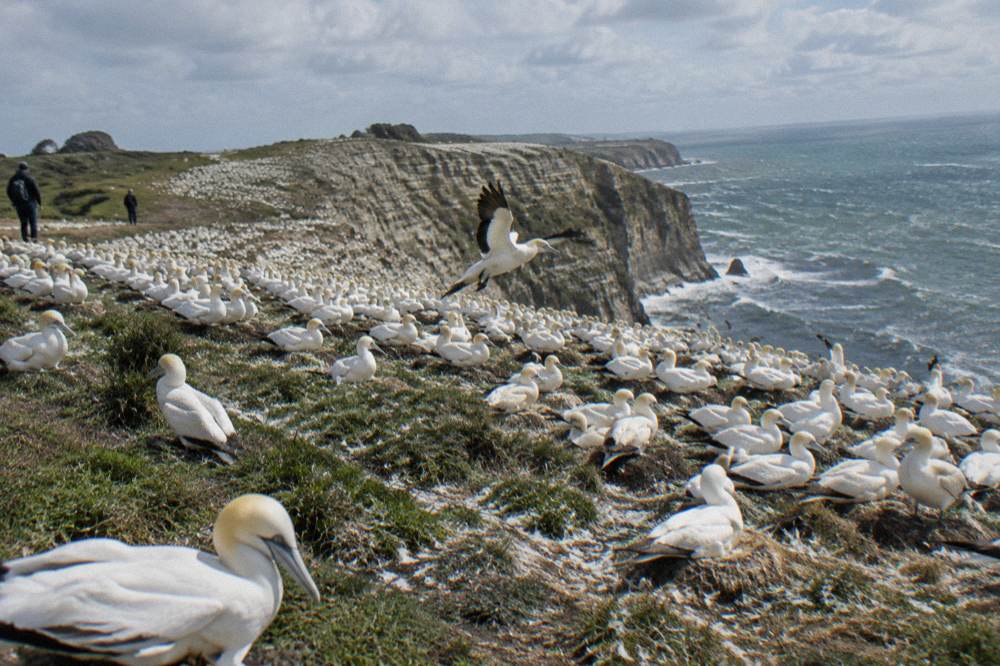
The birds themselves reward the patience. Australasian gannets have a wingspan of about 1.8 m, and the cape also hosts white-fronted terns, variable oystercatchers, reef herons, Caspian terns and little blue penguins nesting around the headland. Young gannets make a Tasman Sea crossing to Australia of about 2,800 km and typically return in their third year. A calm, slow visit at the barriers lets the colony carry on around you, which is when the best viewing happens.
The same five metre courtesy applies on the tours. Tea, coffee and a biscuit are served at the colony on the overland runs, the operator says the plateau is flat ground with bench seats, and a guest only needs to be able to get on and off the vehicle unaided. There are no toilets on the tour; the last toilets are at the operator's base, which has good bathroom facilities and a large off-road car park with room for several motorhomes.
Can You Bike To The Gannet Colony Instead?
Yes, there is a self-guided fat-bike option. Gannet Bikes runs a ride from 475 Clifton Road that takes 3.5 to 4 hours in total, needs at least intermediate fitness, and supplies a bike, helmet, spare tube, pump and map, finishing with a short walk up to the plateau colony. It uses the same beach and the same tide window as the walk, so the tide rules apply unchanged. If you are weighing that self-guided ride against a guided overland gannet tour, the guide to the Cape Kidnappers bike ride versus a guided gannet tour covers the route, fitness, safety and cost differences side by side.
The bike ride compresses the distance but not the hazard: the cliffs, the tide clock and the seasonal plateau closure are all still in play, and riders should check the tide table before going exactly as walkers do. The DOC rest shelter with toilets a short way up the track from the beach end is the only facility en route, and there is no drinking water. The separate Cape Kidnappers bike ride guide covers it in detail, including fitness expectations.
There is also a separate tide-dependent tractor-trailer ride along the beach from Clifton. Its status is unconfirmed, so check its own site for whether and when it runs. DOC posts risk warnings for the walking track. The overland route across private farmland remains the lower-risk access option.
Should You Walk Or Take A Tour To See The Gannets?
Walk if you want a free, full-day Expert-grade adventure and can plan precisely around a low tide; take a tour if you want the birds without the tide gamble, the cliff hazard or the 19 km. The two standard 3-hour tours cost from $55.00 and from $56.23 per person, against zero fees for the walk but five-plus hours on foot. DOC itself frames the overland route as the lower-risk option.
The two most-reviewed shared tours are both overland: the 3-Hour Tour, Lowest Price from $55.00 per person, rated 4.8 across 378 reviews, which meets at 396 Clifton Road, Te Awanga, with light refreshments included, and the 3-Hour Tour, Meet at Base from $56.23 per person, rated 4.9 across 1,052 reviews, also meeting at the base, with hotel pickup as an optional add-on at booking. Both are 3 hours, both are not for cruise passengers, and both carry free cancellation up to 24 hours before start. The base is about a 25 minute drive from Napier, the same from Hastings and Havelock North.
The private option above, from $688.00 per group of up to 4, adds accommodation pickup and drop-off and runs 4 hours with morning and afternoon tea or coffee. It is priced per group, not per person, so compare it against four per-person fares rather than one. As explained in the standard or private gannet tour breakdown, the private versions suit families and photographers who want the vehicle to themselves.
Cruise passengers have their own answer. The standard 3 hour tours are not for cruise passengers; only the two shore excursions are, including the 4-Hour Shore Excursion from $95.42 per person with 45 minutes at the colony per itinerary, meeting at 100 Marine Parade about 200 m from where the cruise shuttle drops at the Napier i-SITE. Check the ship's all-aboard time against the 4 hour length before booking anything.
In short: walking is genuinely possible, genuinely free, and genuinely demanding. The tour is not a shortcut for the lazy; it is the version of the visit that removes a tide table, a landslide hazard and a 19 km beach from your morning, and for most visitors with one day in Hawke's Bay that trade is worth the fare.
Common Questions About Walking To The Gannet Colony
Can You Walk To The Gannet Colony?
Yes. The DOC beach walk from Clifton to the Cape Kidnappers gannet colony is 19 km return, graded Expert, with at least 5 hours advised. It is possible only around low tide, and the plateau track is closed from July to the week before Labour Weekend each year.
How Far Is The Walk To The Gannet Colony?
The return walk is 19 km. Black Reef, the first nesting site, is 7.5 km from the start at Clifton, and a steep, muddy climb of about 1 km leads on toward the second colony. DOC says to allow at least 5 hours for a comfortable return walk.
Is The Cape Kidnappers Beach Walk Dangerous?
About 7 km of the beach lies under cliffs subject to significant landslide risk. A landslide seriously injured two tourists in January 2019, and a large landslide in February 2020 closed the beach temporarily. Check the DOC safety alert and the Council signage before you go, and keep moving under the cliffs.
Do I Have To Walk To See The Gannets?
No. The overland tours cross private farmland to the plateau and require little or no walking; everything can be seen from the vehicle. The standard tours run about 3 hours from $55.00 per person, and the tours are not governed by the tides.
When Is The Track To The Plateau Colony Closed?
The track from the beach to the plateau colony is closed from July to the week before Labour Weekend each year, to limit disturbance to returning birds. Best viewing is early November to late February.
Can Cruise Passengers Walk To The Gannet Colony?
Not realistically. The walk needs at least 5 hours plus tide planning, which rarely fits a port call, and passengers cannot walk out of the port. The shore excursions, including a 4-hour option with 45 minutes at the colony, are built for cruise days; the standard 3 hour tours are not for cruise passengers.