Is The Cape Kidnappers Gannet Tour Wheelchair Accessible?
What wheelchair access really means on the Cape Kidnappers gannet tours: the stated flags, the plateau terrain, boarding the 4WD, and what to ask before booking.
No, not in the strict sense: the standard 3-hour tour, the cruise shore excursion, the private 4-hour tour and the sunrise tour are all flagged as not wheelchair accessible on their booking pages. Pushchairs, by contrast, are accepted on those same four options. The barrier is boarding the vehicle, not the ground at the colony, which the operator describes as flat with bench seats.
That one sentence hides a more useful picture. The tour that most visitors take, the "3-Hour Tour, Meet at Base" from $56.23 per person, carries two separate flags: not wheelchair accessible, and pushchair accessible. Those two flags sound contradictory until you understand what sits between them, and understanding that gap is the whole point of this page. A person who can transfer out of a wheelchair with some help, or who uses a walker rather than a chair, may find the tour entirely workable. A full-time wheelchair user who cannot stand or transfer almost certainly cannot board, because the tour reaches the colony in a 4WD minivan across a working farm, and there is no stated wheelchair lift on any of the operator's vehicles.
The rest of this article unpacks each part of that. It covers what the flags on each tour actually say, why the colony plateau itself is described as easy terrain, what "little or no walking" means in practice, how the cruise shore excursions differ, and what to ask the operator before you hand over money. It also looks at the alternatives around Cape Kidnappers, including the DOC beach walk, which is a very different proposition indeed. If you are deciding whether to book for a mixed group where one person uses a wheelchair, the answer is not a flat no, it is a conversation worth having before you book. For a sense of what waits at the top once the access details are sorted, the guide to the size of the Cape Kidnappers gannet colony explains why the plateau draws visitors from around the world.
What Do The Accessibility Flags On Each Tour Say?
Four of the tours, the 3-hour standard tour, the 4-hour cruise shore excursion, the private 4-hour tour and the 3-hour sunrise tour, state not wheelchair accessible and pushchair accessible. For wheelchair access on the remaining options, including the 4WD safari shore excursion and the winery combo, ask Gannet Safaris Overland directly before booking.
- Standard Overland Gannet Tours$55
- Cruise Shore Excursions$93
- Private And Sunrise Tours$604 per group
Reading the flags tour by tour is the only reliable way to plan, because every detail applies to that specific product and no other. The table below gathers what is actually stated about access, walking and group size for each of the main options. Where a detail is left open, check the operator's booking page rather than assuming a yes.
| Tour | Price basis | Access flags stated | Walking notes |
|---|---|---|---|
| 3-Hour Tour, Meet at Base | From $56.23 per person | Not wheelchair accessible; pushchair accessible | Most travellers can participate |
| 3-Hour Tour, Lowest Price | From $55.00 per person | Walking is not required if you do not want to | Jacket advised |
| 4-Hour Shore Excursion, 45-Minute Stop | From $95.42 per person | Not wheelchair accessible; pushchair accessible | 45 minutes at the colony per itinerary |
| 4WD Safari Vehicle, 4 Hours | From $93.00 per person | Check the booking page | Roughly 25 minutes each way by coach |
| Private 4-Hour Tour | From $704.30 per group (up to 4) | Not wheelchair accessible; pushchair accessible | Private to your group |
Two things jump out of that table. Second, the lowest-price 3-hour tour makes the strongest statement about walking of anything the operator sells: walking is not required if you do not want to, everything can be seen from the vehicle. That phrasing matters enormously for travellers with limited mobility who can still manage the step up into a minivan, and it is why that tour gets its own section below.
For anyone travelling as a group where one member cannot board, there is still a workable pattern: the rest of the party takes the tour while the wheelchair user spends the three hours elsewhere. The operator's base at 396 Clifton Road, Te Awanga, has a large off-road car park with room for several motorhomes, good bathroom facilities, and the whole area sits about a 25 minute drive from Napier along a coast worth looking at. Not the same as standing at the colony, but not a wasted morning either.
Why The Plateau Itself Is Not The Problem
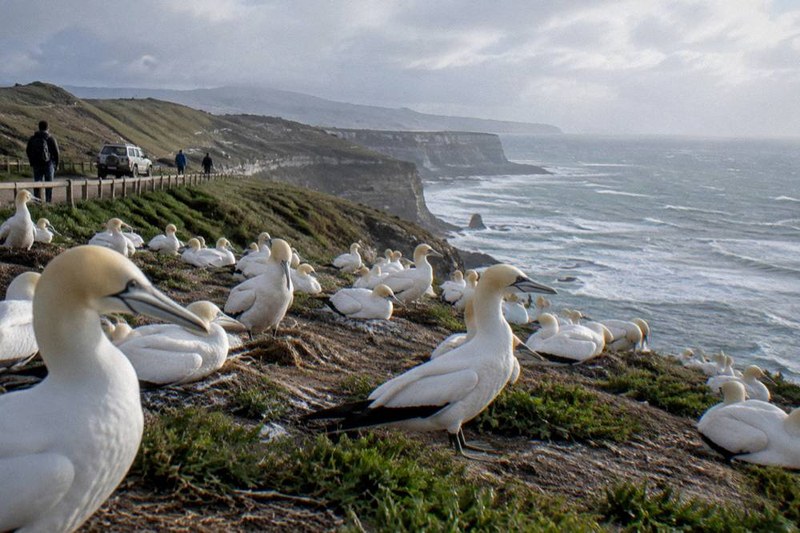
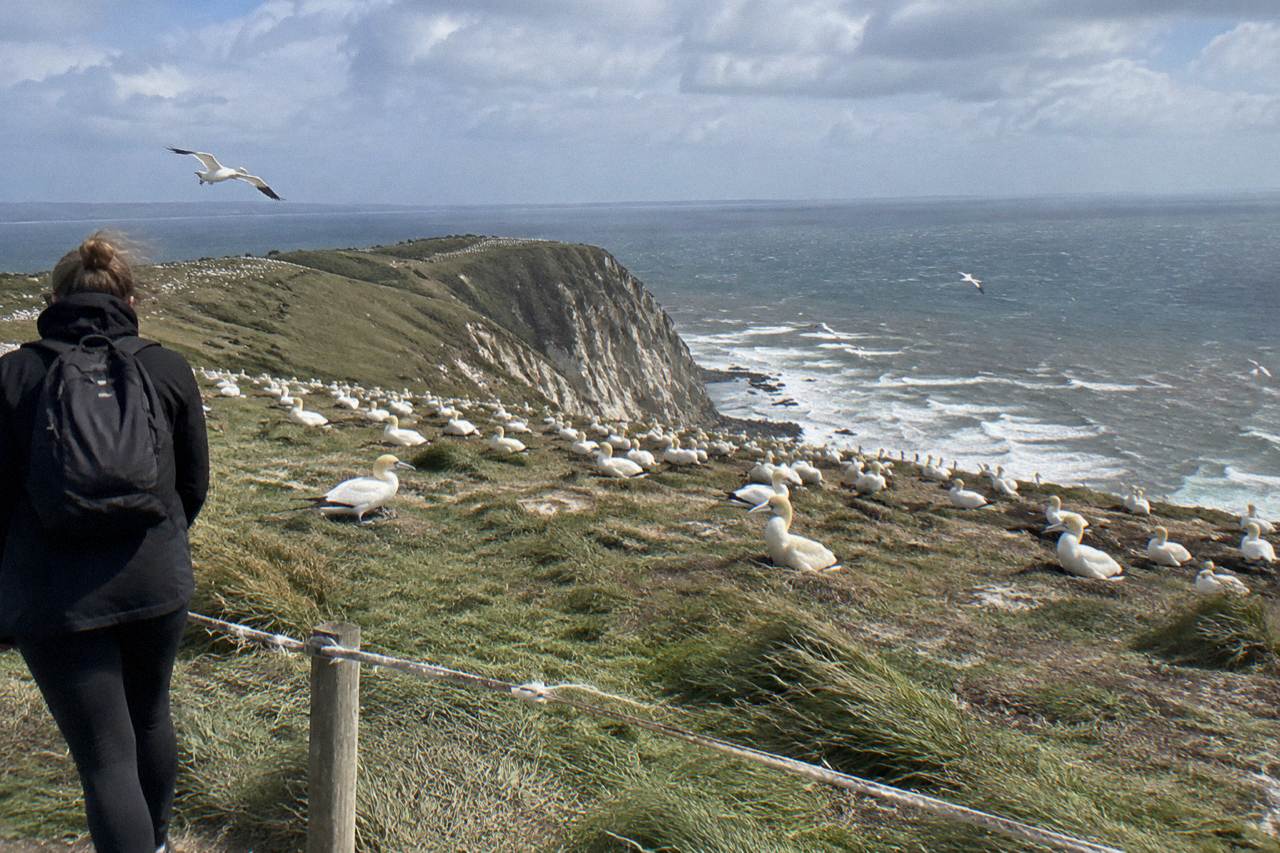
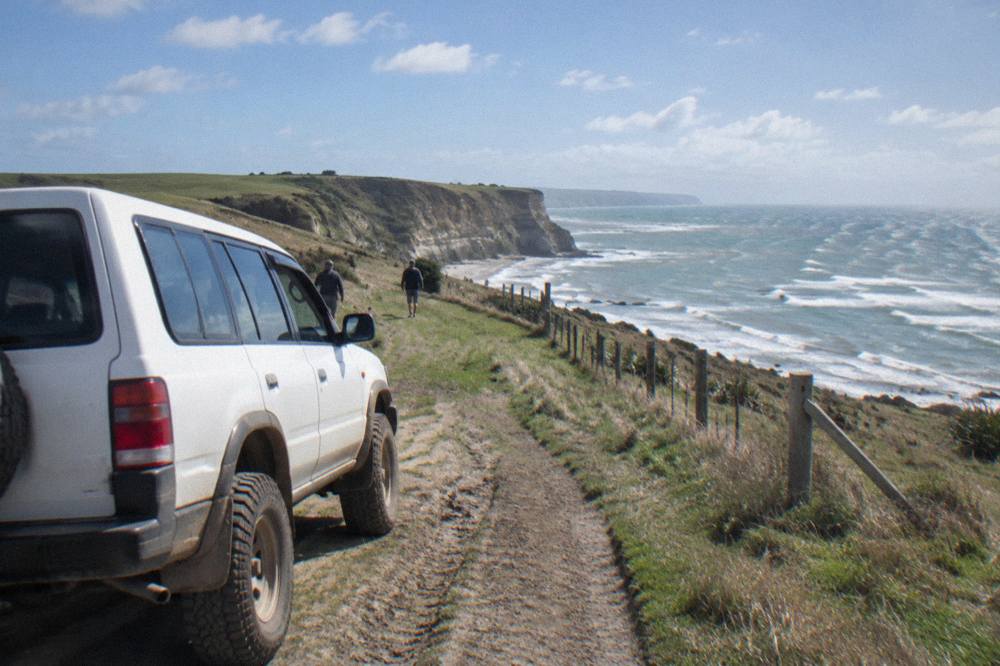
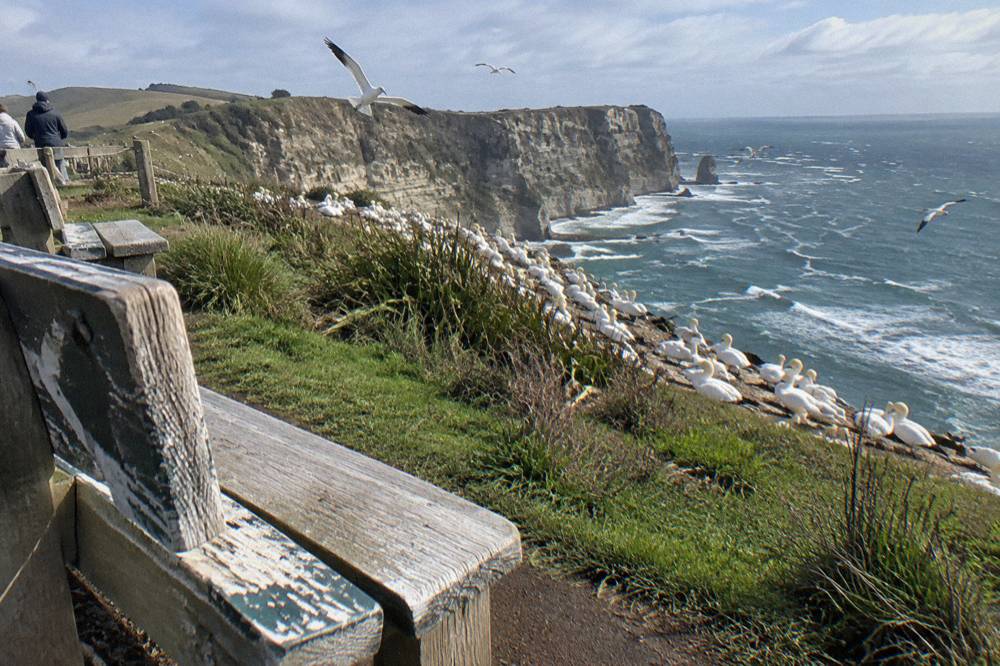
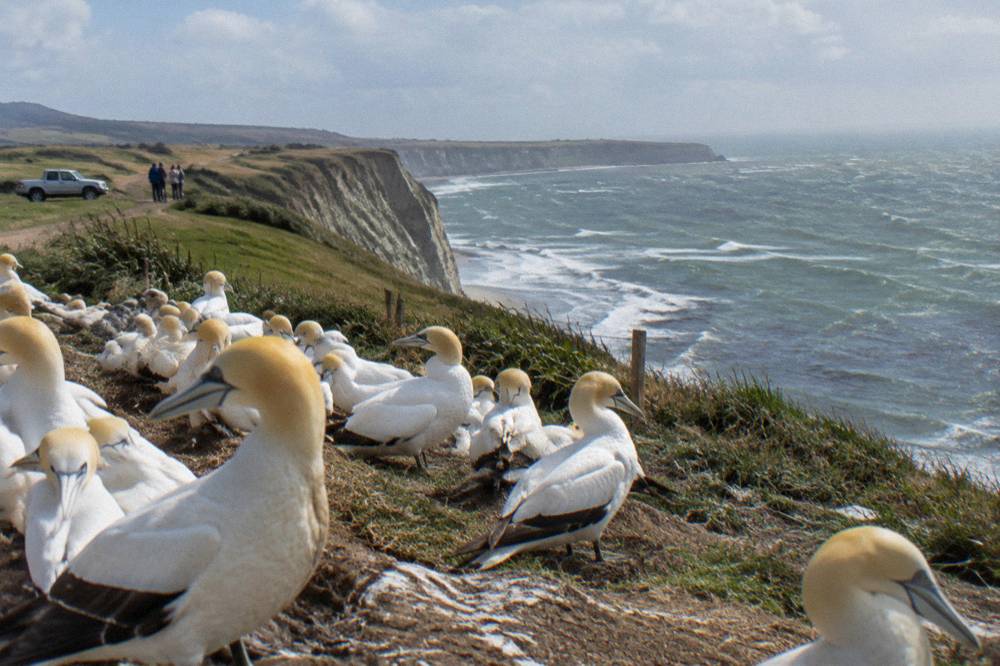
The ground at the colony is described by the operator as flat with bench seats, safe and easy to walk on, with little or no walking required at all. The access barrier is the vehicle journey there: guests need to be able to get on and off the 4WD unaided, and no wheelchair lift is stated on any tour the operator runs.
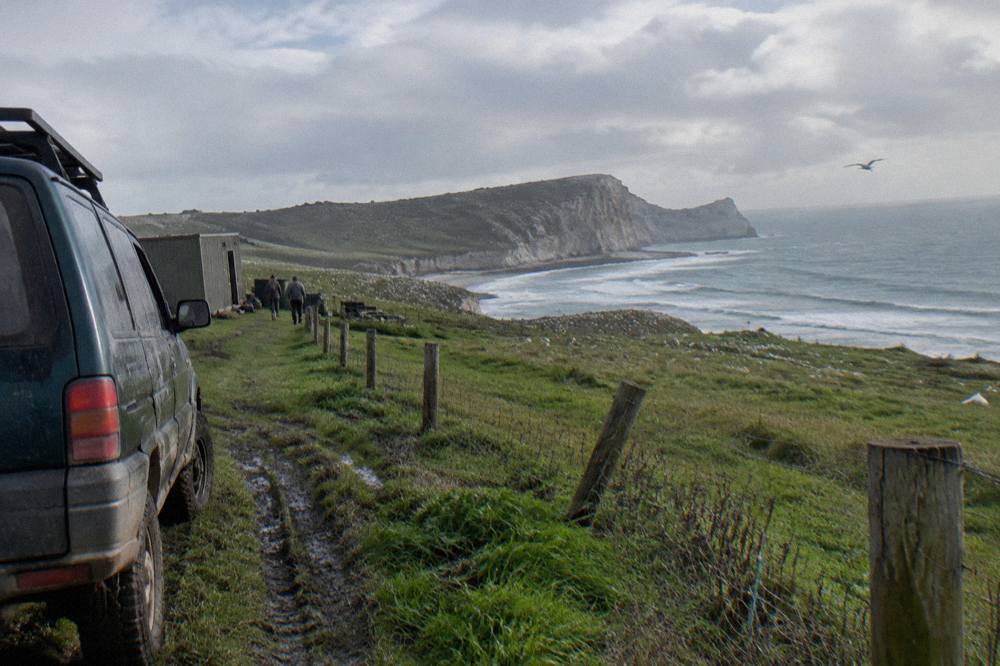
It is worth separating the destination from the transport, because they have completely different accessibility profiles. The overland route crosses Cape Kidnappers Station, a working farm of roughly 2,500 hectares with a predator-proof fenced conservation area, and finishes at a privately owned nature reserve above the cliffs. Once the vehicle stops, the operator says the plateau is flat ground with bench seats, that walking there is safe and easy, and that everything can be seen from the vehicle without getting out at all. In other words, if a wheelchair user could somehow be at the plateau, the terrain would pose very little difficulty compared with, say, a mountain boardwalk.
The tour vehicle is an air-conditioned 4WD minivan or safari vehicle, depending on which product you book, and the stated requirement is that a guest needs to be able to get on and off the vehicle unaided. There is no stated wheelchair lift, no stated boarding ramp and no stated provision for transferring a chair into the vehicle. For a full-time chair user, it is a genuine barrier, and it is better to know that before arriving at the base in Clifton.
This is also why the flags read the way they do. "Not wheelchair accessible" on a booking page is a blanket statement that usually means exactly this: the transport link fails, even when the endpoint would be fine. It is not a judgement about the colony, the track surface at the top, or the operator's willingness to help. Staff at the base are described as serving tea, coffee and a biscuit at the colony, and the whole operation runs on a wildlife sanctuary ethos, but goodwill cannot substitute for a lift that does not exist. The right move is to contact the operator before booking and describe your specific situation in plain terms.
Can You Take The Gannet Tour Without Walking At All?
Not fully. On the 3-Hour Tour, Lowest Price, no walking is needed and everything can be seen from the vehicle, but guests must get on and off unaided. That $55 tour meets at 396 Clifton Road, Te Awanga, with light refreshments included and a jacket advised. It runs from $55.00 per person, is rated 4.8 across 378 reviews, and starts at the operator base at 396 Clifton Road, Te Awanga, about 25 minutes from Napier, with light refreshments included.
Of all the products the operator sells, this one is the closest thing to a low-mobility gannet experience. The flag "walking is not required if you do not want to" is unusually strong language for a nature tour, and it pairs with the operator's own description of the plateau: flat ground, bench seats, everything visible from the vehicle. A traveller who tires easily, who uses a walking frame, or who simply cannot manage uneven ground can sit in the minivan at the top and still watch the birds.
The pickup inclusion matters more than it first appears. Neither 3-hour tour includes pickup in its price: guests self-drive to the base at 396 Clifton Road, Te Awanga, about 25 minutes from Napier, though the slightly pricier option sells hotel pickup as an add-on at booking, sparing a traveller with limited mobility the drive and the car park. The tour is not for cruise passengers, so it suits visitors staying in Napier, Hastings or Havelock North, all roughly a 25 minute drive from the base at Clifton. The only stated physical requirement remains the one from the previous section: getting on and off the vehicle unaided. That is the floor, and nothing in the booking details lowers it.
For context on effort levels across the site's other pages, see the broader Cape Kidnappers tour fitness guide, which compares the overland tours against the demanding DOC beach walk. The short version: the overland tours are the easy option by a wide margin, the 19 km return beach walk graded Expert is the hard one, and nothing in between is needed if you book the vehicle tour.
Is The Napier Cruise Shore Excursion Any Different For Wheelchair Users?
No. The 4-hour shore excursion from $95.42 per person carries the same flags, not wheelchair accessible and pushchair accessible, and adds a meeting point in central Napier. The separate 4WD safari shore excursion from $93.00 leaves access entirely unstated, so passengers with a wheelchair must ask before booking.
Cruise passengers face a slightly more complicated chain than land-based visitors, and every link in that chain matters. Ships calling at Napier between October and April dock at the port, and passengers can walk down the gangway onto the wharf but cannot walk out of the port itself. A shuttle runs to two stops, the Napier i-SITE at 100 Marine Parade and the National Aquarium, and taxis cannot enter the port. The standard shore excursion meets at 100 Marine Parade, opposite the Napier Museum, about 200 metres from where the shuttle drops.
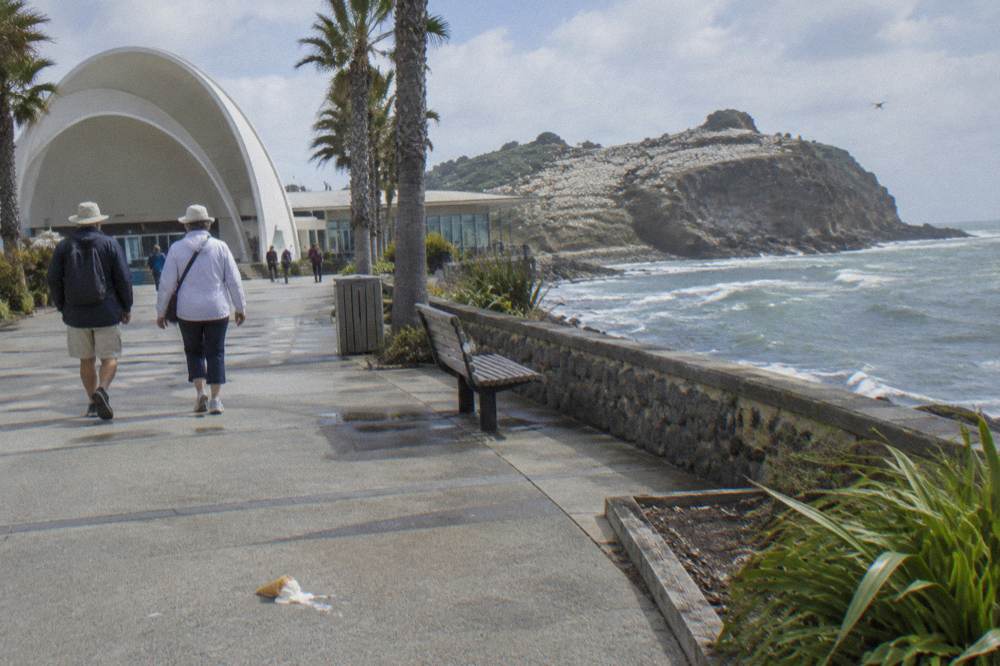
Once the shore excursion reaches Clifton, the picture is identical to the standard tour: an air-conditioned vehicle, a 45 minute stop at the colony per the itinerary, and the same requirement to board unaided. The group size is capped at 40 travellers, and the tour runs 4 hours in total, which is why passengers are told to check the ship's all-aboard time against the tour's length before booking. The 4WD safari shore excursion, from $93.00 per person, meets at the pink flag area in front of the Sound Shell next to the i-SITE, uses a 4WD safari vehicle, and says nothing at all about access, an absence worth reading as a question mark rather than a refusal. On some ship days the operator collects passengers directly from the port because of short port times, and departure times are set per ship, so the meeting arrangements themselves can shift.
The practical advice for wheelchair-using cruise passengers is blunt: email the operator before your voyage, name your ship and date, and describe the chair. The cruise question, including which tours qualify as shore excursions, is covered in more depth in the Napier shore excursion gannets guide.
What About Pushchairs, Strollers And Children?
Yes, pushchairs are accepted on the standard 3-hour tour, the shore excursion, the private 4-hour tour and the sunrise tour, all of which are flagged pushchair accessible. Families should still expect to fold the pushchair on board the vehicle, since space is shared with other travellers on the busiest option.
Service animals are allowed on the standard tour, the private tour and the sunrise tour, another signal that the operation is more flexible than the bare "not wheelchair accessible" flag suggests. None of this changes the boarding requirement, but it colours the conversation you will have when you call.
For families weighing whether young children cope with three hours on a farm track, the dedicated Cape Kidnappers tour with kids guide goes through the practicalities. The headline points from the operator's side: the plateau is flat with bench seats, tea and coffee are served at the colony, there are no toilets beyond the base (the last ones are at 396 Clifton Road, which has good bathroom facilities), and dogs are not allowed anywhere on the tour because the reserve is a wildlife sanctuary. A child in a stroller at the top is fine; a child who needs a mid-tour toilet is a problem, so use the bathrooms at the base before departure.
One caution worth repeating: pushchair accessible does not mean the whole route is paved. A rugged stroller or a carrier will serve better than a lightweight city pushchair with small wheels. The same logic applies to anyone using a rollator or walking frame at the colony itself: the ground is easy by rural standards, not by supermarket standards.
Are The Private And Sunrise Gannet Tours More Accessible?
Wheelchair access: the Meet at Base, shore excursion, Private 4-Hour and 3-Hour Sunrise Tour listings all say not wheelchair accessible and pushchair accessible. Their advantage is flexibility, a private group of up to 4, your own schedule, and on two of them hotel pickup and drop-off included, which removes several transfer barriers.
The private options cost more, from $704.30 per group for the "Private 4-Hour Tour" with a stated 45 minutes at the colony, from $688.00 per group for the private 4-hour tour with pickup included, and from $636.15 and $604.00 per group for the two sunrise versions, but per-group pricing means a party of four is not paying four per-person fares. What money buys here is control: the vehicle is yours, the pace is yours, and there is no queue of travellers waiting while you board slowly.
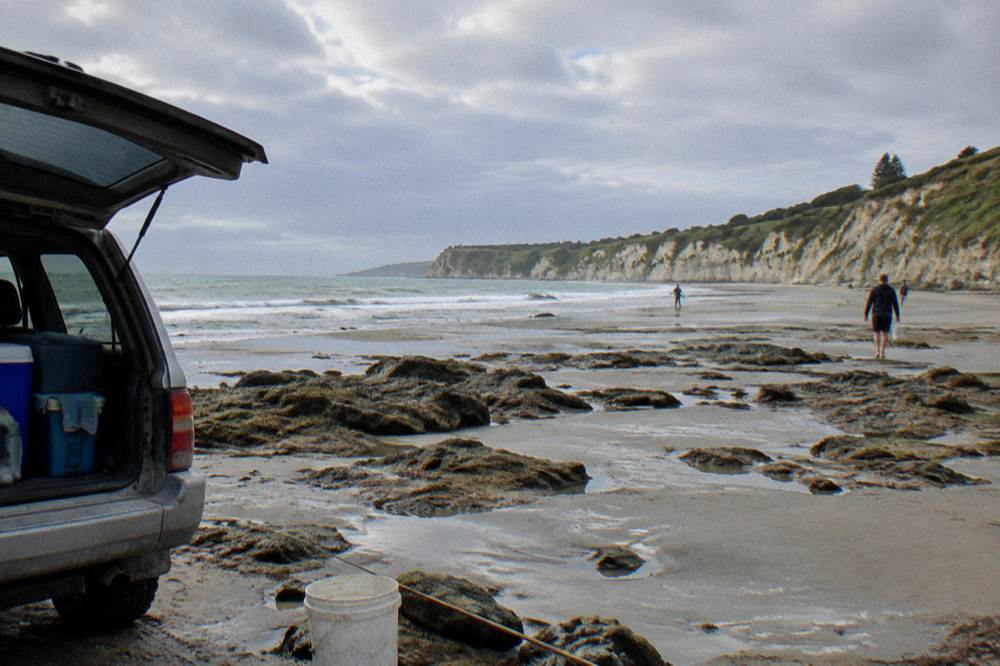
The Private Sunrise tours add a different appeal: early light on the cliffs and a gourmet breakfast of pastries, fresh fruit and yoghurt, plunger coffee and juice on the version that meets at Clifton. Adults return to the cape from around July for courtship and nest building, and tours run 1 August to 30 April, with the best viewing early November to late February according to DOC. A private sunrise departure means fewer vehicles, fewer people and a calmer atmosphere at the plateau, which suits anyone who finds crowds difficult. The 7.5-hour winery combo from $1,214.00 per group for two, in a luxury Range Rover with pickup from your accommodation, is another private-format option.
None of these products should be booked on assumption. Ask specifically about the vehicle, the step height, whether a folded wheelchair can travel in the back, and whether the driver can assist a transfer. For a fuller comparison of the trade-offs, the standard or private Cape Kidnappers tour article lays out the numbers side by side.
Can You Reach The Gannets Any Other Way With A Wheelchair?
Realistically, no. The DOC beach walk from Clifton runs beneath landslide-prone cliffs and is possible only around low tide, with walkers needing to leave the Cape no later than 1.5 hours after low water. The tractor ride and self-guided fat-bike trip both depend on the tide, and neither works for wheelchair users.
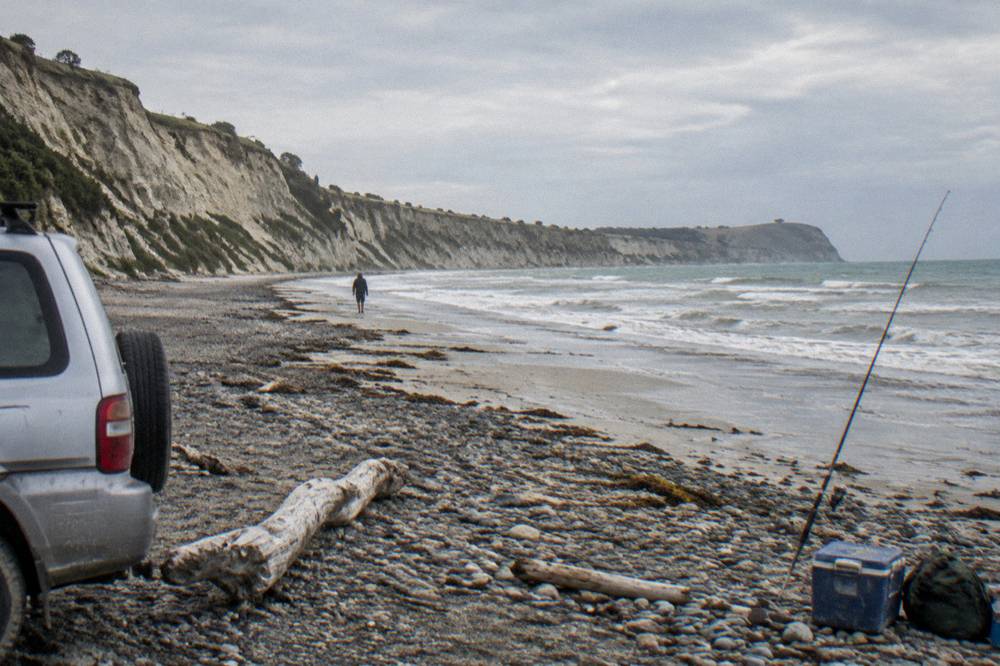
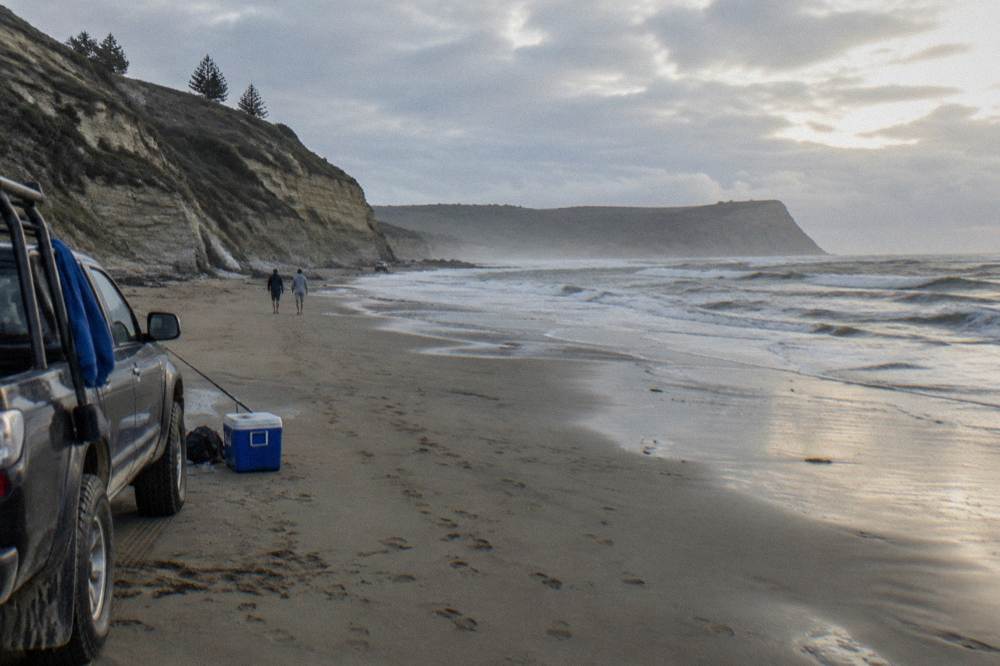
Alternatives to the standard tour come up in nearly every Cape Kidnappers comparison. The free option is the beach walk from Clifton, Scotmans Point, 21 km south of Napier: 19 km return, graded Expert by DOC, needing at least 5 hours for a comfortable return, possible only around low tide, with high tides and big seas blocking the beach, and walkers must leave the Cape no later than 1.5 hours after low tide. Black Reef, the first nesting site, sits 7.5 km from Clifton, and a steep, rough, muddy climb of about 1 km leads on toward the second colony. This is one of the least wheelchair-friendly walks in the country, and about 7 km of it lies beneath cliffs subject to significant landslide hazard: a landslide seriously injured two tourists in January 2019, and another large landslide in February 2020 closed the beach before it reopened. DOC says track status can change at any time and advises checking the safety alert on its Cape Kidnappers gannet reserve page.
The other commercial alternatives do not help either. Gannet Bikes runs a self-guided fat-bike ride from 475 Clifton Road, 3.5 to 4 hours in total, needing at least intermediate fitness, so it is out. Gannet Beach Adventures offers a tide-dependent tractor-trailer ride along the beach from Clifton, and its current status and schedule should be checked on its own site; even when running, boarding a tractor trailer across sand is not a wheelchair proposition. DOC treats beach transport as a high-risk operation and describes the overland route across private farmland as a lower-risk option, which underlines the point that the vehicle tour is the accessible-leaning choice of everything on offer.
For a full-time wheelchair user, the overland 4WD tour is marked not wheelchair accessible; for anyone with partial mobility the answer is not a flat no, and a call to Gannet Safaris Overland before booking sorts out what works. One related note for walkers and riders only: Clifton Motor Camp closed in February 2026 after a geotechnical assessment found unstable land above it, was permanently closed in July 2026, and in August 2026 Hastings District Council voted to close a section of Clifton Road at the former campground to vehicles. Pedestrian access to Clifton Beach and the walking route stays open, and the overland tours' base at 396 Clifton Road is separate from the campground.
What Should You Ask The Operator Before Booking?
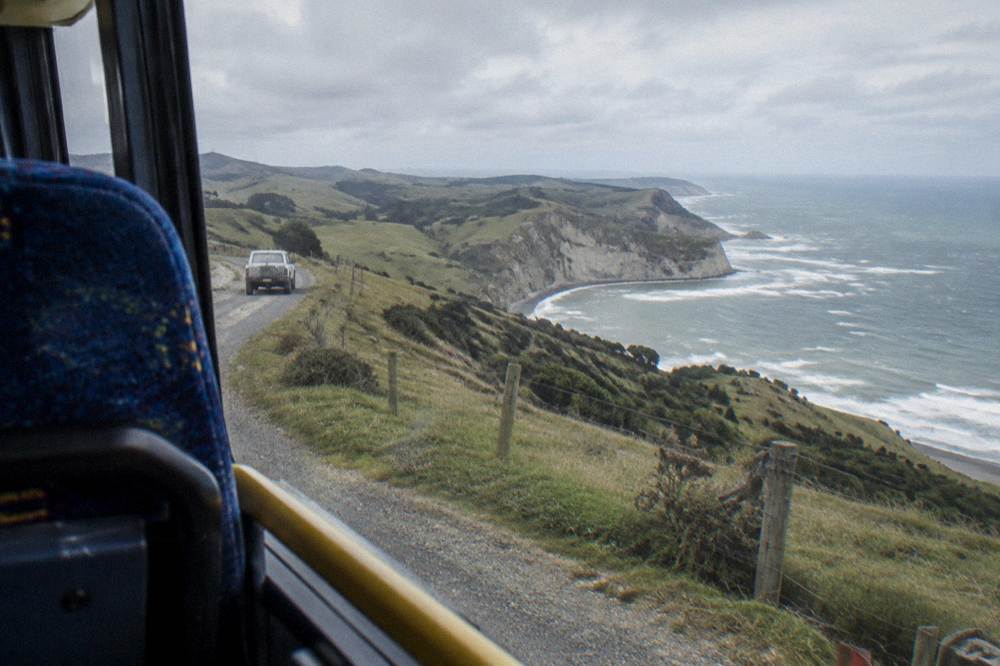
Three questions cover it: which vehicle runs that day and how high is the step in; can a folded wheelchair travel in the back; and can the driver assist a transfer. Answering these before payment beats discovering them at a farm gate in Clifton, and free cancellation up to 24 hours before start applies to all the tours covered here.
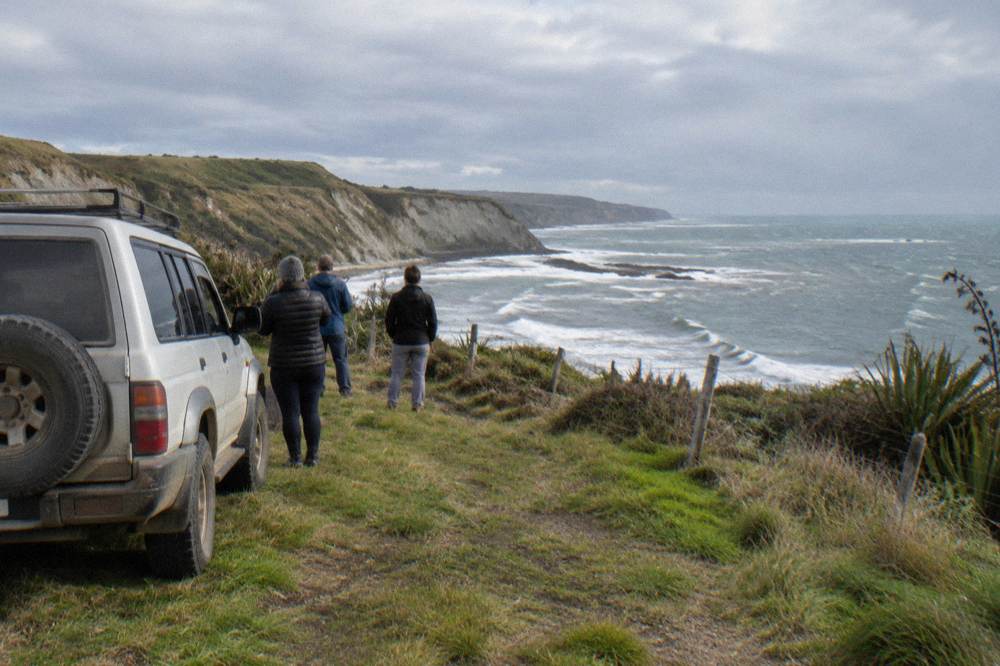
Phrasing matters when asking. "Is it accessible?" invites a yes or no drawn from the booking flag, which is already known. "My companion uses a rigid wheelchair, cannot transfer without a hoist, can you take us?" gets a real answer from the operator. Between those poles sits a wide band of partial mobility: a traveller who can stand with support, a traveller with a folding transit chair and a strong companion, a traveller who walks short distances but cannot manage slopes. Each of those situations has a different outcome, and the operator, who runs these vehicles daily across the farm, can judge far better than any FAQ page. Contact details for DOC's Hawke's Bay office, napier@doc.govt.nz or 0800 275 362, are worth keeping too if your questions are about the reserve rather than the tour.
Timing your questions matters as well. Ask again by email a few days out to confirm, and keep the reply. The 24-hour free cancellation window on every tour in this comparison gives you an exit if the answer turns out worse than hoped, but it is a much better exit before you have driven to Clifton. Note that the standard 3-hour tours are not for cruise passengers, so ship visitors should confine their questions to the two shore excursions, and never assume a private tour suits a cruise day without saying so.
Value for travellers who can board is a separate question, covered on its own page: see is the Cape Kidnappers gannet tour worth it. This site, Napier Gannet Tour, exists to keep those two questions separate: whether the tour is good, which the 4.9 rating across 1,052 reviews on the standard tour speaks to, and whether you physically can take it, which only your own mobility and a phone call can settle. For most partially-mobile travellers the answer is a workable yes. For full-time wheelchair users it is, at present, a no with a narrow caveat: ask anyway, because tour vehicles and policies change, and the only thing worse than a no is an assumption.
Common Questions About Wheelchair Access At Cape Kidnappers
Is The Cape Kidnappers Gannet Tour Wheelchair Accessible?
No. The standard 3-hour tour, the 4-hour cruise shore excursion, the private 4-hour tour and the sunrise tour are all flagged not wheelchair accessible and pushchair accessible. The stated requirement is that a guest can get on and off the 4WD vehicle unaided, and no wheelchair lift is stated on any tour.
Can You See The Gannets Without Leaving The Vehicle?
Yes. The operator says everything can be seen from the vehicle without getting out, and the 3-hour lowest-price tour states walking is not required if you do not want to. The plateau is flat ground with bench seats for those who do step out.
Are Pushchairs And Strollers Allowed On The Gannet Tours?
Yes on the standard 3-hour tour, the shore excursion, the private 4-hour tour and the sunrise tour, all flagged pushchair accessible. A rugged stroller handles the grass plateau better than small city wheels, and expect the pushchair to fold for the vehicle journey.
Is The Walk To The Gannet Colony An Option For Limited Mobility?
No. The DOC beach walk is 19 km return, graded Expert, possible only around low tide, with about 7 km beneath landslide-prone cliffs. It needs at least 5 hours and sturdy footwear, and it is not suited to any mobility aid.
Are There Toilets At The Gannet Colony?
No toilets on the tour itself. The last bathrooms are at the operator's base at 396 Clifton Road, Te Awanga, which has good facilities and a large off-road car park, so use them before departure.
Can I Cancel If The Accessibility Answer Is Worse Than Expected?
Yes. Every tour covered here carries free cancellation up to 24 hours before start, so ask your accessibility questions at booking rather than the day before, and keep the operator's reply.