How Many Gannets Are At Cape Kidnappers?
DOC puts the Cape Kidnappers gannet colony at 6,500 pairs, the largest and most accessible mainland colony in the world. Here is what that number means for your visit.
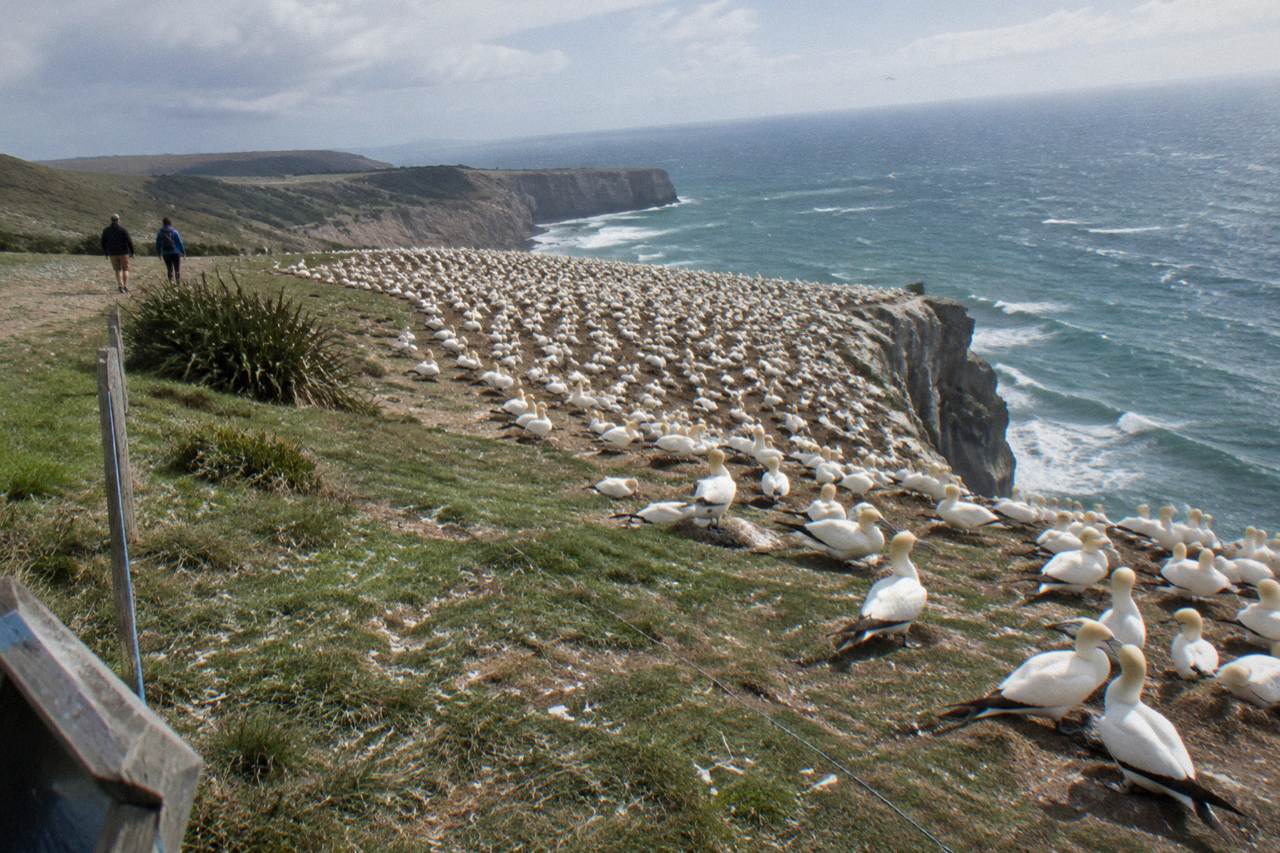
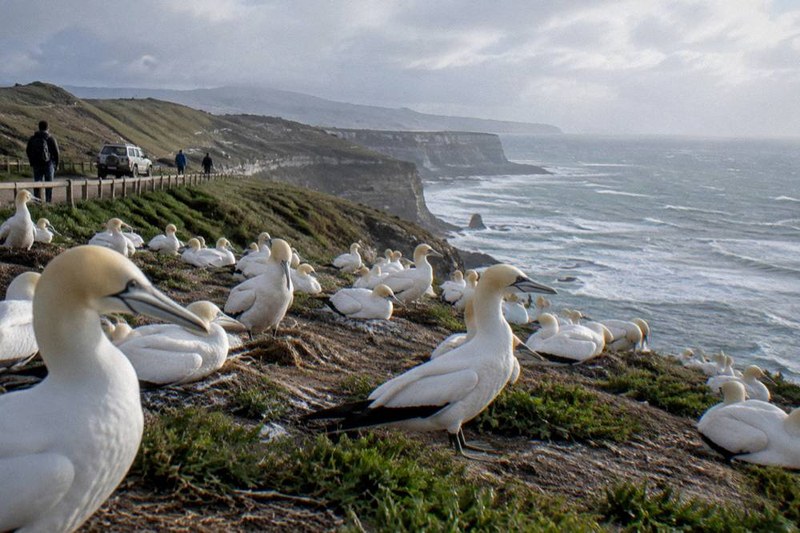
DOC puts the Cape Kidnappers gannet colony at 6,500 pairs, which makes it the largest and most accessible mainland gannet colony in the world. Because each pair typically raises a single chick, the site holds far more individual birds than the pair count suggests at the height of the season, all packed onto clifftop nesting ground a short drive from Napier. For a wider look at where these seabirds breed beyond the Hawke's Bay cliffs, the guide to seeing gannets in New Zealand covers the best viewing spots and seasons.
That figure comes from the Department of Conservation, the agency that manages the reserve, and it is the only number worth quoting. Various websites show larger counts, some wildly so, but DOC's own figure is the one backed by the department responsible for monitoring the site. It is also a number with a history behind it. Australasian gannets, takapu in te reo Māori, have nested at Cape Kidnappers since the 1870s, and DOC records that the population has grown steadily from those first arrivals to today's 6,500 pairs.
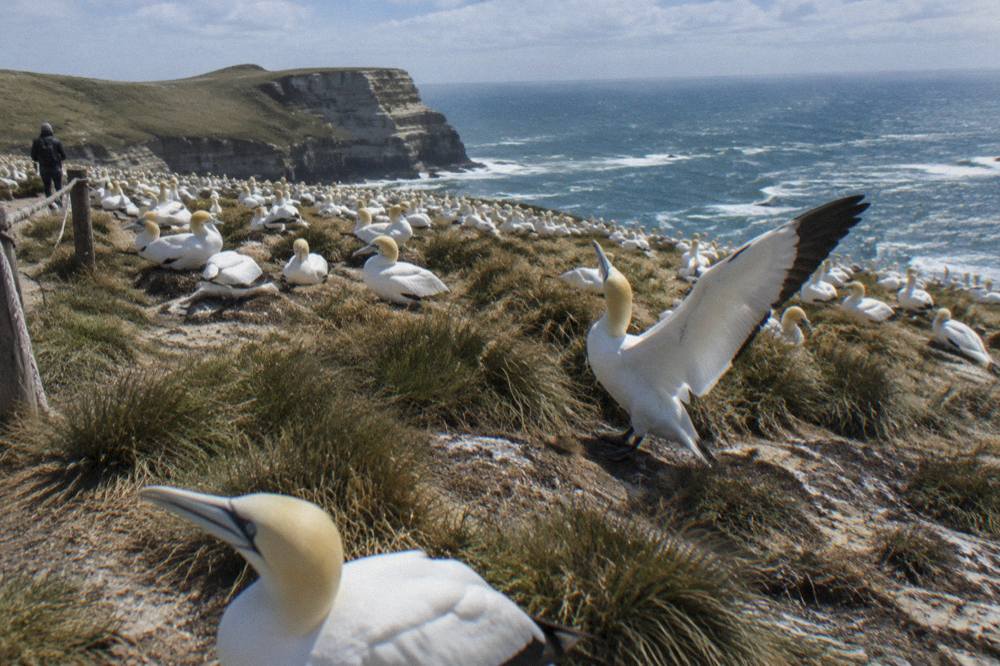
Growth like that does not happen by accident. Cape Kidnappers Station, the working farm the colony sits on, covers roughly 2,500 hectares and includes a predator-proof fenced conservation area. Fencing and predator control give the nesting birds a level of protection few mainland sites can match, and the birds themselves are faithful to their nesting spots. A group of gannets nesting together is called a colony or a gannetry, and pairs stay together over many seasons, returning to the same patch of ground year after year.
The practical takeaway for a visitor is simple. For sizing up whether a trip is worth it, the tally is the anchor: DOC puts the colony at 6,500 pairs.
If seeing that many birds appeals, the overland tours are the main way to reach the plateau colony, which DOC calls the best viewing spot. Three options cover the core choices: joining the standard tour at the operator's base, adding hotel pickup, or going private.
What Makes Cape Kidnappers The Largest Mainland Gannet Colony?
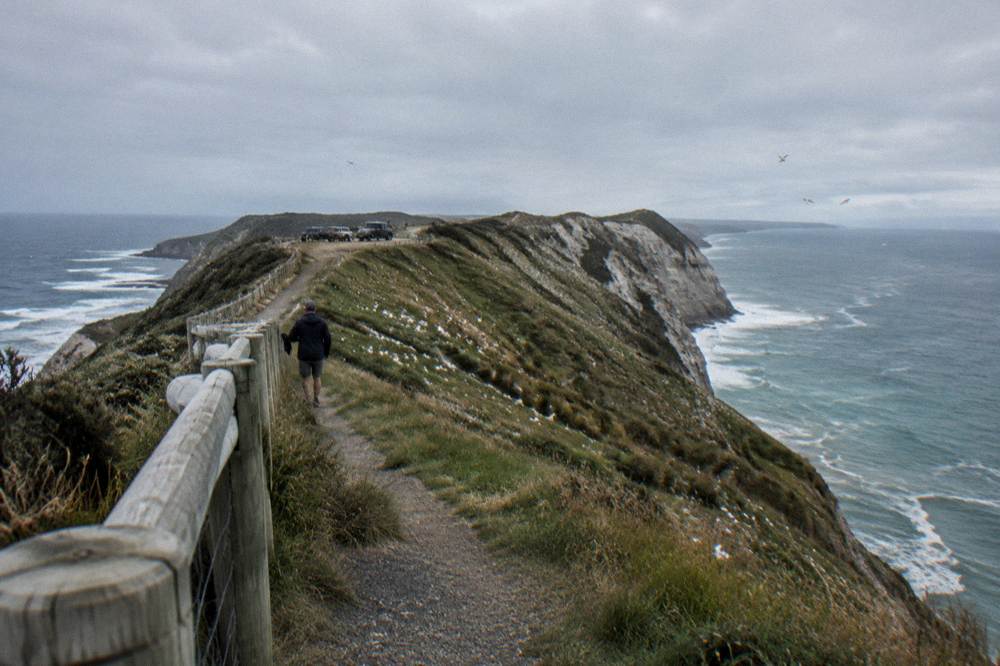
Cape Kidnappers holds DOC's "largest and most accessible mainland colony" ranking because 6,500 pairs nest on clifftops you can actually reach by land, at a scale no other mainland gannetry matches. Most big gannet colonies sit on remote offshore islands, reachable only by boat or not at all, while this one sits above a working farm about 25 minutes' drive from Napier. For the full story behind that ranking, the guide to the world's biggest gannet colony covers what the status actually means and how to plan a visit from Napier.
The word "mainland" is doing real work in that title. Mainland colonies are rare because gannets need safe, cliff-edged nesting ground free of predators, and coasts with those features usually come with people, dogs and introduced mammals. The combination of sheer cliffs, private farmland and a fenced conservation area at Cape Kidnappers gives the birds exactly what they need while leaving a route in for visitors.
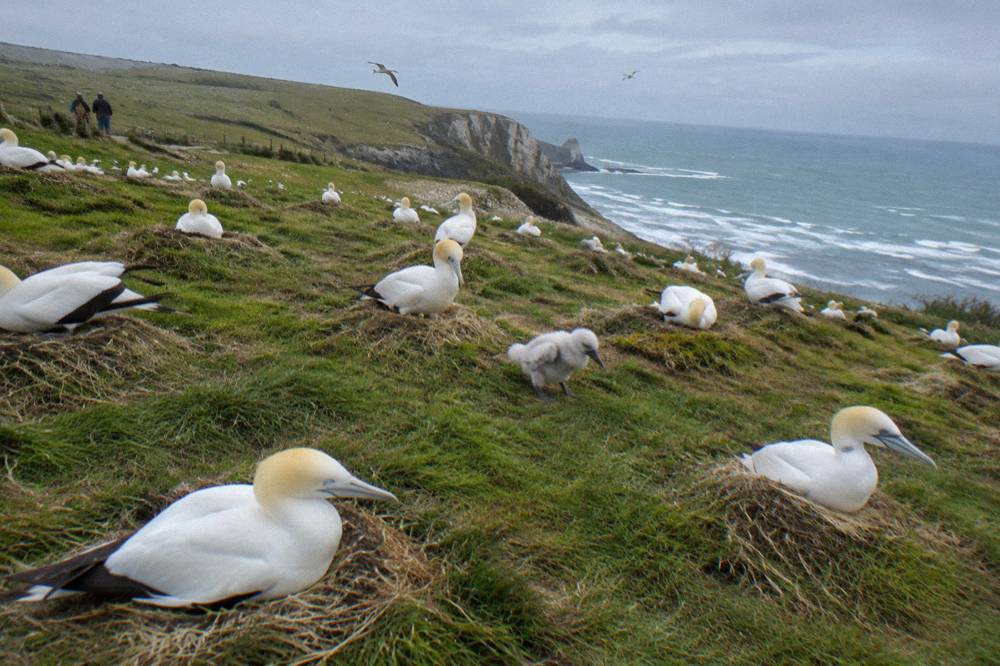
Accessibility is the second half of the claim. The plateau colony sits on private land. The DOC walking track climbs to the plateau but is closed from July to the week before Labour Weekend and is governed by the tides, while the overland 4WD tours cross the farm station with no tide restrictions. DOC names the Plateau colony as the best place to view nesting gannets, with close-up views possible at the Plateau and Black Reef colonies. The result is an odd and rather wonderful arrangement: one of the world's great seabird spectacles, sitting on a working farm, reached by vehicle tracks rather than a hiking trail.
A site this significant also draws people who only have a day in port. Cruise passengers should note that the standard 3-hour overland tours are not for cruise passengers; the shore excursion versions are the ones timed to ship schedules.
Where Do The 6,500 Pairs Nest At Cape Kidnappers?
The Cape Kidnappers gannets nest at separate sites along the cape: Black Reef, the first nesting area on the coast walk 7.5 km from Clifton, and the Plateau colony on private clifftop land, which DOC names the best viewing spot. The birds do not form one continuous mass but a chain of ganneries spread across the headland.
Black Reef is the colony walkers meet first. The beach walk from Clifton reaches it after 7.5 km, and from there a steep, rough, muddy climb of about 1 km leads on toward the second colony. DOC grades the full 19 km return walk as Expert and advises allowing at least 5 hours for a comfortable return trip, so reaching even the first nesting site on foot is a serious commitment. The beach walk is possible only around low tide, high tides and big seas block the beach, and walkers must leave the Cape no later than 1.5 hours after low tide. Check the tide table before going.
- Standard Overland Gannet Tours$55
- Cruise Shore Excursions$93
- Private And Sunrise Tours$604 per group
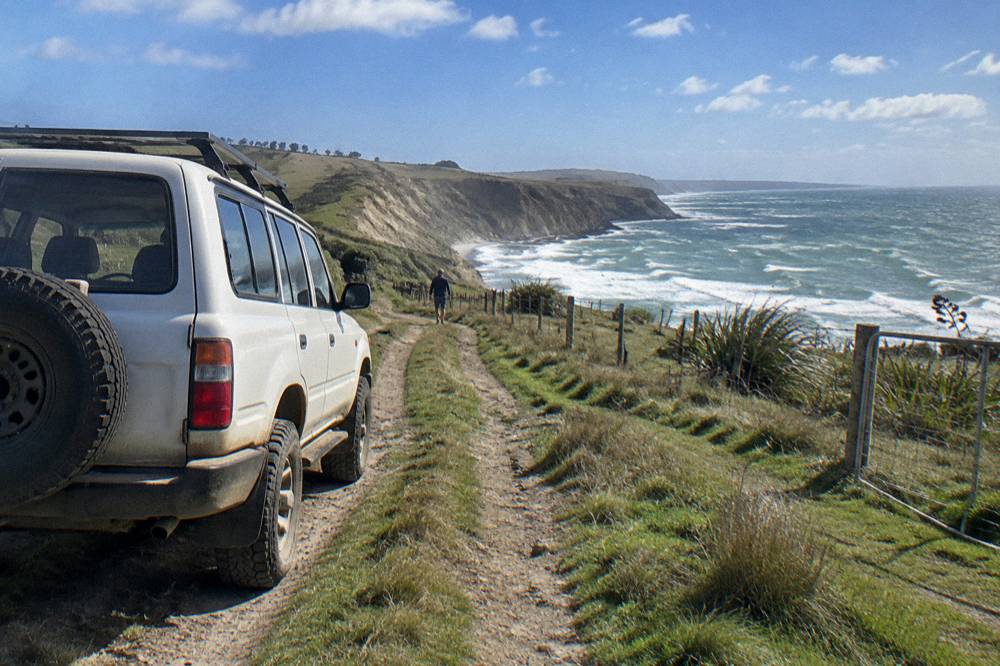
The Plateau colony is different in every way. It sits on private land above the cliffs, and the overland tours reach it by 4WD across the farm rather than along the shore. Because the tours travel above the cliff tops, the operator notes they are not governed by the tides. The plateau itself is flat ground with bench seats, the operator describes walking there as safe and easy, and everything can also be seen from the vehicle without getting out. That is a meaningful distinction for visitors who would love to see 6,500 pairs of birds but do not love the idea of a 19 km expert-grade beach tramp.
The standard way in is the 3-hour tour meeting at the operator's base, 396 Clifton Road, Te Awanga, about 25 minutes' drive from Napier. It runs from $56.23 per person, is rated 4.9 across 1,052 reviews, and includes coffee or tea, with hotel pickup available as an optional add-on chosen at booking. Travel is in an air-conditioned minivan. There is more detail in the Cape Kidnappers gannet colony tours guide.
When Are The Most Gannets At Cape Kidnappers?
DOC names early November to late February as the best viewing window, and puts the colony at 6,500 pairs. Adults begin returning from around July for courtship and nest building, so the colony's visible population swings enormously across the year.
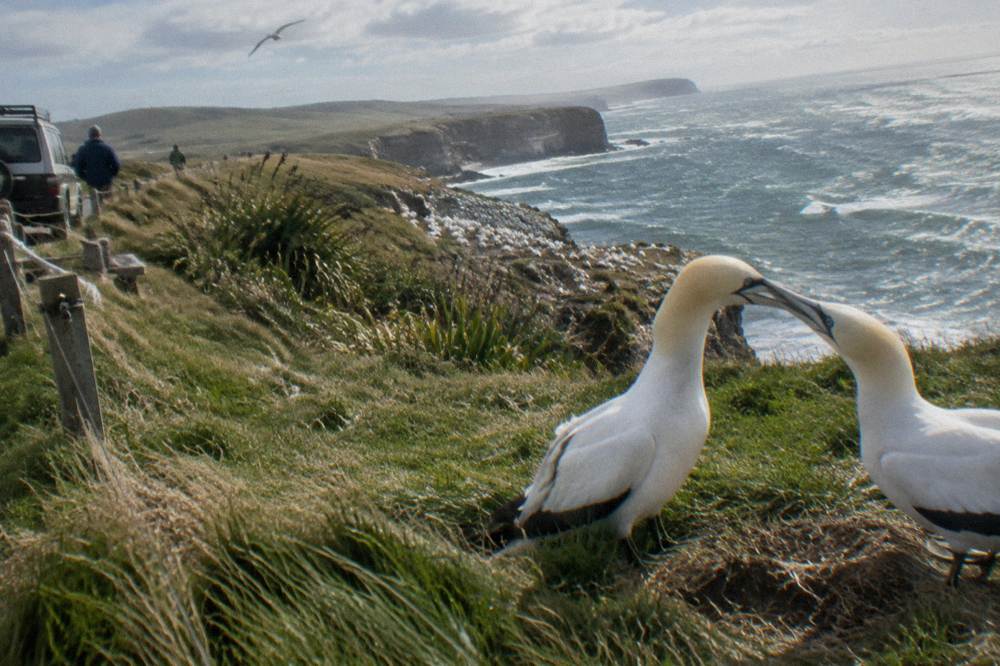
The cycle runs like clockwork even though the birds travel astonishing distances. Young gannets make a Tasman Sea crossing to Australia of about 2,800 km and return two to three years later, typically in their third year, to join the breeding population. The adults that do return reunite with long-term partners on the same nesting ground, rebuild their nests, and lay a single egg. Both parents incubate that egg on their webbed feet, a habit that makes gannets look oddly gentle at close range, and both raise the chick together.
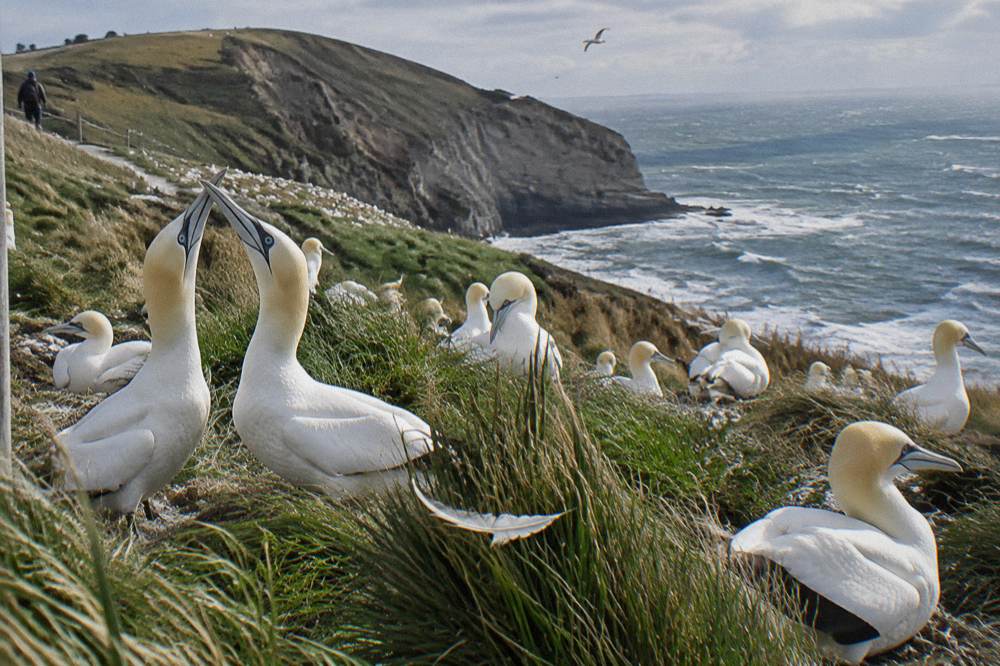
For visitors, the seasonal math matters more than the biology. Turn up between early November and late February and the plateau is at full capacity: courting, incubating, feeding and fledging all happening within metres of the viewing area, with a wingspan of about 1.8 m on every adult bird. The tours themselves run from 1 August to 30 April, including Christmas Day, while the public track from the beach to the plateau colony is closed from July to the week before Labour Weekend each year to limit disturbance to returning birds. If your dates are flexible, the gannet season guide breaks the whole year down month by month.
One caution on timing: no one can promise a bird count, a chick stage or a hatching date for a given day. Nature sets the schedule, and DOC's 6,500 pairs is a population figure, not a daily attendance guarantee. Weather can also affect departures, and tours can be cancelled or rescheduled when conditions demand it. What the season window does tell you is when your odds of seeing the colony at its busiest are highest, and that window is generous: nearly four months of peak viewing inside a nine-month tour season.
How Does 6,500 Pairs Compare With Other Gannet Colonies?
At 6,500 pairs, Cape Kidnappers is the largest mainland colony of Australasian gannets anywhere, though some island colonies elsewhere are larger in absolute numbers. Its standing rests on the combination of size and land access, which is why DOC describes it as both the largest and the most accessible mainland colony in the world.
DOC puts the Cape Kidnappers colony at 6,500 pairs, the only official figure for the reserve. Numbers shift through the breeding season, so any single count is a snapshot rather than a fixed total. What Cape Kidnappers offers that few sites anywhere can is scale plus closeness: thousands of pairs spread across multiple nesting sites, with the Plateau colony reachable by vehicle and close-up viewing possible from behind the barriers. The rest of the planning pages sit on Napier Gannet Tour.
The table below puts the Cape Kidnappers numbers in context on their own, rather than against figures for other colonies.
| Fact | Cape Kidnappers figure | Source note |
|---|---|---|
| Breeding pairs | 6,500 pairs | DOC |
| World standing | Largest and most accessible mainland colony | DOC |
| Species | Australasian gannet (takapu) | DOC |
| Nesting since | The 1870s | DOC |
| Colony sites | Plateau colony and Black Reef, among nesting sites along the cape | DOC |
| Best viewing | Early November to late February | DOC |
| Adult lifespan | 25 to 40 years | DOC |
| Fledgling migration | About 2,800 km to Australia, returning around the third year | DOC |
For visitors wondering how that accessibility works in practice, the guide to wheelchair access on the Cape Kidnappers gannet tour covers the plateau terrain, the four-wheel-drive ride out, and what to ask before booking.
Two details in that table deserve a pause. First, DOC puts the Cape Kidnappers colony at 6,500 pairs. Second, the lifespan figure of 25 to 40 years means many of the birds you watch are older than the children standing beside you at the fence, and will keep returning to this headland long after your visit. The Australasian gannet guide goes deeper on the biology.
How Close Can You Get To The Gannets At Cape Kidnappers?
At the Plateau colony you can watch nesting gannets from a few metres away, behind barriers, with DOC asking visitors to stay behind barriers or at least five metres from nesting birds. The overland tours seat you on flat ground with bench seats beside the colony, which is why DOC names the Plateau as the best place to view nesting gannets.
Close-up viewing comes with firm rules, and they are easy to follow. Keep behind barriers or at least five metres from nesting gannets, keep to the track through private land, and leave the drones at home: drones on conservation land need a DOC permit. Nesting birds dislike loud noises and fast movement, so a calm, quiet group gets a far better show than a loud one. Dogs and horses are not allowed anywhere in the reserve, no motorbikes or vehicles may leave the beach into the reserve, and there are no fires or camping.
The tour experience respects those rules by design. Gannet Safaris Overland, the operator running all the tours covered here, brings guests to the plateau by 4WD across the farm, serves tea, coffee and a biscuit at the colony, and gives you unhurried time beside the birds. There are no toilets on the tour; the last toilets are at the operator's base at 396 Clifton Road, which has good bathroom facilities and a large off-road car park with room for several motorhomes. Photography works well from the viewing area, and the Cape Kidnappers gannet photography guide covers lenses, light and etiquette in detail.
The lowest-price 3-hour tour meets at 396 Clifton Road, Te Awanga, runs from $55 per person and is rated 4.8 across 378 reviews, with light refreshments, air-conditioned transport and no walking required. Hotel pickup is an optional extra on the meet-at-base version, and included on the private and sunrise pickup tours. Between that and the meet-at-base version, it is the cheaper of the two by a small margin, though the difference is mostly about convenience rather than what you see.
Is Seeing 6,500 Pairs Of Gannets Worth The Trip From Napier?
For almost every visitor with an interest in wildlife, yes: 6,500 pairs of nesting seabirds with a 1.8 m wingspan, viewable from metres away on a mainland clifftop, is a genuine world-class sight, and the tour to reach it costs from $56.23 per person over three hours. Few wildlife sights this easy to reach are also described by DOC as the largest and most accessible mainland gannet colony in the world.
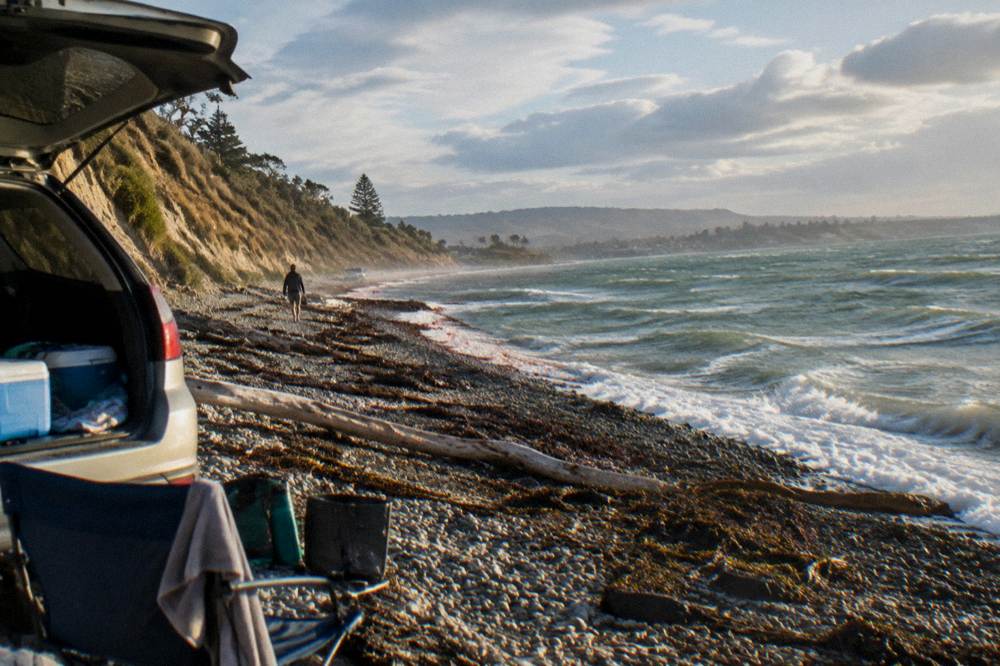
The point is that the price of the standard tour buys certainty. The beach walk is free in dollars but expensive in effort, tide discipline and risk: 19 km return on an expert-graded route under cliffs subject to significant landslide and rockfall, where a landslide seriously injured two tourists in January 2019 and another large landslide in February 2020 closed the beach for a time. DOC reports large landslides on that coastline every year and says the status of the track can change at any time, so walkers should check the safety alert on its page before setting out. DOC also treats beach transport as a high-risk operation and describes the overland route across private farmland as the lower-risk option.
Against that backdrop, the tour options stack up cleanly. The 3-Hour Tour, Lowest Price from $55 per person (4.8 across 378 reviews) and the meet-at-base 3-hour tour from $56.23 per person (4.9 across 1,052 reviews), where hotel pickup is an optional extra chosen at booking, are the two cheapest ways in among the tours with substantial review histories, and both are for land-based visitors rather than cruise passengers. The private 4-hour tour, from $704.30 for a group of up to four with 45 minutes at the colony per the itinerary, suits families or photographers who want the vehicle to themselves, though its per-group price should not be compared with per-person prices without saying so.
Deciding usually comes down to three questions: your dates, your mobility and your budget. The dates question is answered by the season, early November to late February for peak birds, 1 August to 30 April for tours. The mobility question is answered by the plateau's flat, bench-seated design, where walking is optional and everything can be seen from the vehicle. The budget question is answered by the table below, which sets out the core options side by side.
| Tour | Price basis | Price from | Duration | Pickup | Reviews |
|---|---|---|---|---|---|
| 3-Hour Tour, Meet at Base | Per person | $56.23 | 3 hours (approx.) | Optional add-on at booking | 4.9 across 1,052 reviews |
| 3-Hour Tour, Lowest Price | Per person | $55.00 | 3 hours | Not included | 4.8 across 378 reviews |
| Private 4-Hour Tour | Per group (up to 4) | $704.30 | 4 hours (approx.), 45 minutes at the colony | Check the booking page | 11 reviews only |
| 4-Hour Shore Excursion, 45-Minute Stop | Per person | $95.42 | 4 hours (approx.), 45 minutes at the colony | Central Napier meeting point | 10 reviews only |
Free cancellation up to 24 hours before start applies to every tour. The meet-at-base tour is not wheelchair accessible. The shore excursion exists specifically for cruise passengers, whose ships visit Napier from October to April; those passengers should weigh the 4-hour tour length against the ship's all-aboard time.
What Else Will You See At The Cape Kidnappers Colony?
Beyond the 6,500 pairs of gannets, the cape hosts white-fronted terns, variable oystercatchers, reef herons, Caspian terns and little blue penguins nesting around the coastline, plus the working farm landscape the tours cross to reach the colony. The drive through Cape Kidnappers Station, roughly 2,500 hectares of farmland with a predator-proof fenced conservation area, is part of the experience in its own right.
The gannets dominate, and they should, but the supporting cast rewards attention. Gannets fish by diving, and from the clifftops you can often watch adults streaming back from fishing trips in lines over the sea, a sight that makes the abstract number 6,500 pairs suddenly concrete. When one bird lands beside its waiting partner, the greeting ritual involves much clacking of bills and bowing, and the single egg or chick soon shows itself between the parents' feet.
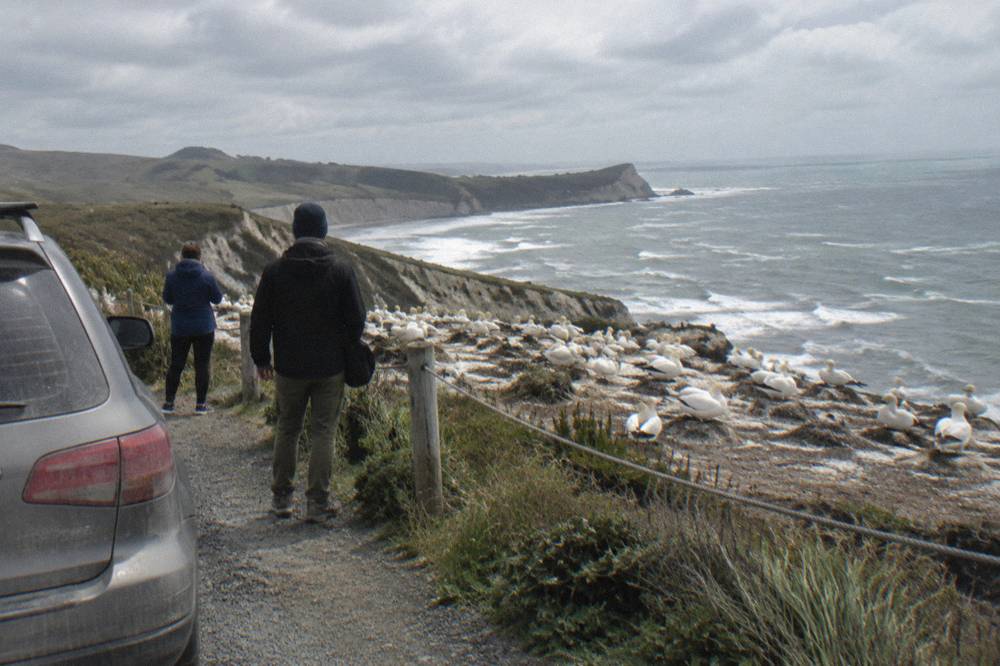
The farm crossing is the underrated half of the tour. The route travels through native bush and open pasture on a working station, and the operator's vehicles reach places no public road touches. For many visitors this is the moment the day stops feeling like a bus ride and starts feeling like access to a private corner of the coast, which is precisely what it is: the Plateau colony sits on private land, and the tours are the practical way in.
If the idea of pairing the birds with more of Hawke's Bay appeals, the region's wine country is the natural companion. The private 7.5-hour winery combo, from $1,214.00 for a group of up to two in a luxury Range Rover with pickup from your accommodation, runs from about 8:30 am to 4:00 pm and is described in the what to do in Napier with a gannet colony tour piece. Whether the birds come first or the cellar doors do, the colony is the sight that gives the region its world-ranking claim.
Three tours cover most readers' needs, and comparing them side by side is the fastest way to choose.
Common Questions About Gannet Numbers At Cape Kidnappers
How Many Gannets Are At Cape Kidnappers?
DOC puts the colony at 6,500 pairs, the largest and most accessible mainland gannet colony in the world. With each pair typically raising one chick, the site holds far more individual birds than the pair count suggests at the height of the season.
Is Cape Kidnappers The Biggest Gannet Colony In The World?
It is the largest mainland colony in the world, in DOC's words the largest and most accessible mainland colony.
How Many Chicks Do The Gannets Raise Each Year?
Each pair lays a single egg, and both parents incubate it on their webbed feet and raise the chick together. That is why a 6,500-pair colony swells well beyond its pair count in summer without doubling every year.
When Can You See The Most Gannets At Cape Kidnappers?
DOC names early November to late February as the best viewing window, when the adults are settled on nests and raising chicks. Adults return from around July, and tours run from 1 August to 30 April.
Are The Gannet Numbers Counted Every Year?
DOC monitors the reserve and publishes the 6,500-pair population figure for the colony. Daily bird counts at any given moment depend on weather, season and breeding stage, so no operator can promise an exact number on a given day.
Do Young Gannets Stay At Cape Kidnappers?
No. Fledglings fly across the Tasman Sea to Australia, a crossing of about 2,800 km, and typically return to Cape Kidnappers in their third year to join the breeding colony.