How To See Gannets At Cape Kidnappers?
The practical ways to see the Cape Kidnappers gannet colony in Hawke's Bay: overland tours, the DOC beach walk, and the bike and tractor alternatives, with prices, durations and start points.
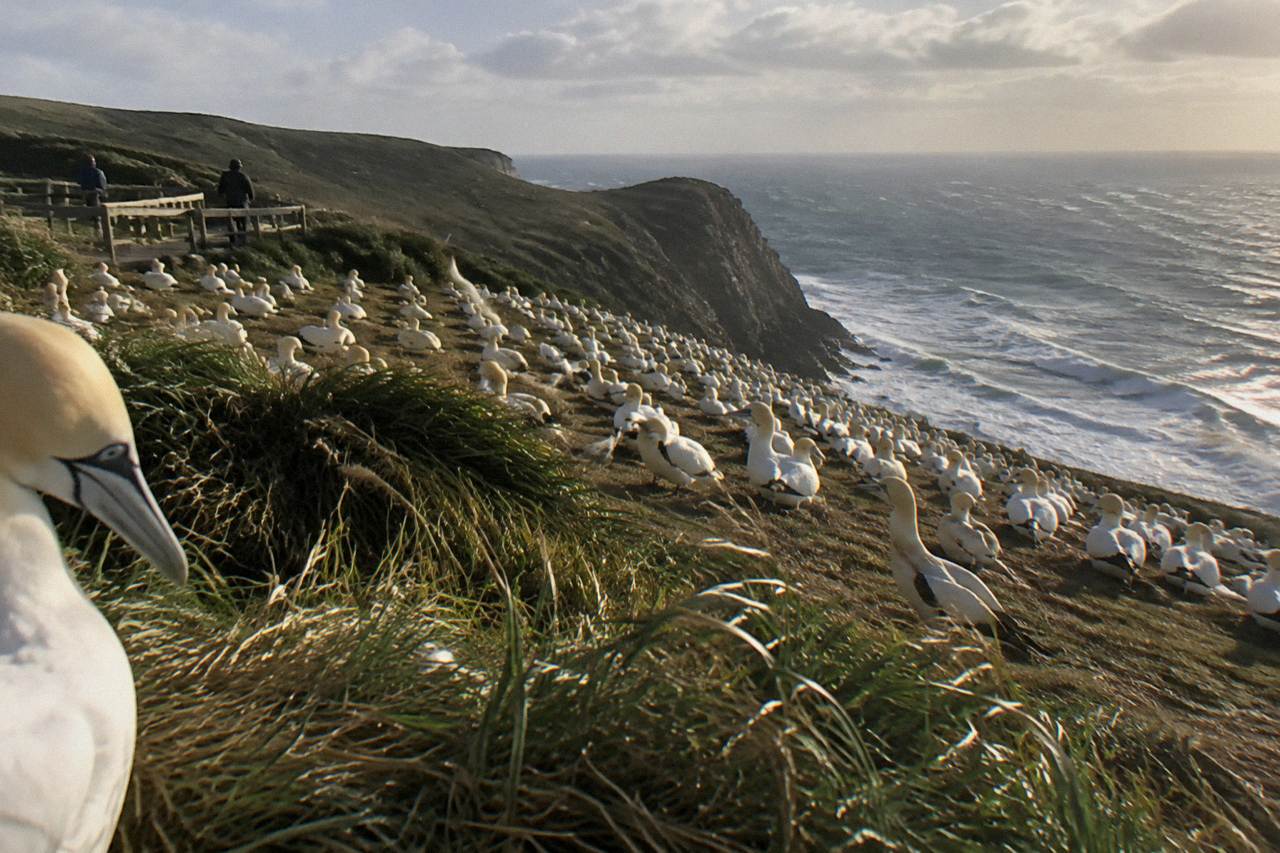
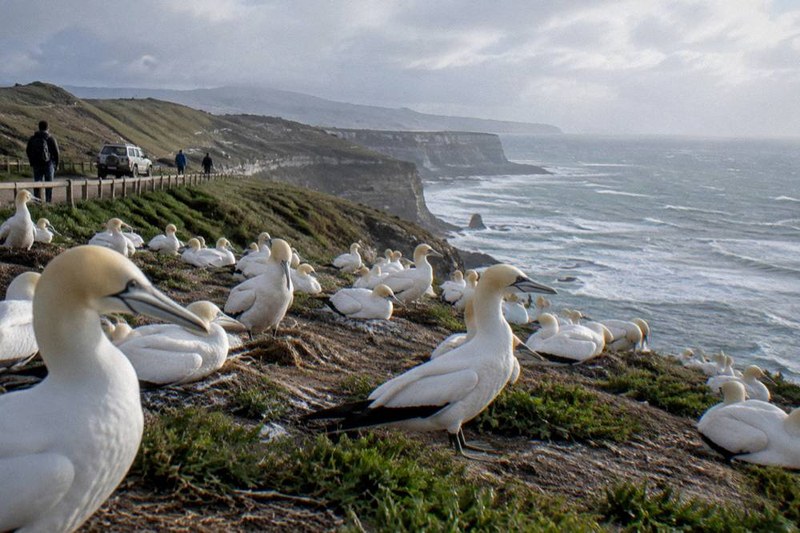
Cape Kidnappers holds what the Department of Conservation calls the largest and most accessible mainland gannet colony in the world. DOC puts the colony at 6,500 pairs of Australasian gannets nesting on the clifftops at the end of the peninsula south of Napier. Getting to them is the interesting part. The colony sits on private farmland and at the foot of landslide-prone cliffs, and that shapes every option you have. For help sorting through those access options, the guide to seeing Hawke's Bay gannets up close compares the overland tours and what each one costs.
There are three practical routes. The overland tours, run by Gannet Safaris Overland, cross a 2,500 hectare working farm by 4WD and reach the plateau colony without any tide risk. The DOC beach walk is a 19 km return Expert-graded tramp along the shore, possible only around low tide. And two separate operators offer other ways along the beach: a self-guided fat-bike ride and a tide-dependent tractor-trailer ride. This page lays out all three, with the prices and durations of the tours covered here, so you can pick the way in that fits your time, budget and legs. If you're weighing the beach tractor ride against the overland tour, the tractor ride versus overland tour comparison breaks down the routes, tides and safety to help you decide.
The simplest way is an overland tour: a 3-hour minivan ride from the operator's base at 396 Clifton Road, Te Awanga, from $56.23 per person, rated 4.9 across 1,052 reviews. Walkers can do the 19 km return beach walk from Clifton, possible only around low tide and graded Expert, while a bike or tractor ride covers the beach with two other operators. Whichever option you choose, the guide to everything else to do at Cape Kidnappers covers the shoreline, cycling routes and other wildlife that make the trip worth planning around.
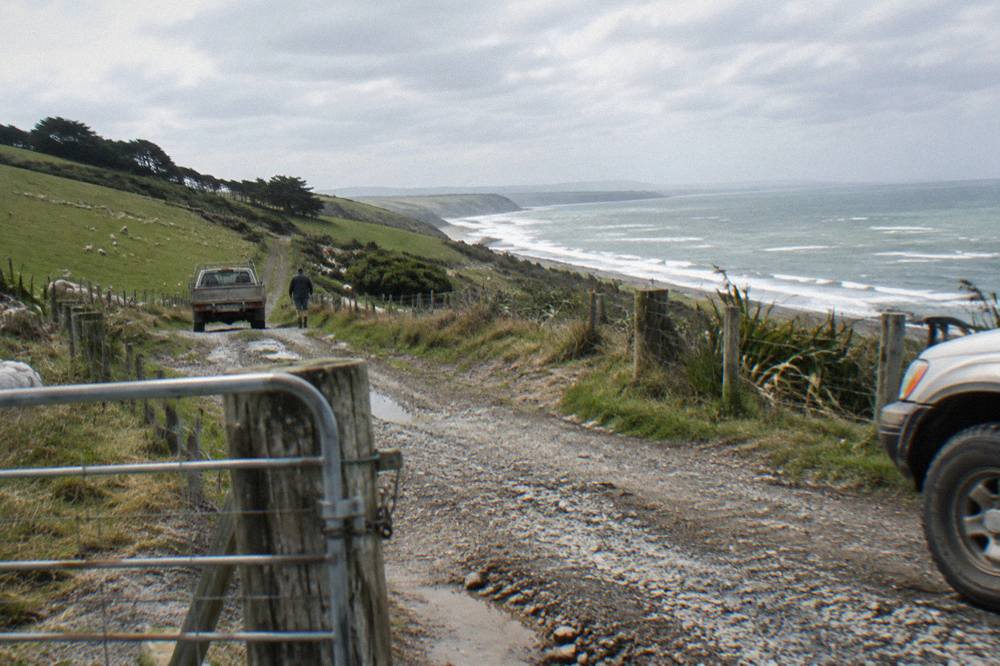
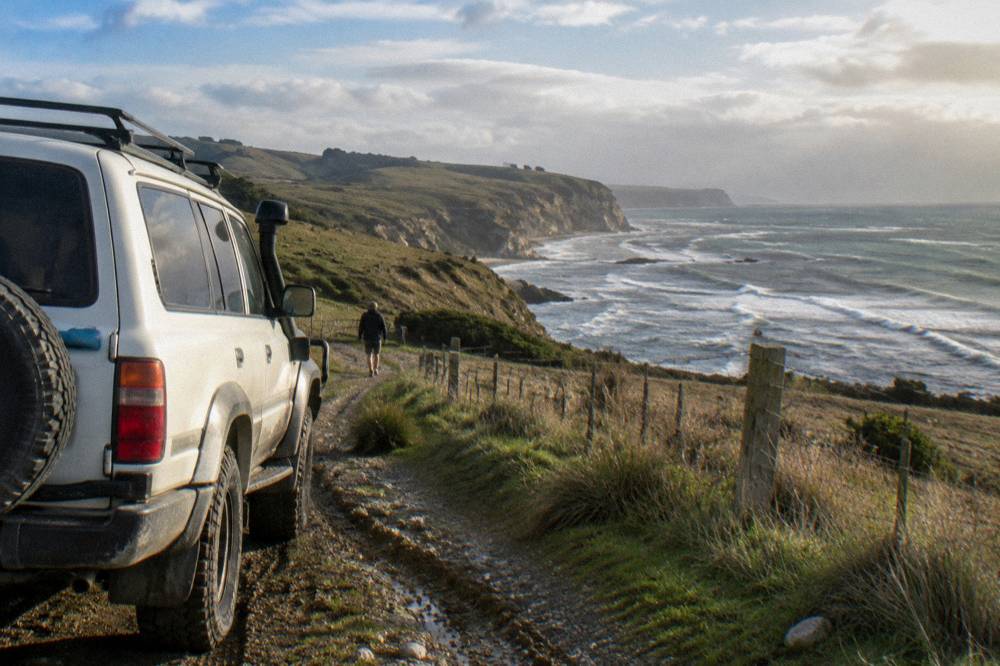
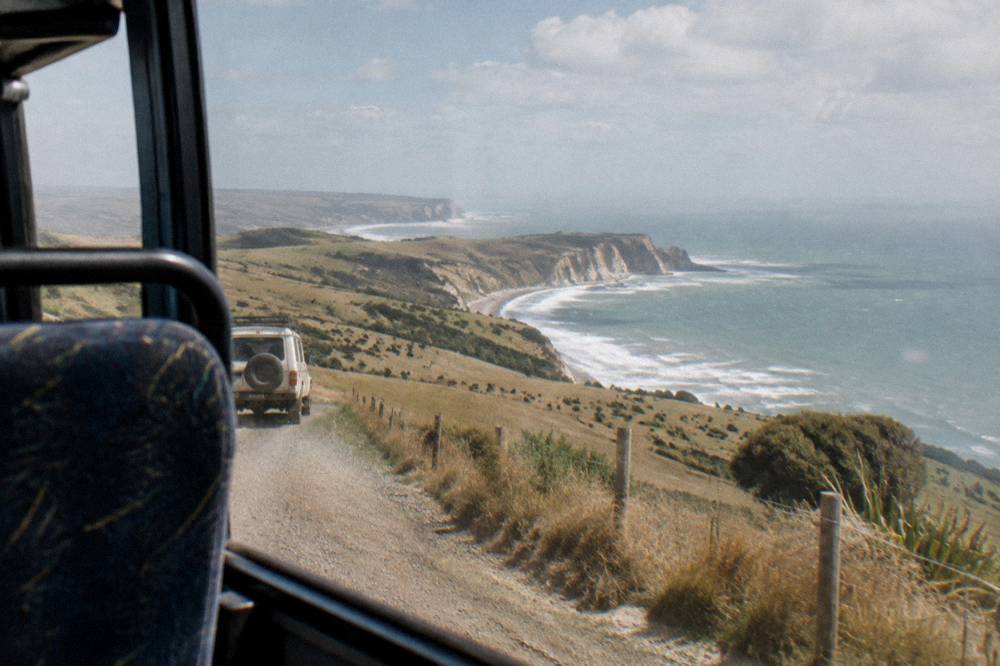
The overland route deserves its place at the top of the list for one reason above all: it does not depend on the sea. The operator says the tours are not governed by the tides because they travel above the cliff tops, crossing private farmland and native bush to a nature reserve where the plateau colony sits on flat ground with bench seats. Tea, coffee and a biscuit are served at the colony itself. Little or no walking is required, and the operator says everything can be seen from the vehicle without getting out, as long as a guest can climb on and off unaided. That combination, no tide window, no long walk, no climb, is the draw of the overland route.
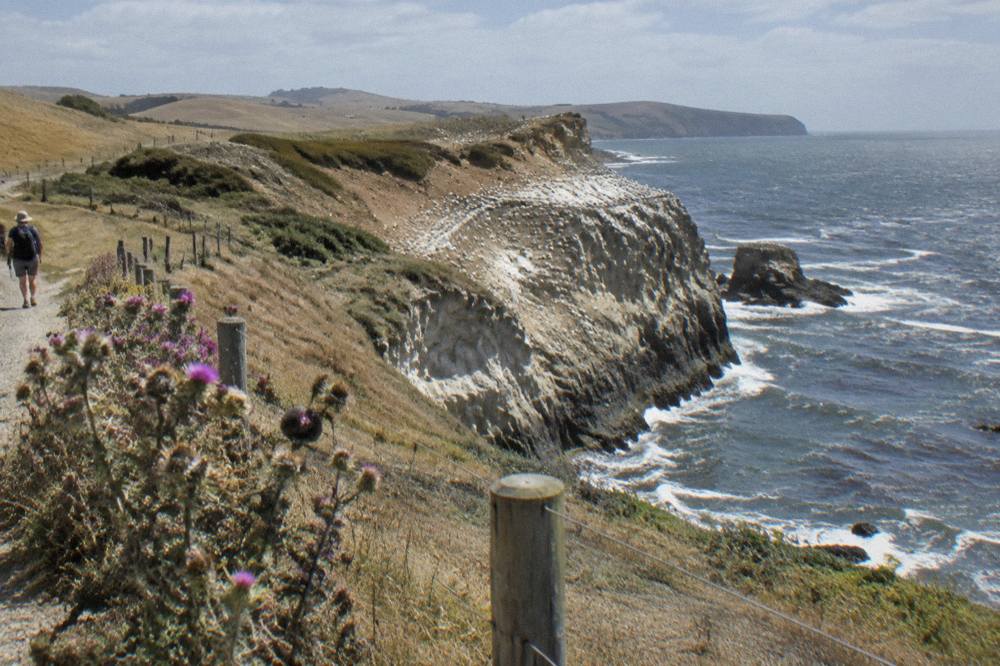
The walk is the other authentic option and it asks a lot more. DOC grades the route Expert, says to allow at least 5 hours for a comfortable return walk, and warns that about 7 km of the beach lies under cliffs subject to significant landslide and rockfall hazards. The beach walk is possible only around low tide; high tides and big seas block the beach entirely. It costs nothing but it is a genuine tramp, not a stroll. You'll find it covered in full further down, and the dedicated piece on whether you can walk to the gannet colony goes deeper on the route itself.
Before choosing, it helps to see the three ways side by side. The table below uses the tour figures exactly as they appear on each booking page, plus the DOC facts for the free walk.
What Are The Three Ways To Reach The Cape Kidnappers Gannet Colony?
The three ways are the overland 4WD tour across a working farm, the free DOC beach walk from Clifton, and a bike or tractor ride along the beach run by separate operators. The overland tour runs from $55 per person, the walk costs nothing but takes at least 5 hours, and the bike ride takes 3.5 to 4 hours with intermediate fitness or better.
Each way in suits a different traveller, and the differences are bigger than they look on paper. The overland tours start from the operator's base at 396 Clifton Road, Te Awanga, about a 25 minute drive from Napier, the same from Hastings and Havelock North. The walk starts at Clifton, Scotmans Point, 21 km south of Napier and 18 km east of Hastings. The bike ride also starts from Clifton, at 475 Clifton Road.
| Way in | Operator | Time | Effort | Price |
|---|---|---|---|---|
| 3-Hour Tour, Lowest Price | Gannet Safaris Overland | 3 hours | Little or no walking; stay in the vehicle if you prefer | From $55.00 per person |
| Private 4-Hour Tour | Gannet Safaris Overland | 4 hours | Private to your group of up to 4 | From $704.30 per group |
| DOC beach walk | Self-guided | At least 5 hours return | Expert grade; 19 km return | Free |
| Fat-bike ride | Separate operator | 3.5 to 4 hours | At least intermediate fitness | Check the operator's site |
| Overland 4WD Gannet Tour | Separate operator | Tide dependent | Minimal | Check its own site |
DOC treats beach transport as a high-risk operation and describes the overland route across private farmland as the lower-risk option, which is worth knowing when you weigh the cheap beach options against the tour. The tractor ride run by Gannet Beach Adventures is a separate tide-dependent operation from Clifton, and its running status is something to confirm on its own site before you plan around it. The bike ride from Gannet Bikes supplies the bike, helmet, spare tube, pump and map, and finishes with a short walk up to the plateau colony.
One detail that matters to walkers and riders: Clifton Motor Camp closed on 20 February 2026 after a geotechnical assessment found unstable land above it, and in August 2026 Hastings District Council voted to close a section of Clifton Road at the former campground to vehicles. Pedestrian access to Clifton Beach and the walking route stays open, but anyone who used the camp as a base or a parking landmark should plan around the change. The overland tours are not affected by this.
Which Overland Tour Should You Choose?
The standard 3-hour tour from the base at $56.23 per person suits most visitors, with hotel pickup available as an optional add-on for anyone without a car, while the $55.00 per person 3-hour tour also meets at the base. Private versions run from $604.00 to $704.30 per group of up to 4. All carry free cancellation up to 24 hours before start.
The two standard per-person tours differ mainly in how you get to the start. The 3-Hour Tour, Meet at Base starts at 396 Clifton Road, Te Awanga, with hotel pickup available as an optional add-on chosen when you book. The 3-Hour Tour, Lowest Price, rated 4.8 across 378 reviews, meets at the operator's Te Awanga base; hotel pickup and drop-off are not included, though the 3-Hour Tour, Meet at Base, lists pickup as an optional add-on at booking, which matters if you are staying in Napier or Hastings without a vehicle. Both run about 3 hours, both serve refreshments at the colony, and the price gap between them is about a dollar.
The base itself is well set up for self-drivers. It has good bathroom facilities, which are the last toilets before the colony since there are none on tour, and a large off-road car park with room for several motorhomes. There is room to arrive early, use the facilities and let the schedule settle before the vehicle leaves.
- Standard Overland Gannet Tours$55
- Cruise Shore Excursions$93
- Private And Sunrise Tours$604 per group
Private versions change the arithmetic rather than the route. A Private 4-Hour Tour runs from $704.30 per group of up to 4, with 45 minutes at the colony per itinerary and coffee or tea included; the price is per group, not per person, and it still costs more per head than the standard fare even when four people share it. The Private 4-Hour, Pickup Included version runs from $688.00 per group of up to 4 with accommodation pickup and drop-off and morning or afternoon tea, and there is a Private Sunrise version from $604.00 per group of up to 4, also with pickup. The sunrise departures trade the ordinary timetable for early light on the cliffs and a quieter plateau, and each is private to your group.
Beyond the private options, one more version exists for travellers who want the coast and the vines in a single day: the Private 7.5-Hour Winery Combo, from $1,214.00 per group of up to 2, with pickup around 8:30 am and return by 4:00 pm in a luxury Range Rover. It pairs the colony with Hawke's Bay wine country and is priced and structured for couples rather than groups.
Choosing between standard and private usually comes down to party size and schedule, and the deeper comparison on standard versus private gannet tours works through the maths in detail. For a solo traveller or a couple, the standard tour is hard to argue against.
Can You Walk To The Gannet Colony From Clifton Beach?
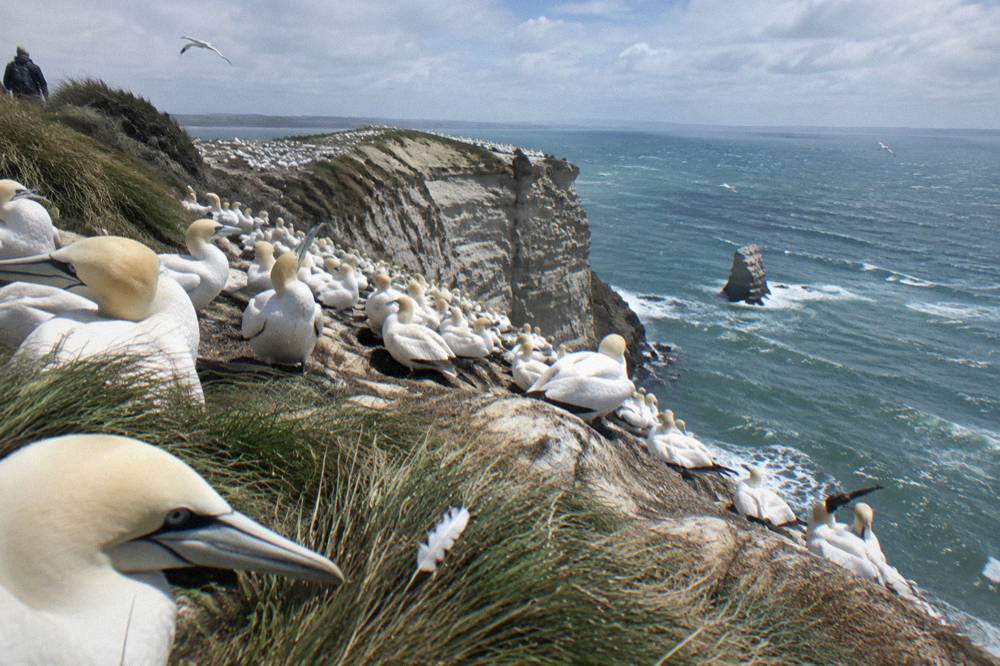
Yes, but it is a 19 km return Expert-graded walk that is possible only around low tide, and DOC says to allow at least 5 hours. Black Reef, the first nesting site, sits 7.5 km from Clifton, and a steep, rough, muddy climb of about 1 km leads on to the second colony.
The walk is free and it is magnificent, and it is also the option where the safety wording matters most. High tides and big seas block the beach, and you must leave the Cape no later than 1.5 hours after low tide, so the tide table is the single document that decides your day. Check the tide table before going. DOC also says the status of the track can change at any time and to check the safety alert on its Cape Kidnappers page before you set out, because about 7 km of the beach lies beneath cliffs subject to significant landslide hazard. A landslide seriously injured two tourists in January 2019, and a large landslide in February 2020 closed the beach for a time. DOC reports large landslides in the area every year.
The route rewards the effort. Black Reef comes first at 7.5 km, where close-up views of nesting gannets are possible, then the climb, then the plateau. DOC says the best place to view nesting gannets is the Plateau colony, which is on private land, and close-up views are possible at both the Plateau and Black Reef colonies. What to take comes straight from DOC's list: sturdy footwear, food and water, sunscreen and hats, extra clothing for cool sea breezes, a water and windproof jacket, gloves, a head torch, and a communication device. There is a DOC rest shelter with toilets a short way up the track from the beach end, but no drinking water.
Two closures shape the calendar. The track from the beach to the plateau colony is closed from July to the week before Labour Weekend each year to limit disturbance to returning birds, so the full walk is a spring-to-autumn affair. And the rules on the ground are strict for good reason: no dogs or horses, no vehicles off the beach into the reserve, no fires or camping, keep behind barriers or at least five metres from nesting gannets, and keep to the track through private land. Nesting birds dislike loud noises and fast movement, and drones on conservation land need a DOC permit. Questions about access can go to DOC Hawke's Bay at napier@doc.govt.nz or 0800 275 362.
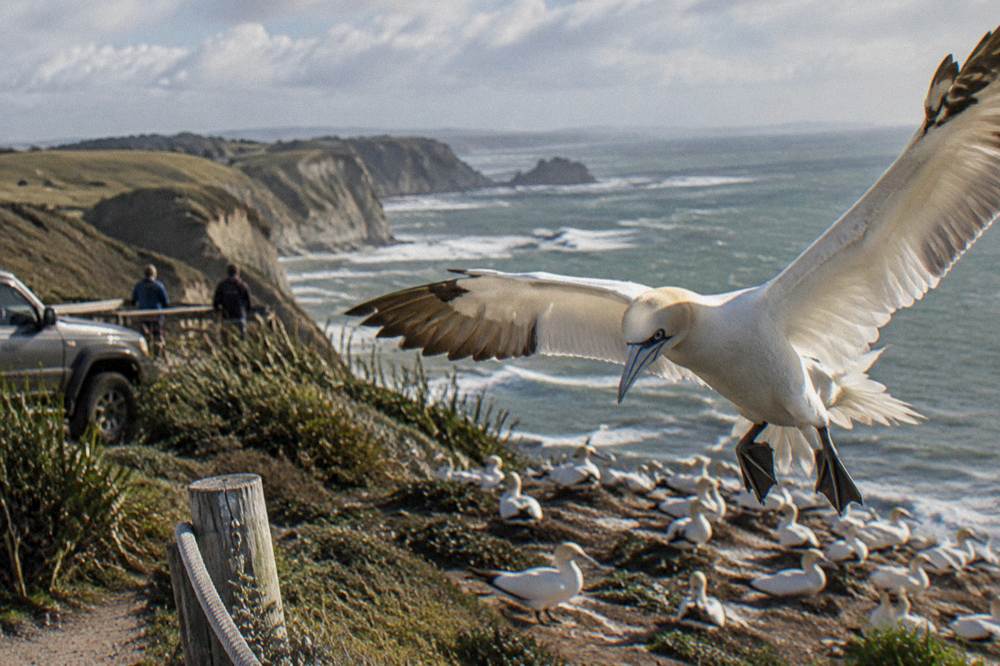
The bike and tractor alternatives sit between the walk and the tour. Gannet Bikes runs a self-guided fat-bike ride from 475 Clifton Road, 3.5 to 4 hours in total, needing at least intermediate fitness, with the same short walk to the plateau colony at the end. Gannet Beach Adventures runs a tide-dependent tractor-trailer ride along the beach from Clifton; check its own site for whether and when it runs. Neither is part of the tour operator's lineup, and neither price is published here. The full Cape Kidnappers walk guide covers the route section by section.
When Is The Best Time Of Year To See The Gannets?
The best time to see the gannets is early November through late February, the window DOC identifies as the best viewing period. Although tours run from 1 August to 30 April, adults only return to the cape from around July for courtship and nest building, so midsummer delivers the fullest colony.
The season has a shape, and knowing it can change what you see. The Department of Conservation's best-viewing window for the colony runs from early November to late February.
The shoulders of the season are quieter but not empty. The tour season itself runs 1 August to 30 April, including Christmas Day, and the plateau track for walkers closes from July to the week before Labour Weekend. The gannet season guide on when to visit the Cape Kidnappers colony maps the whole year month by month.
What Does Each Way Of Seeing The Gannets Cost?
Among the well-reviewed standard tours, the 3-Hour Tour, Lowest Price is the cheaper at $55.00 per person across 378 reviews, rating 4.8, against $56.23 per person for the base-start tour across 1,052 reviews. Both meet at 396 Clifton Road, Te Awanga. The beach walk is free, and private tours run from $604.00 to $704.30 per group of up to 4.
| Option | Basis | From price | Duration | Notes |
|---|---|---|---|---|
| 3-Hour Tour, Meet at Base | Per person | $56.23 | 3 hours | 4.9 across 1,052 reviews; coffee or tea |
| 3-Hour Tour, Lowest Price | Per person | $55.00 | 3 hours | 4.8 across 378 reviews |
| Private 4-Hour Tour | Per group, up to 4 | $704.30 | 4 hours | 45 minutes at the colony |
| Private 4-Hour, Pickup Included | Per group, up to 4 | $688.00 | 4 hours | Pickup and drop-off included |
| 3-Hour Sunrise, Pickup Included | Per group, up to 4 | $604.00 | 3 hours | Sunrise departure with pickup |
| Private 7.5-Hour Winery Combo | Per group, up to 2 | $1,214.00 | 7.5 hours | Range Rover, colony plus wineries |
| DOC beach walk | Free | $0 | At least 5 hours | Expert grade, low tide only |
Read the price column with its basis in mind. The per-person fares and the per-group fares are not directly comparable: a $704.30 group price for four people is not four times a $56.23 seat until exactly four travel. Every tour above carries free cancellation up to 24 hours before start, which matters in a region where coastal weather can shift plans. Never count on a particular day: operators describe weather permitting departures, and tours can be cancelled or rescheduled.
Can Cruise Passengers See The Gannets At Cape Kidnappers?
Yes, through the dedicated shore excursions: a 4-hour tour from $95.42 per person with 45 minutes at the colony, or a 4WD safari vehicle version from $93.00 per person, both meeting at 100 Marine Parade on the Napier waterfront. The standard 3-hour tours are not for cruise passengers.
The meeting point is the practical detail. The 4-Hour Shore Excursion meets at 100 Marine Parade opposite Napier Museum, roughly 200 m from the cruise shuttle drop at the i-SITE, while the 4WD Shore Excursion meets at the pink-flag area in front of the Sound Shell, where the driver waits with a sign. Passengers can walk down the gangway onto the wharf but cannot walk out of the port; a shuttle runs to two stops, the i-SITE and the National Aquarium, and taxis cannot enter the port, so the shuttle is the way ashore. The return shuttle leaves from the i-SITE.
Timing is the other half of the decision. The excursions run about 4 hours return from Napier, and departure time is set per ship. On some ship days the operator collects directly from the port because of short port times. Before booking, check the ship's all-aboard time against the tour's 4-hour length and leave a margin; Napier cruise ships call from October to April, which overlaps the best viewing window. The 4WD Safari Vehicle version runs from $93.00 per person and includes hot drinks, coffee or tea.
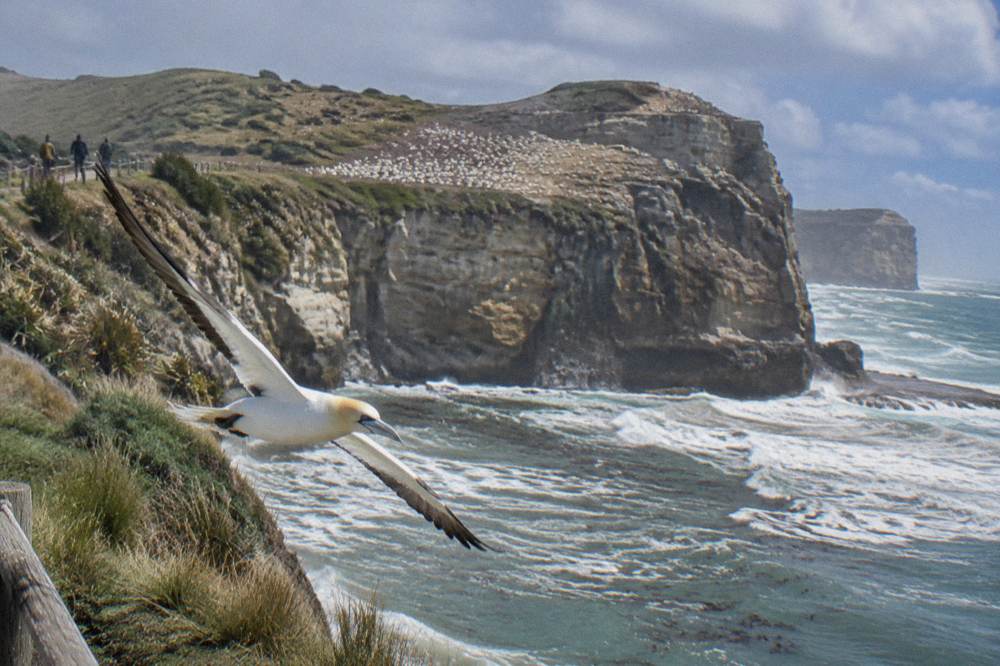
The dedicated shore excursion page on Napier gannet shore excursions works through the port logistics in more depth. The key point for this page is simpler: if you arrive by ship, book the shore excursion, not the standard tour, because the standard 3-hour tours start half an hour's drive away at Te Awanga and are not built for the port clock.
What Should You Know Before You Go?
Take a jacket, use the toilets at the base before departure, leave the dog at home, and expect no facilities at the colony. The plateau is flat with bench seats, little or no walking is needed, and tours can be cancelled or rescheduled when the weather turns.
The small practicalities make the difference between a relaxed visit and a rushed one. Dogs are not allowed anywhere on the tour or the reserve, it is a wildlife sanctuary and a DOC reserve. There are no toilets on the tour itself; the last ones are at the operator's base at Te Awanga, which has good bathroom facilities, so use them before the vehicle leaves. Tea, coffee and a biscuit are served at the colony on the overland tours. A jacket is advised, and walking is not required on the 3-Hour Tour, Lowest Price.
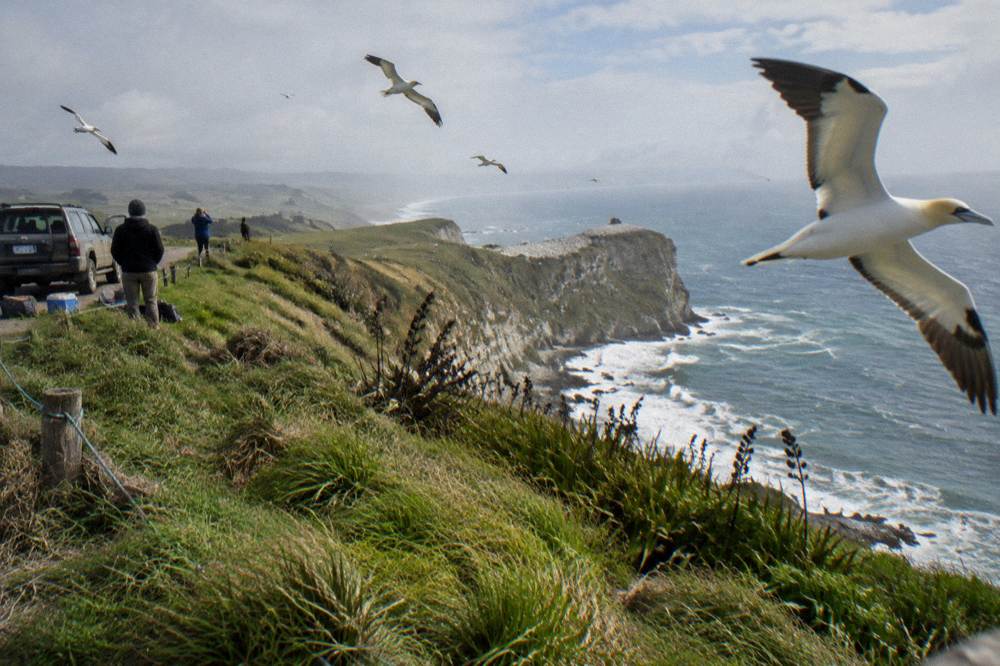
The plateau itself is forgiving ground: flat, with bench seats, and the operator describes walking there as safe and easy. Everything can also be seen from the vehicle. What the tour cannot do is promise a bird count or a chick stage on a given day; the colony is wild, numbers shift through the season, and planning means expecting birds, not expecting specific scenes. Weather can cancel or move departures, so keep the free cancellation window, up to 24 hours before start, in mind when you build your itinerary.
For walkers, the extra rules stack up fast: sturdy footwear, food and water, sunscreen and hats, extra clothing for cool sea breezes, a water and windproof jacket, gloves, a head torch, and a communication device, all straight from DOC's list. The area is susceptible to tsunami; if a siren or alert sounds, move to higher ground. That sounds dramatic for a bird-watching trip, but the Cape is a long low peninsula, and the advice is there for a reason.
Which Gannets Will You Actually See At The Colony?
The gannets at this colony are Australasian gannets, known to Māori as takapu, with around 6,500 pairs by DOC's count and a wingspan of about 1.8 m. They are the main attraction, though the cape also hosts white-fronted terns, variable oystercatchers, reef herons, Caspian terns and nesting little blue penguins.
The gannets are the draw, and they earn it. A nesting group is called a colony or a gannetry, pairs stay together over many seasons, and the birds live 25 to 40 years. Young birds make a Tasman Sea crossing to Australia of about 2,800 km and return two to three years later, typically in their third year, which means every chick on the plateau is a future trans-Tasman migrant.
A group of gannets nesting together is a colony, and Cape Kidnappers is the largest and most accessible mainland example in the world, a status DOC attributes to numbers that have grown steadily since the 1870s. For photographers, the flat plateau and the bench seating give steady angles on the colony with the sea far below, and the light in the first and last hours of the day is the reason the private sunrise departures exist at all.
However you get there, the ways in are fewer and simpler than they first appear. The overland tour from Te Awanga is the reliable spine of a visit, the beach walk is the free, demanding alternative for the well-prepared, and the bike and tractor rides split the difference. If the deciding factor is time in port or a car in the driveway, the sections above carry the exact numbers for each case, and the operator's own pages hold the dates that fit your calendar.
One closing thought: pick the way in that matches your legs and your tide luck, not the one with the best photo on a booking page. The colony has been there since the 1870s and will be there next season; the difference between a good visit and a great one is almost always the planning, not the ticket.
Common Questions About Seeing Gannets At Cape Kidnappers
How To See Gannets At Cape Kidnappers?
Take an overland 4WD tour from the base at Te Awanga, from $55.00 per person, walk the 19 km return DOC beach route around low tide, or use a bike or tractor ride along the beach run by separate operators. The overland tour needs little or no walking and is not governed by the tides.
Can You Walk To The Gannet Colony Instead Of Taking A Tour?
Yes. The walk from Clifton is 19 km return, graded Expert, with at least 5 hours needed for a comfortable return. It is possible only around low tide, high tides and big seas block the beach, and you must leave the Cape no later than 1.5 hours after low tide. Check the tide table before going.
Are The Overland Tours Affected By The Tides?
No. The operator says the overland tours are not governed by the tides because they travel above the cliff tops across private farmland.
When Is The Best Time Of Year To See The Gannets?
Tours run from 1 August to 30 April, and DOC says the best viewing is early November to late February. Adults return from around July for courtship and nest building.
Can Cruise Passengers Do A Gannet Tour From Napier?
Yes, through the dedicated shore excursions, from $93.00 and $95.42 per person, both about 4 hours and meeting at 100 Marine Parade near the i-SITE. The standard 3-hour tours are not for cruise passengers.
Is There Much Walking On The Overland Tour?
Little or no walking is required. The plateau is flat ground with bench seats, everything can be seen from the vehicle, and the tour that meets at the base notes walking is not needed if you do not want it. Guests need to be able to get on and off the vehicle unaided.