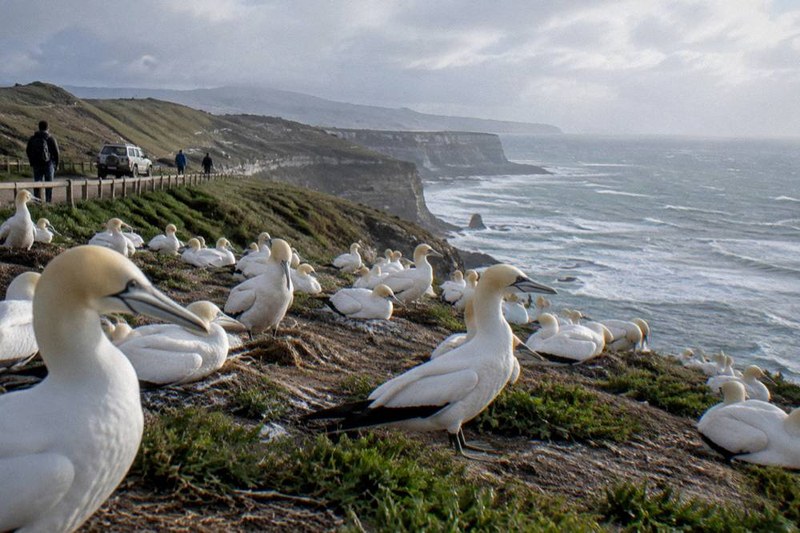
Cape Kidnappers Walk: The Beach Track To The Gannets
The Cape Kidnappers walk is a 19 km return beach route to the largest mainland gannet colony in the world. Here is what DOC says about distance, tides, closures and the cliff hazard, and how it compares with riding there instead.
Short answer
The Cape Kidnappers walk is 19 km return from Clifton, graded Expert, with at least 5 hours needed for a comfortable return trip. It is possible only around low tide, and about 7 km of beach sits under landslide-prone cliffs. The overland tours cover the same colony in 3 to 4 hours above the cliffs.
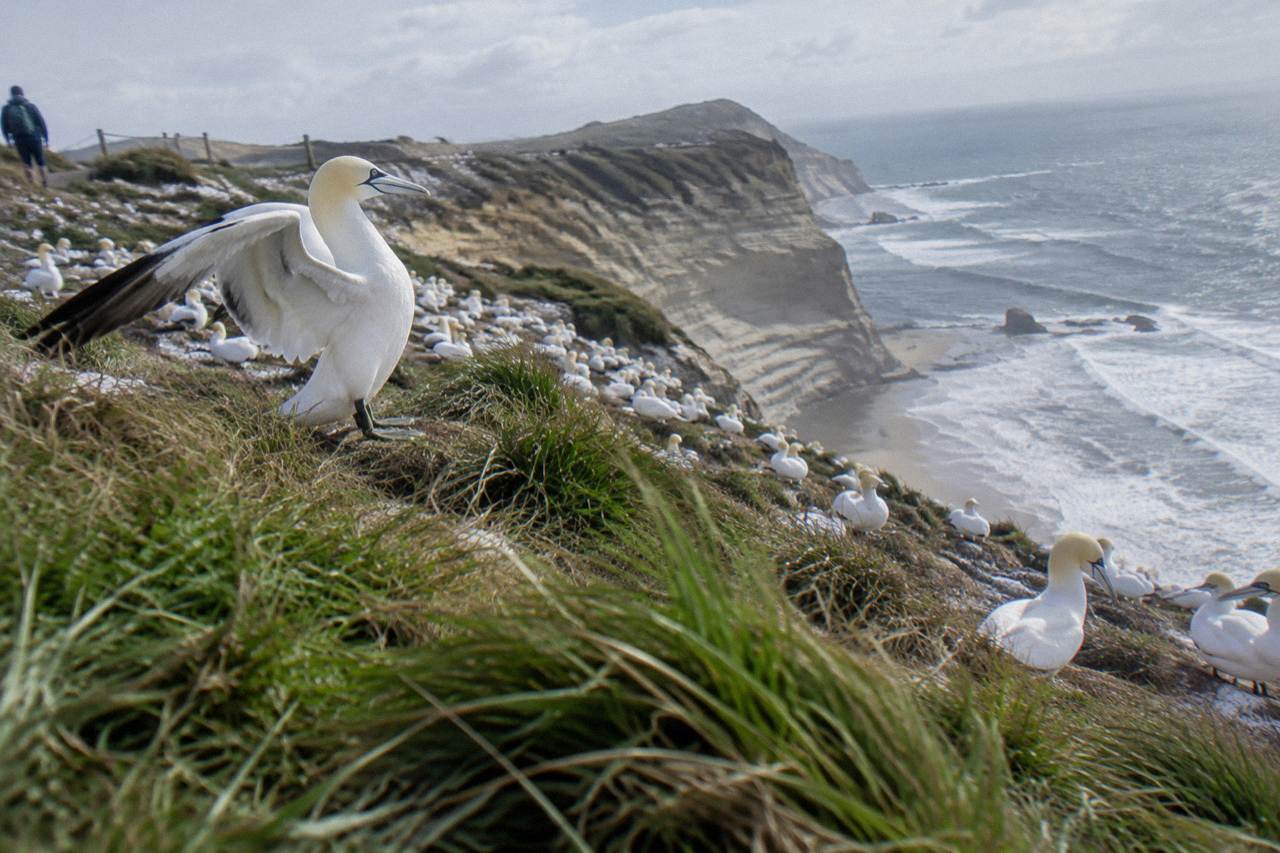
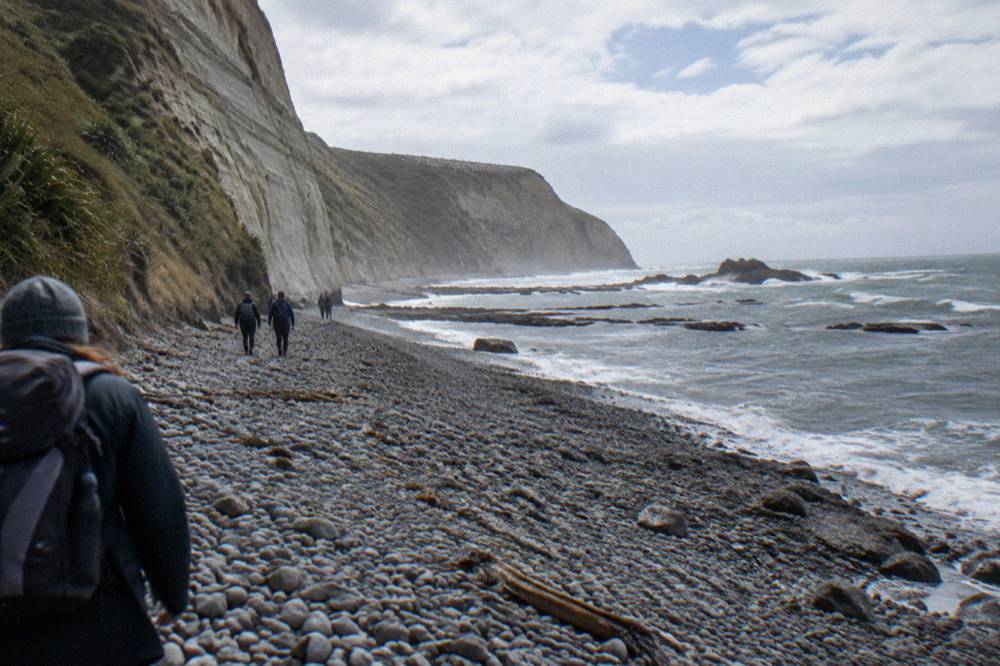
Walking to the gannets at Cape Kidnappers is one of the most unusual day walks in New Zealand: for most of its length there is no track at all, just a stony beach squeezed between the sea and cliffs DOC says are subject to significant landslide. The reward at the end is real. DOC calls the Cape Kidnappers colony, at 6,500 pairs, the largest and most accessible mainland gannet colony in the world, and the birds have nested on this cape since the 1870s. This guide sets out what DOC and the local council actually say about the route, the tides, the seasonal closure and the cliff hazard, and then compares the walk with the overland tours that reach the same plateau without a tide table in your pocket. If you were hoping to bring a dog along on this walk, the guide to bringing a dog to the Cape Kidnappers gannet colony explains the rules, the reasons behind them, and what dog owners can do instead.
What Is The Cape Kidnappers Beach Walk?
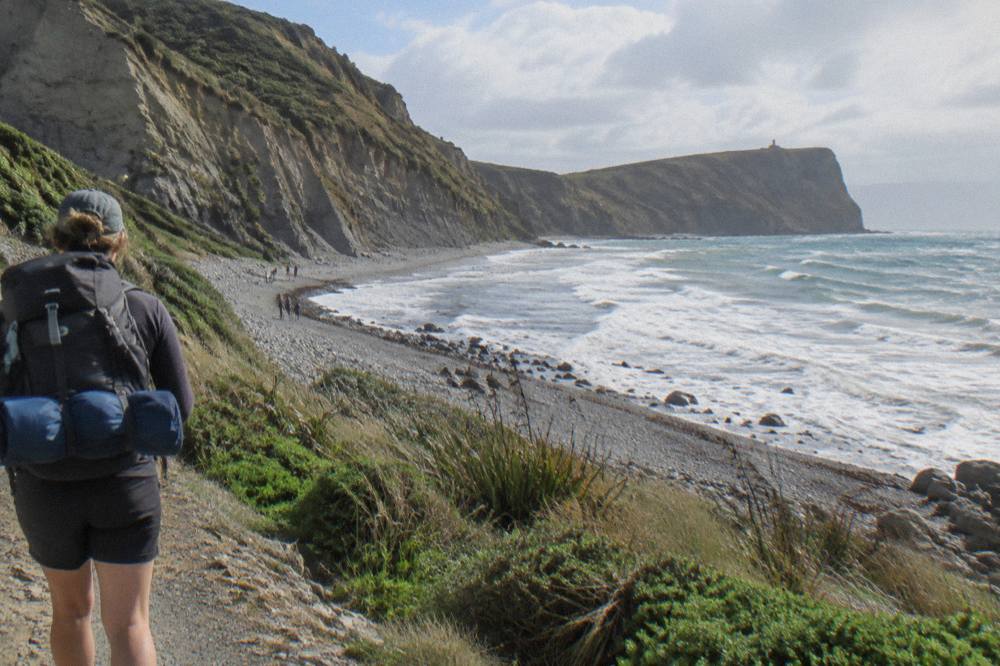
The Cape Kidnappers walk is a 19 km return beach route along the base of the cape from Clifton, 21 km south of Napier and 18 km east of Hastings, to the gannet colonies and back. DOC grades it Expert and says to allow at least 5 hours for a comfortable return trip. There is no formed track for most of the way, and the first nesting site, Black Reef, sits 7.5 km from the start. Because the beach route depends on tides and seasonal closures, check the guide to Cape Kidnappers access and opening rules before committing to the walk.
The walk begins at Clifton, at a spot DOC calls Scotmans Point. Black Reef, 7.5 km in, is where you first meet the gannets, a colony on the rock stacks close enough to shore to view from the beach. Beyond it, the route climbs away from the water: a steep, rough, muddy climb of about 1 km leads up toward the second colony.
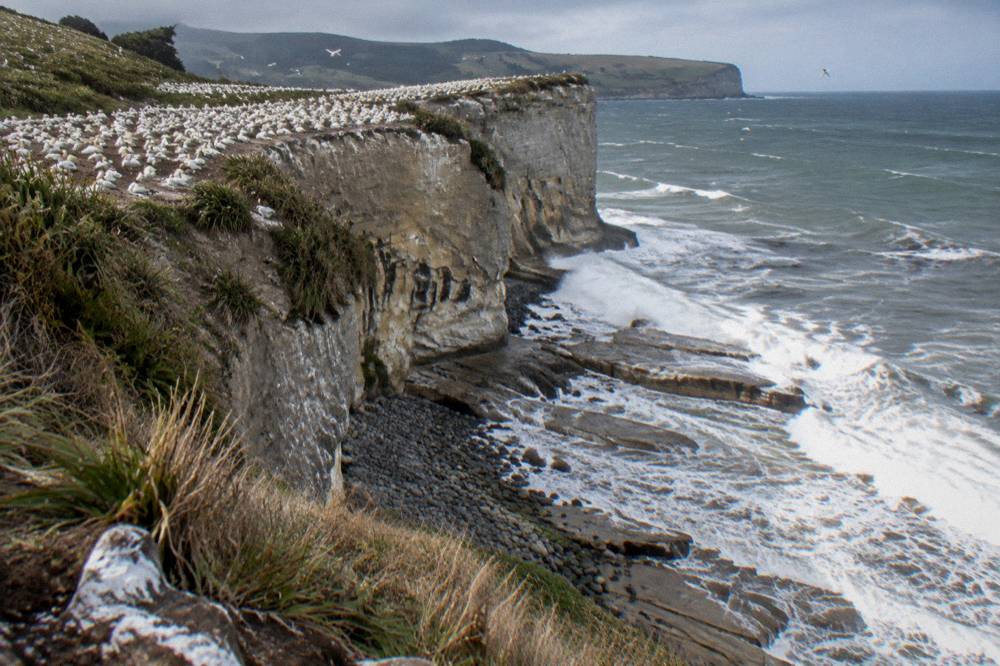
DOC is clear about the best endpoint. The best place to view nesting gannets is the Plateau colony, which sits on private land at the top of the climb, and close-up views of nesting birds are possible at the Plateau and Black Reef colonies. The plateau track is managed seasonally, and the land it crosses is a working farm, Cape Kidnappers Station, roughly 2,500 hectares with a predator-proof fenced conservation area protecting the birds.
| Cape Kidnappers walk fact | Figure |
|---|---|
| Start point | Clifton (Scotmans Point), 21 km south of Napier |
| Total distance | 19 km return |
| Grading | Expert (DOC) |
| Time needed | At least 5 hours return |
| First colony | Black Reef, 7.5 km from Clifton |
| Climb to Plateau colony | About 1 km, steep, rough and muddy |
| Colony size | DOC puts it at 6,500 pairs |
Sharing a narrow beach with such a large nesting colony naturally raises safety questions, and the guide to gannet behaviour and DOC safety rules answers them plainly.
A few ground rules apply on the reserve, whichever way you arrive. Keep behind the barriers or at least five metres from nesting gannets, no dogs or horses, no motorbikes or vehicles off the beach into the reserve, no fires or camping, and keep to the track through the private land. Nesting birds dislike loud noises and fast movement. Drones on conservation land need a DOC permit.
How Long Does The Cape Kidnappers Walk Take?
DOC says to allow at least 5 hours for a comfortable 19 km return walk, and the tide clock, not your legs, is the real constraint: the beach is passable only around low tide, and you must leave the Cape no later than 1.5 hours after low tide. High tides and big seas block the beach entirely. Five hours is a planning minimum, not an average.
Beach walking is slower than track walking. Walkers should budget at least five hours for the comfortable return trip, with a buffer on the far end so the return leg never races the rising tide.
This is where the comparison with the tours becomes unavoidable. The 3-Hour Tour, Meet at Base reaches the same plateau in about 3 hours total, from $56.23 per person, rated 4.9 across 1,052 reviews. The 3-Hour Tour, Lowest Price does the same trip starting at 396 Clifton Road, Te Awanga, from $55.00 per person, rated 4.8 across 378 reviews. Those two are the cheapest and dearest of the per-person seated options among the tours with substantial review pools. If a tide window, a 19 km walk and a 1 km mud climb do not fit your day, a seat in an air-conditioned vehicle does the same job in a fraction of the time.
Timing the walk also means timing the season. The track from the beach to the plateau gannet colony is closed from July to the week before Labour Weekend each year to limit disturbance to returning birds, so the full walk only works through the warmer months, when the adults are present and the colonies are busy. More on the closure below.
When Is The Cape Kidnappers Walking Track Open?
The track from the beach up to the plateau colony is closed from July to the week before Labour Weekend each year, reopening for the season that runs through summer. DOC says the status of the track can change at any time and directs walkers to check the safety alert on its page before setting out. The beach itself is managed by the council, which says Clifton beach is open but may close if there is unstable cliff activity.
That closure window matters more than it first appears. Adult gannets return to the cape from around July for courtship and nest building, and DOC asks that the track stay shut through that early period so the returning birds settle undisturbed. Best viewing runs from early November to late February, so the sweet spot for a full walk to the Plateau is late spring through summer.
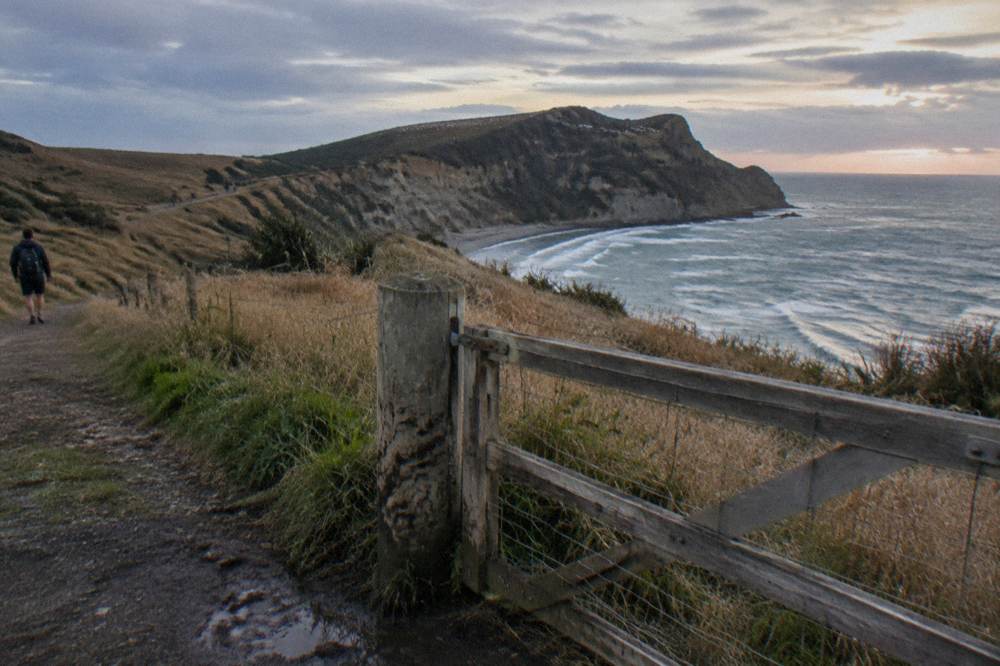
The overland tours run on a different calendar, 1 August to 30 April, including Christmas Day, because they cross private farmland rather than using the seasonal beach track. A walker arriving in September finds the climb to the Plateau shut; a tour guest in the same month rides straight up through the farm. That seasonal difference alone pushes some September and October visitors toward a vehicle, quite apart from the distance.
One further closure fact affects the start of the walk, though only walkers and bike riders. Clifton Motor Camp closed on 20 February 2026 after a geotechnical assessment found unstable land above it, was permanently closed in July 2026, and in August 2026 Hastings District Council voted to close a section of Clifton Road to vehicles at the former campground. Pedestrian access to Clifton Beach and the walking route stays open, so the walk itself is unaffected, but check the signage at Clifton for the current vehicle arrangement if you are driving to the start.
Is The Cape Kidnappers Walk Safe? The Cliffs And Landslide History
About 7 km of the walk lies beneath cliffs subject to significant landslide and rockfall. A landslide seriously injured two tourists in January 2019, and another large landslide in February 2020 closed the beach before the track was later reopened. DOC reports three serious injury landslide events in the past 50 years and large landslides every year, and says track status can change at any time.
That is the plainest safety record available, and it comes from DOC itself. Walkers should keep moving through the cliff sections rather than lingering beneath them, and should treat any fresh material on the beach as a reason to move on quickly.
DOC's own advice for the walk reflects the environment. Take sturdy footwear, food and water, sunscreen and hats, extra clothing for cool sea breezes, a water and windproof jacket, gloves, a head torch and a communication device. The area is also susceptible to tsunami; a siren or alert means move to higher ground immediately.
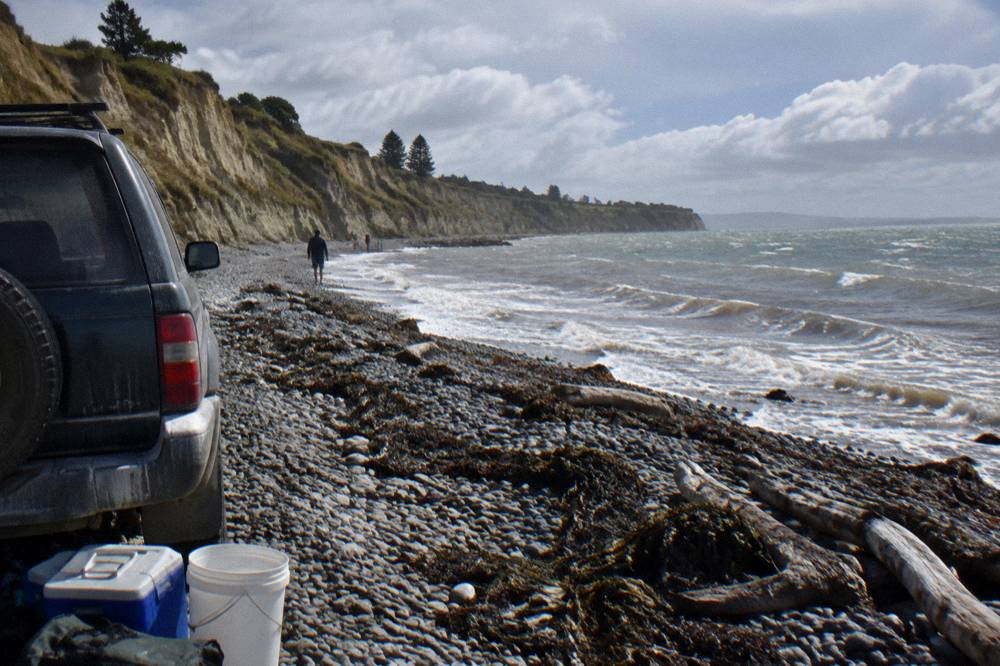
It is worth knowing how DOC frames the different ways to reach the birds. DOC treats beach transport as a high-risk operation and describes the overland route across private farmland as a lower-risk option, because the vehicles travel above the cliff tops rather than beneath them. That is DOC's comparison of routes, not a judgement about any particular operator, and it is the single most useful fact for anyone deciding between the walk and a ride. The operator of the overland tours makes the same point from its side: those tours are not governed by the tides because they travel above the cliff tops.
There are two other beach-based alternatives worth naming for completeness, both run separately from the tours this site covers. Gannet Beach Adventures runs a tide-dependent tractor-trailer ride along the beach from Clifton; check its own site for whether and when it runs. Gannet Bikes offers a self-guided fat-bike ride from 475 Clifton Road, 3.5 to 4 hours in total, needing at least intermediate fitness, with a short walk to the plateau colony at the end. Both sit under the same cliffs the walk does, which is exactly why DOC's route comparison exists.
How Do The Tides Govern The Walk?
The beach walk is possible only around low tide, high tides and big seas block the beach, and you must leave the Cape no later than 1.5 hours after low tide. Check the tide table before going.
- Standard Overland Gannet Tours$55
- Cruise Shore Excursions$93
- Private And Sunrise Tours$604 per group
The tide is not a footnote on this walk, it is the plan. A 19 km round trip bracketed by a 1.5 hour departure deadline means the whole outing has to be built around a single low tide, and a big swell can make the beach impassable even when the tide table looks friendly. Sea state and tide work together: a moderate high tide with a big running swell can push water to the cliff base and leave nowhere to walk.
The contrast with the tours could not be sharper, and it is a genuine decision factor for cruise visitors and anyone on a tight schedule. The overland tours travel above the cliff tops across farmland, so no tide table applies to them at all. The shore excursion options for cruise passengers, the 4-Hour Shore Excursion with its 45 minutes at the colony and the 4WD Safari Vehicle tour, both run about 4 hours from Napier meeting points, with departure times set per ship. Cruise passengers should check the ship's all-aboard time against that 4 hour length before booking anything.
For walkers, the practical checklist is short. Get the tide table for the day, identify the low tide, plan to leave the Cape no later than 1.5 hours after it, check the DOC safety alert for the track status, and look at the marine forecast for swell. If any one of those four is unfavourable, the walk waits for another day.
Walk Or Overland Tour: Which Suits You?
Choose the walk if you want a free, full-day Expert-grade adventure, can commit 5 to 6 hours plus a tide window, and accept the cliff hazard. Choose an overland tour if your time is fixed, your mobility or fitness is limited, or you are visiting outside the track season: the 3-Hour Tour, Meet at Base runs from $56.23 per person, with free cancellation until 24 hours before start.
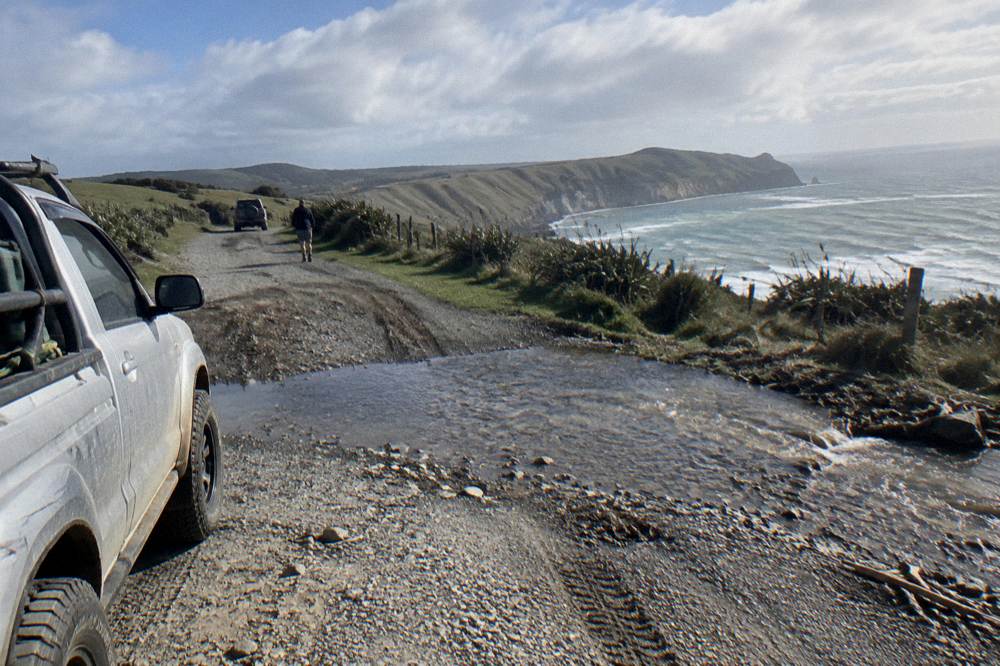
The version of this comparison is that they are not really the same product. The walk is an expedition-grade day out with a wildlife payoff; the tour is a comfortable 3 hour loop to the same birds with tea, coffee and a biscuit served at the colony. The operator says little or no walking is required, that the plateau is flat ground with bench seats, and that everything can be seen from the vehicle without getting out; a guest only needs to be able to get on and off the vehicle unaided. On the 3-Hour Tour, Lowest Price, walking is not required if you would rather skip it, and the operator advises bringing a jacket.
| Cape Kidnappers walk | 3-Hour Tour, Meet at Base | 3-Hour Tour, Lowest Price | |
|---|---|---|---|
| Cost | Free | From $56.23 per person | From $55.00 per person |
| Time | At least 5 hours | About 3 hours | 3 hours |
| Effort | Expert, 19 km plus a 1 km climb | Little or no walking | Walking not required |
| Tide dependent | Yes, low tide only | No, above the cliffs | No, above the cliffs |
| Season | Track closed July to week before Labour Weekend | Runs 1 August to 30 April | Runs 1 August to 30 April |
| Meeting point | Clifton, Scotmans Point | 396 Clifton Road, Te Awanga | 396 Clifton Road, Te Awanga |
| Reviews | Not applicable | 4.9 across 1,052 reviews | 4.8 across 378 reviews |
The optional hotel pickup add-on on the Meet at Base tour deserves a paragraph of its own for anyone staying in Napier without a car.
If a shared vehicle does not appeal, the private options change the arithmetic, and their prices are per group, up to 4 people, so they cannot be compared with per-person fares without saying so. The Private 4-Hour Tour runs from $704.30 per group of up to 4, with 45 minutes at the colony per its itinerary and coffee or tea included, private to your group. For early risers, the Private Sunrise Tour runs about 3 hours from $636.15 per group of up to 4, meeting at 396 Clifton Road, with a gourmet breakfast of pastries, fresh fruit and yoghurt, plunger coffee and juice.
There is also a version of the sunrise idea with hotel pickup included, the 3-Hour Sunrise, Pickup Included, from $604.00 per group of up to 4, which starts from your accommodation and returns you there. Sunrise and private products carry only a handful of reviews each, too few for a star rating to mean anything, so judge them on the itinerary rather than the scores.
For a deeper comparison that includes the full decision framework, see the walk versus overland tour guide, and for the creature itself, the Australasian gannet facts page covers the biology behind what you will be looking at.
What Should You Take And Know Before Walking?
DOC's kit list for the walk is sturdy footwear, food and water, sunscreen and hats, extra clothing for cool sea breezes, a water and windproof jacket, gloves, a head torch and a communication device. The only toilets along the route are at a DOC rest shelter a short way up the track from the beach end, which has no drinking water.
That head torch and communication device recommendation tells you how seriously DOC treats the walk: both are there for the scenario where the return leg runs long, the light goes, or something goes wrong under the cliffs. A phone in a waterproof pouch satisfies the communication device, but coverage along the beach should not be assumed to be reliable end to end. Tell someone your plan and your expected return time before you leave Clifton.
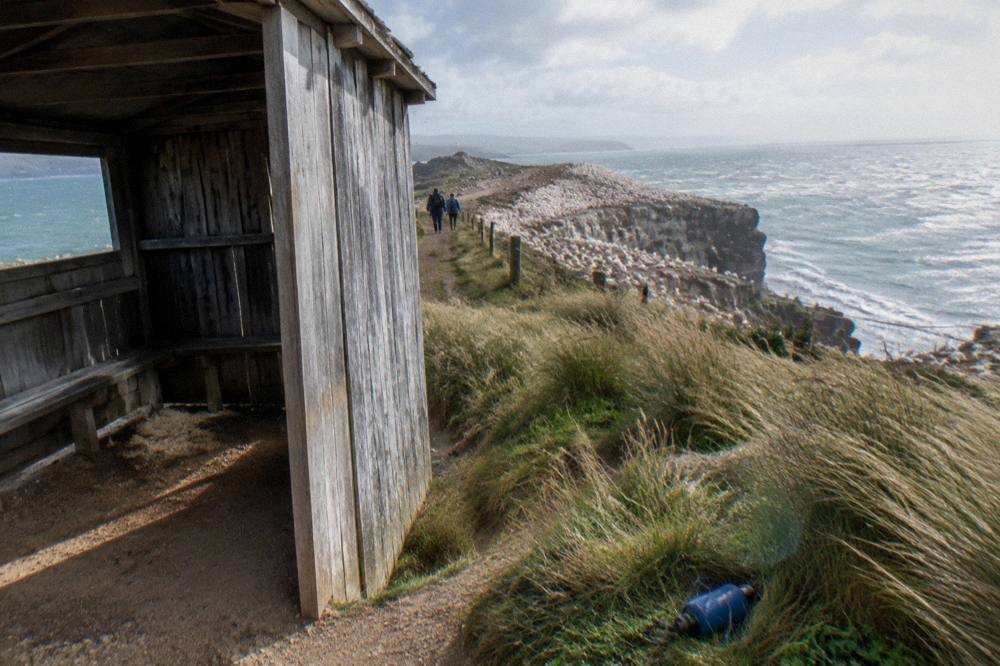
Food and water matter more than they would on a 5 hour forest track, because the beach reflects heat on clear days and there is nowhere to refill. Two other behavioural notes from DOC: nesting birds dislike loud noises and fast movement, so keep voices down near the colonies, and stay behind the barriers or at least five metres from any nesting gannet. The birds' 1.8 metre wingspan makes them look slow and tame; they are wild animals guarding chicks.
| Item | Why DOC lists it |
|---|---|
| Sturdy footwear | The beach is loose rolling stone, the 1 km climb is rough and muddy |
| Food and water | 5 to 6 hours with no supply points or drinking water |
| Sunscreen and hat | Reflected light off the beach and sea |
| Extra clothing, windproof jacket, gloves | Cool sea breezes and sudden weather changes |
| Head torch | In case the return leg runs past daylight |
| Communication device | Emergency contact along a remote beach |
If you want the birds but not the logistics, the established alternative needs almost none of this kit. A jacket is the only thing advised on the seated 3 hour tour, which is why many visitors split the difference and read the is the tour worth it assessment before choosing.
Getting To The Clifton Start Of The Walk
The walk starts at Clifton, Scotmans Point, 21 km south of Napier and 18 km east of Hastings, about a 25 minute drive from either city. The operator base at 396 Clifton Road has a large off-road car park with room for several motorhomes, and good bathroom facilities, the last proper toilets before the colonies.
That last toilet point is more practical than it sounds. The walk itself has no facilities until the DOC rest shelter partway up the track from the beach end, and the colonies have none at all. On the overland tours the same rule applies: no toilets on the tour, with the base's bathrooms the last stop, though tea, coffee and a biscuit are served at the colony on those trips.
Cruise visitors should note the geography. The shore excursions are the only tour options built for cruise passengers, meeting at 100 Marine Parade in Napier, opposite the museum and about 200 metres from where the port shuttle drops at the i-SITE; the standard 3 hour tours are not designed around ship schedules. The beach walk from Clifton is a different prospect again: ships visit from October to April, passengers cannot walk out of the port, taxis cannot enter it, and a 19 km Expert walk plus a 25 minute drive each way is not a realistic port-day plan. Walkers, in practice, are staying in Hawke's Bay.
Who Should Skip The Walk Altogether?
Skip the walk if you cannot commit a full day around a single low tide, if the Expert grading or the 1 km climb is beyond your mobility, if you are visiting between July and the week before Labour Weekend when the plateau track is closed, or if a big swell is running. Every one of those situations still leaves the overland tours, which run 1 August to 30 April and need no tide planning.
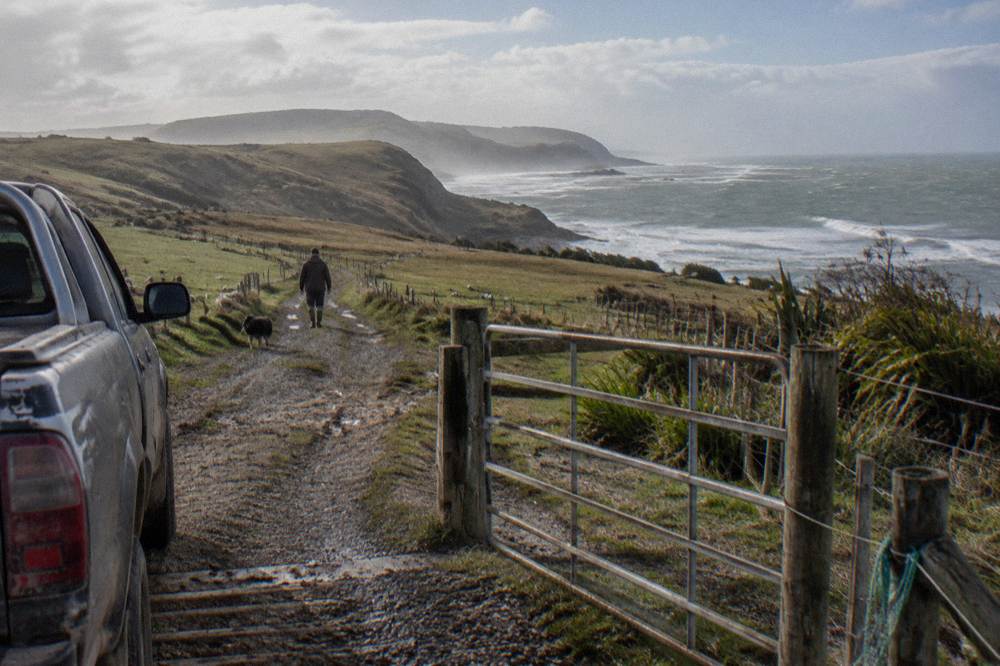
Some limitations are simply mismatched with this route. The walk is not a realistic option for young children on a long day, for anyone who cannot manage loose stone underfoot for hours, or for a visitor with half a day free and an afternoon flight. It rewards preparation, good knees and a flexible schedule, and gives back a wild, quiet approach to the birds that no vehicle can copy.
For everyone else, the seated options scale with budget and appetite. 3-Hour Tour, Meet at Base runs from $56.23 per person and rates 4.9 across 1,052 reviews. You meet at 396 Clifton Road, Te Awanga, ride in an air-conditioned vehicle for about 3 hours, and get coffee or tea; hotel pickup can be added as an option at booking, handy without a car. Not offered to cruise passengers. All of the tours covered here carry free cancellation up to 24 hours before start, which is worth knowing when your plans depend on weather you cannot yet see. This site, Napier Gannet Tour, exists to make exactly this choice easier.
Common Questions About The Cape Kidnappers Walk
How Long Is The Cape Kidnappers Walk?
The walk is 19 km return from Clifton. DOC grades it Expert and says to allow at least 5 hours for a comfortable return trip, with the tide window often stretching the full day.
Can You Walk To The Gannet Colony At Cape Kidnappers?
Yes, along the beach at low tide. The walk is possible only around low tide, high tides and big seas block the beach, and you must leave the Cape no later than 1.5 hours after low tide. Check the tide table before going.
When Is The Cape Kidnappers Walking Track Closed?
The track from the beach to the plateau gannet colony is closed from July to the week before Labour Weekend each year to limit disturbance to returning birds. DOC says track status can change at any time, so check its safety alert before setting out.
Is The Cape Kidnappers Walk Dangerous?
About 7 km of the beach lies under cliffs subject to significant landslide risk. A landslide seriously injured two tourists in January 2019 and another large landslide in February 2020 closed the beach before it reopened. DOC reports large landslides every year and three serious injury events in the past 50 years.
How Many Gannets Are At Cape Kidnappers?
DOC puts the colony at 6,500 pairs and calls it the largest and most accessible mainland gannet colony in the world. The birds have nested at the cape since the 1870s.
What Is The Best Time Of Year To Walk To The Gannets?
DOC says the best viewing is early November to late February. Adults return from around July for courtship and nest building, and the plateau track reopens in the week before Labour Weekend.