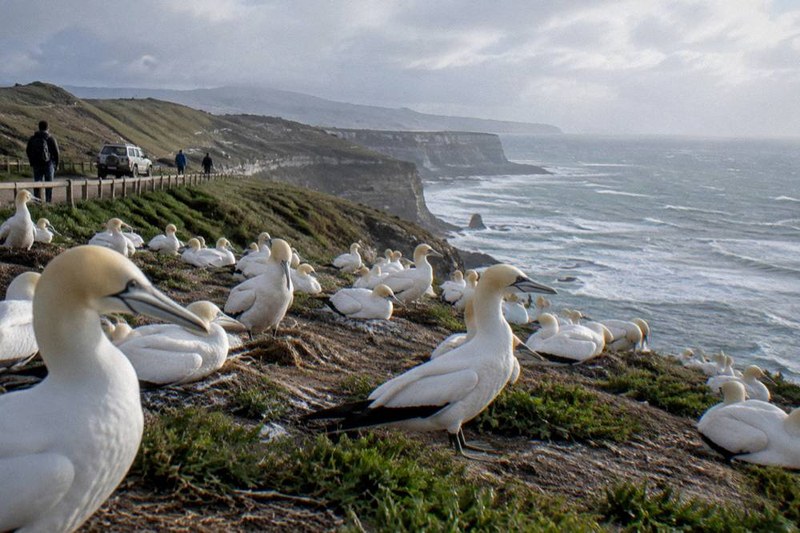
What Do I Need To Bring On A Gannet Colony Tour?
A packing and clothing guide for the Cape Kidnappers gannet colony tours from Napier, covering layers, footwear, sun protection, toilets, refreshments and what changes for the beach walk.
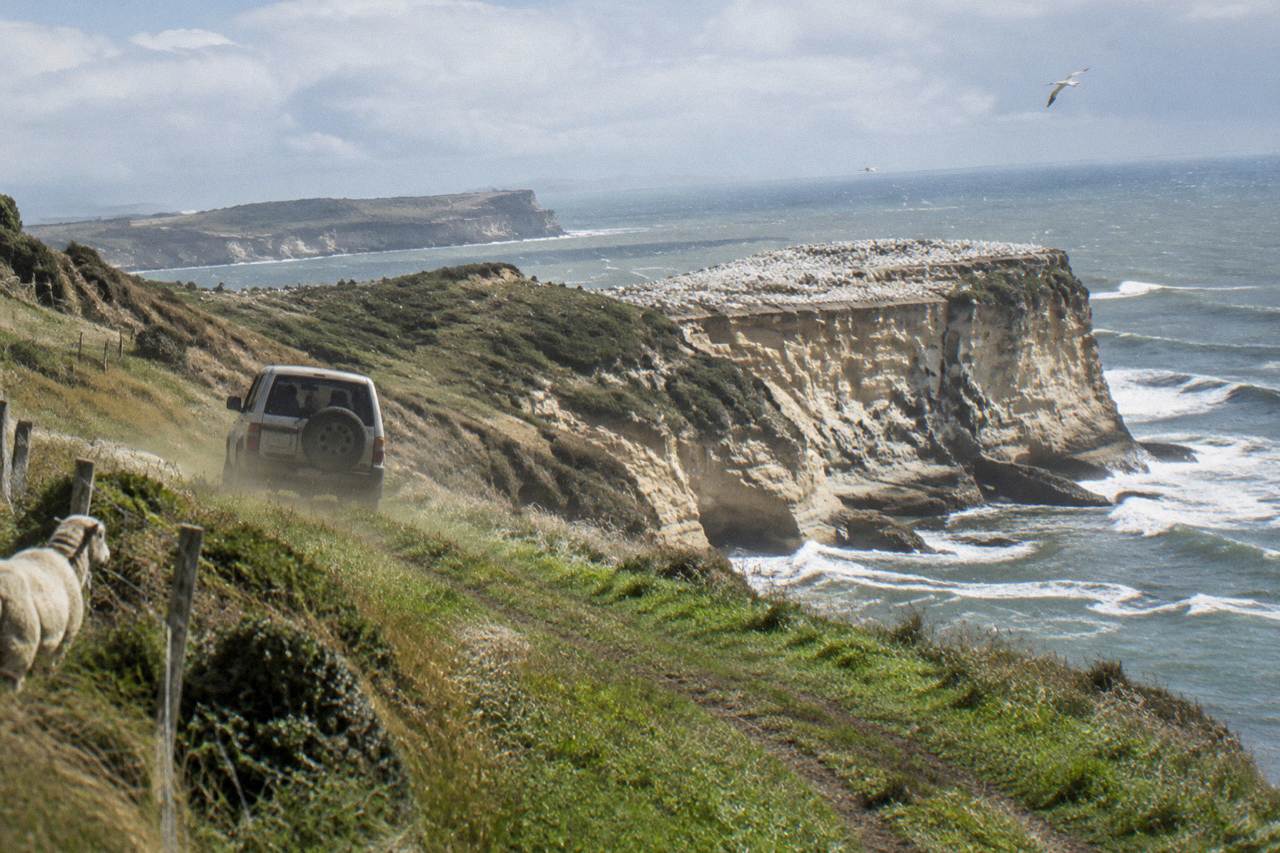
Packing for a gannet colony tour at Cape Kidnappers is a short problem with a few sharp edges. The overland tours cross open farmland above the cliffs, where the wind is near constant, the sun is stronger than it feels, and the last proper toilets are at the operator's base at 396 Clifton Road, Te Awanga. Layers, a wind and waterproof jacket, a hat, sunscreen and closed sturdy shoes cover almost everything.
The rest of this page works through the sub-questions readers actually ask before they go: what to wear in each season, whether real walking shoes matter, whether food and drink are provided, and how the answer changes if you are taking the DOC beach walk or a cruise shore excursion instead of the minivan tour.
For the standard overland gannet tours you need warm layered clothing, a water and windproof jacket, a sun hat, sunscreen, closed sturdy footwear and anything you personally need for three to four hours without shops or toilets. Binoculars or a camera are worth the space. You do not need food, walking boots, tide tables or serious fitness, because the tour rides above the cliffs and serves tea or coffee at the colony.
Start with the wind. Cape Kidnappers sits at the end of a peninsula exposed to sea breezes off Hawke Bay, and the tour's viewing area is a flat plateau of bench seats above the cliff line. Even on a warm Hawke's Bay afternoon, sitting still in that breeze feels cold in a t-shirt. Several thin layers you can add and remove beat one heavy jumper, because the transport is air-conditioned and the plateau is not.
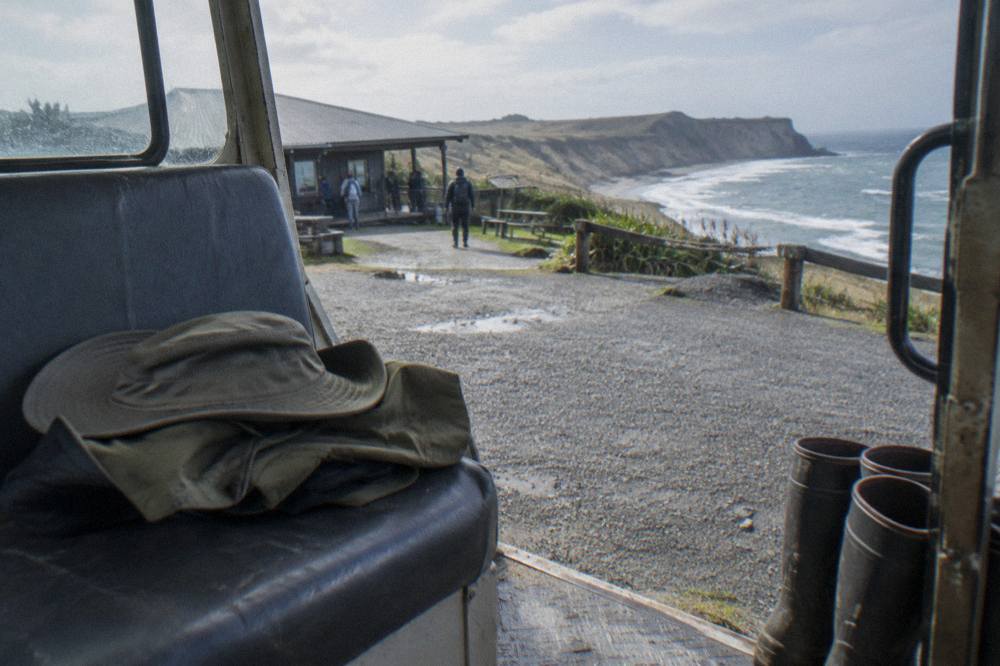
Sun protection is the second half of the equation. New Zealand's UV is fierce even on cool days, and the plateau gives little shade. A brimmed hat that stays on in wind, sunglasses, sunscreen on face, neck and hands, and a lip balm with SPF are all worth packing. The operator notes that a jacket is advised, and that advice applies across the season, not just in spring. If your packing list has room for one small extra, make it a hair tie or cap for anyone with long hair, because the wind at the colony does not negotiate.
Here is the whole list in one place, split by what it is for:
| Item | Why | Needed On The Overland Tours? |
|---|---|---|
| Warm layers (base layer plus mid-layer) | Plateau wind chill while seated still | Yes, all season |
| Water and windproof jacket | Constant coastal breeze, passing showers | Yes, operator advises a jacket |
| Sun hat that stays on in wind | Strong UV, no shade at the plateau | Yes |
| Sunscreen and sunglasses | High UV even on cool days | Yes |
| Closed shoes with grip | Gravel and grass underfoot at the base | Yes, trainers are fine |
| Camera or binoculars | Close-up nesting views from bench seating | Optional but worth it |
| Food and drink | Tea or coffee and a biscuit served at the colony | No, though water helps on hot days |
| Walking boots, tide table, full day pack | Only for the 19 km DOC beach walk | No |
The tours run from 1 August to 30 April, which means packing for everything from winter-grade chill to high-summer heat. The best gannet viewing runs early November to late February, when nesting birds are at the colony in the largest numbers, and that peak sits in the middle of Hawke's Bay's warmest and sunniest weather. Plan for warmth and sun first, then carry a layer against the sea breeze.
What Should You Wear On The Cape Kidnappers Overland Tour?
Wear long trousers or leggings, a base layer, a warm mid-layer, and a water and windproof jacket on top, with closed shoes and a wind-proof hat. Dress as if for a cool, blustery coastal walk rather than a bus ride. The tour vehicle is air-conditioned, so the answer is layers you can strip off, not one heavy coat you cannot regulate once you are out at the colony.
The tour's own clothing advice is blunt: a jacket is advised, and little or no walking is required. Both points matter for packing. The jacket is about the plateau, where you sit or stand in open wind for your colony stop while the birds go about their nesting around you. The minimal walking means you do not need hiking trousers, gaiters or anything technical. Ordinary comfortable clothes that let you climb a couple of steps into a minivan are enough.
Footwear is the one item people over-pack. The operator describes the plateau as flat ground, and says everything can be seen from the vehicle if you would rather not get out at all. A clean pair of trainers, everyday walking shoes or any closed shoe with grip will serve. If you want the full clothing reasoning by season, the dedicated Napier Gannet Tour packing pages include a deeper guide on what to wear for a gannet tour.
One clothing question that comes up with families: children need the same layers as adults, and usually one more, because they sit still at the viewing area while parents move around taking photos. The Cape Kidnappers tour with kids guide covers the practical side of bringing children. A spare warm layer per child, snacks you are happy to eat at the base, and a small bag that closes properly, so nothing blows across the plateau, are the working answers.
Is Food And Drink Provided On The Gannet Tour?
Yes on the overland tours: tea or coffee and a biscuit are served at the colony, so you do not need to carry a thermos or a packed lunch. On the standard 3-Hour Tour the refreshments listed are coffee and tea. Tea and coffee come with several of the tours, and the winery combo adds a platter lunch and wine tastings.
There are no toilets on the tour, and none at the colony. The last proper facilities are at the operator's base at 396 Clifton Road, Te Awanga, which has good bathrooms and a large off-road car park with room for several motorhomes. The practical packing consequence is simple: plan your stop at the base as the toilet stop, and keep the three to four hours of the tour in mind when you drink the coffee.
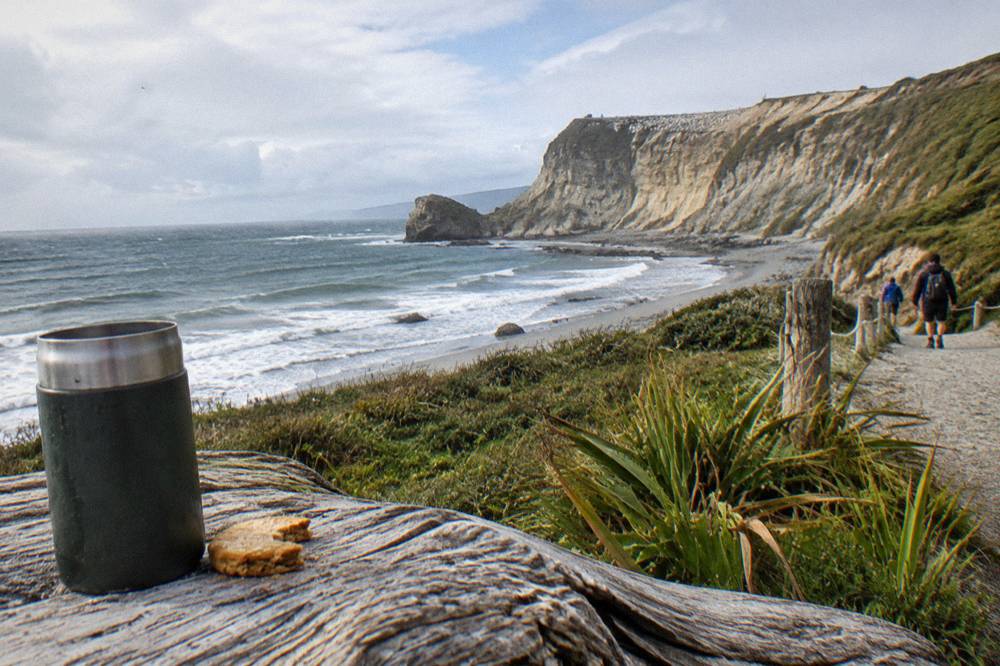
Different tour versions spell their refreshments slightly differently, which is worth checking when you book. The 3-Hour Tour, Meet at Base lists coffee and tea, as does the Private 4-Hour Tour and the shore excursion version, while the 3-Hour Tour, Lowest Price lists light refreshments. The Private Sunrise Tour stands apart with a gourmet breakfast of pastries, fresh fruit and yoghurt, plunger coffee and juice, priced per group of up to four from $636.15. Nobody needs to pack a picnic for any of these, but a small bottle of water in your bag is sensible on a hot day, since the served drinks arrive at the colony, not at the start.
Dogs are the other recurring question, and the answer is a flat no. The reserve is a wildlife sanctuary and DOC reserve, and nesting birds are disturbed by the presence of animals.
Do You Need Binoculars Or A Camera For The Gannet Colony?
The plateau puts you close to the nesting gannets, and binoculars or a camera with zoom are still worth the space. A phone camera works acceptably; the birds are large, about a 1.8 metre wingspan, and hold still for photos.
DOC considers the Plateau colony the best place to view nesting gannets anywhere at the cape, and the close-up viewing is the whole point of the overland route. The birds nest, court and feed chicks at close range from the bench seating, so the photographic limit is usually your lens, not your distance.
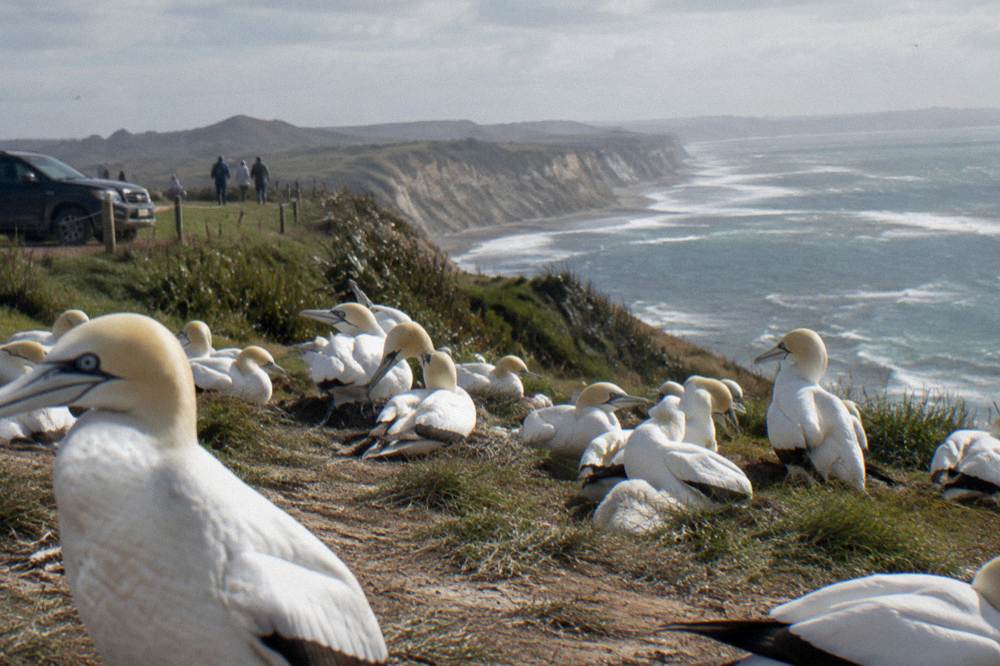
A couple of small packing items make photography better. A microfibre cloth for sea spray and dust, a spare battery or power bank in a warm inner pocket, and a polarising filter if you own one, all earn their space. If photography is the reason you are going, the Cape Kidnappers gannet photography guide goes into lenses, light angles and timing in detail, and pairs well with a private tour where you set the pace.
What Changes If You Take The Cruise Shore Excursion?
For the Napier shore excursions, pack the same layers, windproof jacket, hat and sunscreen, plus your ship card and photo identification, and keep your bag small. The excursion runs about 4 hours return from Napier and departure times are set per ship, so check the all-aboard time before you book and carry nothing you cannot keep on your lap in a minivan.
- Standard Overland Gannet Tours$55
- Cruise Shore Excursions$93
- Private And Sunrise Tours$604 per group
Cruise passengers arrive through a specific set of logistics that shapes packing. Passengers can walk down the gangway onto the wharf but cannot walk out of the port; a shuttle runs to the Napier i-SITE at 100 Marine Parade and to the National Aquarium, and taxis cannot enter the port. The 4-hour shore excursion meets at 100 Marine Parade, opposite the Napier Museum, a short walk from where the free ship shuttle drops at the i-SITE. The 4WD safari vehicle tour meets instead at the pink-flag area in front of the Sound Shell next to the i-SITE, where the driver holds a sign. None of that changes what you wear, but it does change what you carry: you have no hotel room to leave a bag in.
Two shore excursion versions exist. The 4-Hour Shore Excursion costs from $95.42 per person and includes 45 minutes at the colony per its itinerary, serving coffee or tea. The 4WD Safari Vehicle version costs from $93.00 per person, runs about 4 hours return from Napier with roughly 25 minutes each way by coach, and serves hot drinks, coffee or tea. Both meet at 100 Marine Parade. Reviews for both are still few, so judge them on their details rather than star ratings. Weather permitting, both reach the same plateau as the standard tours.
Are You Packing For The Beach Walk Instead?
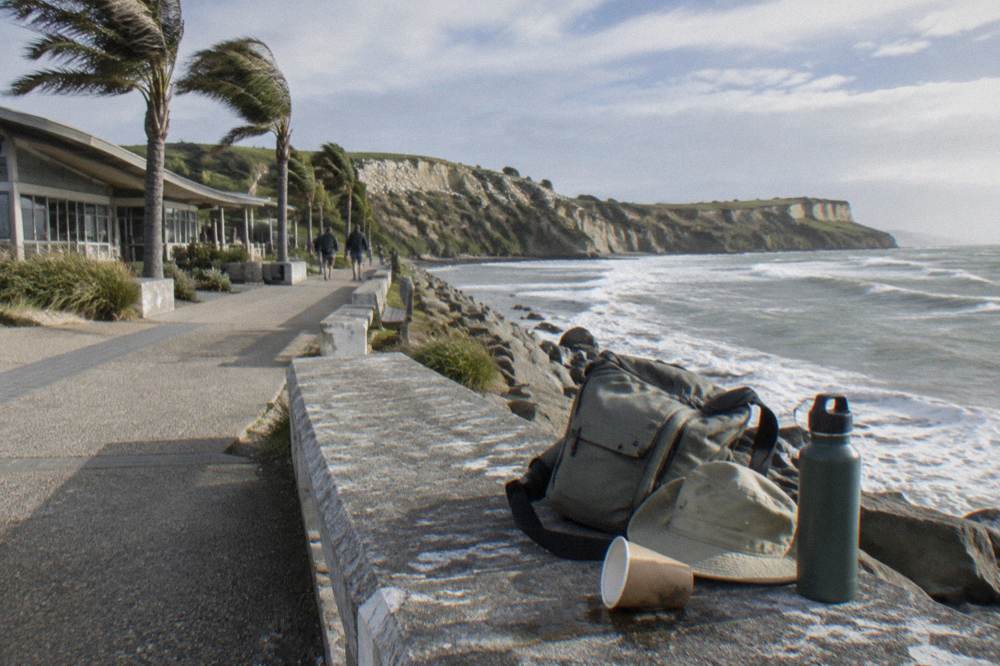
If you are walking to the colony from Clifton, the packing answer changes completely: DOC says to take sturdy footwear, food and water, sunscreen and hats, extra clothing for cool sea breezes, a water and windproof jacket, gloves, a head torch and a communication device. The walk is 19 km return, graded Expert, and takes at least 5 comfortable hours.
This is a different activity wearing the same destination's name. The beach walk starts at Clifton, Scotmans Point, 21 km south of Napier, and the first nesting site, Black Reef, sits 7.5 km along the beach. Beyond it, a steep, rough, muddy climb of about 1 km leads to the second colony. The beach walk is possible only around low tide, high tides and big seas block the beach, and you must leave the Cape no later than 1.5 hours after low tide, so check the tide table before going. None of the tide logic applies to the overland tours, which the operator says are not governed by the tides because they travel above the cliff tops.
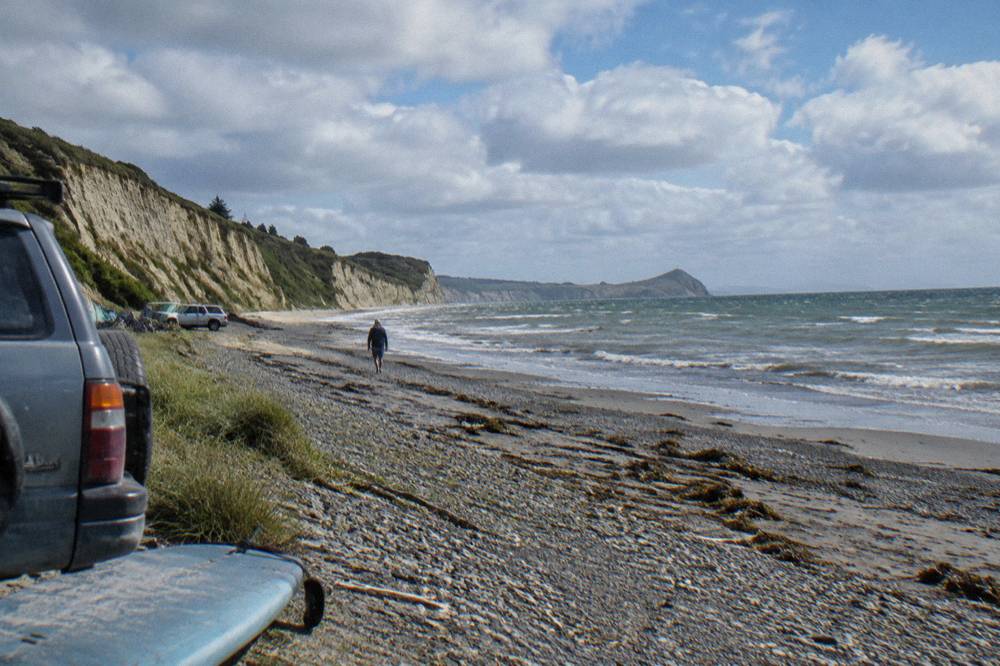
Safety packing for the walk is not optional decoration. About 7 km of the beach lies under cliffs subject to significant landslide, a landslide seriously injured two tourists in January 2019, and DOC says the track's status can change at any time, so check the safety alert on its page before you set out. The walk-specific kit list, including the head torch and communication device, exists because a slip, a late tide or an injury on a remote beach turns serious fast. Note also that Clifton Motor Camp closed permanently in July 2026 after a geotechnical assessment found unstable land above it, and Hastings District Council voted to close a section of Clifton Road at the former campground to vehicles; pedestrian access to the beach and the walking route stays open. That matters to walkers and riders, not to the overland tours, which meet at the base at 396 Clifton Road.
The packing gap between the two ways of seeing the colony is really the whole decision. The walk versus overland tour comparison sets the two out side by side. In packing terms: the tour wants a jacket and a camera, the walk wants a full day pack with survival-level kit.
Which Tour Should Your Packing List Match?
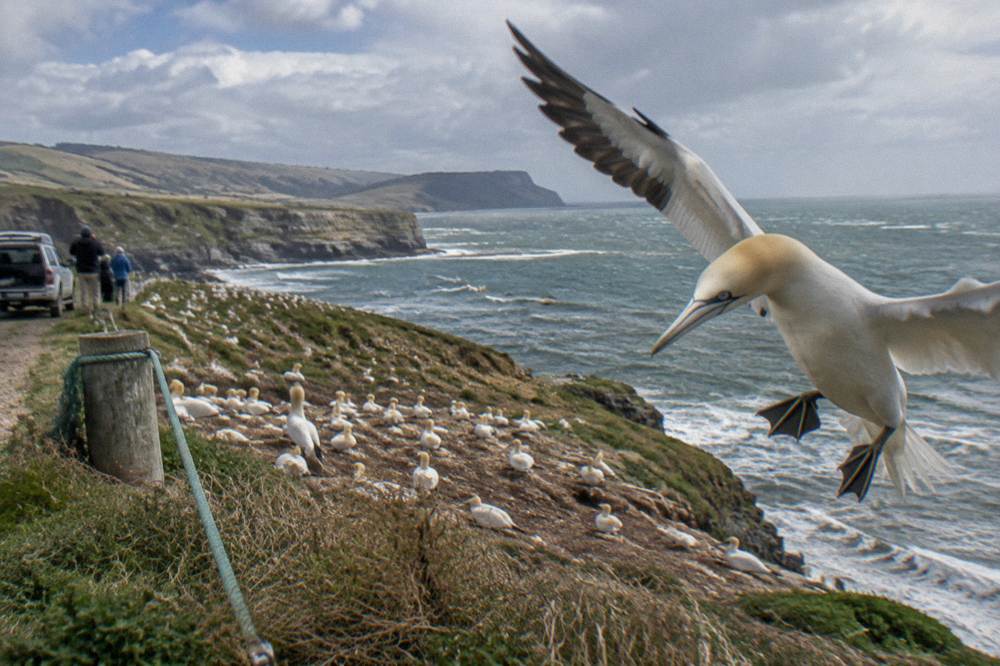
Match your list to the tour you booked, because the versions differ. The 3-Hour Tour, Meet at Base runs from $56.23 per person, rated 4.9 across 1,052 reviews, and lets you add hotel pickup when booking; the 3-Hour Tour, Lowest Price runs from $55 per person, rated 4.8 across 378 reviews, with everyone meeting at the Te Awanga base. Private tours are priced per group of up to four, from $604 to $704.30, so compare them only against each other.
That version runs 3 hours, meets at the Clifton Road base in Te Awanga, serves light refreshments, and lists the same jacket advice. Among the two standard tours with substantial review pools, it is the cheaper entry at $55 per person against $56.23, though the meet-at-base version carries the larger review pool at 1,052 reviews.
The private versions change the packing question again. The Private 4-Hour Tour, from $704.30 per group of up to four, includes 45 minutes at the colony per its itinerary and serves coffee or tea, and the Private 4-Hour, Pickup Included, from $688 per group, adds morning and afternoon tea or coffee plus accommodation pickup. For families and photographers, a private tour means you can carry more gear without apologies, and the vehicle travels at your group's rhythm.
For the standard experience, the 3-Hour Tour, Meet at Base remains the reference point: from $56.23 per person, about 3 hours total, air-conditioned minivan transport, coffee or tea served, free cancellation. Its full details, including how the optional hotel pickup add-on works at booking, are on the 3-Hour Tour, Meet at Base page. It is not for cruise passengers; the two shore excursions cover that case.
Whichever version you choose, free cancellation up to 24 hours before start applies, so booking ahead costs you flexibility rather than money, and you can firm up your packing once you know your departure time.
Common Questions About What To Bring On A Gannet Colony Tour
What Do I Need To Bring On A Gannet Colony Tour?
Bring warm layered clothing, a water and windproof jacket, a sun hat, sunscreen, sunglasses and closed sturdy shoes. A camera or binoculars are optional but worth it, and a small bottle of water helps on warm days. You do not need food or drink, since tea or coffee and a biscuit are served at the colony, and you do not need walking gear.
Are There Toilets On The Cape Kidnappers Gannet Tour?
No. There are no toilets on the tour or at the colony. The last toilets are at the operator's base at 396 Clifton Road, Te Awanga, which has good bathroom facilities and a large off-road car park. Use them before departure, since the standard tours run about three hours and the shore excursions about four.
Do I Need Walking Boots For The Gannet Colony?
No. The overland tours ride across farmland to a flat plateau with bench seats, and the operator says little or no walking is required; everything can be seen from the vehicle. Any closed shoe with reasonable grip is fine. Walking boots only matter if you are doing the DOC beach walk, which is 19 km return and graded Expert.
Is Food Provided On The Gannet Tour?
Tea or coffee and a biscuit are served at the colony on the overland tours. The Private Sunrise Tour includes a gourmet breakfast of pastries, fresh fruit and yoghurt, plunger coffee and juice.
What Should Cruise Passengers Bring On The Shore Excursion?
The same clothing list: layers, a windproof jacket, hat, sunscreen and closed shoes. Add your ship card and photo identification, and keep your bag small enough to hold on your lap. The excursion runs about 4 hours return from Napier and departure times are set per ship, so check your ship's all-aboard time when you book.
Can I Bring A Drone Or A Dog To See The Gannets?
No dogs are allowed; the reserve is a wildlife sanctuary and DOC reserve where nesting birds are easily disturbed. Drones on conservation land need a DOC permit, so leave the drone at home unless you have arranged one. Keep behind barriers or at least five metres from nesting gannets, and move calmly and quietly near the birds.