Photographing The Cape Kidnappers Gannet Colony On A Tour
Cape Kidnappers holds DOC's count of 6,500 pairs of Australasian gannets on cliffs you can photograph from a vehicle or on foot at the plateau. Here is how the tour options, seasons and reserve rules shape the shots you come home with.
Short answer
The plateau colony is the photography prize: DOC calls it the best place to view nesting gannets. Overland tours reach it in about 3 hours from $55 or $56.23 per person, and private sunrise trips run from $604 per group of up to 4. Best viewing runs early November to late February.
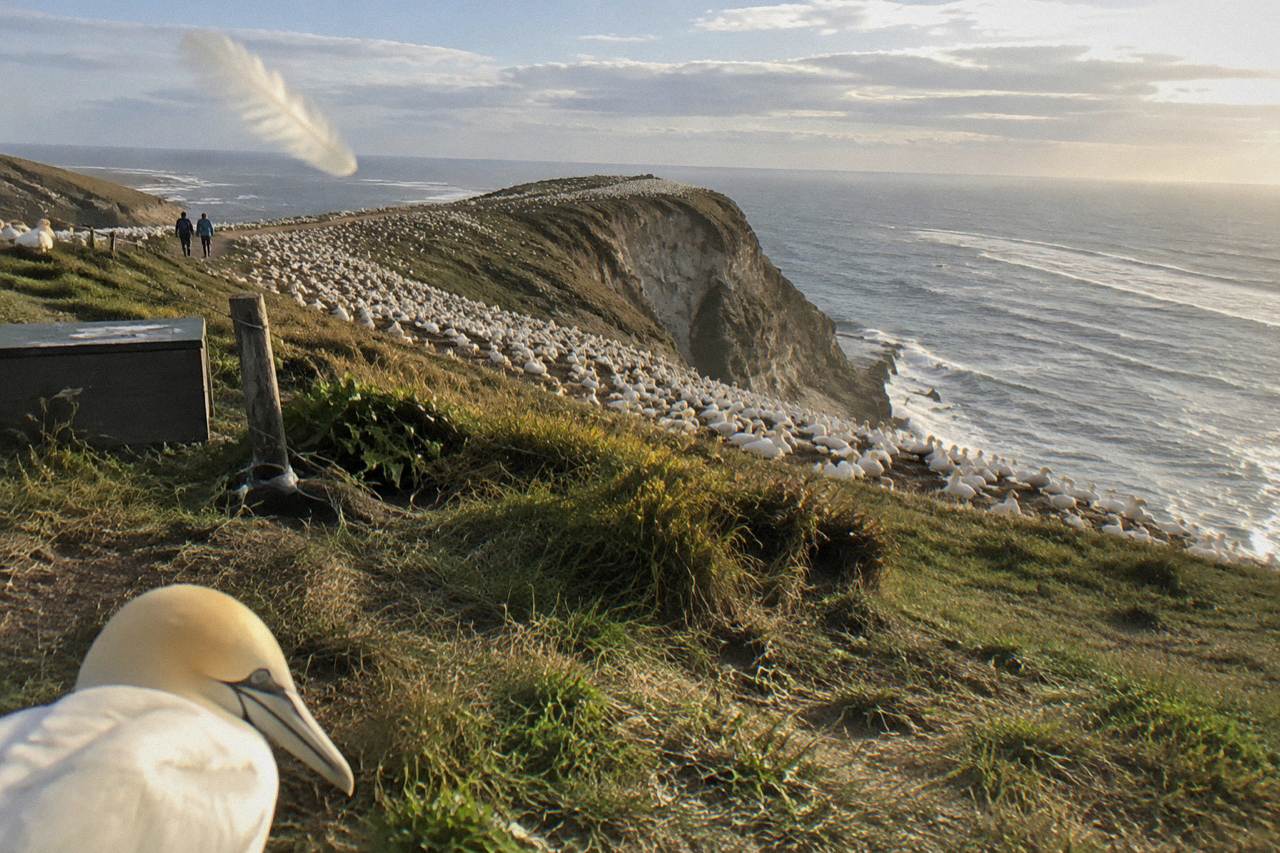
Cape Kidnappers is the sort of place photographers plan a Hawke's Bay trip around. Australasian gannets have nested on these cliffs since the 1870s, and DOC now puts the colony at 6,500 pairs, which it describes as the largest and most accessible mainland gannet colony in the world. The birds have a wingspan of about 1.8 m, they nest metres apart in a dense, noisy gannetry, and the reserve sits above the sea with open sky behind the colony: the raw ingredients of a strong wildlife portfolio are all in one place.
What varies is how you get there and what each route gives a camera. The beach walk is long and tide-bound. The overland tours cross a working farm in a 4WD vehicle to a privately owned nature reserve above the cliffs, and the operator says that route is not governed by the tides at all. For a photographer deciding which trip to book, the differences that matter are start time, group size, how long you hold the plateau, and whether pickup is included. Each of those is weighed against the tour figures and DOC's rules, so you can match the trip to the shots you want rather than to a brochure.
Why Is Cape Kidnappers So Good For Gannet Photography?
Cape Kidnappers concentrates everything a wildlife photographer wants in one accessible spot: DOC's figure of 6,500 nesting pairs on clifftop colonies, close-up viewing at the Plateau and Black Reef sites, and vehicle access to a plateau that needs little or no walking. The reserve sits about 25 minutes' drive from Napier, with tours running 1 August to 30 April.
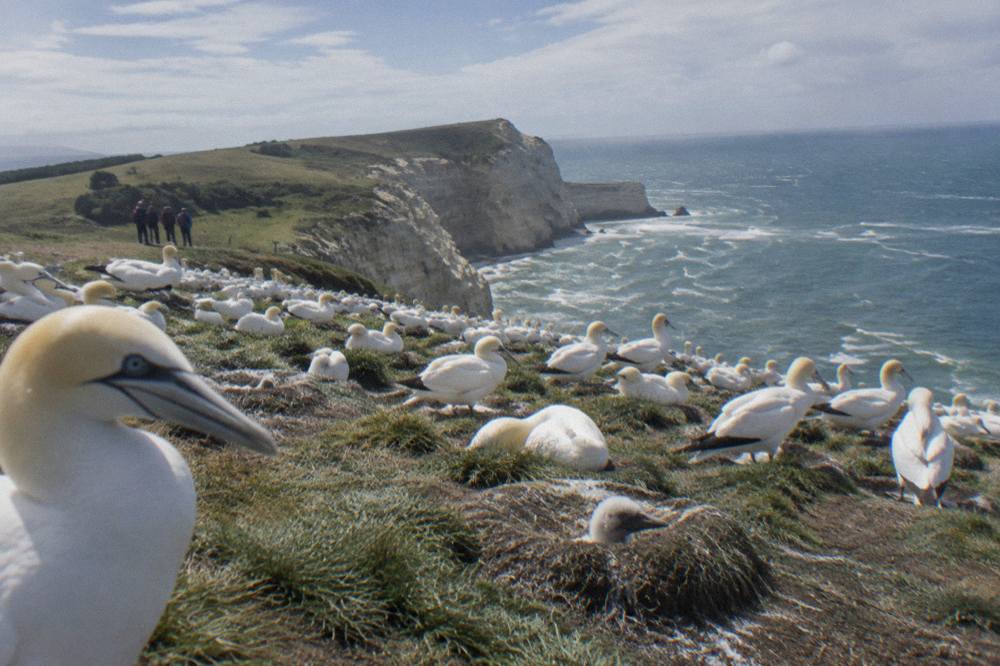
The density is the first thing that strikes anyone who has photographed seabirds elsewhere. Gannets nest shoulder to shoulder, pairs stay together over many seasons, and each pair raises a single egg incubated on their webbed feet. From the plateau you can frame hundreds of birds in one wide shot, then tighten to a single pair's greeting display, all from essentially the same standing position.
The birds themselves are generous subjects. Adults return to the cape from around July for courtship and nest building, so there is a long runway of behaviour to photograph, from nest material gathering to the sky-pointing displays of reunited pairs. DOC's best viewing window is early November to late February, when chicks and courtship activity overlap. Around the colony there are other rewards too: white-fronted terns, variable oystercatchers, reef herons, Caspian terns, and little blue penguins that nest around the cape, so a spare card is not a joke.
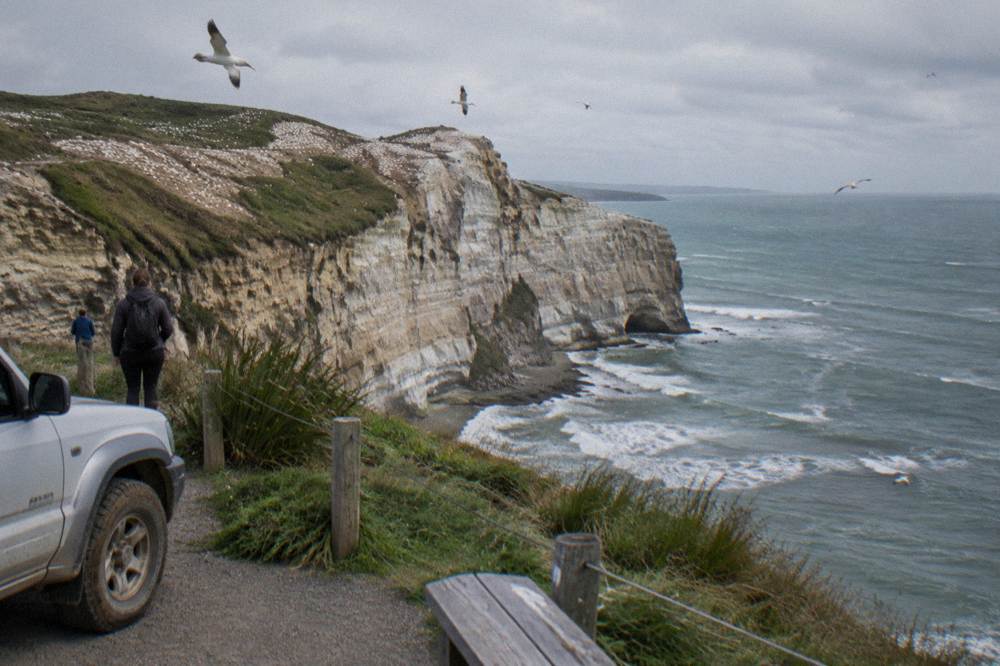
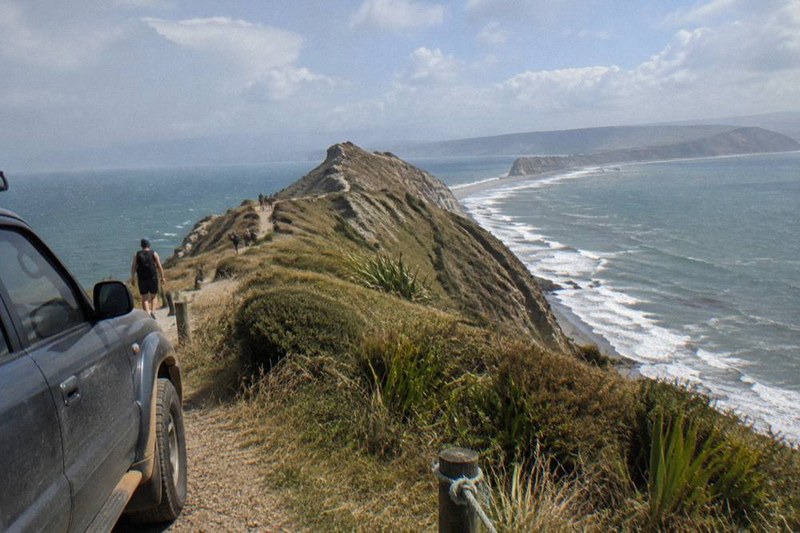
The access seals it. The Plateau colony, which DOC calls the best place to view nesting gannets, is on private land reached by the overland tours across Cape Kidnappers Station, a working farm of roughly 2,500 hectares with a predator-proof fenced conservation area. The operator says the plateau is flat ground with bench seats, that everything can be seen from the vehicle without getting out, and that a guest only needs to be able to board and leave the vehicle unaided. For a photographer with a long lens and a bag, that flat, stable footing at the top of the cliffs is worth a great deal.
Which Tour Gives You The Best Photo Access?
For most photographers the standard 3-hour overland tour is the practical choice: 4.9 across 1,052 reviews from $56.23 per person with hotel pickup as an optional add-on, or 4.8 across 378 reviews from $55 for the version that meets at the base. Private tours from $604 to $704.30 per group of up to 4, the price for a vehicle to yourself.
The answer is that all of the vehicle tours put you on the same plateau, so the question is really about start time, group size and convenience rather than a secret better angle. The table below sets out the differences that matter to a photographer choosing between them.
| Tour | Price (USD, from) | Basis | Length | Pickup | Rating and reviews |
|---|---|---|---|---|---|
| 3-Hour Tour, Meet at Base | $56.23 | per person | 3 hours | Optional add-on at booking | 4.9 across 1,052 reviews |
| 3-Hour Tour, Lowest Price | $55.00 | per person | 3 hours | Not included | 4.8 across 378 reviews |
| 3-Hour Sunrise, Pickup Included | $604.00 | per group, up to 4 | 3 hours | Included | 5.0 across 3 reviews |
| Private 4-Hour, Pickup Included | $688.00 | per group, up to 4 | 4 hours | Included | 5.0 from 4 reviews |
A few notes a photographer would want. The two 3-hour shared tours cost $55 and $56.23 per person, about a dollar apart, so choose on pickup: one has no hotel pickup, the other offers it as an optional extra. Both standard 3-hour tours meet at 396 Clifton Road, Te Awanga, about a 25 minute drive from Napier, and the base has a large off-road car park with room for several motorhomes; the tour from $56.23 offers hotel pickup as an optional add-on chosen at booking, a handy choice if you have no car. Both serve tea, coffee and a biscuit at the colony, and both carry free cancellation up to 24 hours before start, which matters when you are gambling on a weather window.
The private options are priced per group, up to 4 people, so never stack them against the per-person fares without saying so. What the group price buys a photographer is control: no strangers leaning into your frame, and in the case of the sunrise trips, a departure timed to the light rather than to a daily schedule. For a fuller comparison of the standard and private formats, see the standard versus private gannet tour breakdown.
One caution for cruise passengers: the standard 3-hour tours are not for cruise passengers. If you are on a ship, read the cruise section further down, because the two shore excursions are the only options that fit a port day.
What Does The Sunrise Tour Offer A Photographer?
The private sunrise tours give photographers the two things a shared trip cannot: a vehicle for up to 4 people only, and a start timed to early light, from $604 per group with pickup and drop-off included, or $636.15 from the Clifton base with a gourmet breakfast. Each runs about 3 hours.
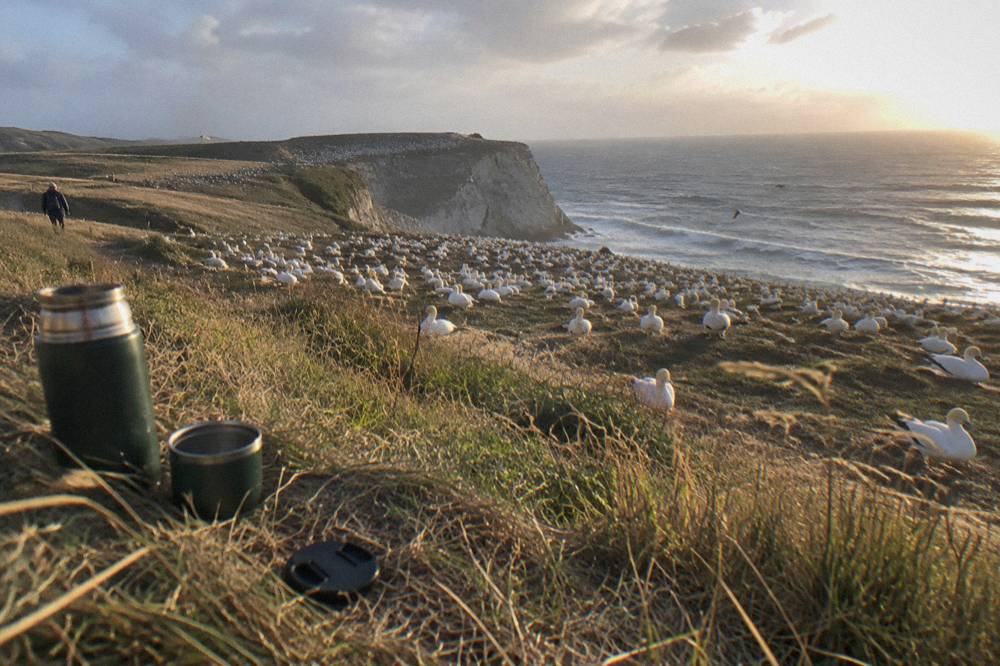
There are two versions. The Private Sunrise tour with pickup included runs from $604.00 per group of up to 4, collects you at your accommodation, and shows a 5.0 rating across 3 reviews, a small pool worth reading in full before you rely on it. The other version, from $636.15 per group of up to 4, starts at 396 Clifton Road and adds a gourmet breakfast of pastries, fresh fruit and yoghurt, plunger coffee and juice. Which is better depends on whether you would rather have hotel pickup or the gourmet breakfast on the other listing.
Why sunrise matters here is not just the golden glow. Gannets are active all day, but low sun rakes across the plateau and lights the birds' white plumage from the side instead of overhead, which keeps detail in the feathers and the sea behind. Midday light on a white bird against dark water is the classic exposure trap; early light softens it. No operator can promise the light or the birds on any given morning, weather can cancel or reschedule a departure, so treat the sunrise fare as buying the chance, not the photograph.
- Standard Overland Gannet Tours$55
- Cruise Shore Excursions$93
- Private And Sunrise Tours$604 per group
The private format also buys patience. On a shared vehicle the clock runs for everyone; with your own group you can trade minutes between the wide colony, the cliff edge and a single pair, and nobody is waiting on the bench seats. For photographers weighing whether that flexibility justifies the per-group fare, the private Cape Kidnappers tour guide works through the trade-offs in detail.
How Close Can You Get To The Gannets?
Close-up views of nesting gannets are possible at the Plateau and Black Reef colonies, but DOC's rules stand in every case: stay behind barriers or at least five metres from nesting birds, no drones without a DOC permit, and no dogs anywhere in the reserve. Five metres is still long-lens territory for frame-filling portraits.
The five-metre rule is not an obstacle, it is a working distance. A long telephoto lens at five metres gives you a full-frame adult, head detail, and the interaction between a pair; a standard zoom covers behaviour groups and the colony spread against the sea. The plateau's flat ground and bench seats let you sit low and steady, and the operator says everything can also be seen from the vehicle, which doubles as a blind if you would rather not move among the birds at all.
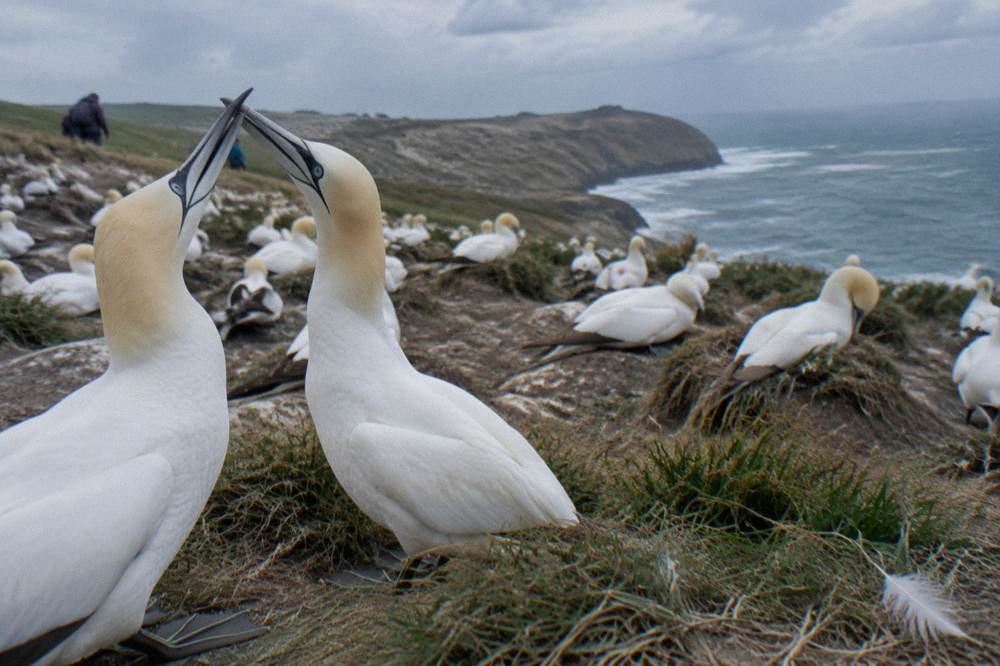
The reserve rules exist because nesting birds dislike loud noises and fast movement. Sudden movement flushes birds off nests, which exposes eggs and chicks, so photographers should move slowly, keep voices down, and resist the urge to creep past barriers for a tighter shot. The full set of DOC rules for the reserve and the beach approach is worth knowing before you pack:
| Rule | What it means for photographers |
|---|---|
| Stay behind barriers or 5 m from nesting gannets | Long lens required for portraits; barriers mark the legal shooting line |
| Drones need a DOC permit | No launching from the tour or the beach without one |
| No dogs or horses | No dogs or horses are permitted in the reserve |
| No motorbikes or vehicles off the beach | Vehicle access to the plateau is via the tours only |
| No fires or camping | Day visits only; the tours run 1 August to 30 April |
| Keep to the track through private land | Applies to walkers and riders crossing Cape Kidnappers Station |
Drones deserve a special word because aerial footage of a mainland gannetry is an obvious temptation. DOC requires a permit for drones on conservation land, and a colony of 6,500 pairs is exactly the place where an unpermitted drone both breaks the rules and disturbs breeding birds. If aerials are your thing, secure the permit first or leave the drone at the hotel.
The standard 3-hour meet-at-base tour is the one most photographers actually take to the plateau, and it is the one to check first when you are ready to look at dates:
What Should You Pack For A Photo Tour To The Colony?
Pack for a cliff top in maritime weather: a water and windproof jacket, warm layers, a hat and sunscreen, and camera protection against sea breeze and dust, plus food and water if you are walking. There are no toilets on the tour itself; the last bathrooms are at the operator's base at 396 Clifton Road.
The tour itself needs less kit than the walk, but the plateau is exposed and the breeze comes straight off the Pacific. A jacket that blocks wind and drizzle protects both you and the camera; lens cloths multiply in salt air; and a hat plus sunscreen matter even on grey days, because the light reflecting off white birds and white water burns in both directions.
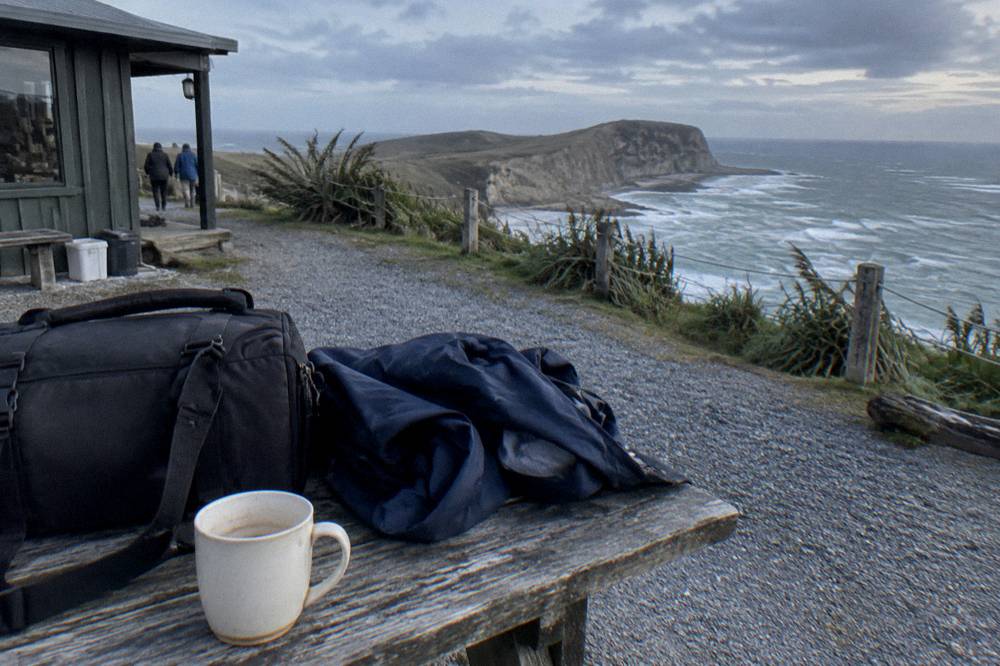
For the vehicle-based trips, the practical kit list is short: your longest lens, a mid-range zoom for behaviour scenes, spare batteries in inside pockets against the breeze, and cards enough for a colony of thousands. A beanbag or a rolled jacket on the bench or the vehicle window frame beats a tripod in the space available. If you are walking the beach route instead, DOC's own list is sturdier: sturdy footwear, food and water, extra clothing for cool sea breezes, gloves, a head torch, and a communication device, because the walk is 19 km return and you will be out for hours.
| Item | Vehicle tour (3-4 hours) | Beach walk (19 km return) |
|---|---|---|
| Long telephoto lens | Yes, for portraits at the barrier distance | Yes, plus weight you carry all day |
| Wind and waterproof jacket | Yes | Yes, non-negotiable |
| Sturdy footwear | Comfortable shoes fine | Essential, rough and muddy sections |
| Food and water | Optional, refreshments included on most trips | Essential |
| Head torch and communication device | No | Yes, per DOC |
| Sunscreen and hat | Yes | Yes |
Refreshments differ between tours: standard trips include coffee or tea, while one sunrise version adds a gourmet breakfast. Check the what to bring on a gannet colony tour guide for the version you book. The Cape Kidnappers weather guide is the companion read for deciding whether a morning is worth the fare at all.
When Is The Best Season For Gannet Photos At Cape Kidnappers?
Tours run 1 August to 30 April, and DOC names early November to late February as the best viewing window, when courtship, nests, eggs and chicks all overlap at the colony. Adults return from around July, and the summer months concentrate the most birds and the most behaviour on the cliffs.
The season shapes your subjects more than any camera choice does. Adults return to the cape from around July, and DOC names early November to late February as the best viewing window. DOC gives early November to late February as the best viewing window for the reserve.
No source will promise chicks at any particular week, and no tour will promise a bird count on the day you stand at the plateau, so plan around the window rather than a date. The two sunrise listings are the earliest starts.
One seasonal trap for the self-guided: the track from the beach to the plateau gannet colony is closed from July to the week before Labour Weekend each year to limit disturbance to returning birds, and that closure does not affect the overland tours, which cross private farmland. If your photography plan involves walking rather than riding, check the Cape Kidnappers gannet season guide before you pick your dates.
The 3-hour tour that meets at the base is the easy version to slot into a Hawke's Bay stay during the peak window:
Can Cruise Passengers Photograph The Colony Too?
Yes, but only on the two shore excursions: a 4-hour trip from $95.42 per person meeting at 100 Marine Parade opposite the Napier Museum, or a 4WD safari version from $93.00 per person meeting at the Sound Shell pink-flag area next to the i-SITE. The standard 3-hour tours do not serve cruise passengers.
The meeting points matter because Napier's port rules matter. Cruise passengers can walk down the gangway onto the wharf but cannot walk out of the port; a shuttle runs to two stops, the Napier i-SITE at 100 Marine Parade and the National Aquarium of New Zealand, and taxis cannot enter the port. The 4-hour shore excursion meeting point sits opposite Napier Museum, about 200 m from where the shuttle drops at the i-SITE, and the 4WD safari version meets at the pink-flag area in front of the Sound Shell right beside it. On some ship days the operator collects passengers directly from the port because of short port times, and departure time is set per ship, so confirm the arrangement for your call.
The photography trade-off on a port day is time and numbers. The 4-hour shore excursion spends about 45 minutes at the colony per its itinerary, which is enough for a disciplined shoot if you know your shots before you arrive, and it carries up to 40 travellers. The 4WD safari version is also 4 hours return from Napier, roughly 25 minutes each way by coach to the farm leg. Both serve hot drinks, coffee or tea, and both carry free cancellation up to 24 hours before start.
Check your ship's all-aboard time against the tour's 4-hour length before booking. The Napier shore excursion guide for gannets covers the port logistics in more depth, and the one day in Napier itinerary shows how the excursion fits with the town's Art Deco quarter between disembarkation and departure.
Is Walking To The Colony A Realistic Photo Plan?
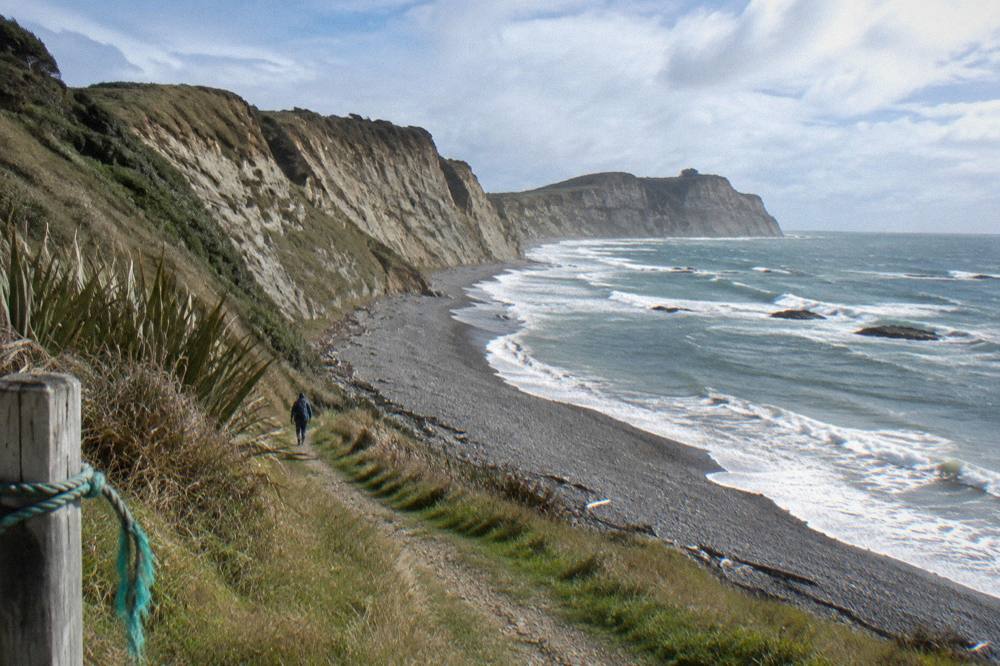
The beach walk from Clifton is 19 km return, DOC grades it Expert, and it is possible only around low tide, with high tides and big seas blocking the beach outright. It reaches Black Reef, the first nesting site, at 7.5 km, then a steep, rough, muddy climb of about 1 km leads toward the second colony. Most photographers ride.
For a photographer, the walk's appeal is the low angle: Black Reef's birds nest near beach level. The cost is a full day, at least 5 hours for a comfortable return walk per DOC, expert fitness, tide discipline, and a hazard that deserves respect. About 7 km of the beach lies under cliffs subject to significant landslide and rockfall; a landslide seriously injured two tourists in January 2019, another large landslide in February 2020 closed the beach before it reopened, and DOC reports three serious injury landslide events in the past 50 years with large landslides occurring every year. DOC says the track's status can change at any time, so check the safety alert on its page before you set out.
The tide rules are strict and simple to state: the walk is possible only around low tide, leave the Cape no later than 1.5 hours after low tide, and check the tide table before going. The overland tours, by contrast, are not governed by the tides because they travel above the cliff tops, which is precisely why photographers with limited days in Hawke's Bay usually book the vehicle and save the tide maths for another visit. The Cape Kidnappers walk guide covers the route in full, and the walk versus overland tour comparison makes the trade-off explicit.
Access news worth knowing if you do walk or ride: Clifton Motor Camp closed on 20 February 2026 after a geotechnical assessment found unstable land above it, was permanently closed in July 2026, and in August 2026 Hastings District Council voted to close a section of Clifton Road at the former campground to vehicles. Pedestrian access to Clifton Beach and the walking route stays open, but this affects walkers and bike riders, not the overland tours. There is also a self-guided fat-bike option from 475 Clifton Road, 3.5 to 4 hours for riders with at least intermediate fitness, ending with a short walk to the plateau colony; the Cape Kidnappers bike ride guide explains it. A separate tide-dependent tractor-trailer ride along the beach from Clifton also exists; check its own site for whether and when it runs.
Whatever you choose, a private sunrise tour remains the format built most directly around photography: your group of up to 4, on the same plateau as the shared tours. It is the version this site would point a serious shooter to first.
Common Questions About Gannet Photography At Cape Kidnappers
How Close Can You Photograph The Gannets At Cape Kidnappers?
Close-up views of nesting gannets are possible at the Plateau and Black Reef colonies, but DOC requires visitors to stay behind barriers or at least five metres from nesting birds. At five metres a long telephoto lens still gives frame-filling portraits and head detail.
Which Tour Is Best For Photographers?
There is no secret angle: the vehicle tours all reach the same plateau. The standard 3-hour trips from $55 and $56.23 per person suit most shooters, while the private sunrise tours from $604 per group of up to 4 add early light and a vehicle to yourself.
Can I Fly A Drone Over The Gannet Colony?
Only with a DOC permit. Drones on conservation land require one, and an unpermitted drone over 6,500 nesting pairs both breaches the rules and disturbs breeding birds. Secure the permit first or leave the drone behind.
When Is The Best Month For Gannet Photos?
DOC names early November to late February as the best viewing window, when courtship, eggs and chicks overlap. Tours run 1 August to 30 April, and adults begin returning from around July.
Can Cruise Passengers Do A Photography Trip To The Colony?
Yes, on the two shore excursions, from $93.00 and $95.42 per person, both 4 hours and both meeting on Marine Parade near the i-SITE. The standard 3-hour tours are not for cruise passengers, so check your ship's all-aboard time against the 4-hour length.
Is The Walk To The Colony Good For Photos?
The 19 km return beach walk reaches the Black Reef nesting site at 7.5 km and offers low-angle shots no vehicle gives, but DOC grades it Expert, it is possible only around low tide, and sections run beneath landslide-prone cliffs. Most photographers book a tour instead.