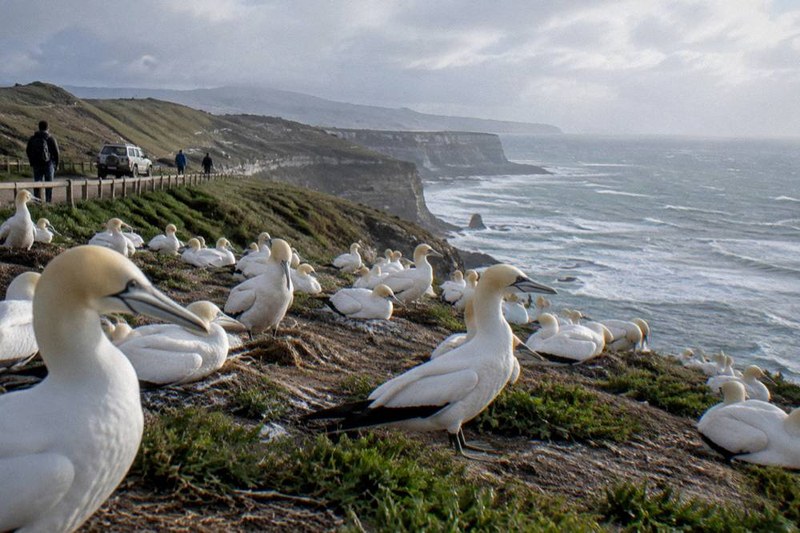
What Time Of Year Are Gannet Chicks At Cape Kidnappers?
Gannet chick timing at Cape Kidnappers, mapped against DOC's best-viewing window from early November to late February and the tour season that runs 1 August to 30 April, with help choosing a booking month.
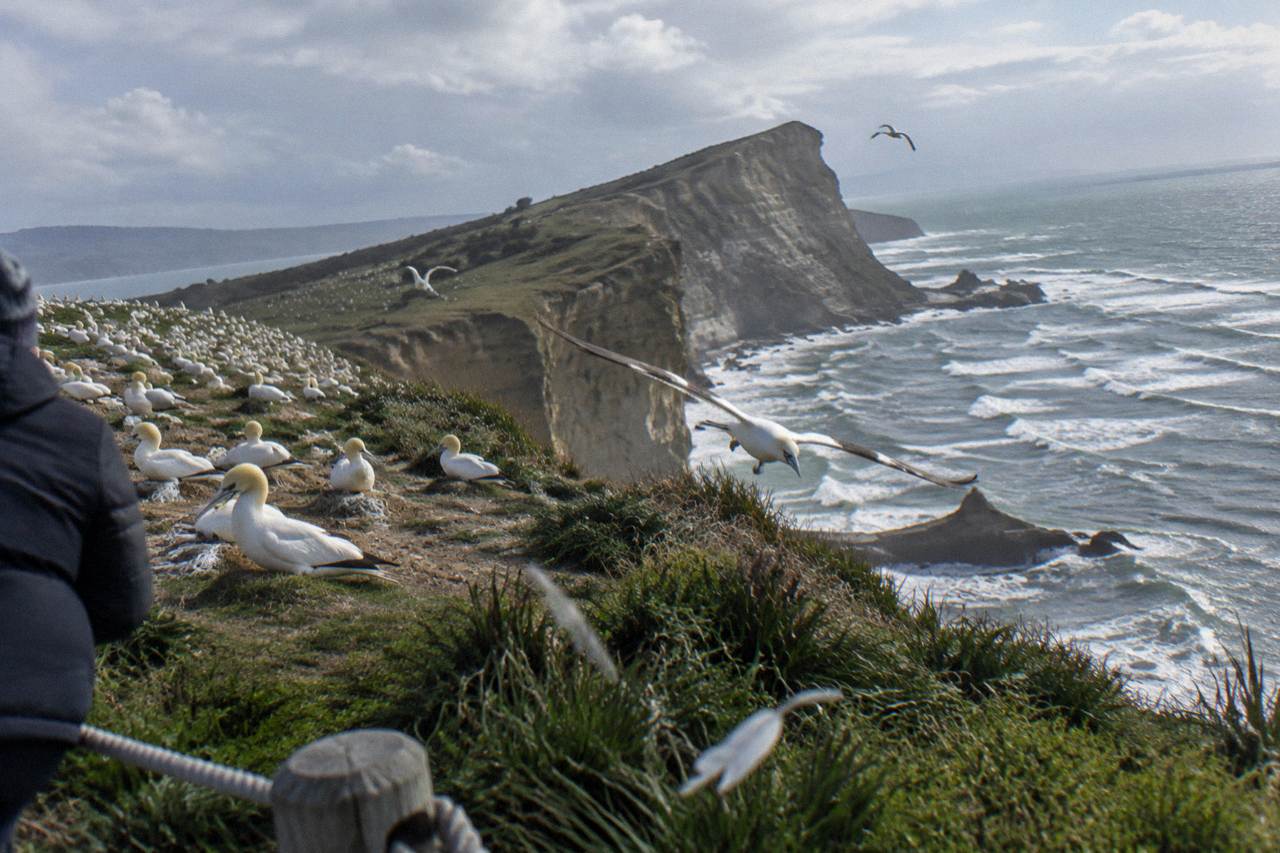
DOC names early November to late February as the best viewing window at Cape Kidnappers, and that window is the closest thing to a chick season. Chicks can be present across a wide stretch of the season, but no week or month is promised, and weather can always affect a departure. To plan around that hatch window, the season-by-season guide to gannet chick timing at Cape Kidnappers explains what each stretch of the season offers and how to pick a suitable tour.
That answer tends to frustrate people who want a date. The instinct is understandable: you are booking flights, you have one shot at Hawke's Bay, and you have read that the colony holds 6,500 pairs, DOC's figure for the largest and most accessible mainland gannet colony in the world. You want to land in the week the fluffy chicks are at their most photogenic. The birds do not cooperate with that kind of precision, and neither do the sources.
What follows is built on the Department of Conservation's own guidance for the Cape Kidnappers / Te Kauwae-a-Maui Gannet Reserve, the biology recorded by NZ Birds Online, and the published details of the overland tours that reach the plateau colony. Where something is genuinely variable, it says so.
When Is The Best Viewing Season At Cape Kidnappers?
DOC's guidance is specific: the best viewing at Cape Kidnappers runs from early November to late February. That is the window the Department of Conservation marks as the best viewing time for the colony. Outside it the colony is still present and active, but the spectacle thins as birds depart.
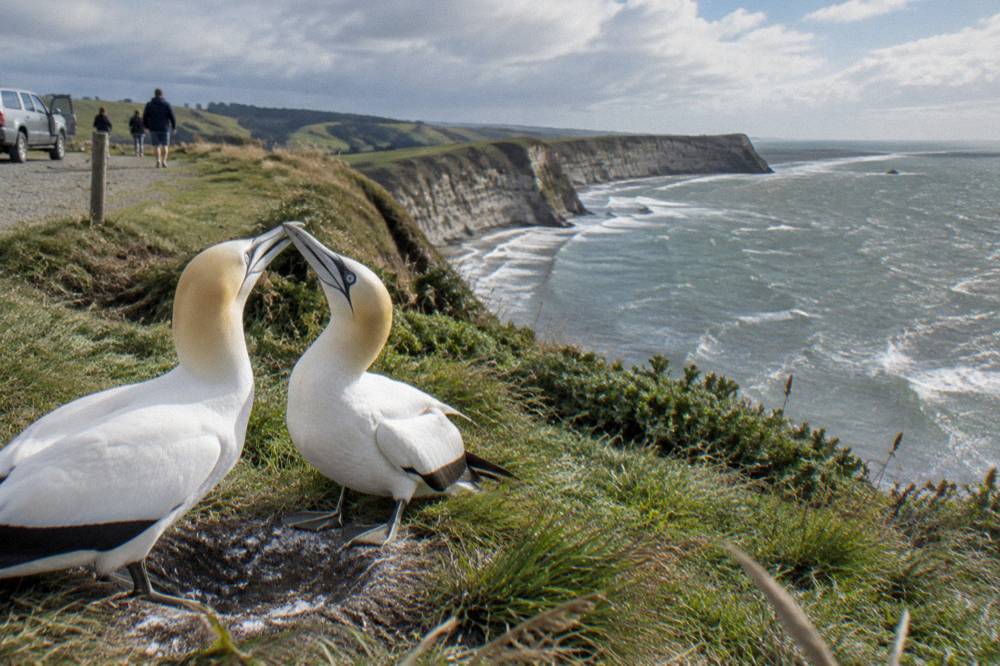
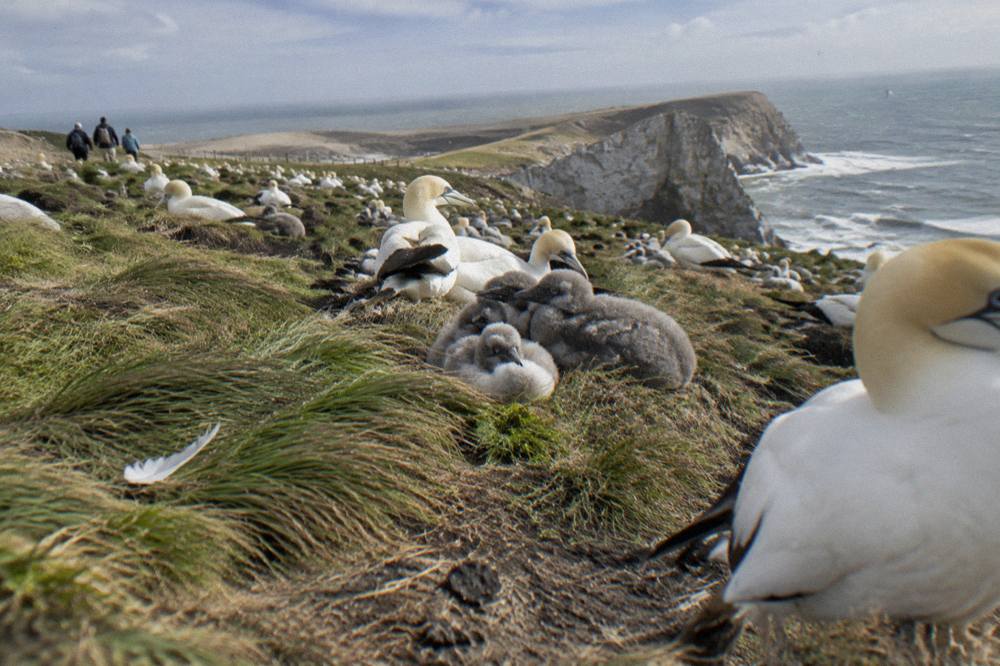
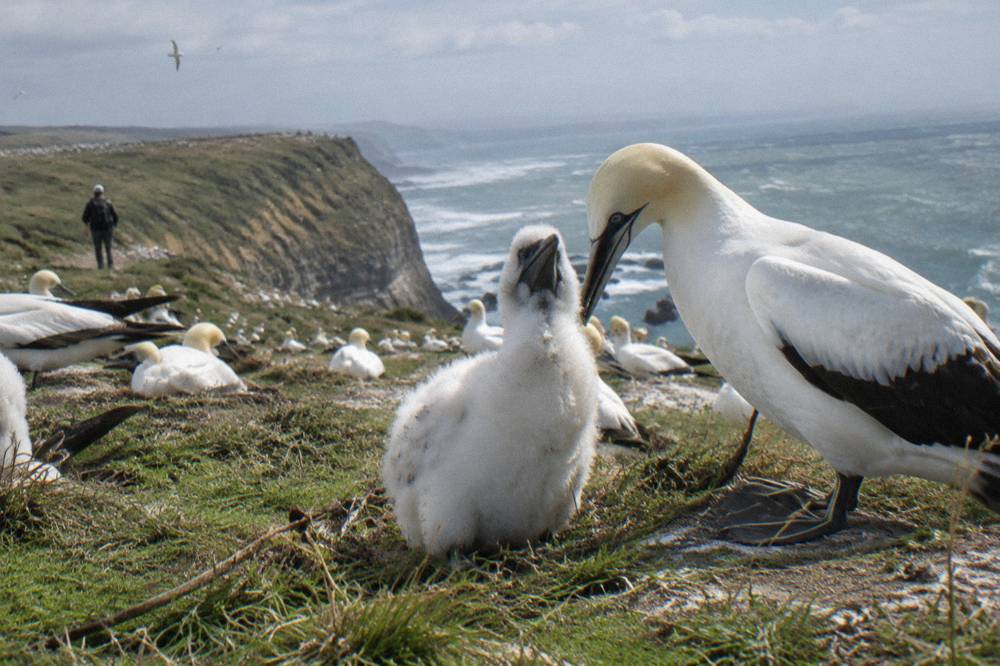
The reason the window is wide rather than precise is the gannet breeding cycle itself. Australasian gannets, takapu in te reo Māori, have nested at the cape since the 1870s, and their numbers have grown to the 6,500 pairs DOC counts today. Adults return to the cape from around July for courtship and nest building. Each pair lays one egg. Both parents incubate it, resting the egg on their webbed feet rather than in a built nest the way many seabirds do, and both share the chick-rearing. Because pairs across a colony of thousands are not synchronised, different nests sit at different stages at the same time. One bird may be brooding a small chick while its neighbour is still incubating and another is feeding a chick nearly the size of an adult.
Hatch timing shifts from season to season, so no week can be promised in advance. DOC describes the Plateau colony, on private land reached by the overland tours, as the best place to view nesting gannets, with close-up views possible at the Plateau and Black Reef colonies.
- Standard Overland Gannet Tours$55
- Cruise Shore Excursions$93
- Private And Sunrise Tours$604 per group
Timing a booking month against that window is straightforward arithmetic once you accept the fuzziness. November and December sit at the start of the best viewing window, which DOC sets from early November to late February. January and February are peak summer in Hawke's Bay and sit well inside the DOC best viewing window. March still has birds, but numbers decline as young birds and then adults begin moving out. If your only constraint is maximising the chance of chicks, book inside the DOC window; if your constraint is school holidays or a cruise date, read the tour-season section below before deciding the trip is wasted, because it usually is not.
When Do The Adult Gannets Arrive At Cape Kidnappers?
Adults return to Cape Kidnappers from around July for courtship and nest building, and the colony builds steadily from there. Adults return from around July By the time tours resume in August the plateau is already coming back to life after the winter gap.
The return is a genuinely dramatic phase if you catch it. Pairs stay together over many seasons, so much of the early activity is reunion and re-establishment: birds reclaiming nest sites, rebuilding, displaying. A group of gannets nesting together is called a colony, or a gannetry, and by spring the Cape Kidnappers gannetry is a dense, noisy patchwork of established pairs. Gannets are long-lived birds with a lifespan of 25 to 40 years, and pairs reuse their bond and their site year after year.
The other thing worth knowing about the adult calendar is the departure side. Once breeding winds down, the birds disperse to sea, and the plateau empties. If you see a claim that the colony is worth visiting in June, treat it with suspicion: the tours are not running, the beach track to the plateau is closed, and the birds are largely elsewhere.
There is a planning nuance here that first-time visitors miss. But if chicks are the whole point of your trip, the early season is the wrong trade. Hold out for the November-to-February window and you give yourself the best odds.
How Long Do Gannet Chicks Stay At The Nest?
A gannet chick is raised from a single egg, fed by both parents, and grows to near-adult size before fledging and leaving the colony for a roughly 2,800 km Tasman Sea crossing to Australia. Young birds typically return to New Zealand in their third year. Precise nest-stage timings vary between seasons, so no reliable week-by-week chick calendar exists.
The biology is well documented even where the dates are not. NZ Birds Online records the wingspan of an adult Australasian gannet at about 1.8 m, the single-egg clutch, and incubation on the webbed feet. A fledgling gannet is a remarkable sight: at fledging it is heavy with accumulated fat, grey-brown where the adults are white, and about to undertake one of the longer first journeys of any New Zealand seabird.
That Tasman crossing is the part that surprises most readers. Young gannets leave the Hawke's Bay cliffs and fly to Australia, roughly 2,800 km away, then return to New Zealand in their third year. Adults meanwhile make shorter feeding trips during the breeding season, which is why the plateau is in constant motion through the viewing window: birds arriving, birds leaving, birds exchanging at the nest.
What you can say is structural: one egg per pair, both parents involved, a long fledge, and a colony at mixed stages through the heart of the season. If seeing a chick at close quarters matters to you, the practical lever is not the date, it is the vantage point, and the next section covers which visits actually put you near the nests.
Which Tour Months Work For Seeing Chicks?
The overland tours run from 1 August to 30 April, including Christmas Day, which comfortably covers DOC's early-November-to-late-February best viewing window. Any month inside that window works for a chick-focused visit; the practical differences are crowds, weather and price, not bird presence.
The tour season is longer than the chick window, and that matters for how you book. If you can travel freely, target November through February and the question answers itself. What you should not do is book a July trip expecting the plateau experience; the tours do not operate then.
The two standard overland tours illustrate the price spread on per-person tickets. The 3-Hour Tour that meets at the base, 396 Clifton Road in Te Awanga, runs from $56.23 per person and carries a 4.9 rating across 1,052 reviews, the deepest review pool of any tour covered here, making it the most-reviewed option and, among the two well-reviewed tours, the higher-priced of the pair. The alternative 3-hour tour runs from $55.00 per person, rated 4.8 across 378 reviews, and meets at the operator base in Te Awanga rather than offering pickup or drop-off; if you would rather ride than drive, the other standard tour sells pickup as an optional add-on at booking, keeping this one the cheaper of the two well-reviewed options. Both run about 3 hours, both are not for cruise passengers, and both offer free cancellation up to 24 hours before start, which is worth having when you are gambling on weather in a coastal month.
| Tour | Season basis | Length | Price basis | Pickup | Cruise passengers |
|---|---|---|---|---|---|
| 3-Hour Tour, Meet at Base | 1 Aug to 30 Apr | 3 hours | From $56.23 per person | Optional add-on at booking | Not suitable |
| 3-Hour Tour, Lowest Price | 1 Aug to 30 Apr | 3 hours | From $55.00 per person | Not included | Not suitable |
| 4-Hour Shore Excursion, 45-Minute Stop | 1 Aug to 30 Apr | 4 hours, 45 minutes at the colony | From $95.42 per person | Central Napier meeting point | Designed for cruise passengers |
| Private 4-Hour Tour | 1 Aug to 30 Apr | 4 hours, 45 minutes at the colony | From $704.30 per group, up to 4 | Check the booking page | Check the booking page |
The private options are priced per group rather than per person, so treat them as a different purchase entirely. The Private 4-Hour Tour runs from $704.30 for a group of up to four and includes 45 minutes at the colony per its itinerary, with coffee or tea. The private sunrise tours run about 3 hours at dawn. One version includes a gourmet breakfast with plunger coffee and juice, and photographers choose these trips for low light over the colony rather than any particular chick stage.
Cruise passengers should read that table carefully. The standard 3-hour tours are not for cruise passengers; the shore excursions are. The 4-Hour Shore Excursion meets at 100 Marine Parade, opposite Napier Museum and about 200 m from where the cruise shuttle drops at the Napier i-SITE, and its itinerary includes 45 minutes at the colony. On some ship days the operator collects passengers directly from the port because of short port times, and departure times are set per ship, so check the all-aboard time against the 4-hour length before you commit.
What About Walking To See The Chicks?
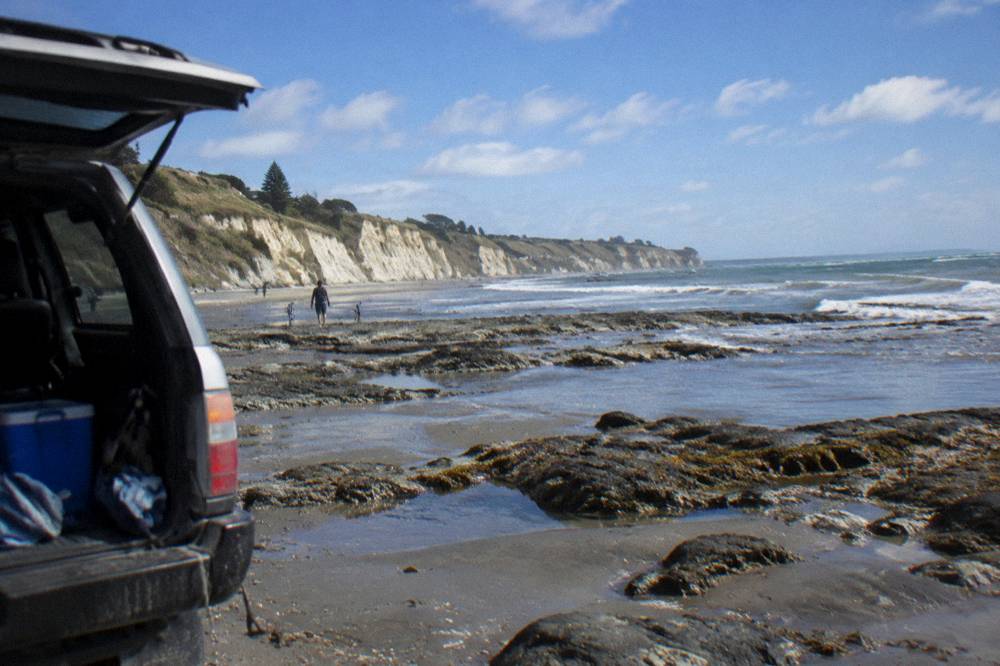
The DOC beach walk to the colony is 19 km return, graded Expert, with at least 5 hours needed for a comfortable return trip, and it is possible only around low tide: high tides and big seas block the beach. Walkers must leave the Cape no later than 1.5 hours after low tide and check the tide table before going.
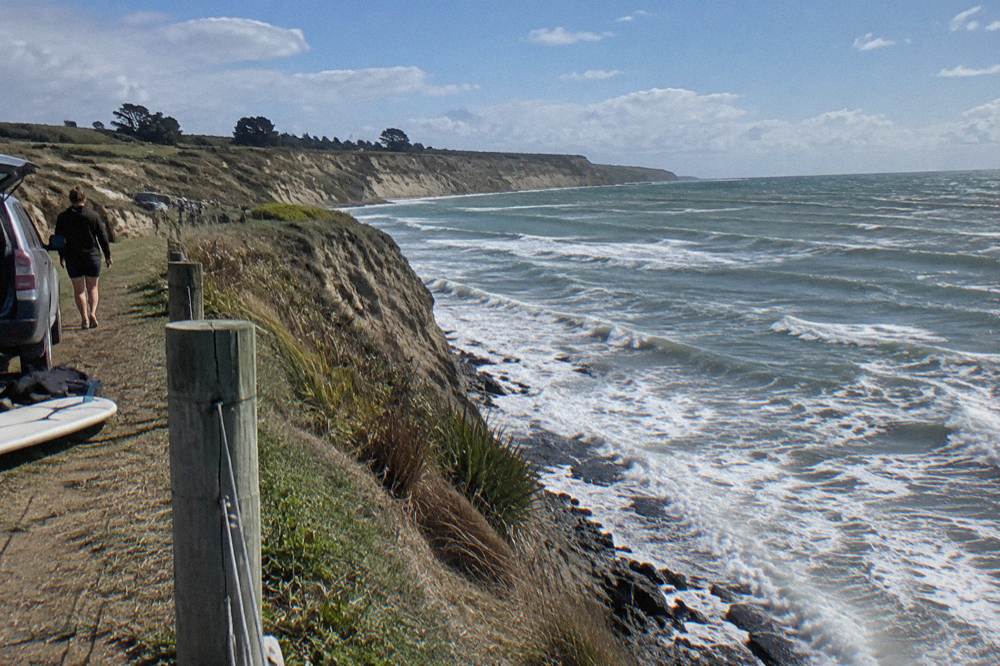
The walk is the free route and, in the chick season, a serious commitment. It starts at Clifton, Scotmans Point, 21 km south of Napier and 18 km east of Hastings. Black Reef, the first nesting site, sits 7.5 km from the start, and a steep, rough, muddy climb of about 1 km leads on to the second colony. DOC's guidance on what to carry reads like a tramping list: sturdy footwear, food and water, sunscreen and hats, extra clothing for cool sea breezes, a water and windproof jacket, gloves, a head torch and a communication device. There is a DOC rest shelter with toilets a short way up the track from the beach end, and no drinking water.
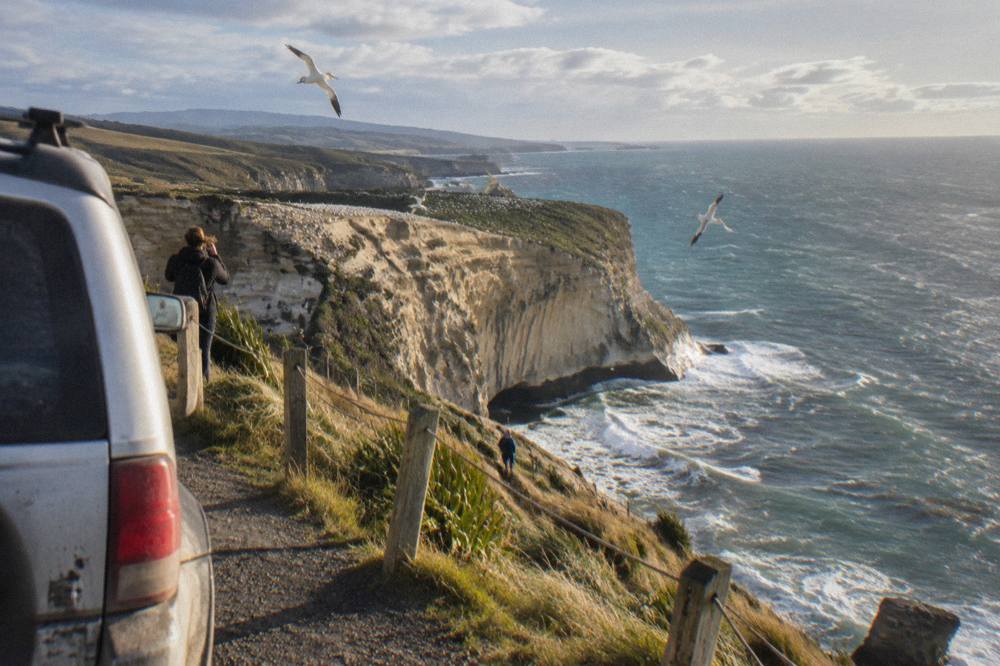
Two hazards dominate the planning. First, about 7 km of the beach lies under cliffs subject to significant landslide and rockfall. A landslide seriously injured two tourists in January 2019, another large landslide in February 2020 closed the beach before it was later reopened, and DOC reports large landslides every year, with three serious injury events in the past 50 years. DOC says the track's status can change at any time and directs walkers to the safety alert on its page; Hastings District Council says Clifton beach is open but may close if there is unstable activity, so check the signage. Second, the tides: the beach is passable only around low tide, and the cliff-top overland tours are the alternative precisely because they travel above the cliffs and are not governed by the tides. DOC itself treats beach transport as a high-risk operation and describes the overland route across private farmland as a lower-risk option.
Access logistics changed recently for walkers and bike riders. Clifton Motor Camp closed on 20 February 2026 after a geotechnical assessment found unstable land above it, was permanently closed in July 2026, and in August 2026 Hastings District Council voted to close a section of Clifton Road at the former campground to vehicles. Pedestrian access to Clifton Beach and the walking route stays open. If your chick-season plan involves the beach, plan parking around the road closure and verify current access before travelling.
For chicks specifically, the plateau is the better vantage. DOC names the Plateau colony, on private land, as the best place to view nesting gannets, and it is the plateau the overland tours reach by 4WD across a working farm of roughly 2,500 hectares with a predator-proof fenced conservation area. The operator describes the plateau as flat ground with bench seats where walking is safe and easy, and says everything can be seen from the vehicle without getting out. A walker coming up the beach track reaches the same cliffs the hard way, and the track from the beach to the plateau colony is closed from July to the week before Labour Weekend each year, so early-season walkers see Black Reef, not the plateau.
At the reserve, a few rules protect the birds at their most vulnerable stage. Keep behind barriers or at least five metres from nesting gannets, keep to the track through private land, and leave dogs, horses, motorbikes, fires and camping at home. Drones on conservation land need a DOC permit. The area is also susceptible to tsunami: if a siren or alert sounds, move to higher ground.
What Do The Young Gannets Do After They Leave?
After fledging, young gannets fly about 2,800 km across the Tasman Sea to Australia and typically return to New Zealand in their third year, eventually breeding at the colony where they were raised. The colony these young birds belong to holds 6,500 pairs, by the Department of Conservation's count.
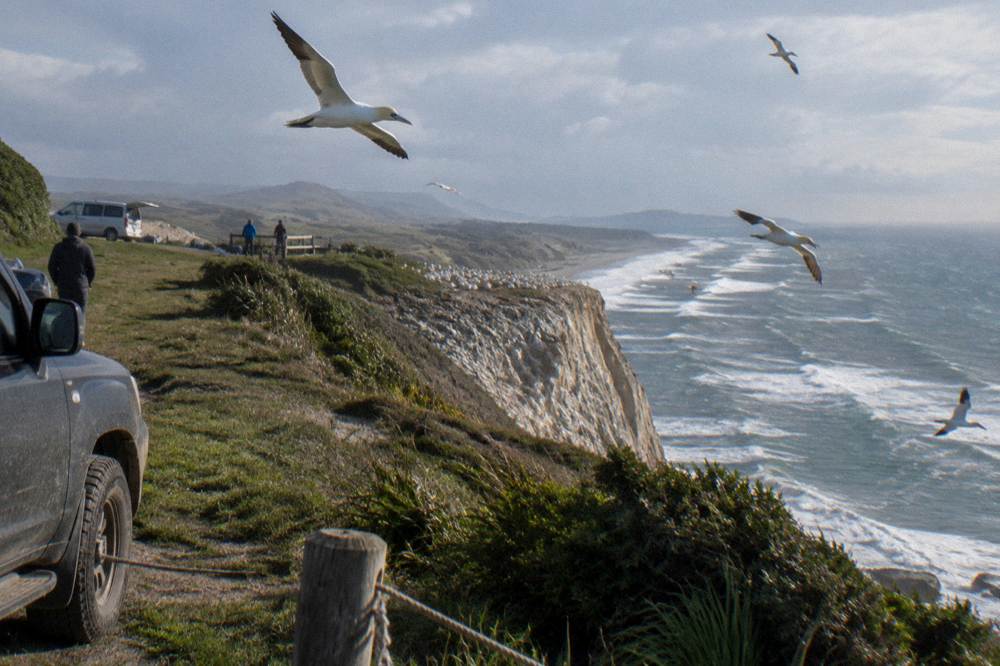
The fledging period is the quiet drama of the late season. It will not breed immediately on return; young birds spend their pre-breeding years at sea and around the colonies, and pairs form over time, with partnerships that then persist across many breeding seasons given gannets' 25 to 40 year lifespan. The colony you watch in February is thus a mix of generations: veterans on established nests, younger adults holding territory, and the current season's chicks waiting on the cliff edge.
For a visitor, this changes what March and April look like. It is quieter, and the cliff-top light in autumn is a photographer's friend. There is no promise in it; birds do not file itineraries.
It also explains the other birdlife worth watching while you wait for gannets to do something. The cape hosts white-fronted terns, variable oystercatchers, reef herons and Caspian terns, and little blue penguins nest around the cape. On the overland route across the farm, keep an eye out between the gate and the cliffs; the reserve's predator-proof fence exists for all of these species, not just the gannets.
How Should You Pick A Booking Month?
Pick a month inside DOC's best viewing window, early November to late February, if chicks are the priority; pick any month from August to April if seeing the colony at all is enough. Then pick the tour that matches your transport and group, and book one with free cancellation up to 24 hours before start so a bad forecast does not sink the trip.
Start with the month, then the mode of transport. For independent travellers with a car, the standard 3-hour tours are the natural fit: from $56.23 per person meeting at the Clifton base with hotel pickup available as an optional add-on at booking, or from $55.00 per person meeting at the same base, with light refreshments included, though either way the drive from Napier to Te Awanga is about 25 minutes. For cruise passengers, only the shore excursions apply, meeting at 100 Marine Parade near the i-SITE. For families or tight groups of up to four who want the plateau to themselves at a chosen hour, the private tours, priced per group, cover it, including a Private Sunrise version for photographers.
Book the cancellation-protected way and watch the forecast rather than the calendar. Gannets do not mind a bit of wind, but coastal weather can cancel or reschedule a departure, and every tour covered here offers free cancellation up to 24 hours before start. Layer for it regardless: the plateau is an exposed cliff-top, and the operator advises a jacket. Wear sturdy shoes, bring sun protection, and use the bathrooms at the base before you leave, as there are no toilets on the tour.
For everything the colony is, the season it keeps and the birds that raise their chicks on it, Napier Gannet Tour gathers the practical detail in one place, including the tide and walk safety guide if the free beach route tempts you. Whatever month you choose, go with eyes open: no date guarantees a chick, but the November-to-February window, a plateau vantage and a little patience come as close as anything can.
Common Questions About Gannet Chicks At Cape Kidnappers
What Time Of Year Are Gannet Chicks At Cape Kidnappers?
DOC's best viewing window runs early November to late February. Chicks are raised from single eggs at unsynchronised stages across the colony, so no week or month is guaranteed to show a particular stage.
When Is The Best Time Of Year To Visit The Cape Kidnappers Gannet Colony?
Early November to late February, per DOC. The tours run 1 August to 30 April, so the viewing window sits comfortably inside the operating season.
Do Gannet Chicks Hatch All At Once?
No. Pairs across a colony of 6,500 are not synchronised, so eggs, small chicks and near-fledged chicks can all be present at the same time during the season.
Can I See Chicks From The Walking Track?
The 19 km return beach walk passes Black Reef, the first nesting site 7.5 km from Clifton, and the track to the plateau colony is closed July to the week before Labour Weekend. It is possible only around low tide, and the cliffs along about 7 km of beach are subject to landslide.
Which Tour Should I Book For The Chick Season?
Any overland tour inside the November-to-February window works. The standard 3-hour tours run from $55.00 and $56.23 per person; cruise passengers need one of the shore excursions instead.