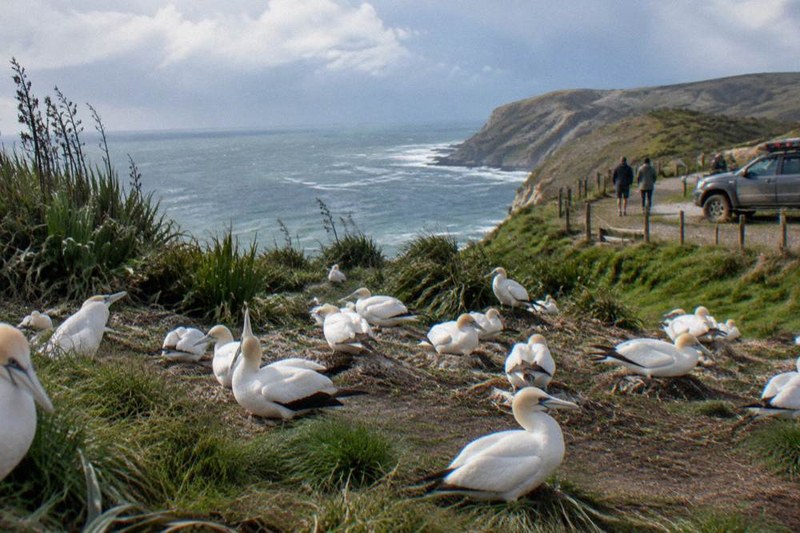
Cape Kidnappers By Bike Vs A Guided Gannet Tour
One way to reach the gannets is a self-guided fat-bike ride along the beach from Clifton; the other is a guided 4WD ride above the cliff tops. Here is how the two compare on route, effort, tide windows, safety and cost.
Short answer
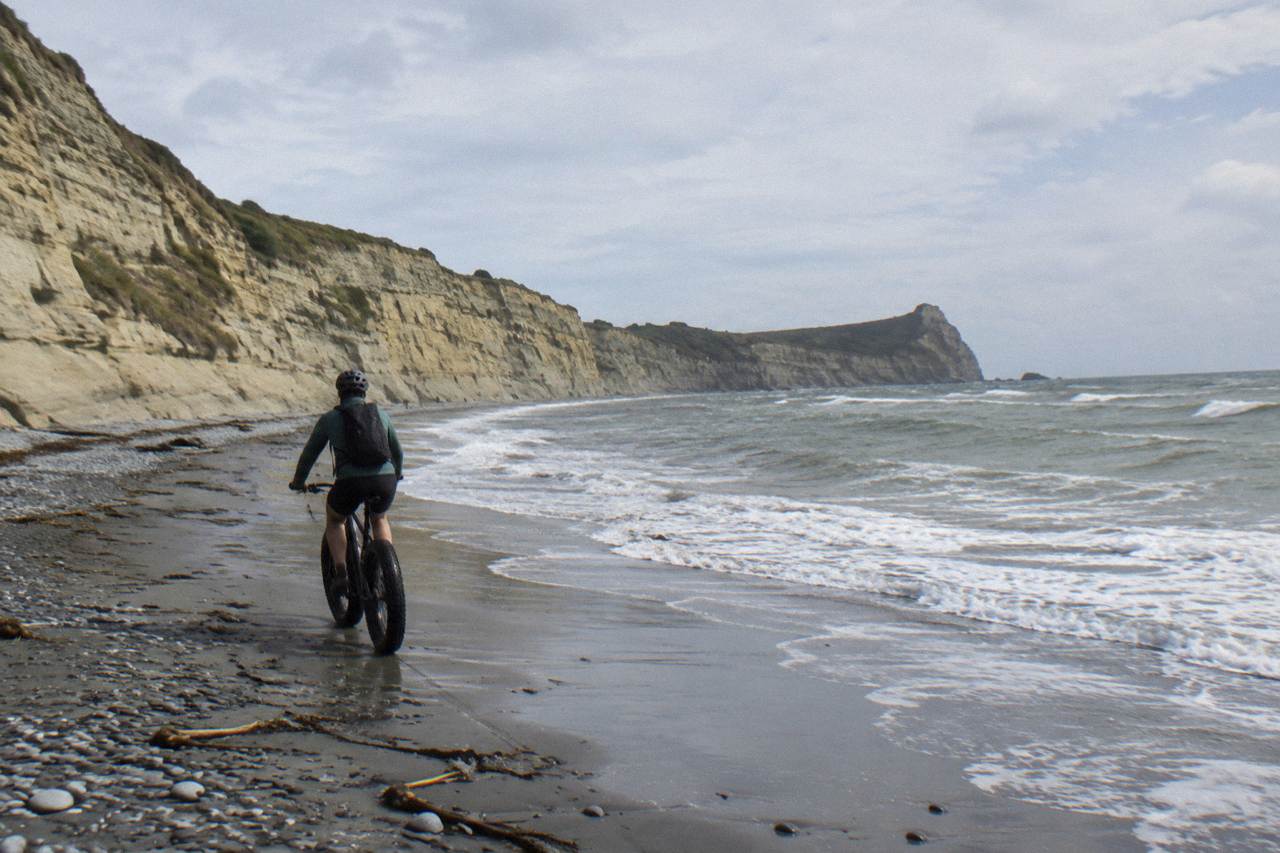
The bike ride is a self-guided fat-bike trip from 475 Clifton Road, taking 3.5 to 4 hours and needing at least intermediate fitness. It rides the beach corridor, which is passable only around low tide. The guided overland tours travel above the cliff tops on private farmland, are not governed by the tides, and run from $55 per person for 3 hours.
Cycling to a gannet colony sounds like the kind of morning that ends in a story. It can be. But the Cape Kidnappers coast is a tidal, cliff-shadowed stretch of Hawke's Bay where the wrong departure time turns a ride into a wait on a shrinking beach, and the cycling option on offer here is fully self-guided. This guide compares that ride, run as a separate fat-bike operation from Clifton, with the guided overland gannet tours that cross the same station by 4WD above the cliff tops. For those drawn to the shoreline instead, the tractor ride versus 4WD overland tour comparison looks at how that beach-level option stacks up on tides, safety, and price.
The comparison matters because the two options reach much the same reward, nesting Australasian gannets at close range, by completely different means. DOC puts the colony at 6,500 pairs and calls it the largest and most accessible mainland colony in the world. How you get there determines how much planning, fitness and risk you carry yourself, and how much you hand to an operator. For a broader look at the guided side first, see the Cape Kidnappers gannet tour overview; for the walking comparison, read the beach walk versus the overland tour.
What Is The Cape Kidnappers Bike Ride Alternative?
The bike ride is a self-guided fat-bike trip from 475 Clifton Road, Clifton, taking 3.5 to 4 hours in total and requiring at least intermediate fitness. Bike, helmet, spare tube, pump and map are supplied, and the ride ends with a short walk up to the plateau colony. It is a separate operation from the guided overland tours, runs to its own arrangements, and you ride it without a guide. For anyone assuming a car can go all the way, the truth about driving to the gannet colony explains where the road access actually ends.
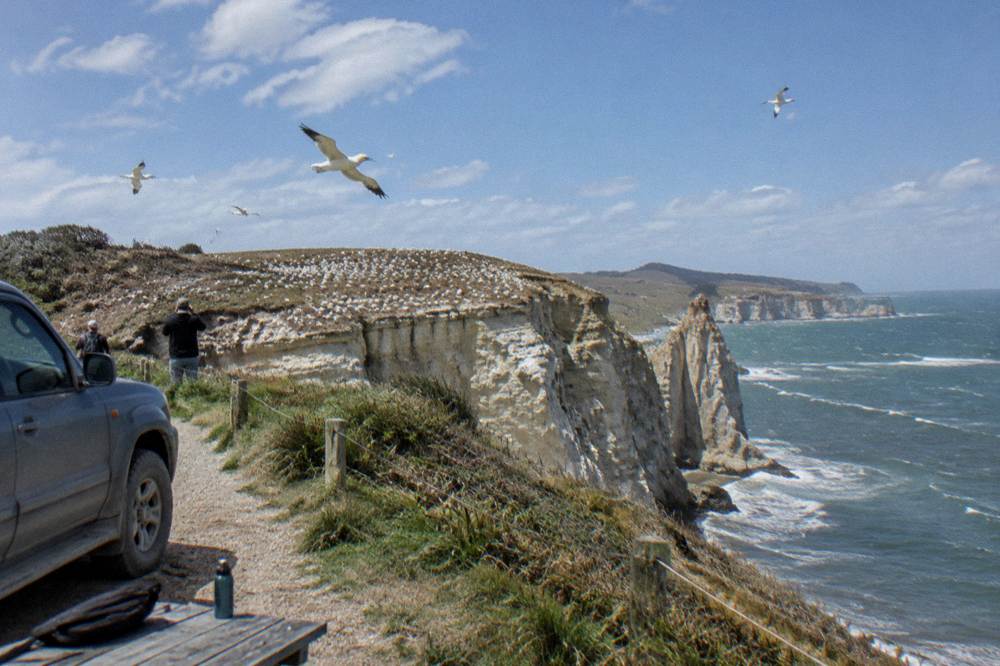
Fat bikes, with their oversized tyres, exist for exactly this kind of surface: the round trip follows the beach from Clifton toward the cape rather than a sealed road. The ride shares its corridor with the famous DOC walking route, which starts at Clifton, reaches the first nesting site at Black Reef 7.5 km away, and covers 19 km return in total. Those are the official DOC distances, and they are the ones to plan around.
There is a DOC rest shelter with toilets a short way up the track from the beach end, but no drinking water, so riders carry what they need. A short walk at the end leads up to the plateau colony, the spot DOC names as the best place to view nesting gannets, with close-up views possible at the Plateau and Black Reef colonies.
Because this is a self-guided product, the tide logic, the timing and the turnaround decision are yours. That is the heart of the comparison with the guided tours, which come next.
How Does The Bike Ride Compare To The Overland Gannet Tour?
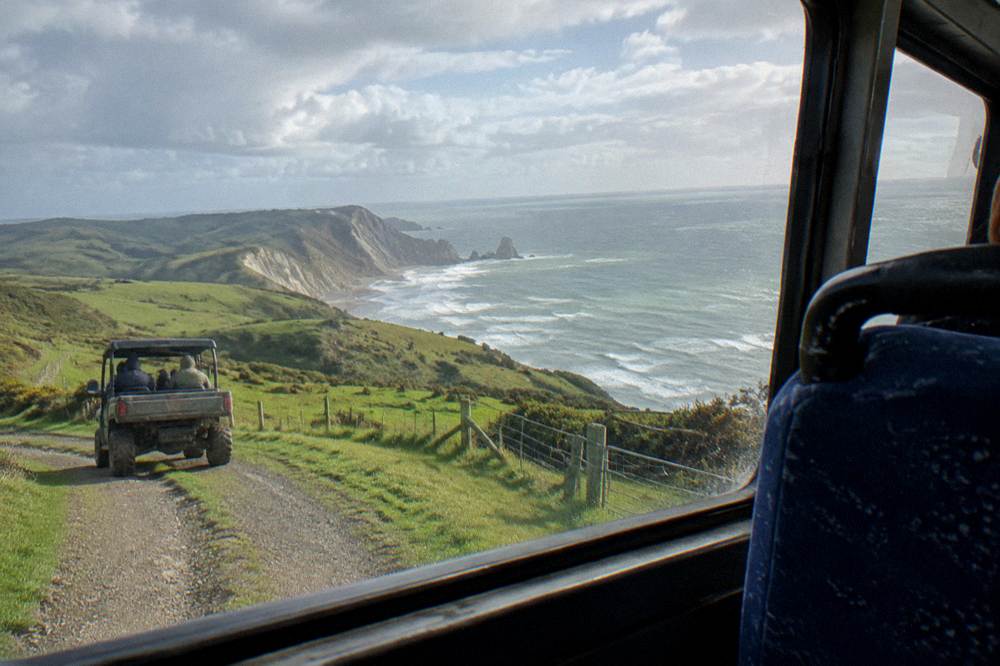
The overland tours are guided 4WD rides across a working farm and native bush to a privately owned nature reserve above the cliffs, roughly 3 to 4 hours door to door depending on the option, with little or no walking required. The bike ride is self-guided, tide-dependent, takes 3.5 to 4 hours in total, and needs at least intermediate fitness. The tours are not governed by the tides because they travel above the cliff tops.
- Standard Overland Gannet Tours$55
- Cruise Shore Excursions$93
- Private And Sunrise Tours$604 per group
That single difference, tides versus no tides, reshapes the whole day. A cyclist studies the tide table the night before and builds the day around it; a tour guest books a departure time and turns up. The operator says the overland route crosses Cape Kidnappers Station, a working farm of roughly 2,500 hectares with a predator-proof fenced conservation area, and that guests can see everything from the vehicle without getting out if they prefer. If you were hoping to bring the family dog along on the overland ride, the rules on dogs at Cape Kidnappers explain why that is not an option and what dog owners can do instead.
Effort is the second difference. The operator describes the plateau as flat ground with bench seats where walking is safe and easy, and the only real requirement is being able to get on and off the vehicle unaided. The bike ride asks for sustained pedalling over soft ground at the fitness level the bike operator states, plus a climb on foot at the far end.
Comfort differs too. On the guided 3-hour tour that meets at the base at 396 Clifton Road, transport is by air-conditioned minivan and refreshments include coffee or tea and beverages, with free cancellation available. The cyclist brings their own food and water, and their own legs.
Side by side, the practical trade-offs look like this.
| Factor | Bike ride from Clifton | Guided overland tour |
|---|---|---|
| Guidance | Self-guided, you navigate | Guided, driver and commentary |
| Route | Beach from 475 Clifton Road | 4WD across private farmland above the cliffs |
| Duration | 3.5 to 4 hours in total | About 3 to 4 hours depending on the option |
| Fitness | At least intermediate | Little or no walking required |
| Tides | Possible only around low tide | Not governed by the tides |
| Toilets | DOC shelter partway, no water | Last toilets at the operator's base at 396 Clifton Road |
| Bike or vehicle | Fat bike, helmet, tube, pump and map supplied | Air-conditioned vehicle or 4WD safari depending on the option |
For help deciding how much effort you actually want on the day, the Cape Kidnappers tour fitness guide walks through the requirements in more detail.
Which Option Suits Your Fitness And Time Budget?
Choose the bike ride if you cycle regularly, can commit 3.5 to 4 hours plus travel, and are comfortable planning around the tide. Choose a guided tour if you want the colony with little or no walking, a fixed departure time, and a 3-hour block from the base at 396 Clifton Road, about a 25 minute drive from Napier. Both fit a half day; only one fits a lazy start.
Time on paper is deceptive. The bike operator's 3.5 to 4 hours in total covers riding both ways and the walk to the plateau. Driving to Clifton and checking the tide sit outside that figure. The guided 3-hour tour from the base compresses all of that into one booked window, and the slightly higher-priced Meet at Base tour offers an optional pickup add-on at booking for travellers who would rather not drive to Te Awanga at all.
The cheapest shared tour runs from $55 per person for 3 hours, rated 4.8 across 378 reviews; it meets at 396 Clifton Road, Te Awanga, and travellers make their own way there. The other standard option meets at the same base and runs from $56.23 per person, carrying 4.9 across 1,052 reviews, the deepest review pool of any tour covered on this site. Both compare on price in the gannet tour price guide.
| Time element | Bike ride | Guided 3-hour tour from the base |
|---|---|---|
| Travel to start | Drive yourself to 475 Clifton Road, about 25 minutes from Napier | Drive to 396 Clifton Road, or choose the pickup-included version |
| Activity window | 3.5 to 4 hours in total, including the walk at the end | About 3 hours total, colony stop included |
| Tide planning | Your own, built around low tide | None needed, the route runs above the cliff tops |
| Buffer if things go wrong | You manage the turnaround yourself | The operator manages the schedule |
| Refreshments | Bring your own food and water | Coffee or tea and beverages included |
| Booking flexibility | Per the bike operator's own terms | Free cancellation up to 24 hours before start |
For a cyclist weighing a fallback, the same 3-hour meet-at-base tour is the natural plan B when the tide or the weather turns, and its free cancellation up to 24 hours before start means a booking held early can be dropped if the forecast for your ride clears.
The standard tour from the base is worth a closer look as that fallback.
Families split along the same line. Cycling with teenagers who ride often is a different proposition from cycling with younger children, and the 3-hour meet-at-base tour is pushchair accessible, which makes it the lower-friction family choice. The tour with kids guide covers that decision in full.
What Does The Cape Kidnappers Bike Route Actually Involve?
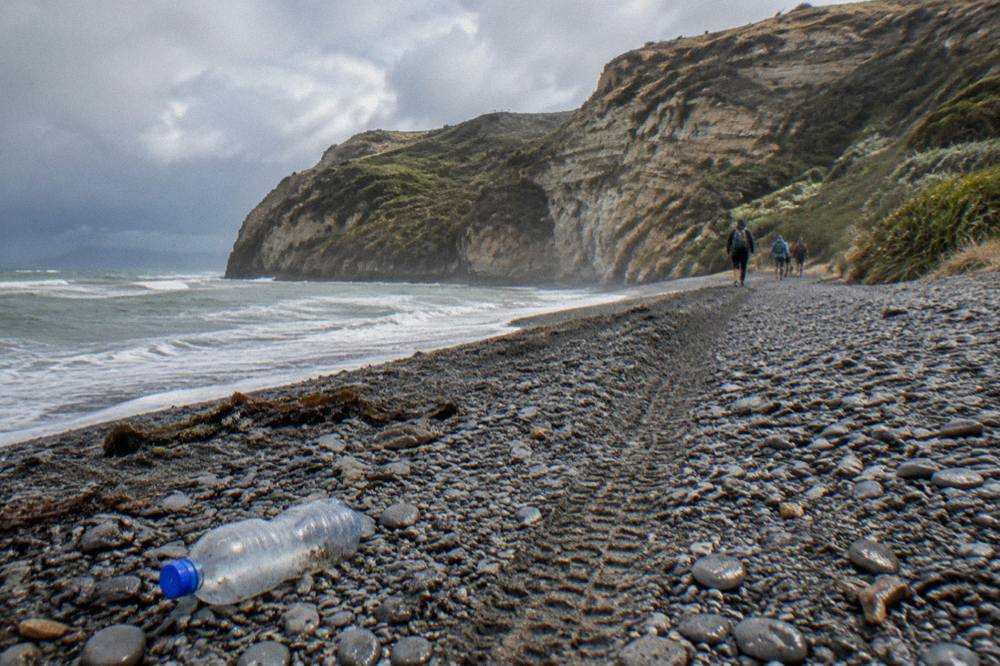
From Clifton the route follows the beach 7.5 km to Black Reef, the first nesting site, and the full walking and riding corridor is 19 km return. A steep, rough, muddy climb of about 1 km leads from the beach up toward the second colony. The beach walk, and by extension the ride along it, is possible only around low tide, and you must leave the Cape no later than 1.5 hours after low tide.
That turnaround rule is the one number that matters most. Leave later and the returning tide, with high tides and big seas blocking the beach entirely, can cut off the route home. Check the tide table before going, every time, and treat big swell forecasts as a reason not to ride at all.
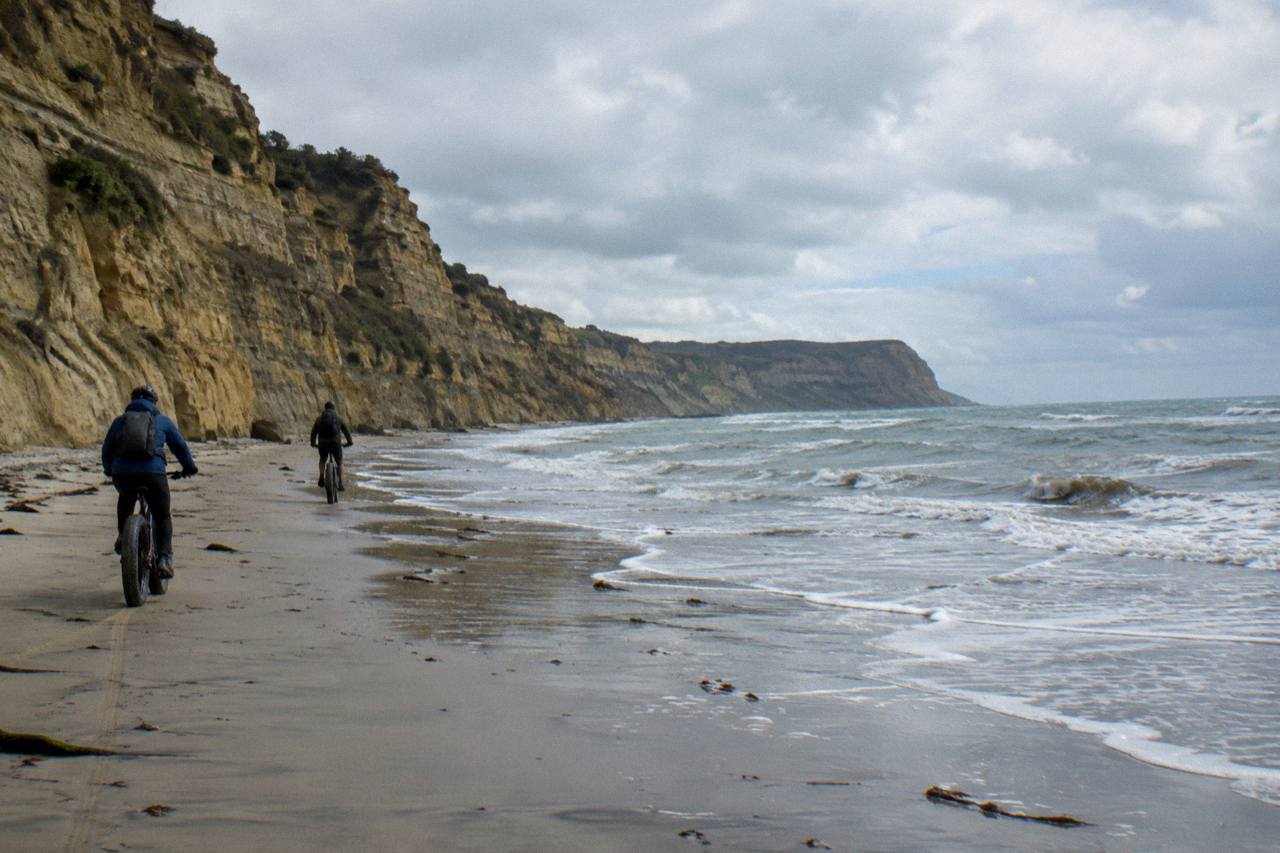
The riding surface is the variable. The operator supplies fat bikes and recommends an intermediate level of fitness or above for the ride. A headwind on the return leg can add real time to a distance that looked short on the map.
At the far end, the short walk to the plateau colony delivers the payoff DOC describes as the best nesting views, and it is the same viewpoint the overland tours reach by vehicle. If the tide window worries you, the Cape Kidnappers tide times guide explains the planning in depth.
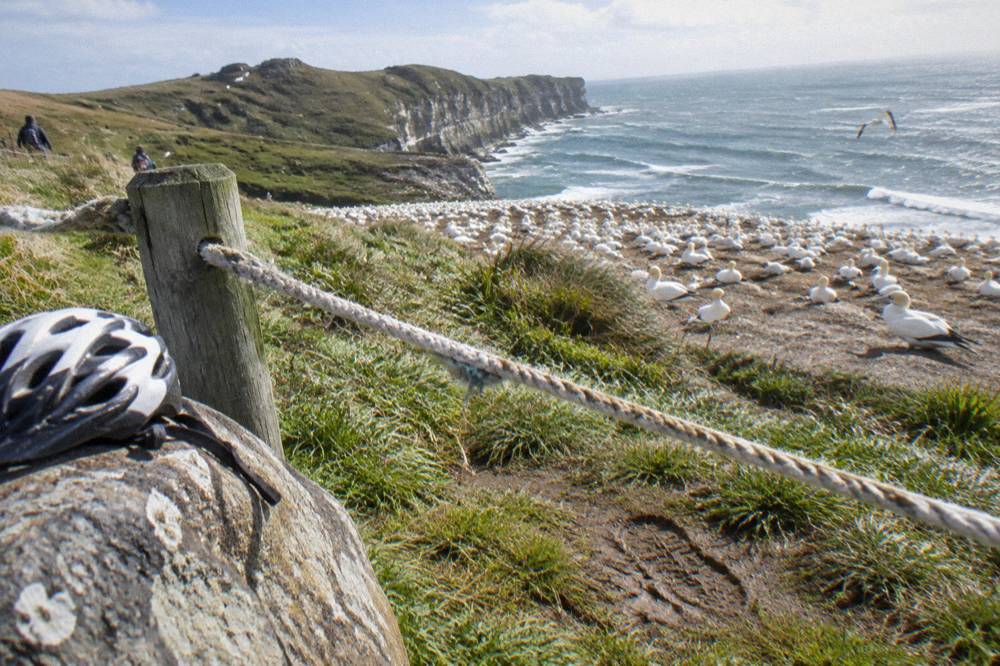
DOC's own packing advice for the beach route is worth repeating for riders: sturdy footwear, food and water, sunscreen and hats, extra clothing for cool sea breezes, a water and windproof jacket, gloves, a head torch and a communication device. The shelter with toilets a short way up the track from the beach end is the only facility, so treat it as a checkpoint rather than a resupply stop.
Is Cycling To Cape Kidnappers Safer Than The Beach Walk?
Cycling and walking share the same hazard: about 7 km of the beach lies under cliffs subject to significant landslide. A landslide seriously injured two tourists in January 2019, and a large landslide in February 2020 closed the beach before it reopened. DOC says track status can change at any time and advises checking the safety alert on its page. Speed on a bike does not remove the cliff risk.
If anything, a bike changes the calculus only slightly. Riding faster shortens the time spent under the cliffs, but it also tempts riders to press on past a safe margin when the tide turns, and fatigue late in a ride dulls exactly the judgement the coast demands. DOC reports three serious injury landslide events in the past 50 years and large landslides every year, and treats the whole beach corridor as a place to move through, not linger.
DOC also treats beach transport as a high-risk operation and describes the overland route across private farmland as a lower-risk option, which is the framing for anyone choosing between the two corridors on safety grounds. Hastings District Council says Clifton beach is open but may close if there is unstable activity; check the signage at the access point.
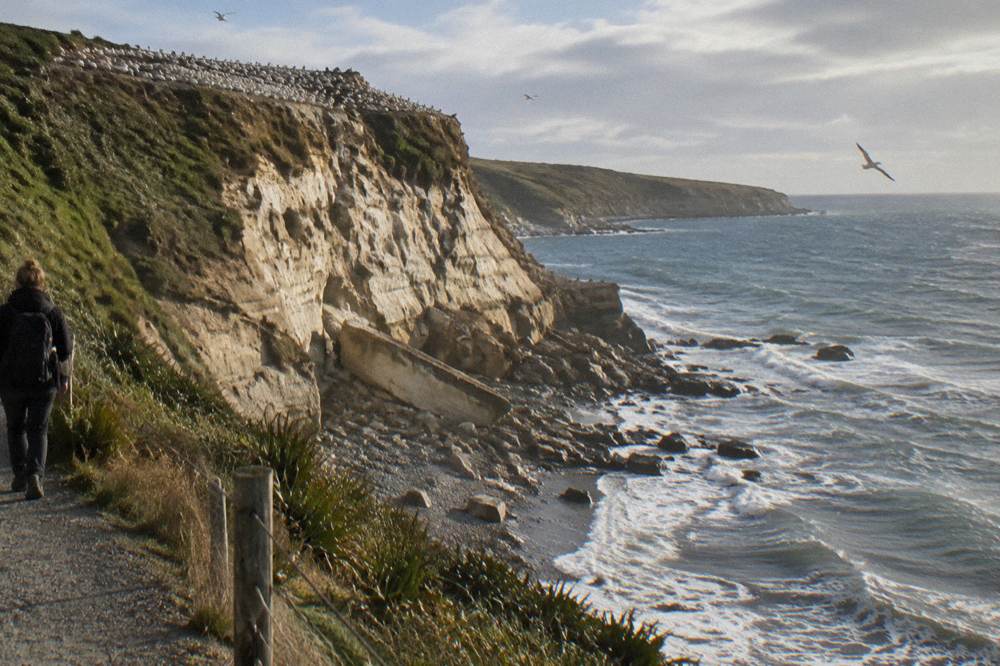
One local change matters specifically to riders and walkers, not to the overland tours: Clifton Motor Camp was closed on 20 February 2026 after a geotechnical assessment found unstable land above it and permanently closed in July 2026, and in August 2026 Hastings District Council voted to close a section of Clifton Road at the former campground to vehicles. Pedestrian access to Clifton Beach and the walking route stays open, but riders should plan their start and parking around the current road layout.
Add the reserve rules to the picture: no dogs or horses, no vehicles off the beach into the reserve, no fires or camping, keep behind barriers or at least five metres from nesting gannets, and stay on the track through private land. Nesting birds dislike loud noise and fast movement, so a bike is parked, not ridden, anywhere near the colonies. Drones on conservation land need a DOC permit, and the area is susceptible to tsunami: a siren or alert means move to higher ground immediately.
What About Cruise Passengers Short On Time?
Cruise passengers should rule the bike ride out: the tide window rarely cooperates with a ship schedule, and the ride needs 3.5 to 4 hours plus travel. Only shore excursion products are built for cruise days, meeting at 100 Marine Parade beside the Napier i-SITE, with the 4-hour tour timed to the ship. The standard 3-hour tours are not for cruise passengers.
The port logistics make the point. Passengers can walk down the gangway onto the wharf but cannot walk out of the port; a shuttle runs to two stops, the Napier i-SITE at 100 Marine Parade and the National Aquarium, taxis cannot enter the port, and the return shuttle leaves from the i-SITE. One shore excursion runs from $95.42 per person and schedules 45 minutes at the colony per its itinerary; another shore excursion uses a 4WD safari vehicle for 4 hours from $93 per person. Check the ship's all-aboard time against the tour's 4-hour length before booking either.
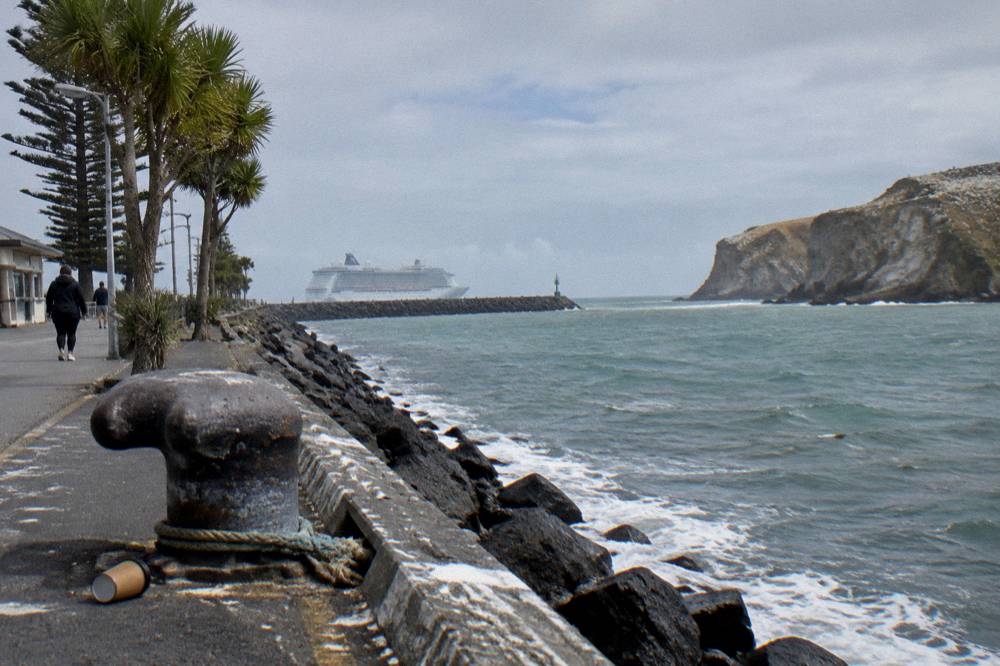
The shuttle stop at the i-SITE sits about 200 m from the shore excursion meeting point opposite the Napier Museum, which is why the excursion meeting spot works so well for passengers. On some ship days the operator collects directly from the port because of short port times, and departure time is set per ship, so the booked time on your confirmation, not a timetable you found elsewhere, is the one that counts. The full picture is in the Napier shore excursion guide.
How Much Does Each Way Of Seeing The Colony Cost?
The standard guided tours run from $55 per person meeting at the base, or from $56.23 per person with hotel pickup as an optional add-on, both 3 hours. Private 4-hour tours run from $688 to $704.30 per group of up to 4. For bike ride prices, check the operator's own site. Private per-group prices are never comparable with per-person prices without saying so.
Among the two well-reviewed standard tours, the $55 option is the cheaper and meets at the base, at 4.8 across 378 reviews, while the $56.23 tour, with hotel pickup as an optional add-on at booking, carries 4.9 across 1,052 reviews. The private tours sell per group, not per person, so dividing that price across travellers would misstate what a ticket costs.
| Option | Basis | From | Duration | Rating |
|---|---|---|---|---|
| 3-Hour Tour, Lowest Price | Per person | $55.00 | 3 hours | 4.8 across 378 reviews |
| 3-Hour Tour, Meet at Base | Per person | $56.23 | 3 hours | 4.9 across 1,052 reviews |
| 4-Hour Shore Excursion, 45-Minute Stop | Per person | $95.42 | 4 hours | 4.9 from 10 reviews |
| 4WD Safari Vehicle, 4 Hours | Per person | $93.00 | 4 hours | New listing |
| Private 4-Hour Tour | Per group, up to 4 | $704.30 | 4 hours | 5.0 from 11 reviews |
| Private 4-hour, pickup included | Per group, up to 4 | $688.00 | 4 hours | 4 reviews only |
| Bike ride from Clifton | Per rider | On the operator's own site | 3.5 to 4 hours | No rating stated |
The $55 tour is the cheapest seat, but there is no pickup: it meets at 396 Clifton Road, Te Awanga, so the roughly 25-minute drive from Napier is still yours.
Every tour on this page runs 1 August to 30 April, so a winter traveller has no guided fallback: the DOC track from the beach to the plateau colony is closed from July to the week before Labour Weekend each year to limit disturbance to returning birds.
When Is The Best Time Of Year To Ride Or Take A Tour?
Tours run 1 August to 30 April, including Christmas Day, and DOC names early November to late February as the best viewing window. Adults return to the cape from around July for courtship and nest building, so spring arrivals build into the summer peak.
The biology sets the calendar. Gannets lay a single egg, both parents incubate it on their webbed feet, and fledglings make a Tasman Sea crossing of about 2,800 km to Australia, typically returning in their third year. Pairs stay together over many seasons and birds live 25 to 40 years, so the colony you see is a settlement of long-term residents, not a passing flock.
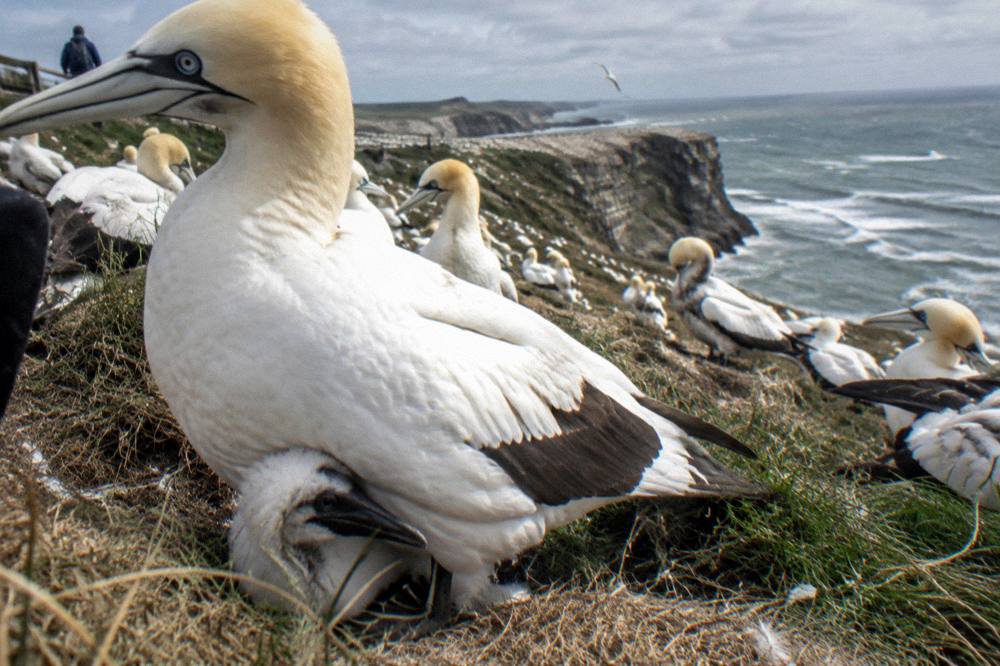
For riders, summer brings two extra considerations. DOC puts the best viewing window from early November to late February, and the walk is tide-governed: leave the Cape no later than 1.5 hours after low tide. Booking a guided tour for the same visit, even as a backup held under its free cancellation up to 24 hours before start, costs nothing to keep and everything to wish for. The season detail, month by month, is in the gannet season guide.
Common Questions About Cape Kidnappers By Bike
Is The Cape Kidnappers Bike Ride Guided?
No. It is a self-guided fat-bike ride from 475 Clifton Road, with bike, helmet, spare tube, pump and map supplied, and it takes 3.5 to 4 hours in total at a minimum of intermediate fitness.
Can I Cycle To Cape Kidnappers At Any Time Of Day?
No. The route follows the beach, which is possible only around low tide, and you must leave the Cape no later than 1.5 hours after low tide. High tides and big seas block the beach, so check the tide table before going.
Is Biking To The Gannet Colony Safer Than Walking?
Both share the same hazard: about 7 km of beach beneath cliffs subject to significant landslide. DOC says track status can change at any time and describes the overland route across private farmland as a lower-risk option than the beach corridor.
How Far Is It To Cycle To The Gannets From Clifton?
By the DOC distances, Black Reef, the first nesting site, is 7.5 km from Clifton, and the full beach route is 19 km return. A short walk from the end leads up to the plateau colony.
Is The Guided Gannet Tour A Good Backup If The Tides Do Not Suit A Ride?
Yes. The 3-hour tour from the base at 396 Clifton Road runs from $56.23 per person with a 4.9 rating across 1,052 reviews, and the lowest-priced 3-hour option, from $55 per person, meets at the same base. Both offer free cancellation up to 24 hours before start.
Can Cruise Passengers Do The Bike Ride Instead Of A Shore Excursion?
It is a poor fit. The ride needs 3.5 to 4 hours plus travel and a workable tide window, while the shore excursions are timed to the ship and meet at 100 Marine Parade beside the Napier i-SITE. Only the shore excursion products are built for cruise days.
The summary: the bike ride suits a confident cyclist who enjoys owning the logistics, and the guided tours suit nearly everyone else, delivering the same plateau viewpoint with no tide table, no landslide corridor and no pedal strokes. Whichever way you lean, Napier Gannet Tour lays out the guided options with dates and current prices for the season you are travelling in.