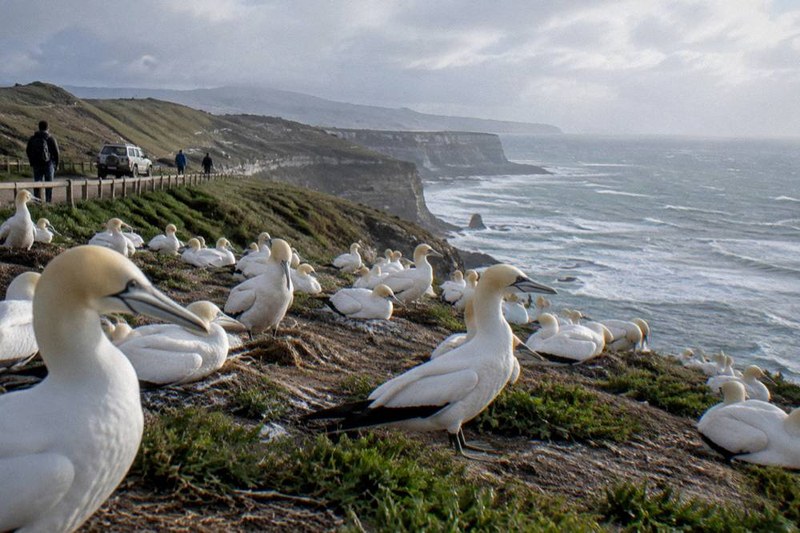
Cape Kidnappers Weather: What To Expect On A Gannet Trip
Weather decides whether a Cape Kidnappers gannet trip runs at all, which option you can take, and what you should carry. Here is what the conditions govern, and what happens when they turn.
Short answer
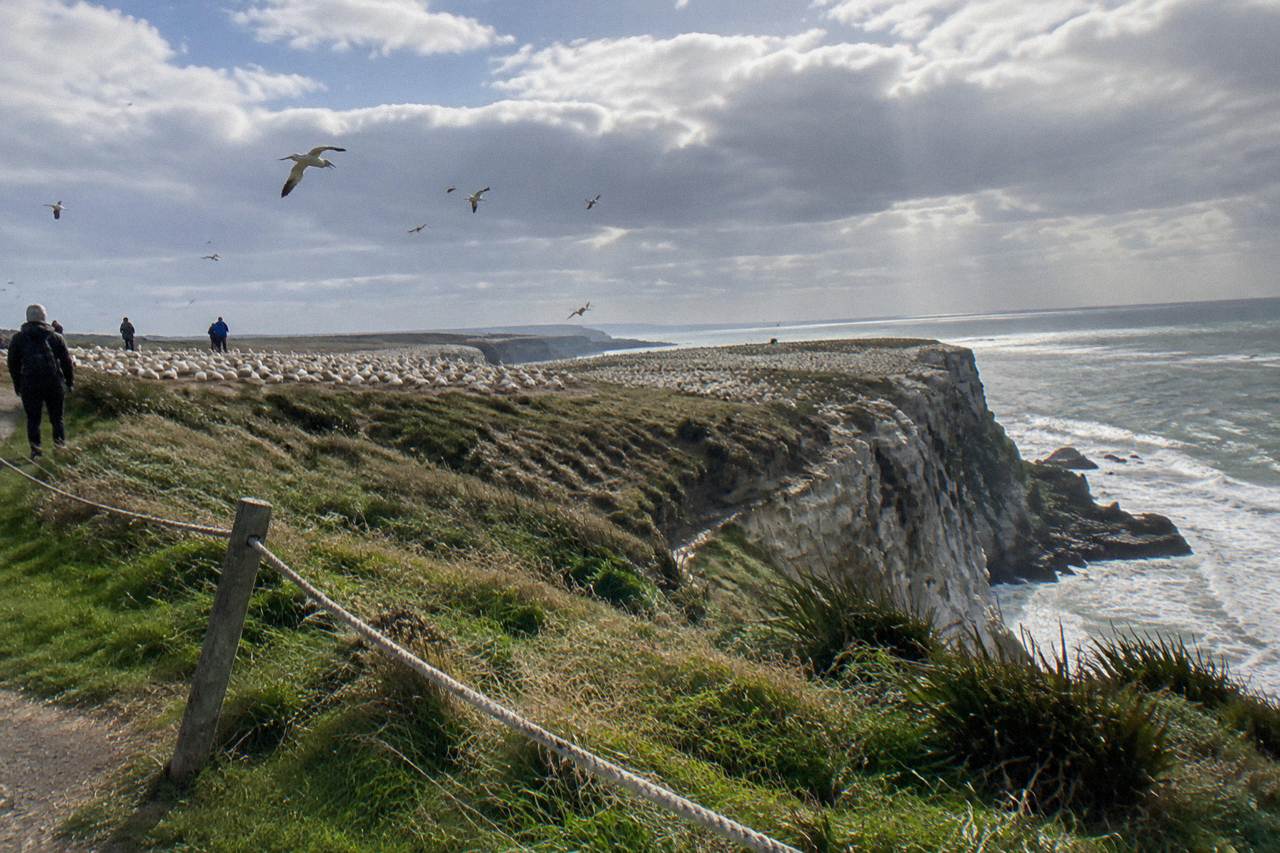
Four of the nine tours offer a different date or a full refund if poor weather forces a cancellation; the others make no such promise, so check the live booking page. Tours run 1 August to 30 April, with the best viewing early November to late February. The beach walk is a separate matter: it is possible only around low tide, and high tides and big seas block the beach entirely.
Gannets do not care about the forecast. The birds are at Cape Kidnappers from around July, when adults return for courtship and nest building, through to the end of the breeding season, and the largest and most accessible mainland colony in the world, as the Department of Conservation puts it, sits there through sunshine, drizzle and southerly blasts alike. What the weather decides is not whether the birds are present. It decides whether the vehicle goes, whether the beach is walkable, how the cliff tops feel in the wind, and what you need in your day pack. Treat it as the single variable that shapes the whole plan. Since what goes in that day pack shifts with whatever the sky is doing, the packing guide for a Cape Kidnappers gannet tour covers the layers, footwear and sun protection that suit each kind of day.
This page walks through the conditions question the way a planner needs it: which tours depend on good weather and what happens to your money if they are called off, how tides and seas govern the beach walk, when the viewing season and the friendlier weather overlap, what to wear when Hawke's Bay turns windy, and how to check conditions in the days before you travel. The overland tours, the shore excursions and the on-foot route answer to completely different masters, and mixing them up is the most common planning mistake at this cape.
Does Cape Kidnappers Weather Affect The Gannet Tours?
Yes, directly: the overland gannet tours require good weather, and when conditions force a cancellation the operator offers a different date or a full refund, so a wild day does not cost you the fare. The tour then may become a matter of rescheduling rather than losing money, and free cancellation up to 24 hours before start applies as well.
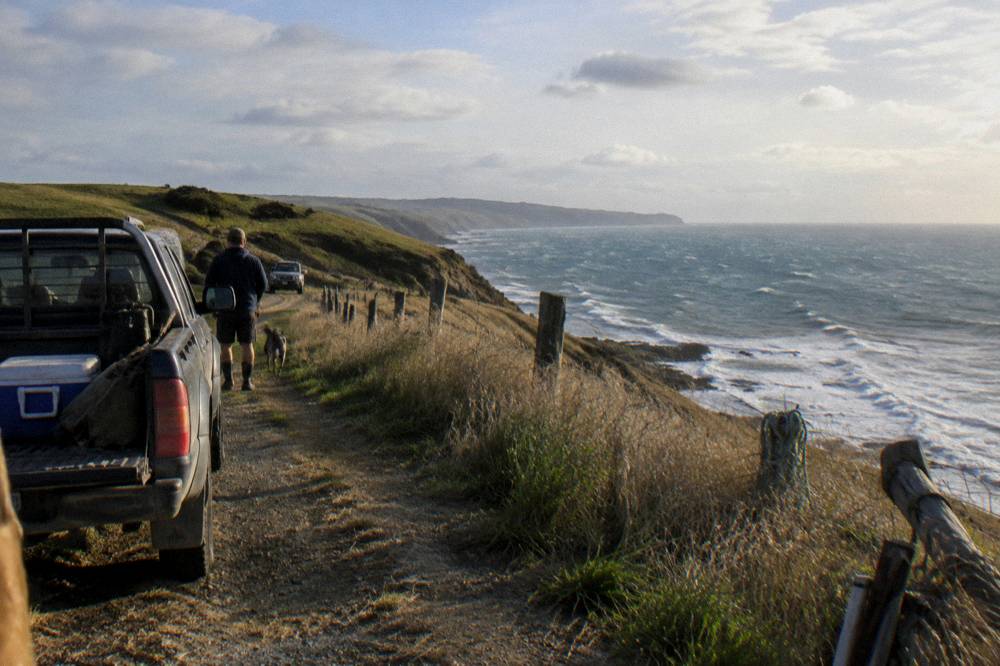
The four core products from the operator, the standard 3 hour tour, the shore excursion, the private 4 hour tour and the sunrise tour, all carry that good weather requirement. This is not a vague disclaimer. It is the operating reality of driving an air conditioned minivan and a 4WD vehicle across a working farm track and along a privately owned nature reserve above cliffs that drop to the Pacific. Wind, rain and sea state on the access route matter to the operator in a way they would not matter on a city sightseeing drive.
What the good weather requirement means in practice depends on the severity of the day. Light drizzle and a breeze will usually still go: the gannets do not stop nesting for a shower. Heavy rain can make the farm track unsafe, and four listings offer a different date or a full refund in poor weather. Booking therefore carries less weather risk than it might appear to from the outside.
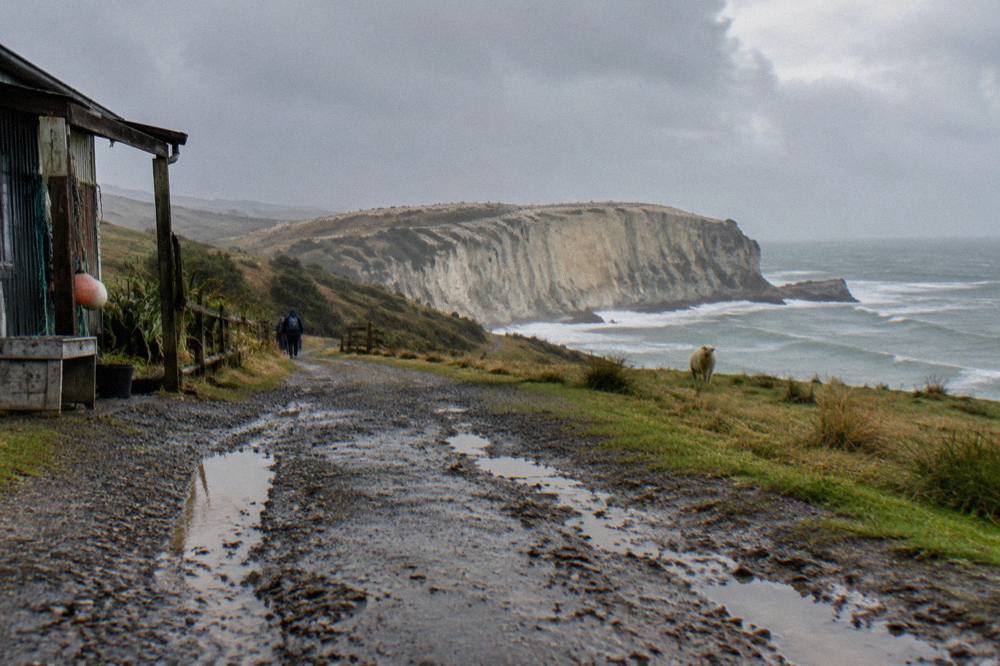
One point worth fixing early, because it confuses people comparing options: the overland tours are not governed by the tides. The operator is explicit about this, because the vehicles travel above the cliff tops rather than along the shore. The tide table is the master of the beach walk, not of the minivan. A day when the walk is impossible at midday can still be a perfectly good day for the overland tour, and vice versa, a calm, clear day is a great day for both. The two dependencies, weather for the vehicle and tide for the boots, only occasionally overlap.
The other practical anchor is the season itself. Tours run from 1 August to 30 April, including Christmas Day, so the weather question only arises within that window. Outside it, there is nothing to reschedule because nothing is running. Within it, the question is what the sky and the sea are doing on your date, and the sections below take those one at a time.
Which Cape Kidnappers Tours Are Moved Or Refunded In Bad Weather?
The standard 3 hour tour, the cruise shore excursion, the private 4 hour tour and the sunrise tour each require good weather, with a different date or a full refund when the operator cancels. Cruise passengers should watch the ship's all aboard time against the 4 hour excursion length, and independent travellers have the cheapest entry point from $55.00 per person.
- Standard Overland Gannet Tours$55
- Cruise Shore Excursions$93
- Private And Sunrise Tours$604 per group
Start with the tour most visitors take. The 3 hour tour that meets at the operator's base, 396 Clifton Road in Te Awanga, runs from $56.23 per person and carries a 4.9 rating across 1,052 reviews, the deepest review pool of the tours compared here. Hotel pickup is an optional add-on chosen at booking; otherwise you meet at the base, which is about a 25 minute drive from Napier and the same from Hastings and Havelock North. The vehicle is air conditioned, coffee or tea is included, and the tour carries free cancellation up to 24 hours before start.
A version with pickup built in also exists: the 3 hour sunrise tour with hotel pickup and drop-off included runs from $604 per group and carries 5 stars across 3 reviews, while the base 3 hour tour at $55 per person, rated 4.8 across 378 reviews, stays the cheapest way onto the plateau. That version also notes that walking is not required if you do not want it, which matters on a wet day when you would rather watch from the vehicle. The operator says everything at the plateau can be seen from the vehicle without getting out, and the plateau itself is flat ground with bench seats.
Here is how the main options stack up on the two things a weather-worried reader cares about: what it costs and how a cancelled departure is resolved.
| Tour | Price (USD, from) | Basis | Weather cancellation outcome |
|---|---|---|---|
| 3-Hour Tour, Meet at Base | $56.23 | Per person | Different date or full refund |
| 3-Hour Tour, Lowest Price | $55.00 | Per person | Different date or full refund |
| 4-Hour Shore Excursion, 45-Minute Stop | $95.42 | Per person | Different date or full refund |
| Private 4-Hour Tour | $704.30 | Per group, up to 4 | Different date or full refund |
| 3-Hour Sunrise Tour | $636.15 | Per group, up to 4 | Different date or full refund |
The private tours are priced per group, so comparing them with the per person tours means saying so explicitly; per person, four travellers on the private 4 hour tour are paying a very different rate than four on the standard tour, and the privacy and the schedule control are what you are buying. The private 4 hour tour includes 45 minutes at the colony per the itinerary and is private to your group. The sunrise tour meets at the Te Awanga base and includes a gourmet breakfast of pastries, fresh fruit and yoghurt, plunger coffee and juice. A weather cancellation on a private booking still resolves to a different date or a full refund.
For cruise passengers the calculus is tighter. The two shore excursions are the only gannet products here that exist for cruise passengers; the standard 3 hour tours are not for cruise passengers at all. The 4 hour shore excursion runs from $95.42 per person, meets at 100 Marine Parade opposite the Napier Museum, about 200 m from where the cruise shuttle drops at the Napier i-SITE, and spends 45 minutes at the colony per the itinerary. Departure time is set per ship, and on some ship days the operator collects directly from the port because of short port times. The weather risk on a port day is compressed: if conditions cancel the tour there is no different date available, so the refund path is the one that matters, and the same 24 hour free cancellation stands alongside it.
A final scheduling note for port days: check the ship's all aboard time against the tour's 4 hour length before you commit. Passengers can walk down the gangway onto the wharf but cannot walk out of the port, taxis cannot enter, and the shuttle runs to the Napier i-SITE and the National Aquarium of New Zealand. A weather delay on a tight port day is the one scenario where the refund clause earns its keep, so read the excursion's departure time against your sailing time the moment you book.
How Do Tides And Sea Conditions Govern The Cape Kidnappers Beach Walk?
The Cape Kidnappers beach walk is possible only around low tide, high tides and big seas block the beach, and walkers must leave the Cape no later than 1.5 hours after low tide, so the tide table, not the rain forecast, is the document that decides this trip. Always check the tide table before going.
The walk starts at Clifton, Scotmans Point, 21 km south of Napier and 18 km east of Hastings. It is 19 km return, graded Expert by the Department of Conservation, and DOC says to allow at least 5 hours for a comfortable return walk. Black Reef, the first nesting site, sits 7.5 km from Clifton, and a steep, rough, muddy climb of about 1 km leads on from there toward the second colony. None of that distance cares about the sky. All of it cares about the sea, because roughly 7 km of the route lies beneath cliffs subject to significant landslide and rockfall hazard, and the sea state decides whether that passage is even attempted.
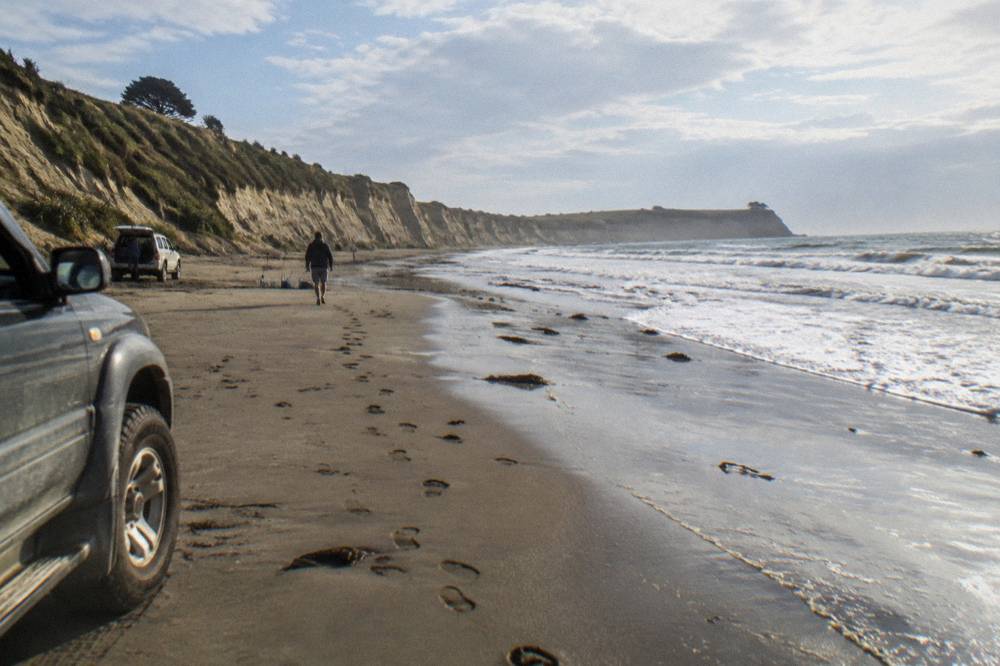
This is where weather and tide interact. A settled spell with a big swell running can make the walk unsafe even at low tide, because big seas push water across the walking line. A grey, drizzly day with calm water and a good low tide can be entirely fine. The rule to internalise is that the two checks are separate: the tide table tells you when the beach is open, and the forecast tells you whether the sea on that beach will be tolerable. Both need to pass.
| Check | Source | What it decides | Rule of thumb |
|---|---|---|---|
| Tide table | Published tide times for Hawke's Bay | Whether the beach is passable at all | Possible only around low tide; leave the Cape no later than 1.5 hours after low tide |
| Sea state | Marine forecast | Whether the exposed 7 km under the cliffs is tolerable | High tides and big seas block the beach |
| Track status | DOC safety alert and signage at Clifton | Whether the route is open after landslide activity | Status can change at any time; check the alert and the signs |
Since the track status is the factor most likely to change, the guide to Cape Kidnappers walk closures and gannet viewing alternatives covers the landslide history, the seasonal shutdown, and other ways to reach the colony.
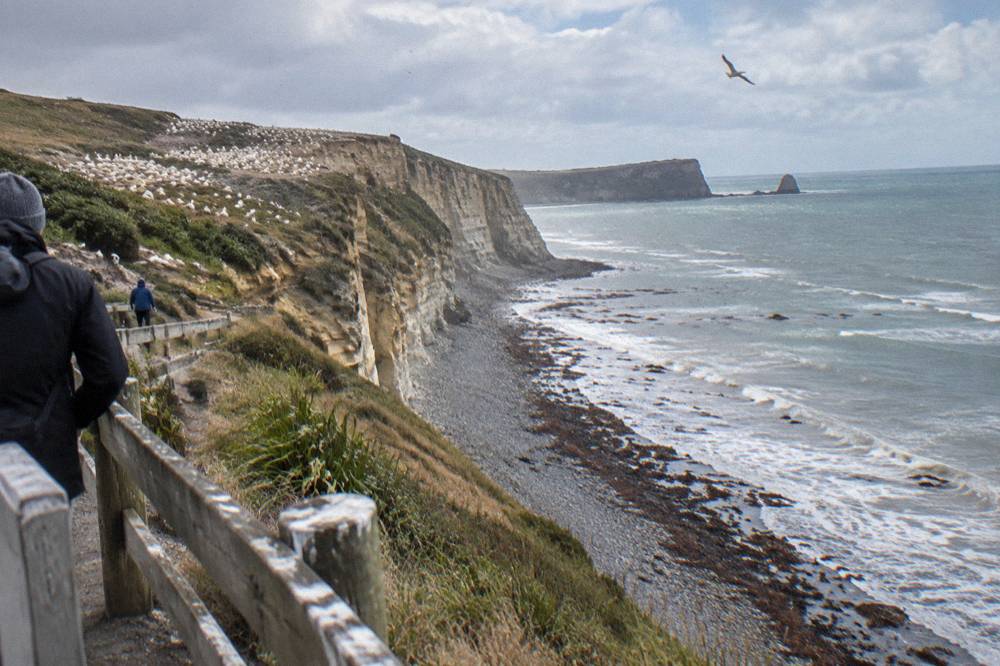
The cliff hazard is real and documented. A landslide seriously injured two tourists in January 2019, and another large landslide in February 2020 led to a closure of the beach before the track was later reopened. DOC says the status of the track can change at any time and advises checking the safety alert on its page before setting out; DOC reports three serious injury landslide events in the past 50 years and large landslides every year. Hastings District Council says Clifton beach is open but may close if there is unstable activity, so check the signage at the access point as well.
The seasonal closure interacts with conditions too. The track from the beach to the plateau gannet colony is closed from July to the week before Labour Weekend each year to limit disturbance to returning birds, so even a perfect low tide in midwinter does not put the plateau within a walker's reach. DOC describes the Plateau, on private land, as the main public viewing area for nesting gannets. The overland route crosses that farmland rather than the beach track, so it sidesteps the tide rules and the rockfall warnings that apply to walkers.
For walkers, the deepest dive on tide planning lives in the site's Cape Kidnappers tide times guide, and the route itself is covered in the Cape Kidnappers walk guide. The short version for this page: pick your low tide window, plan to be off the Cape within 1.5 hours of it, carry what DOC lists for the walk, including sturdy footwear, food and water, a water and windproof jacket and a communication device, and treat any sign of instability, recent slips or fresh debris on the beach as a reason to turn around rather than push on.
When Is The Best Weather Overlap For Gannets At Cape Kidnappers?
The best viewing window is early November to late February, when breeding and chick activity peak, while tours run 1 August to 30 April, so the strongest weeks fall well inside the season. Booking inside that overlap gives the weather its best chance of cooperating.
The season logic runs from the birds outward. Adults return to the cape from around July for courtship and nest building, and DOC's best viewing window of early November to late February corresponds with the period when nests, eggs and chicks make the colony most active and most visible. Gannets lay a single egg, both parents incubate it on their webbed feet, and pairs stay together over many seasons, so a summer visit lands you among thousands of established pairs going about a full breeding cycle. DOC puts the colony at 6,500 pairs.
| Period | Tours running | Colony activity | Weather planning read |
|---|---|---|---|
| July | No, season opens 1 August | Adults returning for courtship and nest building | Nothing to book; watch for the season opening |
| August to October | Yes | Nest building and early nesting | Thinner crowds, higher chance of a weather call; hold dates loosely |
| Early November to late February | Yes | Peak nesting: eggs and chicks, best viewing | The ideal overlap of birds and settled conditions |
| March to 30 April | Yes | Fledging and dispersal | Good odds, thinning crowds; end of season on 30 April |
Temperature and rainfall digits matter less than the pattern: Hawke's Bay sits on the east coast, and Cape Kidnappers faces the Pacific, not the Tasman. The planning insight is simpler than a climate table.
Shoulder season has its own case. August, September and October, and again in March and April, the tours still run, the crowds are thinner, and the birds are present, building, incubating or fledging depending on the month. The trade is a higher chance of the kind of day that triggers the good weather clause. A spring booking is a reasonable bet if you hold your dates loosely and can take the different date option if it is offered. A late March or April booking works well for travellers already in the region, and the operator's base at Te Awanga is an easy 25 minute drive out.
For photographers, the weather question doubles as a light question. The site's Cape Kidnappers gannet photography guide covers the timing in depth, but the headline for this page is that the sunrise tour exists precisely because early light is a genuine draw: the Private Sunrise tour runs from $636.15 per group for up to four with breakfast included, and there is also a 3 hour sunrise version with hotel pickup and drop-off from $604.00 per group for up to four. Dawn in the viewing season is often the calmest, most usable light of the day, which is exactly why those products exist.
What Should You Wear For Cape Kidnappers Weather?
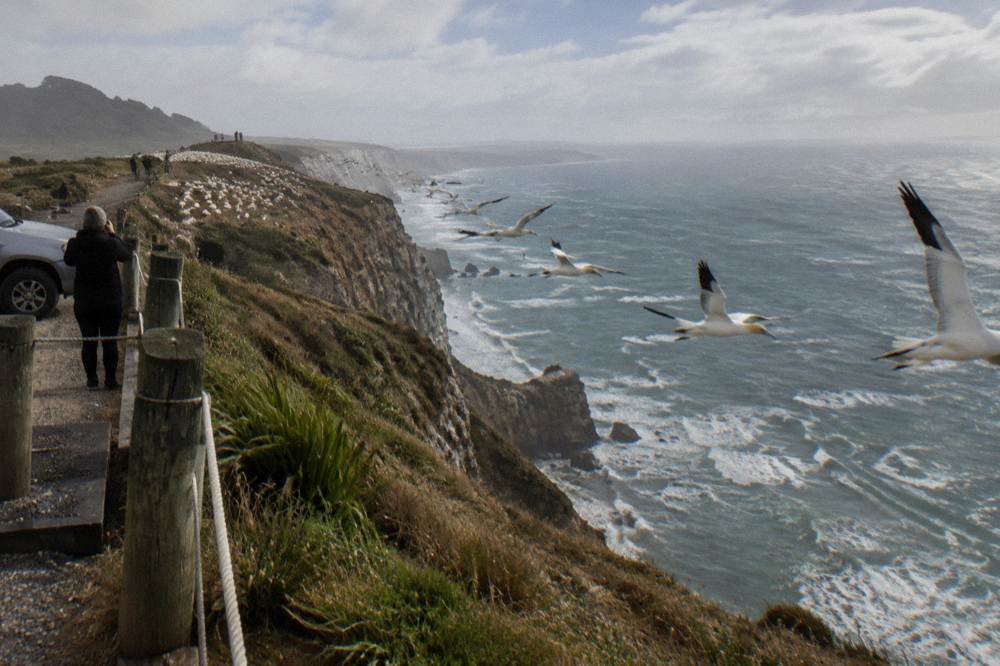
Dress for wind and cool sea breezes at an exposed cliff top, whatever the forecast says when you leave Napier: a water and windproof jacket, warm layers, a hat and sunscreen, because conditions at the plateau can be sharper than in town. On the tour version that notes it, a jacket is advised outright.
The cape is an exposed place. The plateau is flat, open ground above the sea with bench seating, and the operator notes that a jacket is advised on the 3-Hour Tour, Lowest Price. Tea, coffee and a biscuit are served at the colony, which takes the edge off but is not a layering strategy. The practical approach is the one DOC gives walkers, scaled down for a vehicle trip: extra clothing for cool sea breezes, a water and windproof jacket, sunscreen and hats, sturdy footwear for the short time on the plateau.
| Item | Why it earns its place at the plateau |
|---|---|
| Water and windproof jacket | Flat, open ground above the sea with no shelter; advised on the 3-Hour Tour, Lowest Price |
| Warm layers | Conditions at the cliff edge run sharper than in Napier, and the day often changes across the trip |
| Sunscreen and hat | Sea glare is strong even under high cloud; a hat that will not blow away matters more than a stylish one |
| Sturdy footwear | The plateau is farm paddock, not pavement, even though little or no walking is required |
| Sunglasses | Double duty against sea glare and the wind itself |
Sunscreen surprises people on cloudy days. The glare off the sea and the pale ground at the colony is strong even under high cloud, and a three or four hour round trip in it will mark fair skin. A hat that will not blow away matters more than a stylish one. Sunglasses help against the sea glare, and they double as protection against the wind itself.
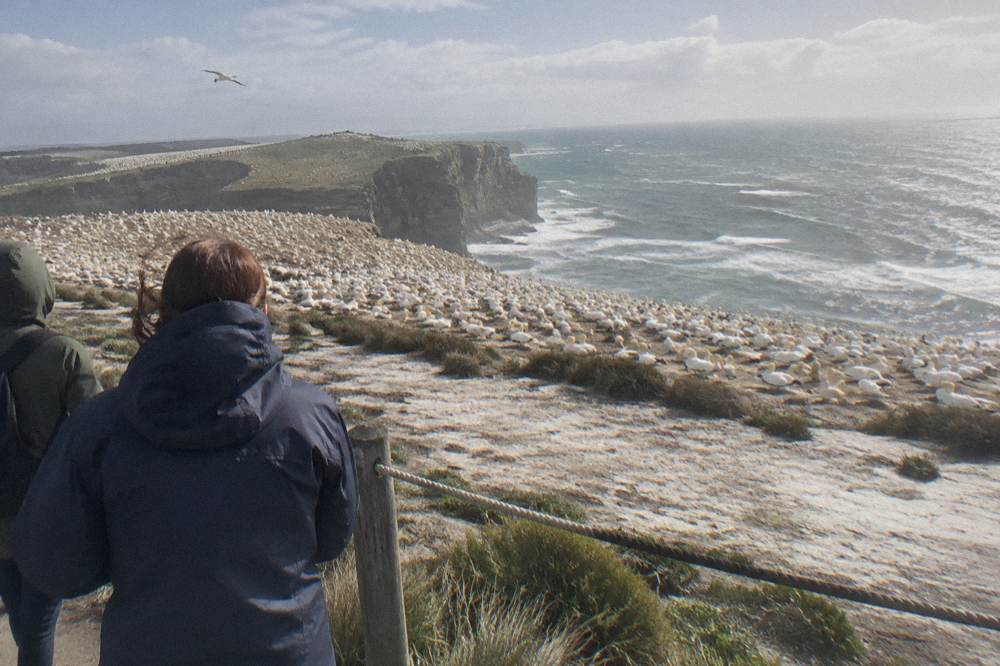
Footwear deserves one sentence. The operator says little or no walking is required, that the plateau is safe and easy, and that everything can be seen from the vehicle. That is true, and it is the reason the overland tour suits travellers who cannot manage the beach walk. Still, the ground at the plateau is farm paddock, not pavement, and shoes you would happily stand on grass in are the right call. The fuller kit discussion, including what children and less mobile travellers need, is in the site's what to wear guide for a Cape Kidnappers gannet tour.
Layering beats a single heavy coat, because the day often changes across the trip: warm in the minivan, sharp at the cliff edge, mild again on the ride home with a hot drink in hand. There are no toilets on the tour itself, the last ones being at the operator's base, which has good bathroom facilities and a large off road car park with room for several motorhomes, so make your stop there count before you board.
How Do You Check Conditions Before A Cape Kidnappers Trip?
Check three things in order: the tide table if you are walking, the marine and land forecast for the Hawke's Bay coast for the days around your date, and the safety alert on the DOC page for the Cape Kidnappers track, then rely on the operator's different date or full refund policy if the day itself cancels the tour.
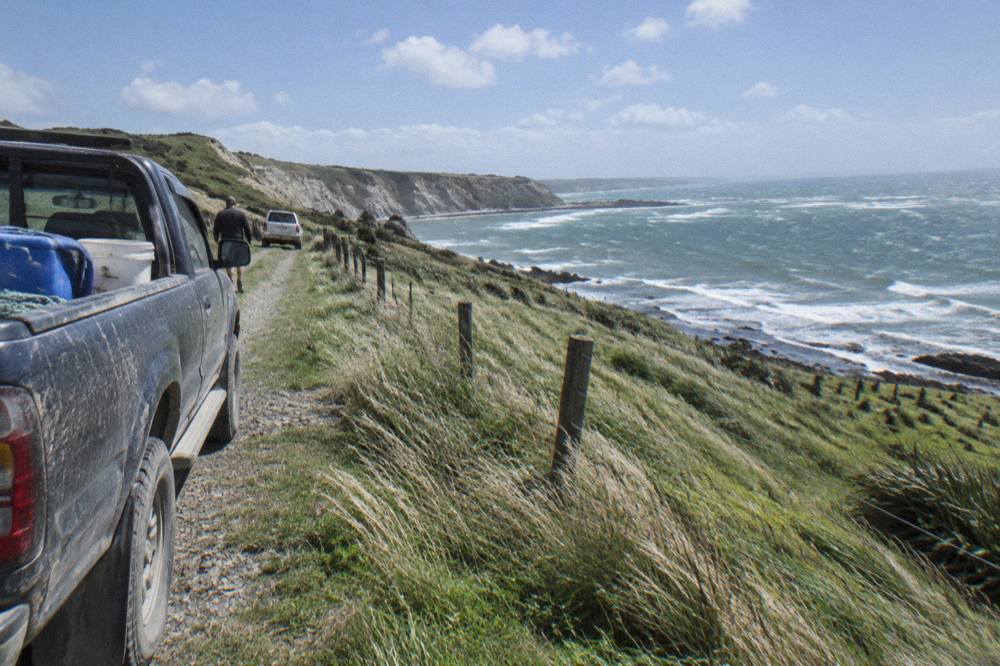
Build the habit of checking two or three days out rather than the night before, because it changes your options. A forecast that turns ugly two days ahead lets you move a booking inside the free cancellation window, which runs up to 24 hours before start on every product covered here. A forecast that turns ugly the night before does not, and then the weather clause itself is your protection: a weather cancellation by the operator still resolves to a different date or a full refund, so the money is not the worry, only the missed day.
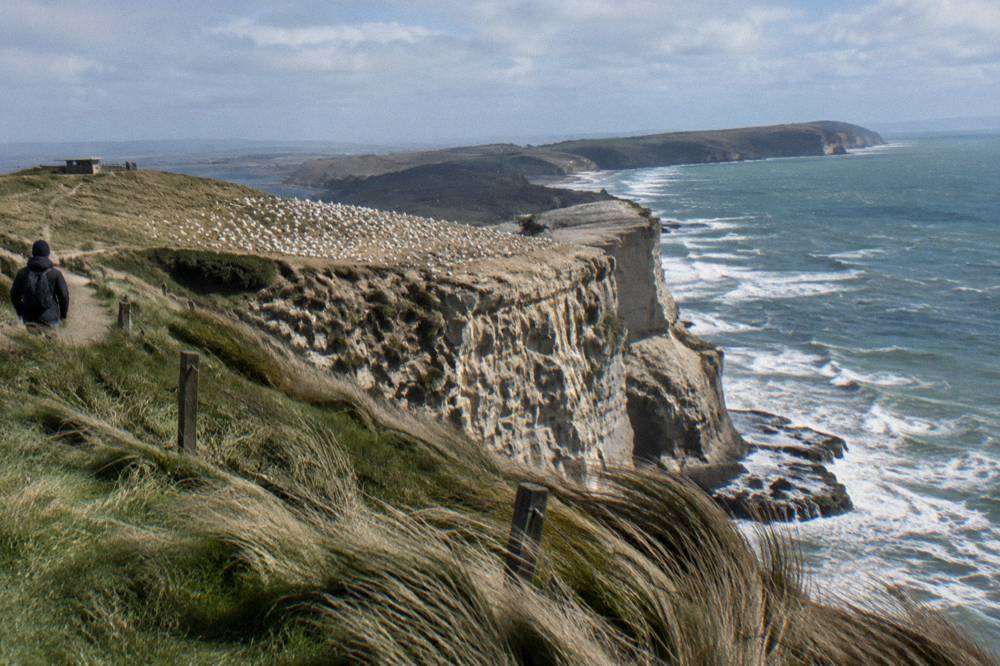
For walkers, the checks are stricter. The tide table is the first document, the forecast is the second, and the DOC safety alert is the third, because the status of the track can change at any time independently of both. Recent rain matters to the cliff hazard, so after a heavy rainfall event, weigh the walk carefully even on a fine following day. Check the signage at Clifton on arrival, since Hastings District Council closes the beach if there is unstable activity. And note the rule set on the reserve itself: no dogs or horses, no motorbikes or vehicles off the beach into the reserve, no fires or camping, keep behind barriers or at least five metres from nesting gannets, keep to the track through private land, and drones on conservation land need a DOC permit. Nesting birds dislike loud noises and fast movement.
Cruise passengers should add one check: the ship's all aboard time against the 4 hour excursion length, with the departure time set per ship. Because passengers cannot walk out of the port and taxis cannot enter, the shuttle to the i-SITE is the fixed first leg of the journey, and the excursion's meeting point at 100 Marine Parade sits about 200 m from that drop. Build a margin into that leg on a busy ship day.
One more local wrinkle matters to walkers and bike riders: Clifton Motor Camp was closed in February 2026 after a geotechnical assessment found unstable land above it, was permanently closed in July 2026, and in August 2026 the Council voted to close a section of Clifton Road at the former campground to vehicles. Pedestrian access to Clifton Beach and the walking route stays open.
What If The Weather Turns During Your Gannet Trip?
Your own packing, the jacket, the layers and the sun protection, is the part you control when the sky changes mid trip.
Most Cape Kidnappers weather stories are minor: a wind that arrives halfway through the colony stop, a shower crossing the farm track on the way home, a sea haze that softens the photography. None of those cancels anything. The tour continues, the birds continue, and the hot drink at the colony does its job.
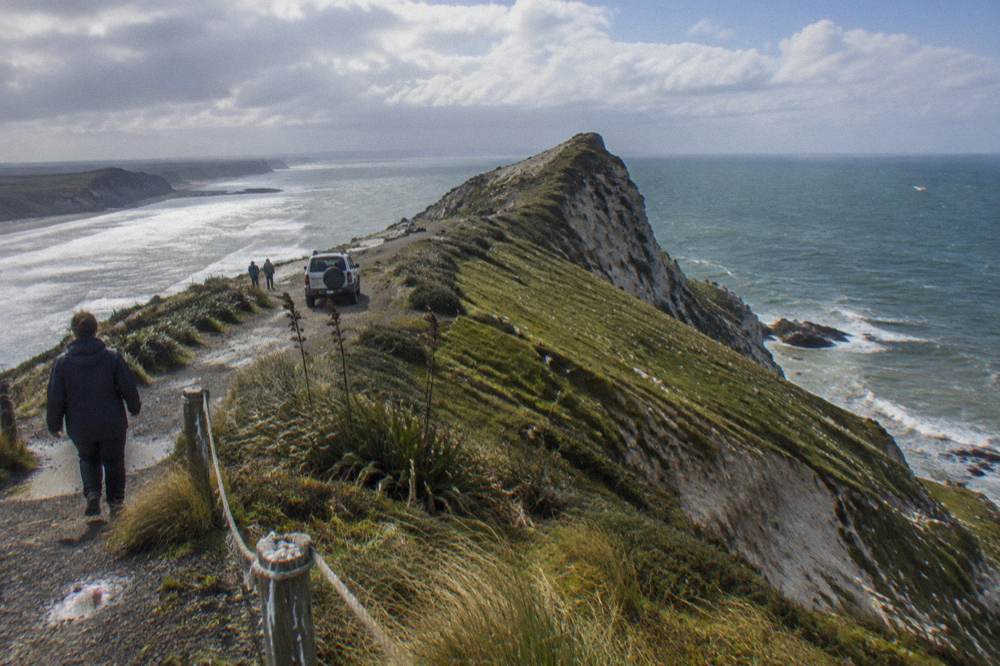
For that reason, the packing advice in the section above is not optional padding. It is the difference between a shortened stop being a minor footnote and being the thing you remember. The same applies to photography: a changing sky is often a gift at this cape, and cloud breaks over the water can produce better frames than flat blue. Travellers chasing those conditions should also read the Cape Kidnappers photography guide.
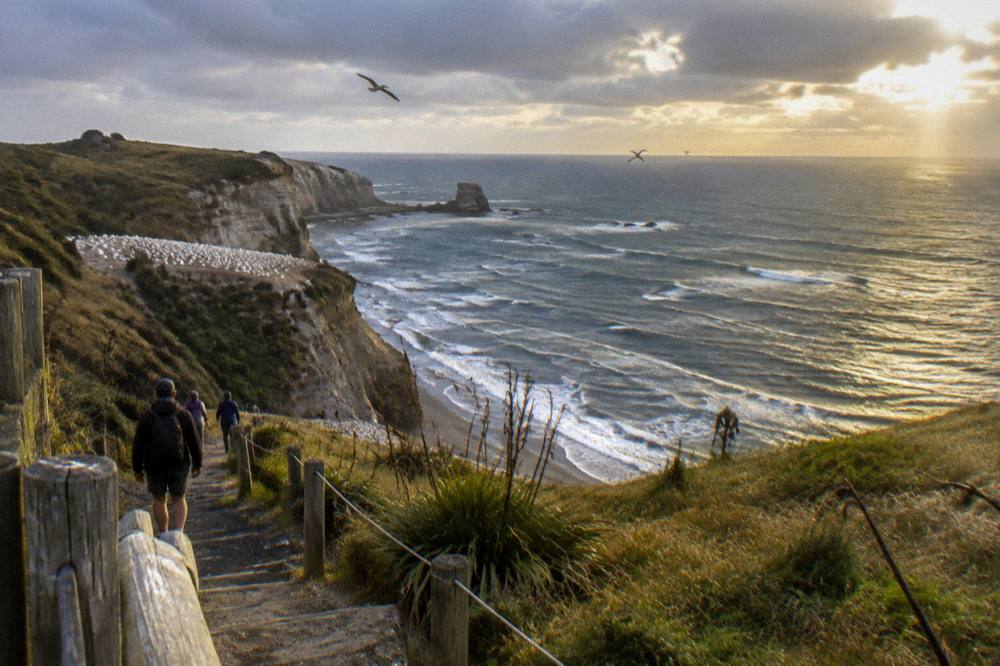
The deeper comfort is structural. Every gannet product on this site, from the $56.23 standard tour to the $704.30 private 4 hour tour, carries free cancellation up to 24 hours before start, and every one of the core four carries the good weather requirement with its different date or full refund outcome. The planning advice is therefore simple: book the tour that fits your dates and budget, hold your weather flexibility loosely, and let the operator absorb the risk that genuinely belongs to the operator. Save your own attention for the tide table if walking, and for the all aboard time if you are on a ship.
That division of labour is the whole answer to Cape Kidnappers weather in one line: the operator owns the go or no go decision and the refund, the tide owns the beach, and you own the jacket, the sunscreen and the booking you can cancel up to 24 hours out.
For everything the sky does not decide, the site's hub on Napier gannet tour planning covers the options, prices and logistics end to end, and Napier Gannet Tour keeps the full picture in one place.
Common Questions About Cape Kidnappers Weather
Does Cape Kidnappers Weather Affect The Gannet Tours?
Yes. The standard 3 hour tour, the shore excursion, the private 4 hour tour and the sunrise tour all require good weather. If conditions force a cancellation, the operator offers a different date or a full refund.
Do The Overland Gannet Tours Depend On The Tide?
No. The operator says the overland tours are not governed by the tides because they travel above the cliff tops. The tide table governs the beach walk only.
What Happens If My Gannet Tour Is Cancelled For Weather?
Four of the nine listings offer a different date or a full refund in poor weather. Every tour covered here also carries free cancellation up to 24 hours before start, so a forecast that turns early gives you an exit before the weather clause is even needed.
When Is The Best Weather For Seeing Gannets At Cape Kidnappers?
The best viewing window is early November to late February, inside the tour season of 1 August to 30 April. That overlap gives you peak nesting activity and the highest odds of a settled day.
What Should I Wear On A Gannet Tour?
A water and windproof jacket, warm layers, sunscreen, a hat and sturdy footwear. The plateau is exposed flat ground above the sea with bench seats and no shelter, and a jacket is advised on the 3-Hour Tour, Lowest Price.
Can I Do The Cape Kidnappers Beach Walk In Any Weather?
No. The walk is possible only around low tide, high tides and big seas block the beach, and you must leave the Cape no later than 1.5 hours after low tide. Check the tide table and the DOC safety alert before going, and check the signage at Clifton on arrival.