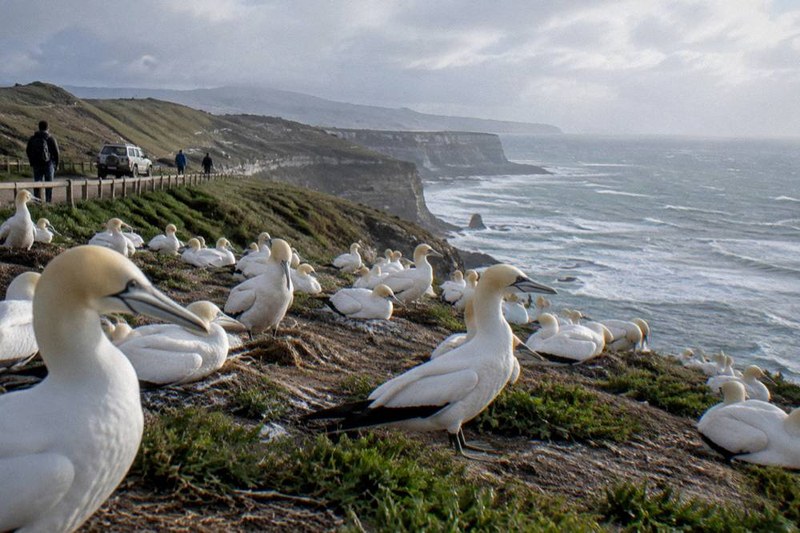
Cape Kidnappers Gannet Season: When The Colony Is Open
The gannets keep their own calendar at Cape Kidnappers, and it decides almost everything about a visit: whether tours are running, how many birds are on the plateau, and how close the chicks are to fledging.
Short answer
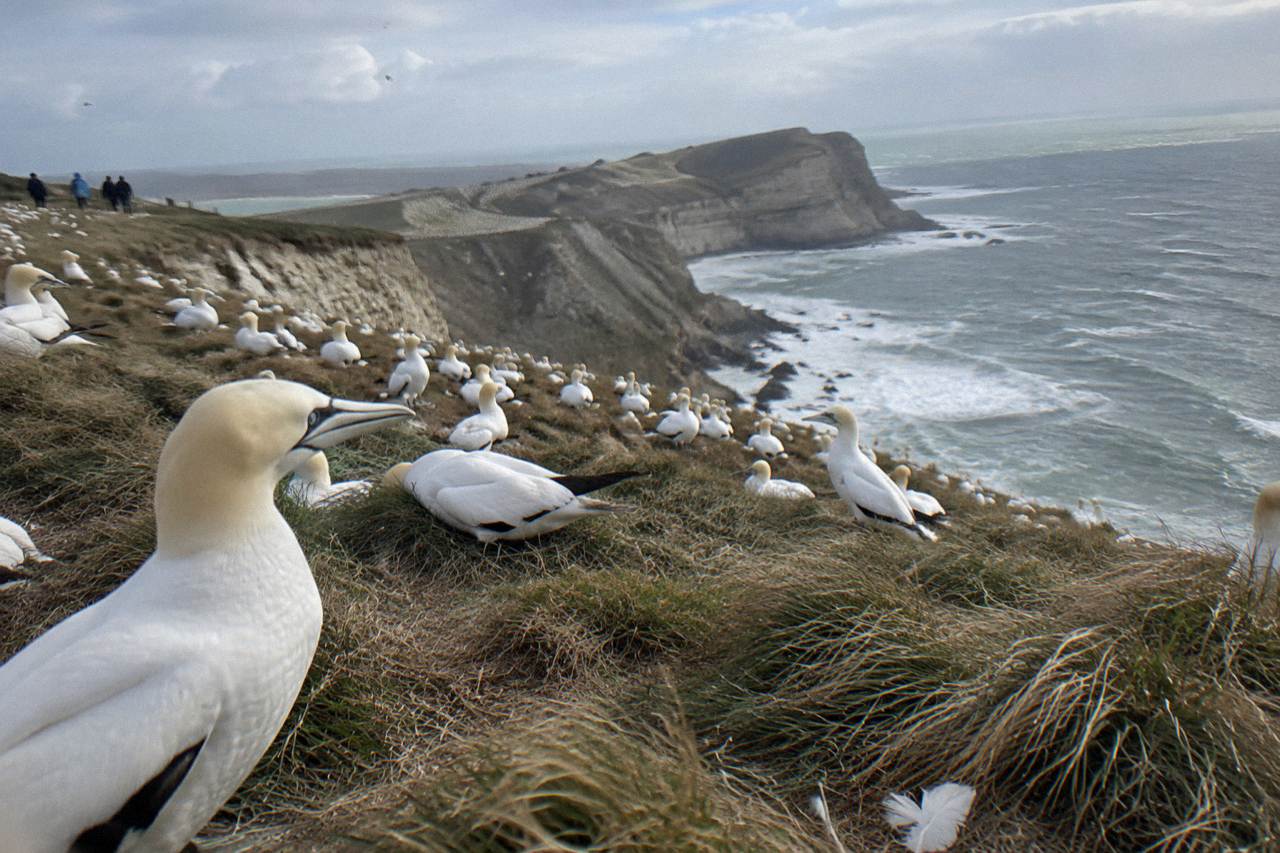
The Cape Kidnappers gannet season runs from 1 August to 30 April, when the overland tours operate. DOC names early November to late February as the best viewing window, when 6,500 pairs are nesting. The DOC plateau track from the beach is closed from July to the week before Labour Weekend each year.
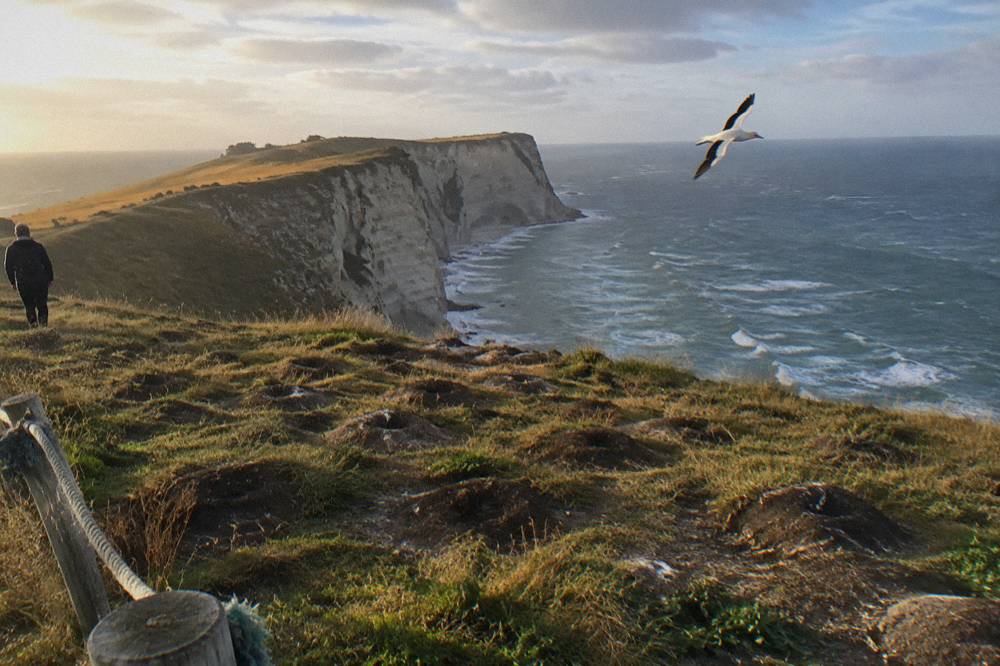
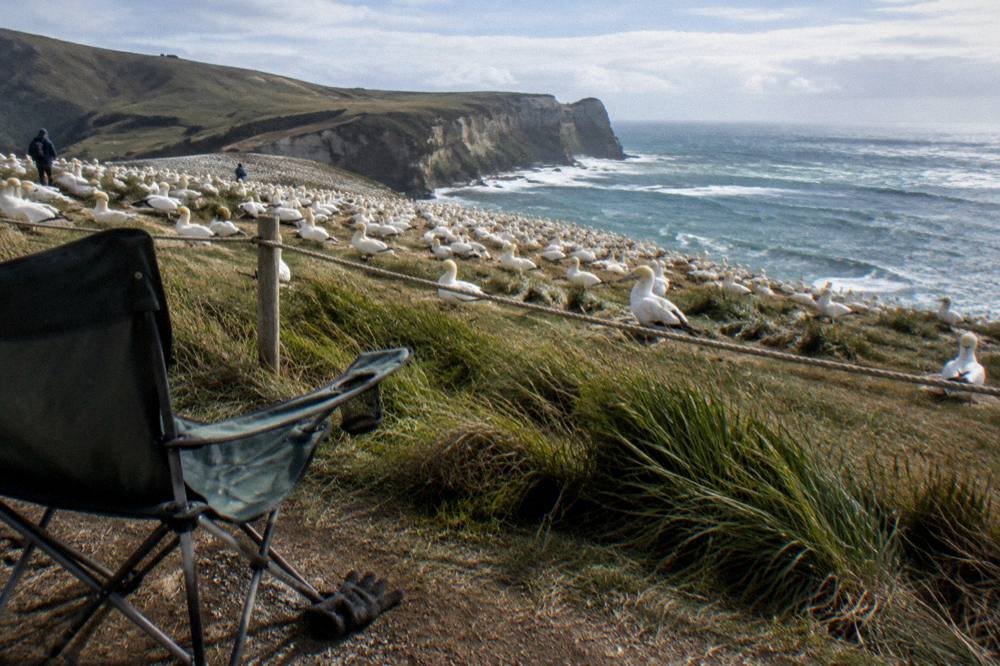
The gannets keep their own calendar at Cape Kidnappers, and it decides almost everything about a visit: whether tours are running, how many birds are on the plateau, and whether the walking track from the beach is open at all. DOC puts the colony at 6,500 pairs and calls it the largest and most accessible mainland gannet colony in the world, and those birds are not there year-round in the same numbers. Plan a trip in the wrong month and the tour may not exist. Plan it in the right one and you stand about five metres from nesting birds on a clifftop above the Hawke's Bay coast.
This page sets out the whole season in order: the months the overland tours run, the window DOC names for best viewing, the annual closure of the walking track, what the birds are doing in each part of the season without promising any chick stage on a given day, and how to match a tour to a month. The starting point is a simple one, and it is the single most useful fact on this page: tours run from 1 August to 30 April, and the best viewing is early November to late February.
When Is The Cape Kidnappers Gannet Season?
The Cape Kidnappers gannet season runs from 1 August to 30 April, and that is also the window in which the overland gannet tours operate, including Christmas Day. DOC names early November to late February as the best viewing period, when the colony is at full strength at 6,500 pairs. The walking track up from the beach has its own shorter closure, from July to the week before Labour Weekend. If those overlapping closure windows make planning feel uncertain, the guide to why Cape Kidnappers actually closes covers the track, landslide, tide, and road factors in plain terms.
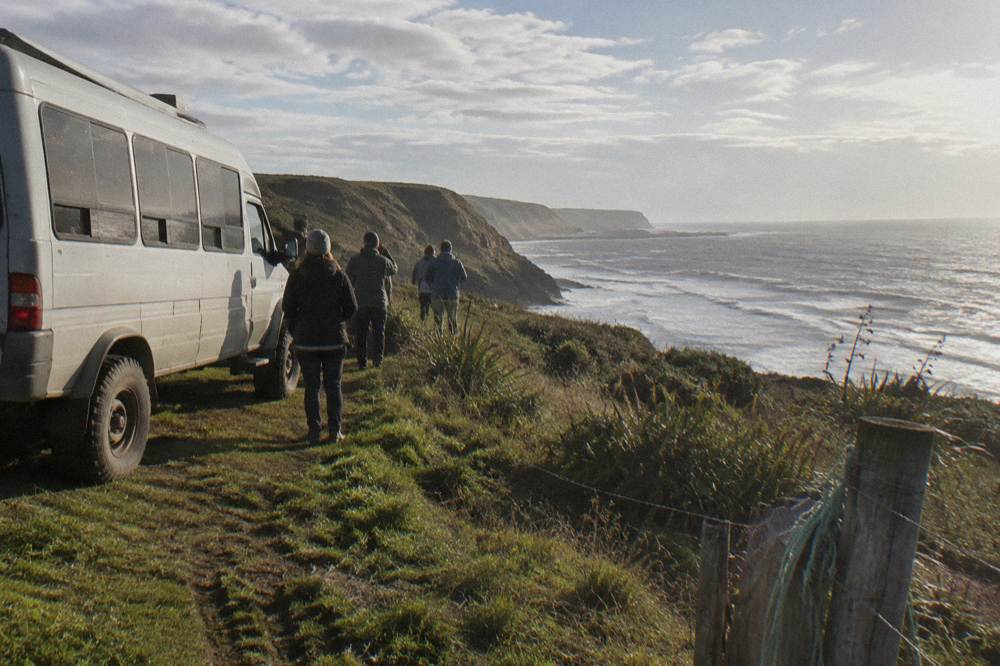
Three different calendars overlap at Cape Kidnappers. The first is the tour season: the overland tours across the working farm to the privately owned nature reserve run from 1 August to 30 April. The second is the bird season: adults return to the cape from around July for courtship and nest building, numbers build through spring, and the colony thins out as chicks fledge and leave. The third is the track season: the DOC track from the beach to the Plateau colony closes from July to the week before Labour Weekend each year, to limit disturbance to returning birds. If you want the timing of a visit to line up with peak chick viewing rather than near-empty nests, the month-by-month guide to gannet chicks at Cape Kidnappers shows what each stage of the season delivers.
The practical consequence is that a winter visit is off the table for most travellers: the operator season runs 1 August to 30 April. The tours are not running, and the beach track to the plateau does not close until July. By August the tours start again. DOC's own guidance is that the best viewing is early November to late February, which lines up neatly with the New Zealand summer holidays and the Napier cruise season that runs from October to April.
- Standard Overland Gannet Tours$55
- Cruise Shore Excursions$93
- Private And Sunrise Tours$604 per group
Australasian gannets have nested at this cape since the 1870s, and the species is long-lived, with a lifespan of 25 to 40 years, so pairs stay together over many seasons. Pairs stay together over many seasons, which is one reason the colony reassembles in much the same shape each year. A group of gannets nesting together is called a colony, or a gannetry, and the gannetry here is divided between the Plateau colony on private land and the Black Reef colony nearer the beach end of the reserve.
The three calendars, side by side, look like this:
| Calendar | Opens | Closes | Who It Affects |
|---|---|---|---|
| Overland tour season | 1 August | 30 April | Everyone booking a vehicle tour to the colony |
| Best viewing window (DOC) | Early November | Late February | Anyone choosing a date for maximum bird activity |
| DOC beach track to the Plateau | Week before Labour Weekend | July each year | Walkers and bike riders only |
| Napier cruise season | October | April | Cruise passengers booking a shore excursion |
Which Months Give The Best Gannet Viewing At Cape Kidnappers?
Early November to late February is the best viewing window at Cape Kidnappers, according to DOC, and that is when the 6,500 pairs are nesting and the plateau is at its busiest. Within that window, the earlier months favour courtship and nest building and the later months favour grown chicks, though no specific hatch week or month can be promised, because the timing varies.
The build-up starts well before November. Adults return to the cape from around July, and courtship and nest building follow. Gannets lay a single egg, and both parents incubate it on their webbed feet, a habit that makes nesting birds easy to read from the viewing area: a bird sitting low on flat feet is almost certainly on an egg. By the time the main viewing window opens in November, most pairs are settled and the plateau is dense with nests.
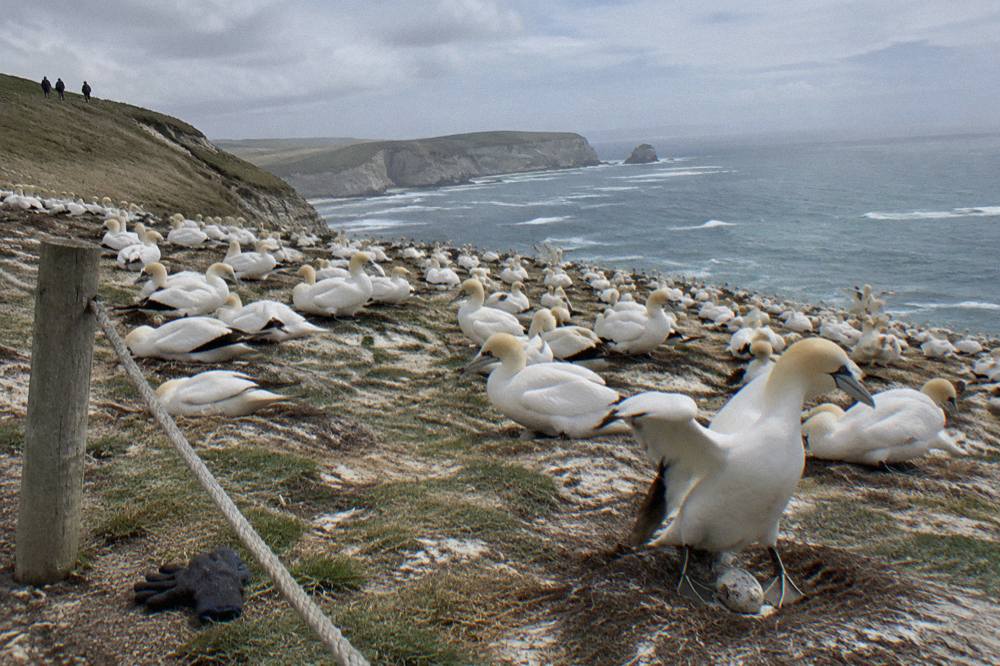
What you cannot do is book a date against a hatch timetable. Hatch timing is not fixed, so no single week or month marks the hatch: grown chicks are common through the late-summer months. What is well established is the fledging journey: young birds make a Tasman Sea crossing to Australia of about 2,800 km and return two to three years later, typically in their third year, to join the breeding colony themselves. To match a visit with the stage of chick development you most want to see, the guide to gannet chick timing at Cape Kidnappers compares the viewing windows across the tour season without promising exact hatch dates.
Other birds share the cape through the same months: white-fronted terns, variable oystercatchers, reef herons and Caspian terns are all present, and little blue penguins nest around the cape. An adult gannet over the nest is a genuinely large bird, and at Cape Kidnappers the colony has grown to 6,500 pairs along the Hawke's Bay coast.
The month you choose also affects crowding on the tours themselves, not just the birds.
When Do The Gannet Tours Run And How Do You Book Around The Season?
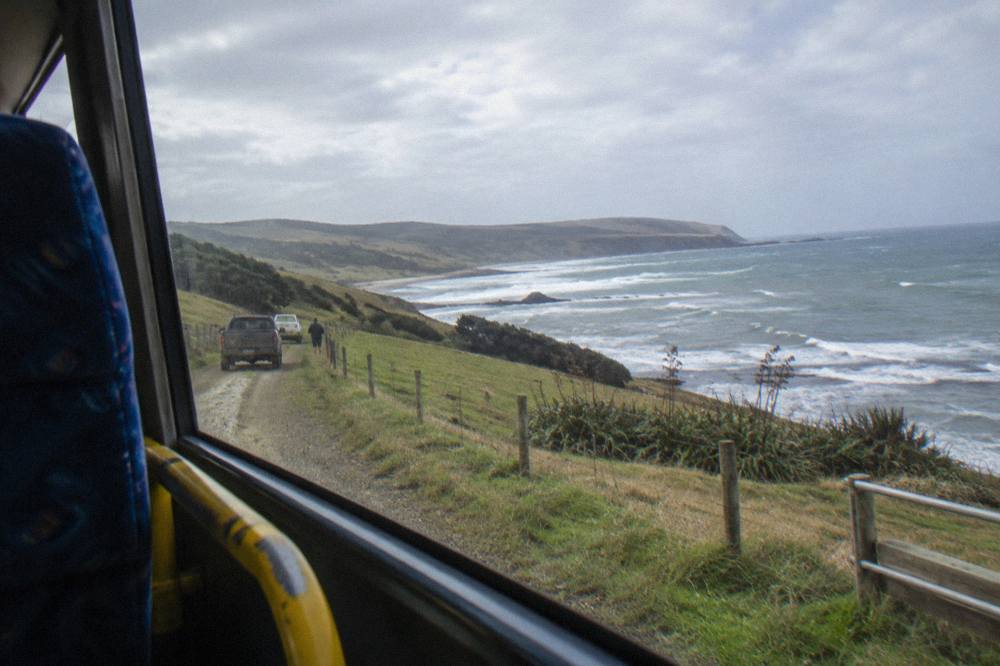
The overland tours run from 1 August to 30 April from the operator's base at 396 Clifton Road, Te Awanga, about a 25 minute drive from Napier. The standard 3 hour tour starts from $56.23 per person with optional hotel pickup, the tour that meets at the base starts from $55.00 per person, and both offer free cancellation up to 24 hours before start.
Season decides availability more than anything else at Cape Kidnappers, so a reader planning a booking date should work backwards from the months above. The two standard 3 hour per-person tours are the natural first stop. One is the 3-Hour Tour meeting at the base at $56.23 per person, rated 4.9 across 1,052 reviews, meeting at 396 Clifton Road in Te Awanga, with hotel pickup available as an optional add-on chosen at booking. The other is the 3-Hour Tour, Lowest Price at $55.00 per person, rated 4.8 across 378 reviews, which meets at 396 Clifton Road, Te Awanga, so you make your own way there. The $55 tour and the $56.23 tour differ by a dollar and change per person, and the pricier one carries the larger review pool; those are the only two with review pools large enough to compare on price at all.
The private options follow the same season, and they suit a different kind of planning. The Private 4-Hour Tour is priced per group of up to 4, from $704.30, with 45 minutes at the colony per its itinerary. There is also a Private Sunrise version of the 3 hour tour, priced per group of up to 4 from $636.15, which pairs the colony with a breakfast of pastries, fresh fruit and yoghurt, plunger coffee and juice. A private sunrise date in November or December, early in the viewing window, is the classic way to combine the best light with the busiest months at the colony.
Cruise passengers have their own calendar constraint: Napier's cruise ships visit from October to April, which sits almost entirely inside the best viewing window. The two shore excursions, one from $95.42 per person with 45 minutes at the colony, and a 4WD safari vehicle version from $93.00 per person, are the only tours in this family built for cruise passengers; the standard 3 hour tours are not. The shore excursion meets at 100 Marine Parade opposite Napier Museum, about 200 m from the free port shuttle drop at the i-SITE; the 4WD safari vehicle tour meets at the pink flag by the Sound Shell next to the i-SITE. Departure times are set per ship. The one thing to check before booking is the ship's all-aboard time against the tour's 4 hour length.
Why Is The Cape Kidnappers Track Closed In Winter?
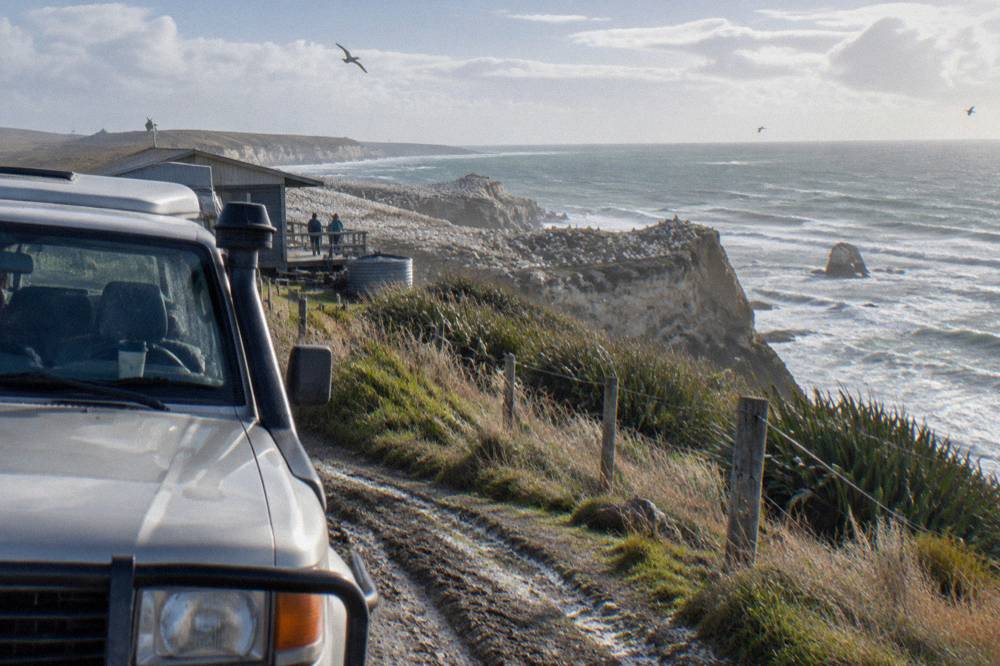
The DOC track from the beach up to the Plateau gannet colony is closed from July to the week before Labour Weekend each year, to limit disturbance to the returning birds. The closure is annual and deliberate, not a reaction to damage, and it means a winter beach walk cannot reach the plateau even when the tide allows the beach itself.
The closure exists for the birds. Adults return to the cape from around July, and the earliest weeks of courtship and nest building are the most sensitive period for the colony. DOC shuts the track through those weeks so the returning pairs settle without foot traffic beside the nests. The overland tours are unaffected because they cross private farmland above the cliff tops and reach the reserve by a different route, so August, September and October visitors can still see the colony by vehicle while the walking track remains shut.
That distinction trips up a lot of walkers. Someone planning the full 19 km return beach walk from Clifton, graded Expert, needs the track open, a low tide window, and a full five hours DOC says to allow for a comfortable return walk. Someone booking the overland tour needs none of that: the operator says the tours are not governed by the tides because they travel above the cliff tops. The walk has its own tide rules, which matter only to walkers: the beach walk is possible only around low tide, high tides and big seas block the beach, leave the Cape no later than 1.5 hours after low tide, and check the tide table before going. Full detail is in the Cape Kidnappers walk guide and the Cape Kidnappers tide times guide.
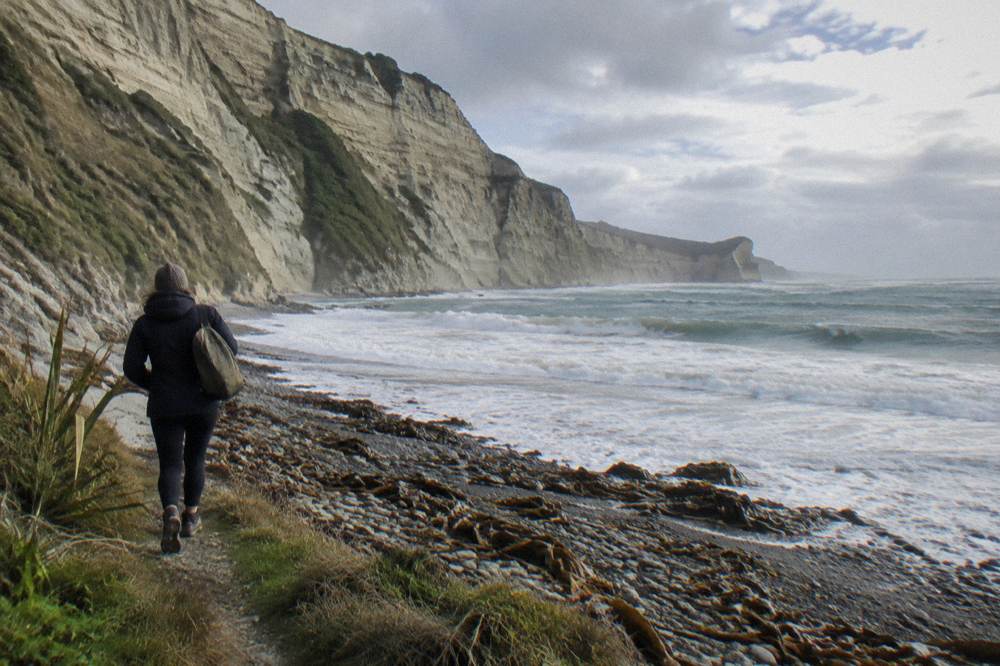
About 7 km of the beach lies under cliffs subject to significant landslide and rockfall, DOC reports large landslides every year, and a landslide seriously injured two tourists in January 2019 before another large event in February 2020 closed the beach temporarily. DOC says the status of the track can change at any time and advises checking the safety alert on its page before setting out. For a season planner the overlap matters more: tours never run May to July and the season starts again on 1 August, while the DOC plateau track stays closed until the week before Labour Weekend, so the overland route remains the lower-risk access to the main plateau colony on private land.
What Are The Gannets Doing In Each Part Of The Season?
From August the returning adults rebuild nests and court; by early November most of the 6,500 pairs are settled on a single egg incubated by both parents on their webbed feet; through summer chicks grow and fledge, making a 2,800 km Tasman crossing to Australia; and by late March and April the plateau empties as the season closes. No specific hatch week can be promised.
The table below is a month-by-month planning guide to the season. It deliberately avoids promising a chick stage on any given day: what the birds do shifts with the season, and the framing is a range, not a timetable.
| Months | What The Birds Are Doing | What Is Running |
|---|---|---|
| May to July | Adults begin returning from around July; the plateau is quiet and the colony is largely empty | Overland tours paused; DOC plateau track closed until the week before Labour Weekend |
| August to October | Courtship, nest rebuilding and egg laying; the colony builds toward full strength | Overland tours running from 1 August; beach track reopens the week before Labour Weekend |
| Early November to late February | DOC's best viewing window; DOC puts the colony at 6,500 pairs | All tour options running; Napier cruise season under way from October |
| March to 30 April | Grown chicks fledge and depart; the plateau thins out through autumn | Tours run to 30 April, then the season ends |
Two biology facts do the heavy lifting in that table. Second, the fledgling crossing: a young gannet leaves the cape and flies about 2,800 km across the Tasman Sea to Australia, returning two to three years later, typically in its third year, to take up a nest site of its own. The birds you watch in February weighing up their first flight are preparing for one of the longer first journeys in New Zealand birdlife.
The nesting calendar is also why the behaviour rules exist year-round: keep behind barriers or at least five metres from nesting gannets, no dogs or horses, no fires or camping, and drones need a DOC permit on conservation land. Nesting birds dislike loud noises and fast movement, and a colony at full strength in January is a dense, noisy, easily unsettled crowd of birds with eggs and chicks underfoot.
Can You Visit Cape Kidnappers Outside The Main Viewing Window?
Yes, within limits: the overland tours run from 1 August to 30 April, so August through October and March through April are all visitable even though they sit outside DOC's best viewing window of early November to late February. May, June and July bring no tours, and the DOC plateau track is closed from July until the week before Labour Weekend.
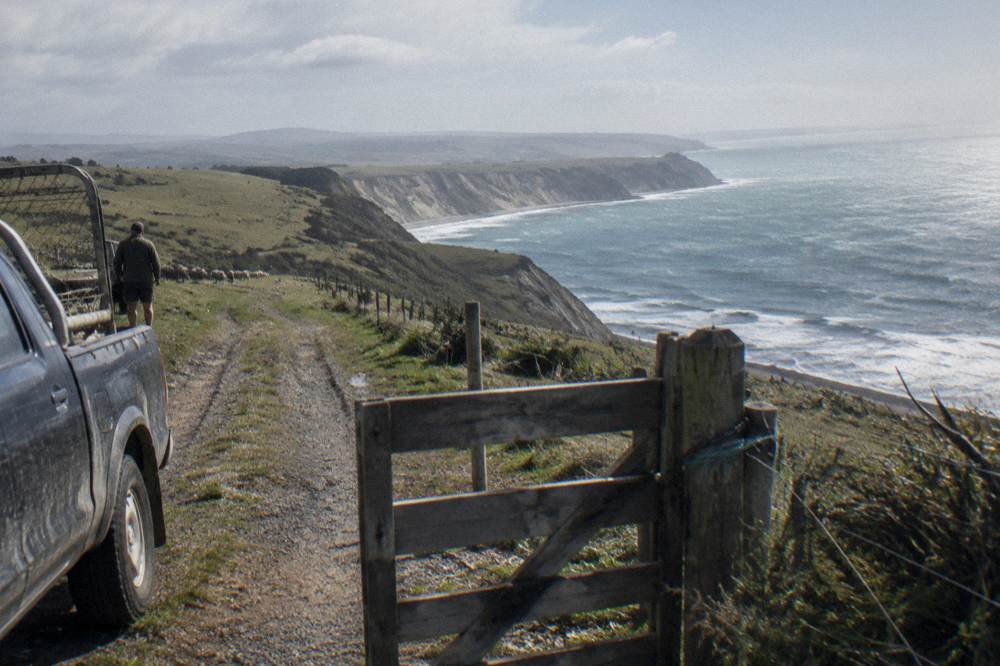
The shoulders of the season are underrated. An August or September departure means a colony in the middle of courtship, with birds displaying, rebuilding nests and re-establishing pairs that stay together over many seasons. A late March or April departure means fewer nests but dramatic emptying of the plateau as fledglings leave, softer light for photography, and the same clifftop ride across the working farm. Neither matches the density of the November-to-February window, and no guide should claim otherwise, but both are real visits with real birds.
The winter months are the only genuine blank. The tours do not run in May, June or July, the plateau track is closed, and the birds themselves are mostly absent until the July return begins. Travellers locked into a winter itinerary would do better to spend the day on Napier's Art Deco quarter or the wineries of Hawke's Bay and save the colony for a return trip, a combination covered in the Art Deco and gannet tour day guide. Weather in the shoulder months also deserves a look at the Cape Kidnappers weather guide before committing to a date, and clothing advice is in what to wear for a gannet tour.
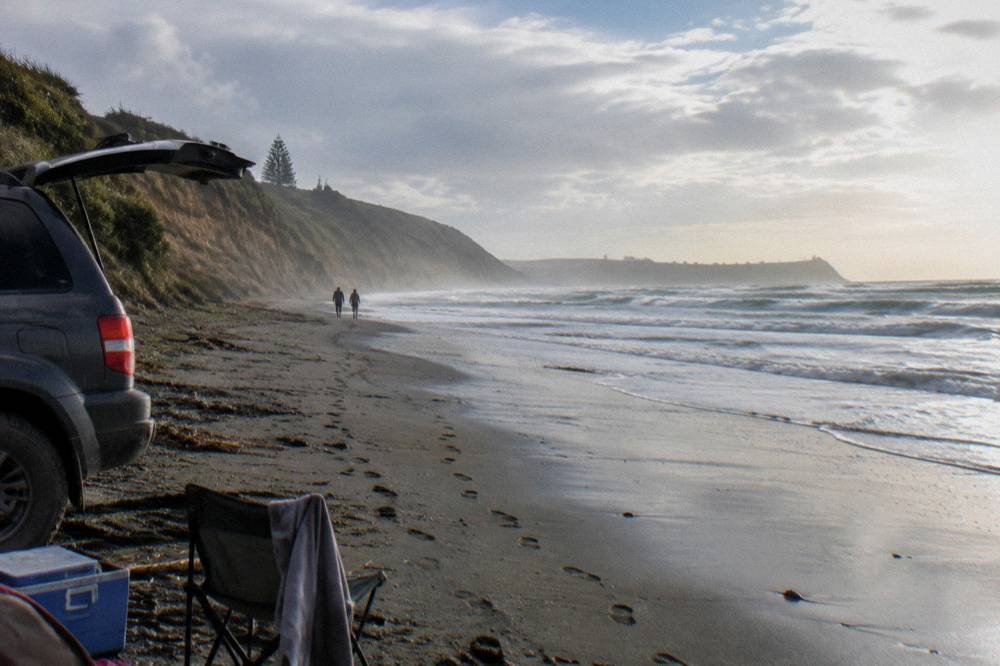
One more season-adjacent fact matters to walkers and bike riders only. Clifton Motor Camp was closed in February 2026 after a geotechnical assessment found unstable land above it, permanently closed from July 2026, and the Council has since voted to close a section of Clifton Road to vehicles at the former campground. Pedestrian access to Clifton Beach and the walking route stays open, and the overland tours, which use their own base at 396 Clifton Road, are a separate matter. Anyone planning the walk or the self-guided bike ride from Clifton should check current access before travelling.
How Does The Season Change The Shore Excursion And Cruise Options?
Napier cruise ships call from October to April, which sits almost entirely inside the best gannet viewing window, so cruise passengers generally arrive at a good time by default. The two shore excursions, from $95.42 and $93.00 per person, run to the cruise calendar rather than a fixed timetable, with departure times set per ship.
The alignment of the two seasons is close to perfect. The strongest months at the colony, November through February, are the heart of the cruise calendar, and the shoulder ship months of October, March and April still fall inside the tour season. The main check for a cruiser is not the birds but the clock: the shore excursions are 4 hours long, the meeting point is the pink-flag area in front of the Sound Shell next to the Napier i-SITE at 100 Marine Parade, roughly 200 m from where the port shuttle drops, and on some ship days the operator collects passengers directly from the port because of short port times. Match the tour against the ship's all-aboard time before booking.
Passengers cannot walk out of the port itself; a shuttle runs to two stops, the Napier i-SITE and the National Aquarium of New Zealand, taxis cannot enter the port, and the return shuttle leaves from the i-SITE. That logistics chain is covered in full in the Napier shore excursion gannets guide. What the season adds is reassurance: a cruise visit between October and April lands inside the tour season, and a visit in the peak months lands inside the best viewing window too.
Which Tour Should You Book For Your Chosen Month?
For the peak months of early November to late February, the standard 3 hour tour from $56.23 per person, rated 4.9 across 1,052 reviews, is the dependable choice. For the quieter shoulders, a private option such as the Private 4-Hour Tour from $704.30 per group of up to 4, or a Private Sunrise 3 hour tour from $636.15 per group, makes more of a quiet plateau.
The match between month and tour is where planning becomes a booking. The two standard tours are the practical per-person options: the $56.23 per person version with 1,052 reviews and the $55 per person version with 378 reviews, both meeting at 396 Clifton Road, Te Awanga. The cheapest shared option, at $55 and rated 4.8 across 378 reviews, leaves the 25 minute drive to the base at 396 Clifton Road, Te Awanga to you. A traveller weighing the two should read the standard or private comparison discussion before deciding, but the short version is that per-person tours suit the peak and private tours suit the edges.
Private tours buy timing, not just the vehicle to yourself. The Private 4-Hour Tour, from $704.30 per group of up to 4, spends 45 minutes at the colony per its itinerary, against roughly 3 hours total for the standard versions, and the extra hour is most valuable in the shoulder months when the plateau is quieter and lingering matters more. Both carry the same free cancellation up to 24 hours before start as the per-person tours.
There is also a season-proofing argument for the longer combo. The Private 7.5-Hour Winery Combo, from $1,214.00 per group of up to 2 in a luxury Range Rover, runs from about 8:30 am to 4:00 pm and pairs the colony with Hawke's Bay wine country, with pickup from your accommodation. In the peak months it turns the best viewing window into a full day; in the shoulders it hedges a quieter plateau with a region that does not depend on the bird calendar at all. For a fuller discussion of value across the whole range, the gannet tour price guide breaks down every option.
The match-ups, condensed:
| Season Window | Best-Fit Tour | Price Basis |
|---|---|---|
| Peak, early November to late February | 3-Hour Tour, Meet at Base, or 3-Hour Tour, Lowest Price | From $56.23 or $55.00 per person |
| Shoulder, August to October | Private 4-Hour Tour | From $704.30 per group of up to 4 |
| Peak with early light | 3-Hour Private Sunrise Tour | From $636.15 per group of up to 4 |
| Cruise call, October to April | 4-Hour Shore Excursion or 4WD safari vehicle version | From $95.42 or $93.00 per person |
| Full-day hedging, any month in season | Private 7.5-Hour Winery Combo | From $1,214.00 per group of up to 2 |
Whatever the month, book against the season, not the weather forecast. Free cancellation up to 24 hours before start applies across the tours covered here, so an early booking in the prime window can be adjusted later, but a date outside 1 August to 30 April cannot be rescued at all. Start from the birds' calendar, choose the tour that fits the month and the budget, and the season does most of the planning for you. The rest, from what to pack to how the walk compares, is covered across the guides linked here, including the overview of Napier Gannet Tour options and the wider Cape Kidnappers gannet colony tours page.
Common Questions About The Cape Kidnappers Gannet Season
When Is The Cape Kidnappers Gannet Season?
The overland tours run from 1 August to 30 April each year, including Christmas Day. DOC names early November to late February as the best viewing window, when the colony of 6,500 pairs is nesting. May, June and July are the off-season, with no tours running.
When Is The Best Month To See Gannets At Cape Kidnappers?
Any month from early November to late February offers the colony at full strength, with nesting adults, eggs and then growing chicks. The exact chick stages shift from year to year, so no hatch week can be promised, but summer months reliably deliver the densest colony.
Why Is The Cape Kidnappers Track Closed In Winter?
The DOC track from the beach to the Plateau colony closes from July to the week before Labour Weekend each year to limit disturbance to the returning birds. The closure is annual and deliberate. The overland tours are unaffected because they cross private farmland above the cliff tops.
Can You See Gannets At Cape Kidnappers In March And April?
Yes. Tours run to 30 April, and in the early autumn the plateau still holds fledging chicks and departing young birds, though numbers thin as the season ends.
Do The Napier Cruise Excursions Match The Gannet Season?
They do. Napier cruise ships call from October to April, which sits almost entirely inside the tour season, and the peak cruise months overlap DOC's best viewing window. Departure times for the shore excursions are set per ship, so check the all-aboard time against the 4 hour tour length.
When Do Gannet Chicks Hatch At Cape Kidnappers?
Hatch timing varies from season to season, so no particular week can be promised in advance. Grown chicks are common through the late-summer months, and fledglings leave on a 2,800 km crossing to Australia, typically returning in their third year.