Are Gannets Dangerous To Visitors At The Cape Kidnappers Colony?
Are gannets dangerous at the Cape Kidnappers colony? A straight answer on gannet behaviour, DOC safety rules, and which Napier gannet tours keep you at a safe distance.
Are Gannets Dangerous To Visitors At The Colony?
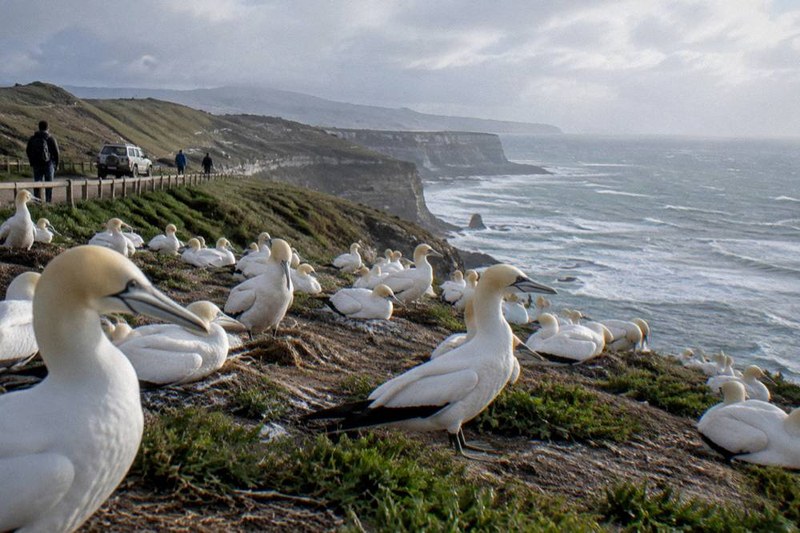
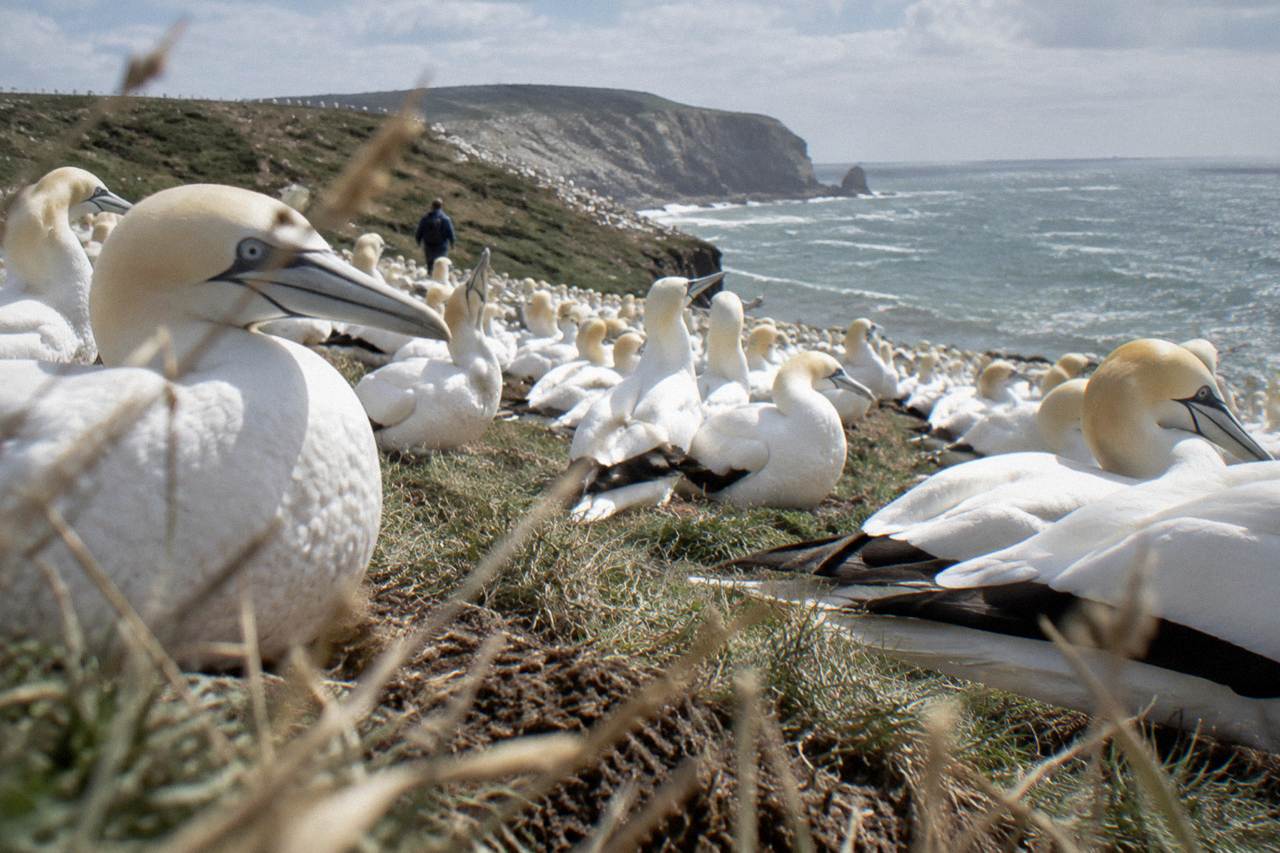
No, gannets are not considered dangerous to visitors at the Cape Kidnappers colony. The birds pose no real threat to people, and a visit is regarded as safe, provided everyone follows the rules that keep both the gannets and their human guests safe. DOC puts the colony at 6,500 pairs, and the birds are focused on nesting, fishing and each other rather than on the humans watching from behind barriers. Gannets are not birds of prey, they carry no venom, and they do not scavenge or stalk people. The real risks at the cape come from cliffs, tides and landslide terrain, not from the birds themselves, and the rules exist mainly to stop people disturbing a very crowded nesting colony. For a closer look at how those devoted pairs bond, nest and raise a single chick, the guide to gannet pairs at Cape Kidnappers also covers which Napier tours put you right in front of them.
Australasian gannets are big birds, and their size is the first thing that surprises visitors. NZ Birds Online gives the wingspan as about 1.8 m, which is larger than most people expect from a seabird that fishes offshore. They nest shoulder to shoulder, sometimes just a wing's reach apart, and the colony runs on constant noise, jostling and squabbling between neighbours. That intensity reads as aggression from a distance, but nearly all of it is directed at other gannets defending their own patch of ground.
DOC's rules for the reserve are the clearest signal of how the birds and visitors interact: keep behind barriers, or at least five metres from nesting gannets. Get closer and the bird's stress rises, and a stressed gannet may lunge, snap or strike with its beak at whatever enters its space. That is a defensive response to an intruder, not an attack on a person.
The colony is reached on the overland tours through a working farm and native bush to a privately owned nature reserve above the cliffs, or by the DOC beach walk from Clifton. The 3-Hour Tour, Meet at Base runs from $56.23 per person, is rated 4.9 across 1,052 reviews, lasts about 3 hours, and starts at 396 Clifton Road, Te Awanga, about a 25 minute drive from Napier. You can also compare the main options side by side on the Cape Kidnappers gannet colony tours guide.
Do Gannets Ever Attack People At Cape Kidnappers?
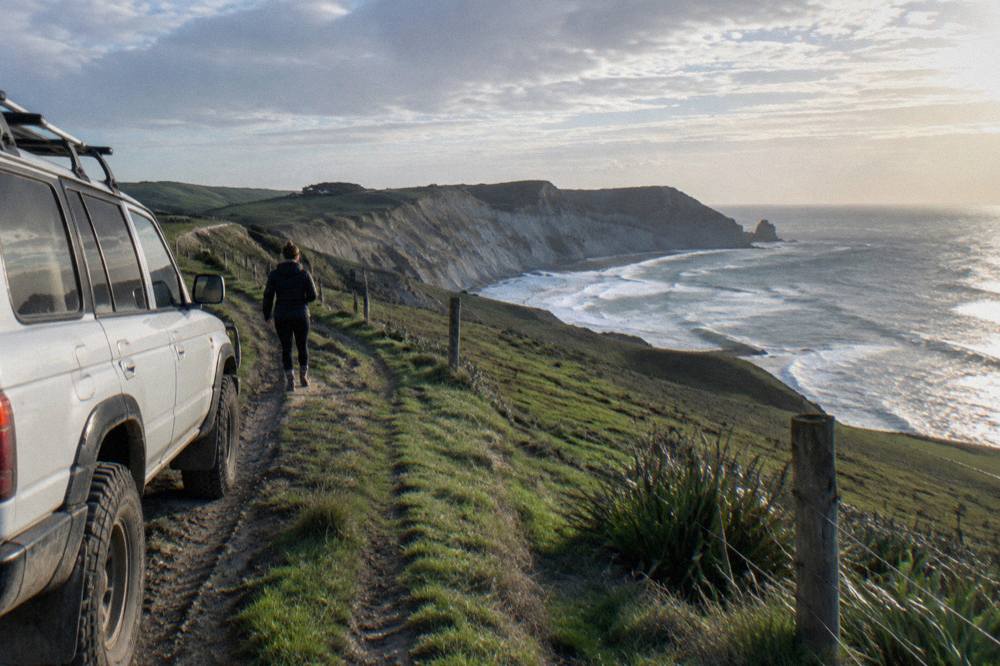
No, gannets do not attack people at Cape Kidnappers. The injuries DOC reports at the cape were from landslides, and the reserve's rules are written to keep visitors safe. What visitors occasionally see, and sometimes describe as an attack, is a nesting gannet lunging or bill-snapping at a person who has come inside its comfort zone. Defensive behaviour happens when the distance rules are broken, and injuries to people from the birds at this colony are not part of the documented safety picture. If you're wondering what to call the dense crowds of birds packed along the cliffs, the guide to gannet group names explains why the gathering at Cape Kidnappers is known as a gannetry.
The documented injuries at Cape Kidnappers have a different cause entirely. DOC reports that a landslide seriously injured two tourists in January 2019, and another large landslide in February 2020 led to a closure of the beach before the track was later reopened. About 7 km of the beach lies under cliffs subject to significant landslide and rockfall, and DOC reports three serious injury landslide events in the past 50 years, with large landslides occurring every year. In other words, the hazard that has actually hurt people at the cape is falling ground, not the birds.
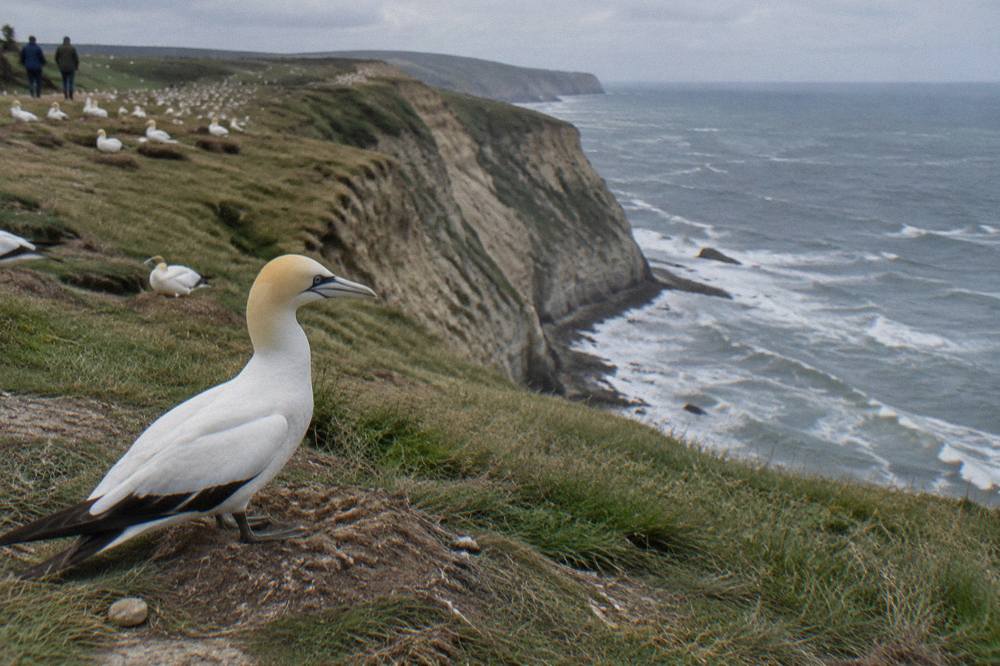
Gannet behaviour toward people follows a predictable ladder. A relaxed bird sits on its nest, preens, or changes position with a slow shuffle. A wary bird raises its head, points its bill, and watches you. A bird that feels cornered lunges forward with the bill open, snapping at the air or at whatever is closest. Each step is a warning, and each step gives you time to step back. Gannets are seabirds, and Cape Kidnappers is home to a colony of about 6,500 pairs.
The injury a gannet could inflict in theory is a bite from a sturdy, spear-shaped bill and a scratch from claws, painful for a moment but minor compared with what people genuinely hurt themselves with at the cape, which is terrain. DOC's guidance, keep behind barriers or at least five metres back, reflects that balance. It protects the birds from disturbance as much as it protects people, because nesting birds dislike loud noises and fast movement, and a colony-wide panic can knock eggs and chicks off nest mounds.
The overland tours travel above the cliff tops rather than along the beach, so the operator describes them as not governed by the tides, and the birds are viewed from a managed spot rather than approached on foot.
How Close Can You Get To The Nesting Gannets?
You can stand as close as five metres from the nesting gannets, but no closer, and you must remain behind the barriers that mark this distance. At Cape Kidnappers the rule is enforced with barriers at the Plateau colony, and guests stay behind them rather than walking among the nests. The Plateau colony, which DOC calls the best place to view nesting gannets, sits on private land reached by the overland tours, and visitors watch from a managed area. On the beach walk, Black Reef is the first nesting site, 7.5 km from Clifton, and close-up views are possible there and at the Plateau, always from outside the nesting birds' space.
Five metres is not a token distance. Birds that are repeatedly disturbed can leave the nest exposed, and the colony's neighbours are close enough that one panic can ripple through dozens of nests. The rule also works in the visitor's favour: at five metres you see the whole social life of the colony, the greeting displays, the sky-pointing, the changeovers between partners, instead of one anxious bird staring back at you.
| Situation | Minimum distance | What you can expect to see |
|---|---|---|
| Behind the barrier at the Plateau viewpoint | Set by the fence | Full colony activity, birds relaxed, courtship and nest building |
| Viewing Black Reef from the beach | At least five metres | Nesting birds on the reef, other seabirds nearby |
| Any gannet on a nest elsewhere | At least five metres | Calm birds; step back if a bird points its bill at you |
| Walking the track through private land | Stay on the track | Farm land and native bush, birds on the cliffs ahead |
The overland tours make the distance rule easy. The operator says the plateau is flat ground with bench seats, that walking there is safe and easy, and that everything can also be seen from the vehicle without getting out, so a guest only needs to be able to get on and off the vehicle unaided. Little or no walking is required. Tea, coffee and a biscuit are served at the colony. That bench-seat arrangement is why families and less mobile travellers usually land on a vehicle tour rather than the beach walk, a trade-off covered in detail on the is the tour suitable for children page.
Dogs are not allowed at all, because the reserve is a wildlife sanctuary and a DOC reserve, and nesting birds read a dog as a predator from a long way off. The same logic applies to drones: flying one on conservation land needs a DOC permit, and low aerial approaches stress the whole colony.
- Standard Overland Gannet Tours$55
- Cruise Shore Excursions$93
- Private And Sunrise Tours$604 per group
What Happens If A Gannet Feels Threatened?
A gannet that feels threatened does not strike immediately; it gives a clear sequence of warning signals before any contact, stretching its neck, pointing its bill at you, and then opening the bill. If the intruder stays, the bird finally escalates, lunging or snapping in its defense. Each of these stages is visible from metres away, and the correct response at any of them is the same, stop approaching and back away slowly. Gannets do not swoop at people the way some terns and gulls do when defending a nest over open ground. A gannet's instinct is to hold its nest, warn, and strike only at what enters its reach, which is why the five metre line works so well for both species involved.
The warning display is worth knowing because it looks dramatic. A gannet's bill is long, pale and sharply pointed, evolved for gripping slippery fish, and a bird that points it at you and claps it open and shut is telling you plainly that you are too close. Nesting birds also dislike loud noises and fast movement, so a shrieking child running along a fence line can agitate more birds than a quiet group standing still twice as close. Calm, slow, quiet visitors get the best of the colony and the least reaction from it.
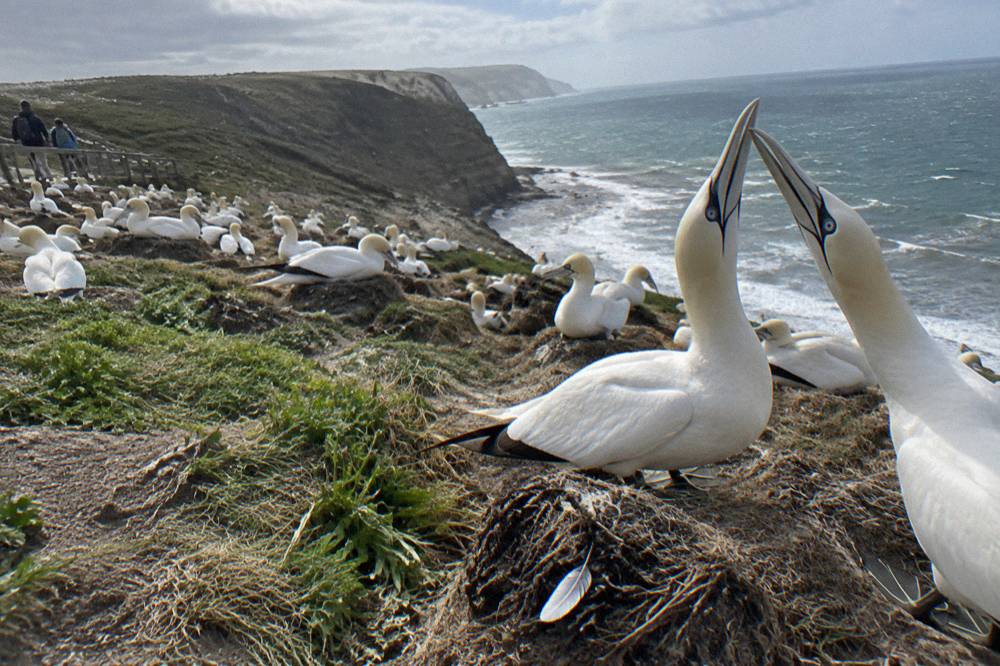
Most of the aggression visitors see at Cape Kidnappers is gannet on gannet. A colony of 6,500 pairs means neighbours dispute borders constantly, arriving partners get greeted with elaborate displays, and a returning bird that lands in the wrong spot gets driven off with bill-thrusts. Pairs stay together over many seasons and greet each other with ritualised movements that can look like fighting. Watching for a few minutes makes the pattern obvious: the birds posture, settle, and return to incubating, and none of it has anything to do with the people at the fence. Once the birds' squabbles make sense, the Napier planning guide built around the Cape Kidnappers gannet tour makes it easy to fill in the rest of a day in Hawke's Bay.
Other wildlife at the cape adds context rather than danger. White-fronted terns, variable oystercatchers, reef herons, Caspian terns and little blue penguins all nest around the cape, and the penguins in particular stay well out of sight in burrows and crevices. None of these species poses a risk to a visitor who stays on the track and behind barriers. The practical safety instructions from DOC for the area are about terrain and sea: sturdy footwear, food and water, sunscreen, extra clothing, a jacket, and a communication device on the walk, and moving to higher ground if a tsunami siren or alert sounds.
Are The Vehicle Tours Safer Than The Beach Walk?
Yes, the vehicle tours are safer in a specific sense: they avoid the beach entirely, travelling above the cliff tops across private farmland, while the beach walk passes about 7 km of cliffs that are subject to significant landslide. By staying on higher ground instead of walking beneath unstable slopes, the overland route removes the main hazard the beach walk cannot avoid. The birds carry the same five metre rule either way, and a vehicle tour does not change how a gannet behaves toward you. What it changes is the terrain between you and the colony, and that terrain, not bird behaviour, is where Cape Kidnappers' documented injuries have come from. DOC treats beach transport as a high-risk operation and describes the overland route across private farmland as a lower-risk option.
The beach walk itself is a serious undertaking, and readers can weigh it fully on the Cape Kidnappers walk guide. It is 19 km return, graded Expert, DOC says to allow at least 5 hours for a comfortable return walk, and it is possible only around low tide, because high tides and big seas block the beach. Walkers must leave the Cape no later than 1.5 hours after low tide, and must check the tide table before going. A steep, rough, muddy climb of about 1 km leads from the beach up toward the plateau track, which is closed from July to the week before Labour Weekend each year to limit disturbance to returning birds.
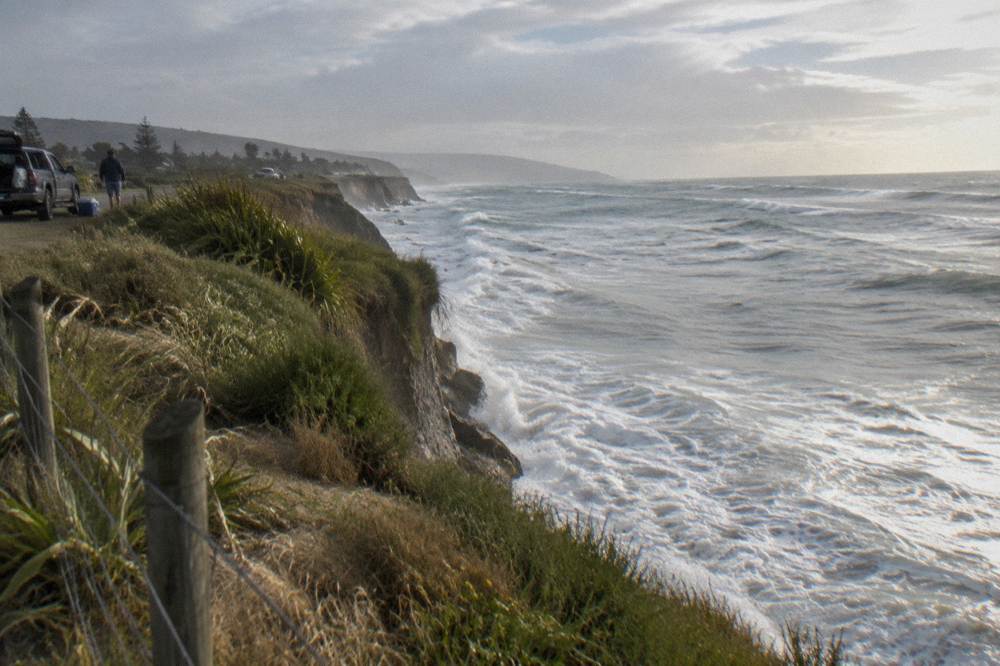
By contrast, the standard overland tours run from 1 August to 30 April, including Christmas Day, and never depend on the tide. The operator's base at 396 Clifton Road has a large off-road car park with room for several motorhomes, and the last toilets before the colony are at the base, so the practical discomforts of the day are also handled differently. None of this makes the walk reckless: it makes it a trip for prepared walkers who accept a cliff hazard that DOC says can change the track's status at any time, and who check the safety alert on its page before setting out.
For a reader whose main worry is the birds, the choice barely matters: both routes end at the same kind of managed viewing, and both ask for the same five metres. For a reader whose worry is safety generally, the vehicle tours remove the two things that have actually hurt people here, the tide window and the cliffs.
The 3-Hour Tour, Lowest Price runs from $55.00 per person, is rated 4.8 across 378 reviews, meets at the operator base in Te Awanga with no hotel pickup included, and notes that walking is not required if you do not want it. Between it and the meet-at-base version from $56.23 with 1,052 reviews, the two best-reviewed options sit within about a dollar of each other, with pickup as the real difference. Both are for general travellers, not cruise passengers.
Is The Gannet Tour Safe For Children And Nervous Visitors?
Yes, the Gannet Tour is a safe and comfortable choice for children and nervous visitors. The overland tours suit families, with bench seating and barrier viewing that keeps the birds at a safe, unthreatening distance, so even hesitant guests can enjoy the colony without feeling overwhelmed. Pushchairs are listed as allowed on the Meet at Base, shore excursion, private 4-hour and sunrise tours, and service animals on the Meet at Base, private and sunrise options, so confirm details on the live booking page for the departure in mind. Nothing in the birds' behaviour changes for a child: the five metre rule and the fence do the work, and the noise and movement of the colony are exactly what children tend to remember. The nesting season's best viewing runs from early November to late February, when chicks and courtship activity fill the plateau.
Nervous adults usually worry about two things, being dive-bombed and being pecked. Neither matches how gannets behave. What the tours come for is the colony itself, which DOC puts at 6,500 pairs. Being pecked requires standing within a bird's reach at its nest, which the barrier makes impossible on a tour.
For visitors who want the colony nearly to themselves, the private versions remove the group variable altogether. The Private 4-Hour Tour runs from $704.30 per group of up to 4, lasts about 4 hours with 45 minutes at the colony per its itinerary, and is private to your group, with coffee or tea included. It is priced per group, so it is never comparable with a per-person fare without saying so. There is also the Private 7.5-Hour Winery Combo from $1,214.00 per group of up to 2, which pairs the gannets with Hawke's Bay wine country in a luxury Range Rover, with pickup about 8:30 am and a return by 4:00 pm.
Cruise passengers have their own dedicated departures, and only those. The two shore excursions, a 4-hour option from $95.42 per person meeting at 100 Marine Parade opposite the Napier Museum, and a 4WD safari vehicle version from $93.00 per person meeting at the pink-flag area by the Sound Shell, are the products built for a ship day, with departure times set per ship. The standard 3-hour tours are not for cruise passengers. Details are on the Napier shore excursion gannets page.
What Should You Do If A Gannet Acts Aggressively?
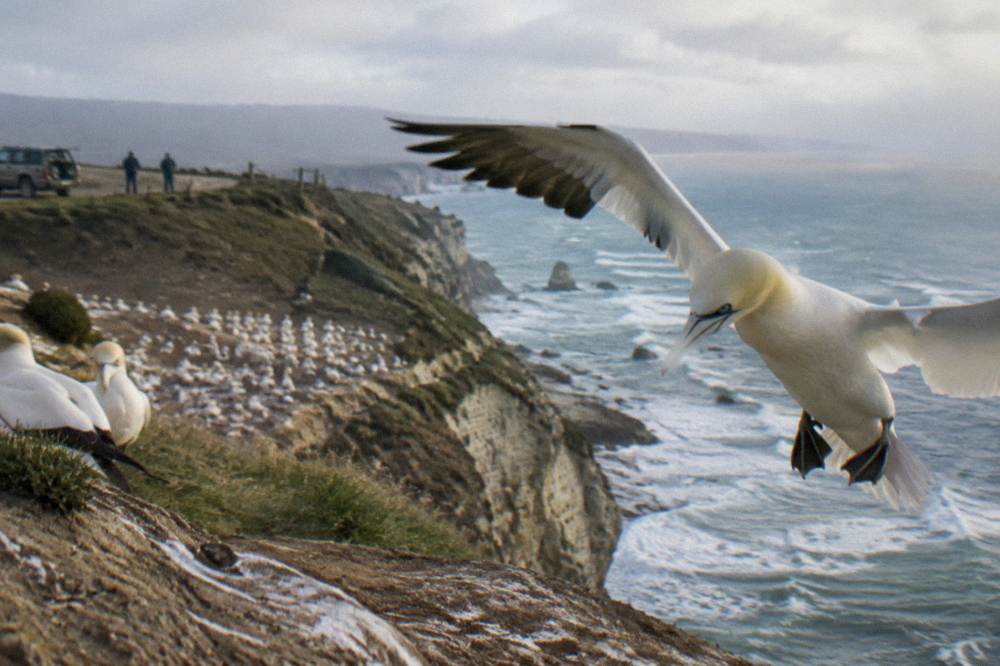
Stop where you are and stay still for a moment, then back away slowly and quietly until you are more than five metres from the bird. The aggressive display ends as soon as the gannet no longer feels cornered, and no further response is needed on your part. Never raise a hand, wave a bag, or try to photograph your way past a warning, because fast movement is exactly what escalates a display. Never try to touch a gannet, feed one, or pick up a chick or egg, both because it is the fastest way to get bitten and because the reserve's rules forbid interfering with nesting birds. There is no scenario at Cape Kidnappers where a visitor needs to defend themselves from a gannet.
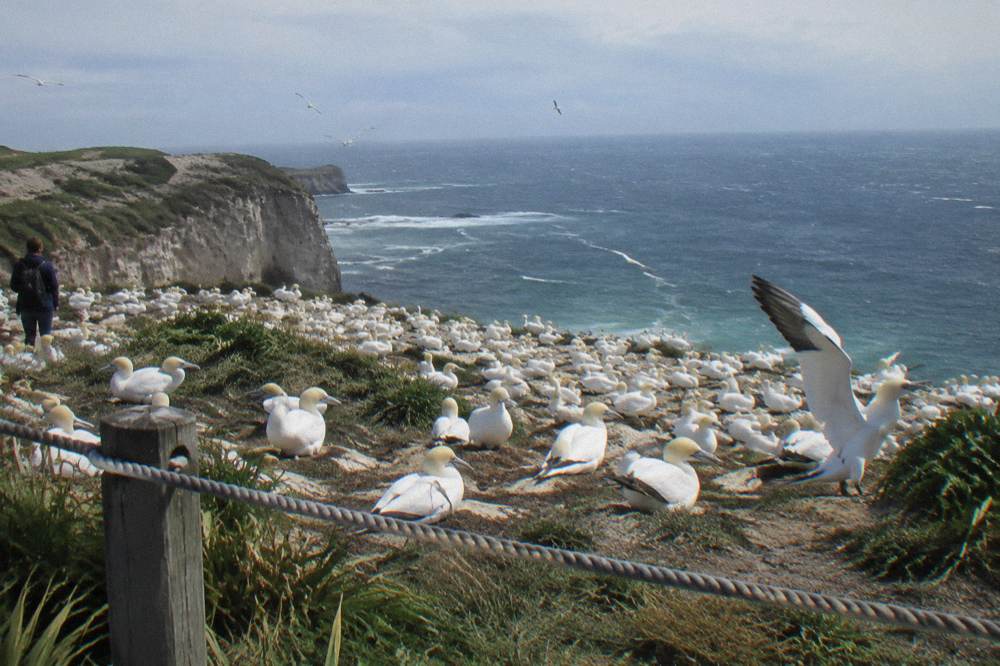
A few behaviours make the whole experience calmer. Approach the viewing area slowly and keep voices low, since nesting birds dislike loud noise. Let children watch from beside you rather than letting them run the fence line. Keep food sealed rather than eating at the barrier, which is both good manners in a reserve and the fastest way to avoid unwanted attention from any scavenging species. Leave drones packed away without a DOC permit, keep dogs at home, and stay on the track through the private farmland sections, where keeping to the track is a condition of access rather than a suggestion.
It also helps to know what the birds are doing with their season. Adults return to the cape from around July for courtship and nest building, each pair raising a single egg, and the best viewing runs from early November to late February. Young gannets fledge across the Tasman Sea to Australia, a crossing of about 2,800 km, and typically return in their third year to join the breeding colony themselves. A bird locked in a border dispute with its neighbour is not looking at you at all, and most of what looks like aggression from the fence is simply the colony's everyday politics.
Every tour covered here carries free cancellation up to 24 hours before start, so a nervous traveller can lock in a departure and still change their mind. If the question was never really the birds but whether the day will suit your group, the fuller decision guide is is the Cape Kidnappers gannet tour worth it, and this Napier Gannet Tour site keeps the whole comparison in one place.
Common Questions About Gannet Safety At Cape Kidnappers
Are Gannets Dangerous To Visitors At The Colony?
No. Gannets at Cape Kidnappers are not considered dangerous to visitors who keep behind barriers or at least five metres back. The birds may lunge or bill-snap if someone crowds a nest, but they do not swoop at or chase people, and the documented injuries at the cape have come from cliff landslides, not from birds.
Can A Gannet Bite Or Injure You?
A gannet can deliver a painful peck with its sturdy, pointed bill if you come within its reach at a nest, which is why the five metre rule exists. Backing away slowly ends any warning display immediately.
Do Gannets Swoop At People Like Gulls?
No. Gannets defend the nest spot itself rather than chasing intruders through the air, because a bird that leaves its single egg risks losing it to neighbours. Their defence ladder is a neck stretch, a pointed bill, bill-clapping, then a lunge, all from the nest.
Is The Gannet Tour Safe For Children?
Yes. The $56.23 overland tour is pushchair accessible but not wheelchair accessible, while the $55 tour requires no walking. Children simply need to stay behind the barrier and keep voices down, since nesting birds dislike loud noises and fast movement.
Why Do The Gannets At Cape Kidnappers Look Like They Are Fighting?
Almost all visible aggression is between neighbouring gannets defending nest space in a colony of thousands of pairs. Pairs stay together over many seasons and greet each other with dramatic displays that resemble fighting but are part of normal colony life.
How Close Can You Get To The Nesting Gannets?
The rule from DOC is to keep behind barriers or at least five metres from any nesting gannet. At the Plateau colony viewpoint a fence marks that distance for you, and on the beach at Black Reef the same five metre rule applies. If a bird stretches its neck or points its bill at you, that is the signal to stop and back away slowly.