Do Gannets Mate For Life? Gannet Pairs At Cape Kidnappers
Do gannets mate for life? How Australasian gannet pairs bond, nest and raise a single chick at the Cape Kidnappers colony, and which Napier tours put you in front of them.
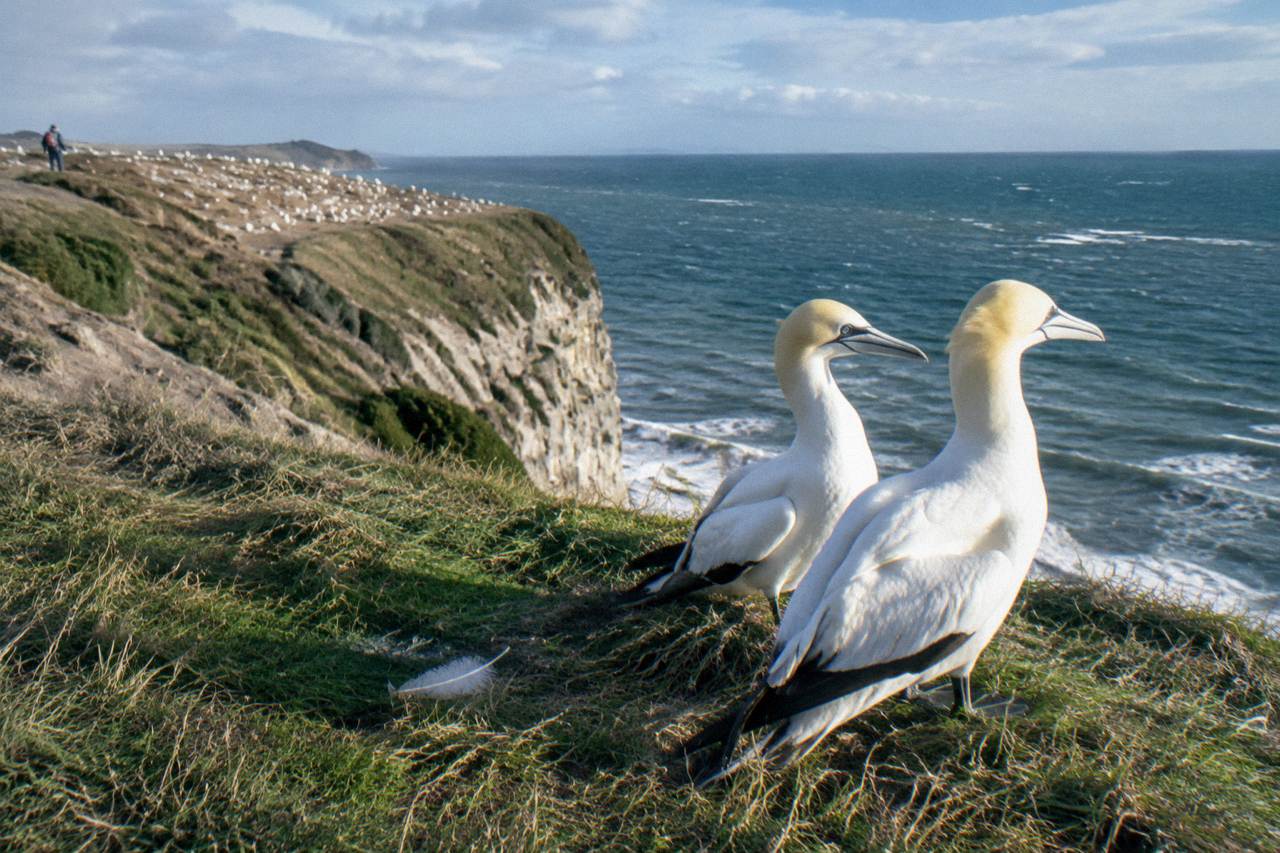
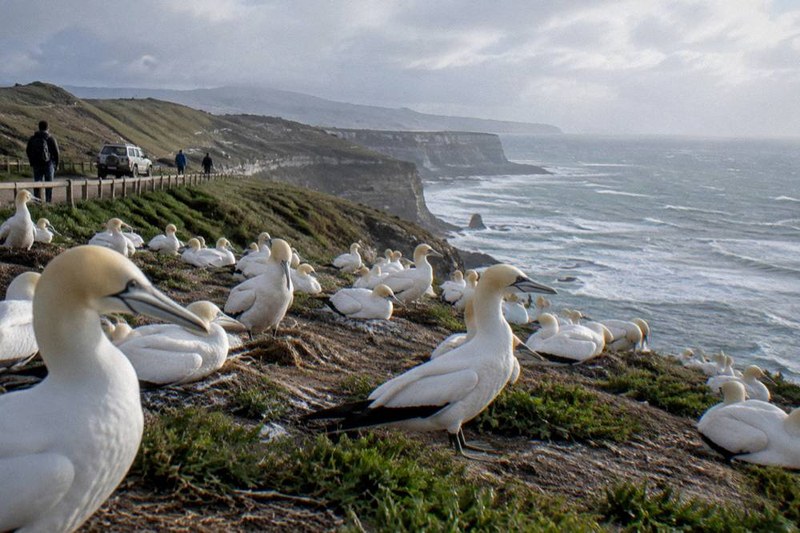
Gannets are the romantics of the New Zealand coast, at least by reputation. A single egg, incubated by both parents on their webbed feet, a nest rebuilt season after season, a greeting ritual of fencing bills and bowed heads that looks choreographed. At Cape Kidnappers, DOC puts the colony at 6,500 pairs, and calls it the largest and most accessible mainland colony in the world, so this is the one place in Hawke's Bay where pair behaviour is not a lucky glimpse but the main event on the clifftop. For the backstory on how this clifftop colony earned its record status, plus the practicalities of getting there from Napier, the guide to the world's largest gannet colony has the details.
The practical question behind the romantic one is simple. If the birds are paired and settled, what will you actually see from the viewing area, and when. The short answers: fencing, nest building, egg changeovers and chick feeding, with the busiest courtship window early in the season and the best all round viewing from early November to late February, per DOC.
Do Gannets Mate For Life?
Gannets are what ornithologists call long term monogamous: pairs stay together over many seasons, reuniting at the same colony, and often the same nest site, year after year. NZ Birds Online notes that gannet pairs remain together over many seasons, and DOC records Australasian gannets nesting at Cape Kidnappers since the 1870s. No source gives a fixed number of years a pair stays bonded, so treat it as a strong habit rather than a lifetime contract. Since so many devoted pairs crowd onto the same cliffs every season, it helps to know what a gathering of gannets is actually called before you visit.
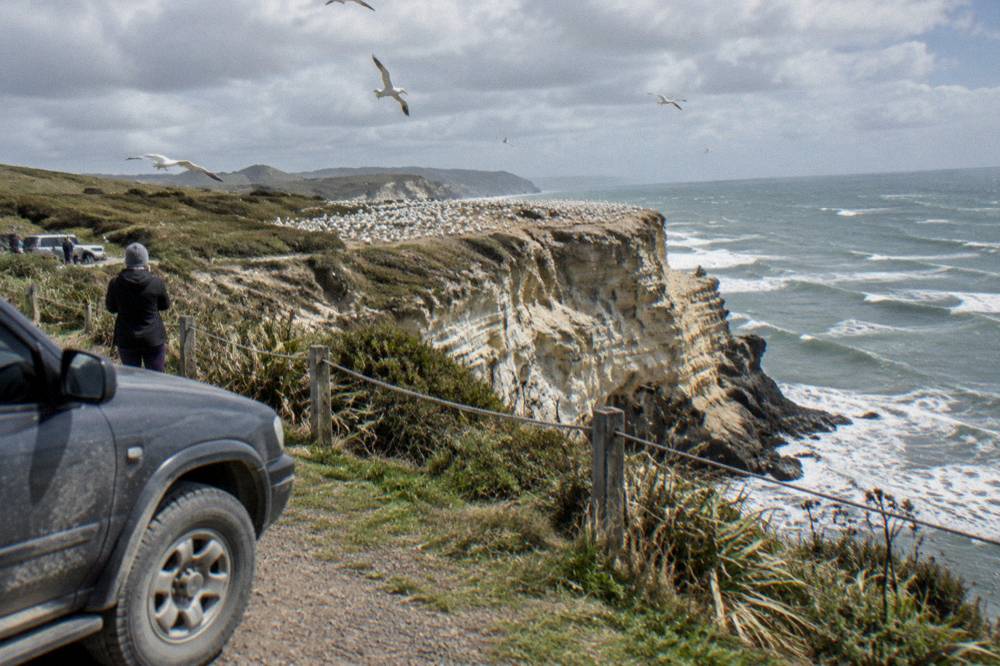
The mechanics matter more than the label. A gannet pair separates outside the breeding season, sometimes for months. Young birds make a migration of their own. Adults come back to the cape from around July for courtship and nest building, and the reunion is where the famous displays happen. A bird that has spent the winter alone recognises its partner on a crowded colony, and the two re-establish the bond through bill fencing, mutual preening and the sky pointing gesture that releases tension between neighbours packed a wing's length apart.
What that means for a visitor is that almost everything you watch at Cape Kidnappers is pair behaviour. The colony is not a mass of anonymous birds. It is thousands of established couples defending a nest mound, swapping incubation shifts, and later trading chick-feeding duties. The scene reads differently once you know that the two birds in front of you have probably done this before, possibly on the same square of turf. Standing that close to so many territorial pairs naturally raises a safety question, and this straight answer on gannet attacks at the colony explains the DOC rules and the viewing distance that keeps both birds and visitors comfortable.
- Standard Overland Gannet Tours$55
- Cruise Shore Excursions$93
- Private And Sunrise Tours$604 per group
If watching that is the goal, the overland tours are the reliable way in. The route crosses a working farm of roughly 2,500 hectares to a privately owned nature reserve above the cliffs, and the operator says the plateau is flat ground with bench seats where walking is safe and easy.
How Do Gannet Pairs Bond At Cape Kidnappers?
The bond is rebuilt each season through bill fencing, in which the pair clatter bills together head to head, mutual preening of the neck and back, and ritualised sky pointing, and it is reinforced by shared work on the nest mound and incubation shifts. NZ Birds Online records that both parents incubate the single egg on their webbed feet. These displays run through courtship and continue quietly all season.
Bill fencing is the one you cannot miss. Two facing birds bow, then lock bills and rattle them, looking for all the world like a sword fight conducted in slow motion. Between bouts the birds preen each other's neck feathers, which does double duty as parasite cleaning and reassurance. DOC puts the Cape Kidnappers colony at about 6,500 pairs.
Courtship peaks when the adults return from around July, and the season runs from there. Tours operate 1 August to 30 April, so the early weeks of August catch the reunions: birds reclaiming mounds, arguing over seaweed and tussock, pairing up again after the winter apart. By late spring most pairs are settled on eggs, and the visible behaviour shifts from courtship to incubation changeovers, where one partner stands off the nest, the other settles onto the egg, and the two may fence bills briefly as a greeting before one flies out to feed.
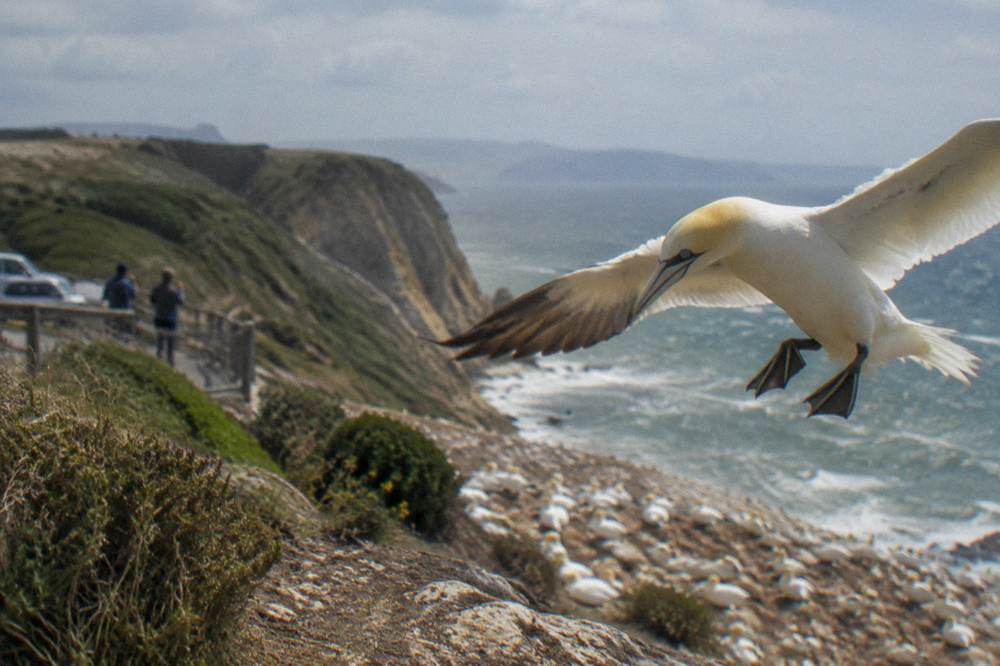
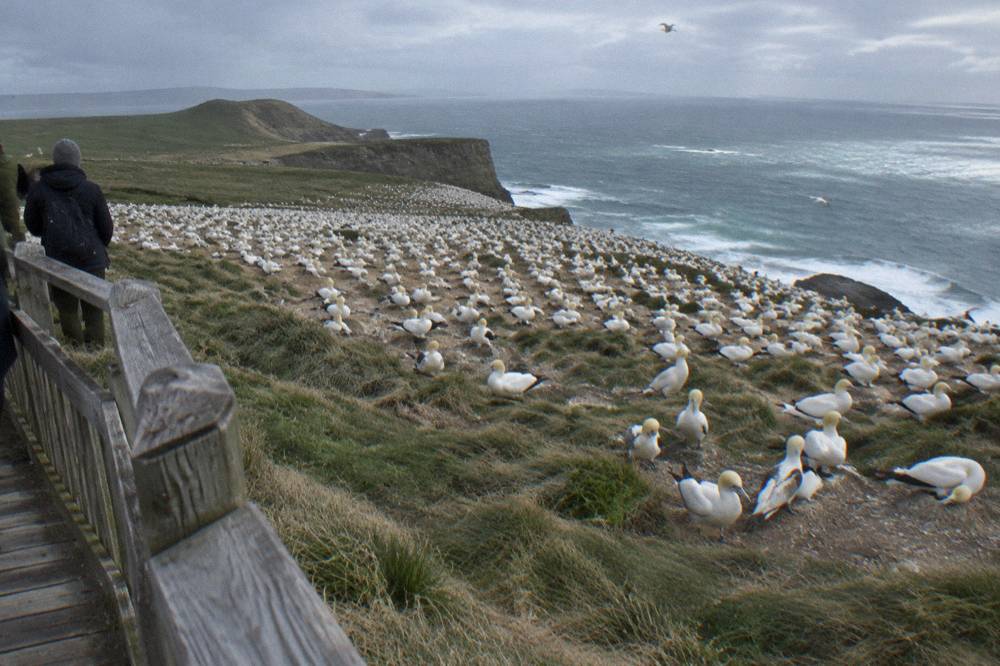
The viewing distance is genuinely close. DOC asks visitors to keep behind barriers or at least five metres from nesting gannets, and the plateau seating sits within comfortable watching range of the birds without disturbing them. Nesting birds dislike loud noises and fast movement, so the standard advice is slow movements and a quiet voice, which also happens to be the best way to watch a pair long enough to see a full behavioural cycle play out.
For travellers matching a trip to the behaviour, the gannet season guide for Cape Kidnappers breaks down what the birds are doing month by month.
What Does A Gannet Nest Reveal About The Pair?
DOC puts the Cape Kidnappers colony at 6,500 pairs. Nest material theft between neighbours is constant, and one member of the pair often guards the mound while the other collects.
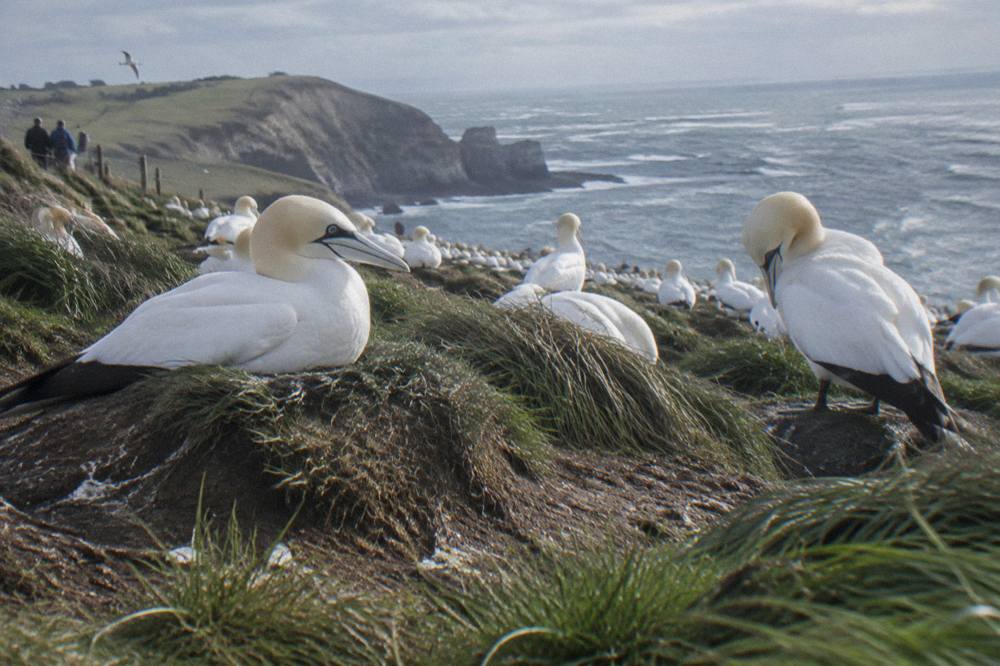
The mound is more than furniture. Because the single egg sits on the pair's webbed feet rather than in a lined cup, a stable, raised platform keeps the egg clear of mud and standing birds around it. Both birds gather material, and both defend it, which produces some of the best comedy at the colony: a departing bird sneaks a beak of seaweed from an unattended neighbour's mound while the owner is at sea, and gets bill fenced on return.
Mound fidelity also explains why the colony looks so orderly from the seating. The even spacing is not random. Each pair's territory is roughly a mound's width from the next, and the same pairs hold the same ground until one fails to return. When that happens, the wider colony carries on: DOC puts the Cape Kidnappers colony at 6,500 pairs.
Watching a mound for ten minutes tells you the pair's whole division of labour. One bird settles on the egg while the other stands guard, preens, or lifts off from the colony edge in a run of wing beats that a camera struggles to follow. The gannet photography guide for Cape Kidnappers covers shutter settings for exactly these takeoff moments.
Do Both Parents Raise The Chick?
Usually, yes. Gannets lay a single egg, both parents incubate it on their webbed feet, and once the chick hatches both adults share feeding duties. NZ Birds Online records the single egg and shared incubation; the chick stage runs through summer at Cape Kidnappers.
The single egg is the reason the pair bond has to be strong. With one chick per pair per season, and a lifespan of 25 to 40 years, each breeding attempt is expensive, and neither bird can raise it alone. One stays at the mound while the other flies out to sea for fish, sometimes long distances, and the changeover at the nest is timed like clockwork. Visitors often mistake the standing bird for idle: it is on duty.
The chick grows from a naked hatchling into a grey white fluffball. Fledglings eventually fly across to Australia and typically return in their third year, so the colony you watch in a given season contains birds at every life stage: established pairs, new pairs, and teenagers too young to breed loafing at the colony edges.
No source puts a fixed week on hatching at Cape Kidnappers, so plan around stages rather than dates. DOC says the best viewing is early November to late February. The question of when gannet chicks appear at Cape Kidnappers has its own page with the cautious wording the biology deserves.
| Behaviour | When to watch | What you see from the seating |
|---|---|---|
| Courtship and bill fencing | Adults return from around July, peak early season | Head to head bill clattering, bowed greetings, mutual preening |
| Nest building | Early season, August onward | Seaweed and grass gathering, mound defence, neighbour theft |
| Incubation changeovers | Spring through early summer | One bird settles onto the egg while the other stands, then departs to sea |
| Chick feeding | Summer | Regurgitation feeds, a standing guard parent, growing grey chicks |
| Fledging preparation | Late summer | Wing stretching, first run takeoffs at the colony edge |
Which Napier Tour Puts You Closest To The Pairs?
Every overland tour reaches the plateau, the colony DOC calls the best place to view nesting gannets. The standard 3-hour tour from $56.23 per person carries a 4.9 rating across 1,052 reviews. The 3-Hour Tour, Lowest Price, from $55.00 per person (4.8 across 378 reviews) visits the same colony in an air conditioned vehicle, meeting at 396 Clifton Road, Te Awanga.
The distinction that matters here is not price but where each tour lands you. Every overland option finishes at the same plateau seating above the cliffs, so the pair behaviour is identical. What changes is the logistics around it. The 3-Hour Tour meets at the operator's base, 396 Clifton Road in Te Awanga, about a 25 minute drive from Napier, with hotel pickup available as an optional add-on at booking. The 3-Hour Tour, Lowest Price meets at 396 Clifton Road, Te Awanga, with light refreshments on board and no walking required. Cruise passengers should book one of the shore excursions rather than a standard tour, since the standard 3 hour tours are not set up for cruise passengers; the shore excursion meets at 100 Marine Parade, opposite the Napier Museum, about 200 m from where the cruise shuttle drops at the Napier i-SITE.
Coffee and tea are served on the standard tour, along with a biscuit at the colony. There are no toilets on tour itself, so use the good bathroom facilities at the base before departure. Dogs are not allowed anywhere in the reserve, it is a wildlife sanctuary and DOC reserve.
Travellers weighing a private version against the shared minivan can compare the private Cape Kidnappers tour options, which run from $704.30 per group for up to 4 people on the 4 hour private format.
Cruise passengers with a port day in Napier can read the dedicated Napier shore excursion guide for the gannets, which covers shuttle stops and the ship-day meeting point at the pink flag area in front of the Sound Shell.
When Is The Best Time To Watch Pair Behaviour?
DOC's best viewing window is early November to late February, when courtship, eggs, chicks and fledging all overlap. Tours run 1 August to 30 April, including Christmas Day. The earliest weeks catch reunion displays, midsummer is chick season, and autumn tapers as fledglings depart. Avoid July: no tours run in July and the plateau track is closed.
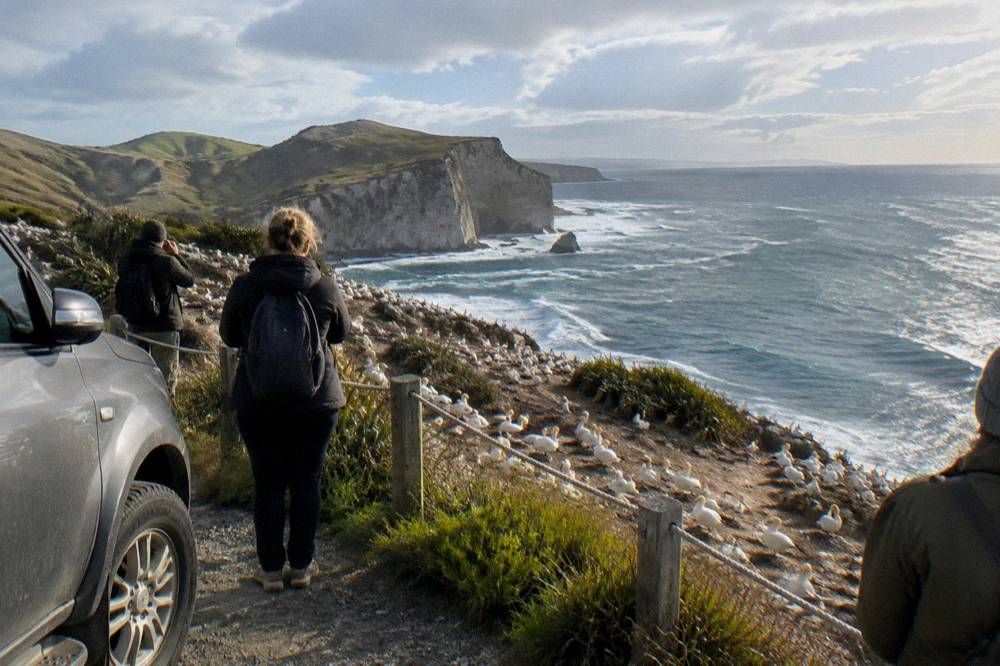
Early August is the purist's choice. The adults are freshly returned from around July, pairs are re-bonding, and the bill fencing and mound fights are at their most frequent. The tradeoff is weather: Hawke's Bay winter can serve wind and rain on an exposed clifftop, and the birds are fewer. The busiest and most rewarding window for most visitors is November through February, when the colony is at full strength, chicks are visible on the mounds, and the long summer light gives the best viewing hours.
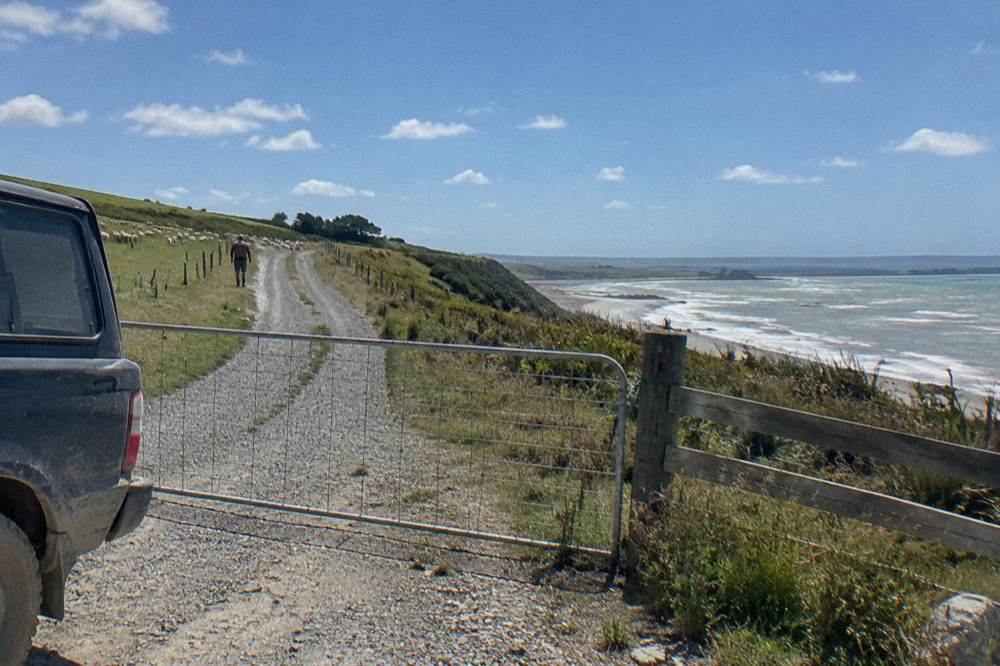
The overland tours run above the cliff tops, and the operator says they are not governed by the tides, so departure times do not hinge on tide tables the way the beach walk does. That makes planning simpler: pick a date in the window, book, and go. Free cancellation applies up to 24 hours before start on the tours covered here, so an early booking carries little risk if your itinerary shifts.
What to wear is its own question on an exposed plateau. The what to wear guide for a Cape Kidnappers gannet tour has the detail, but the short version is a windproof jacket in every season.
Can You Watch Pairs Without A Tour?
Yes, but on foot it is a serious commitment: the DOC beach walk from Clifton is 19 km return, graded Expert, and DOC says to allow at least 5 hours for a comfortable return walk. The walk is possible only around low tide, high tides and big seas block the beach, and you must leave the Cape no later than 1.5 hours after low tide. Check the tide table before going.
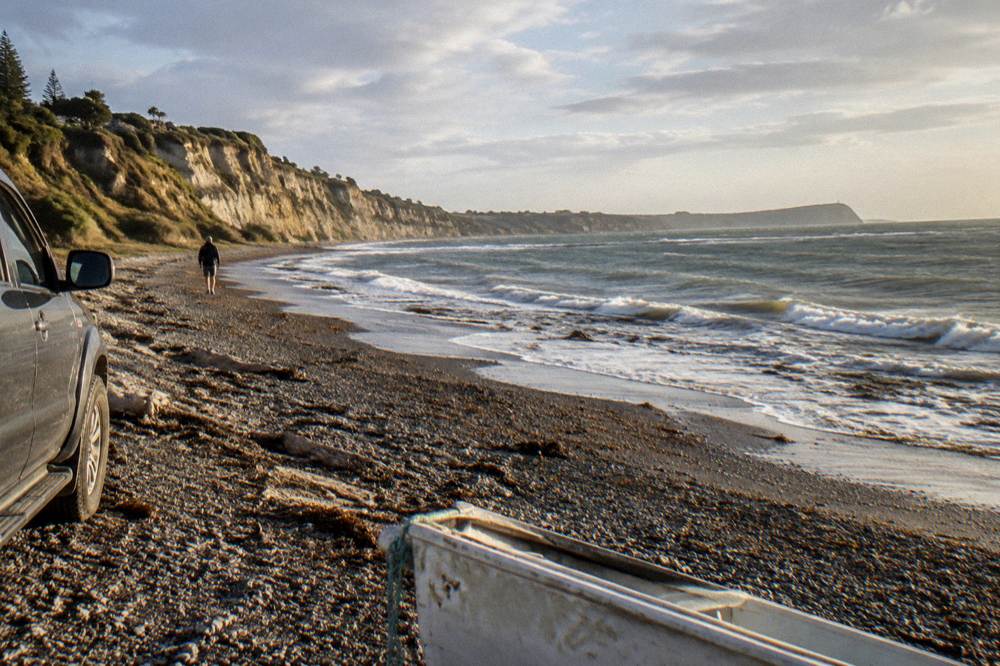
The beach route has hazards the overland route avoids. About 7 km of the beach lies under cliffs subject to significant landslide, and DOC reports three serious injury landslide events in the past 50 years, with large landslides occurring every year; a landslide seriously injured two tourists in January 2019 and another large slide in February 2020 closed the beach before it reopened. DOC says track status can change at any time, so check the safety alert on its page, and check the signage at Clifton, before setting out. The full case for each approach is laid out in the Cape Kidnappers walk versus overland tour comparison.
There are also two other operators in the area, separate from the overland tours. Gannet Bikes runs a self-guided fat-bike ride from 475 Clifton Road, 3.5 to 4 hours in total, needing at least intermediate fitness, finishing with a short walk up to the plateau colony. For a separate tide-dependent tractor ride along the beach from Clifton, check Gannet Beach Adventures' own site for whether it runs.
For a walker or rider, one recent local change matters: Clifton Motor Camp closed in 2026 after a geotechnical assessment found unstable land above it, and the Council has since closed a section of Clifton Road at the former campground to vehicles. Pedestrian access to Clifton Beach and the walking route stays open. This affects walkers and bike riders only, not the overland tours.
DOC's rules for the reserve apply however you arrive: no dogs or horses, no fires or camping, stay behind barriers or at least five metres from nesting gannets, and keep to the track through private land. Drones on conservation land need a DOC permit.
What Else Lives Beside The Nesting Pairs?
The cape supports other seabirds around the gannetry: white-fronted terns, variable oystercatchers, reef herons and Caspian terns are all present, and little blue penguins nest around the cape. The clifftop grassland and the 4WD route across the working farm add a different set of sights on the way in, so the drive is part of the wildlife outing, not dead time.
The supporting cast is easy to miss if all eyes are on the gannets. Terns work the thermals at the cliff edge, oystercatchers call from the reef below, and reef herons hunt in the rock pools when the tide allows. The cape faces the Pacific, and the overland tours are not governed by the tide.
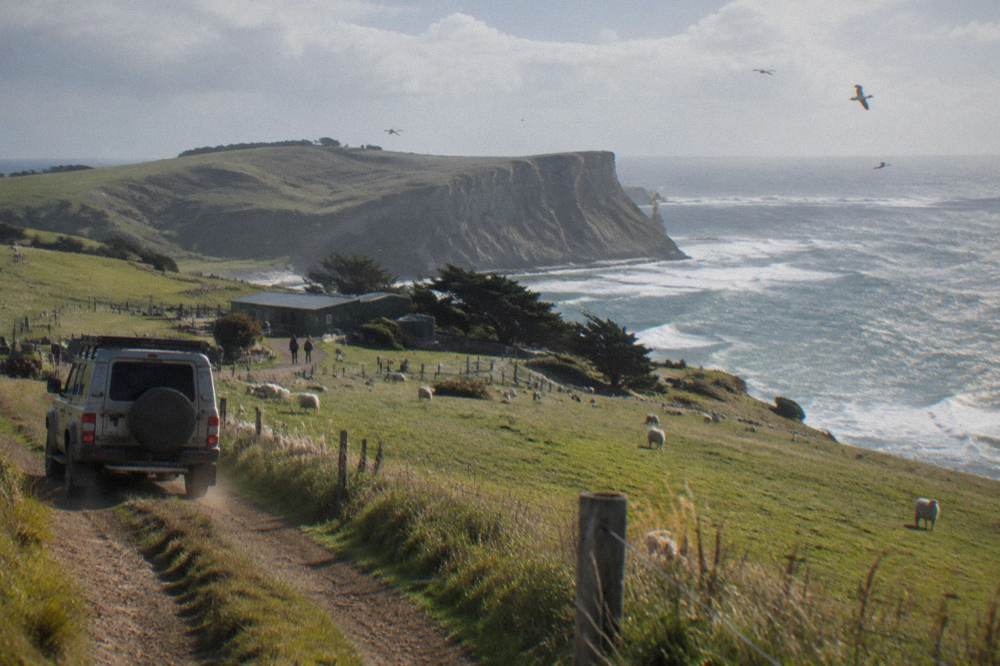
The farm crossing has its own appeal. Cape Kidnappers Station is a working property of roughly 2,500 hectares with a predator-proof fenced conservation area, and the vehicle track climbs through native bush and open pasture with the Hawke's Bay coastline opening behind you.
Planning A Trip Around Gannet Pairs
Pick a date between early November and late February, book an overland tour that suits your transport situation, and give the plateau seating at least half an hour of unhurried watching once you arrive. The 3-Hour Tour from $56.23 per person and the lowest-price 3-hour tour from $55.00 per person, meeting at 396 Clifton Road, are the two most reviewed options, at 1,052 and 378 reviews respectively; private formats run from $604.00 per group.
Timing within the day matters less than people expect. The birds do not keep office hours; incubation changeovers and feeding runs happen through the day, and the colony is active in almost any weather short of a gale. The Private Sunrise format, a 3 hour private tour from $636.15 per group for up to 4, exists for photographers and travellers who want the plateau in low light, with a gourmet breakfast of pastries, fresh fruit and yoghurt, plunger coffee and juice included. A pickup-included Private Sunrise version runs from $604.00 per group for up to 4.
Book ahead for the best viewing window, early November to late February. Cruise ships call at Napier from October to April. Every tour covered here offers free cancellation up to 24 hours before start, so an early reservation costs nothing if plans move.
Whatever the format, the thing you are buying is time in front of the birds. A pair of gannets at Cape Kidnappers is not a static exhibit. That is the quiet spectacle the colony offers, and why Napier Gannet Tour pages keep coming back to the question of what the birds are actually doing up there.
Common Questions About Gannet Pairs At Cape Kidnappers
Do Gannets Mate For Life?
Gannets are long term monogamous: pairs stay together over many seasons and typically return to the same nest mound. No source gives a fixed number of years for a pair bond, so it is best described as a strong seasonal habit rather than a literal lifetime guarantee.
What Do Gannets Do When They Reunite?
Pairs greet with bill fencing, where the two birds clatter bills head to head, followed by mutual preening. The displays rebuild the bond after the winter apart, when the birds have separated at sea, and continue in quieter form through the season.
Do Both Gannet Parents Sit On The Egg?
Yes. Gannets lay a single egg, and both parents incubate it, resting the egg on their webbed feet. The two swap incubation shifts, with one bird at the nest and the other out feeding at sea.
How Many Eggs Does A Gannet Lay?
One. A single egg per pair per season is the rule for Australasian gannets, which is why the shared parental effort is so evenly divided and why the pair bond matters so much to breeding success.
When Can I See Gannet Pairs At Cape Kidnappers?
Adults return from around July for courtship and nest building, tours run 1 August to 30 April, and DOC's best viewing window is early November to late February, when courtship, eggs, chicks and fledging overlap.
How Close Can I Get To Nesting Gannets?
Stay behind barriers or at least five metres from nesting birds. The plateau seating at the colony puts you within comfortable watching range without disturbance, and the overland tours require little or no walking to see everything.