How Long Is The Cape Kidnappers Walk?
The Cape Kidnappers gannet walk is 19 km return, graded Expert, with DOC advising at least 5 hours. Here is what that means in practice, plus the faster overland tour options.
The Cape Kidnappers walk is 19 km return from Clifton, and the Department of Conservation advises allowing at least 5 hours for a comfortable return trip. The walk runs mostly along the beach, is graded Expert, and is possible only around low tide: high tides and big seas block the beach entirely. The first nesting site, Black Reef, sits 7.5 km from the start. For a fuller picture of what the walk involves, the guide to walking to the gannet colony compares the beach route with the overland tour options.
That headline number surprises a lot of visitors. Cape Kidnappers looks close on the map, a finger of land just 21 km south of Napier and 18 km east of Hastings, but there is no road to the colony. The only public access on foot is along the beach beneath the cliffs, out and back on the same stretch of shingle and sand. If you picture a gentle 20 minute stroll to a lookout, the reality is closer to a half day tramp, and the Department of Conservation grades and signs it accordingly.
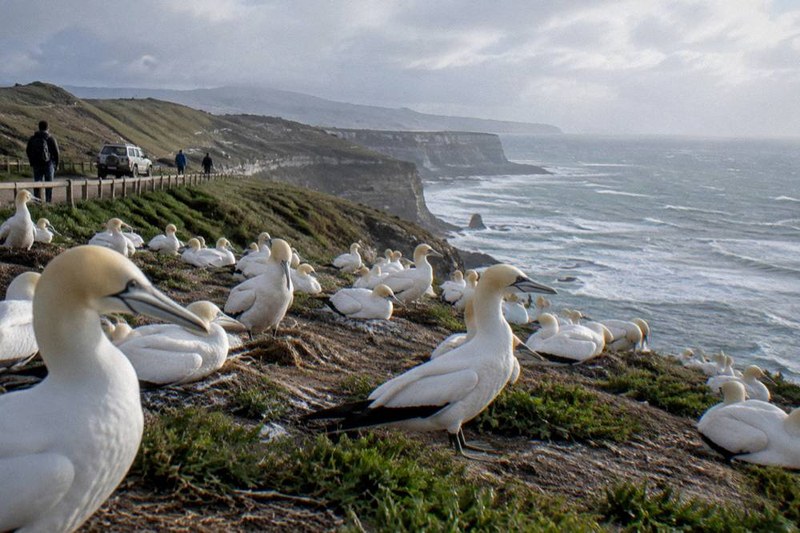
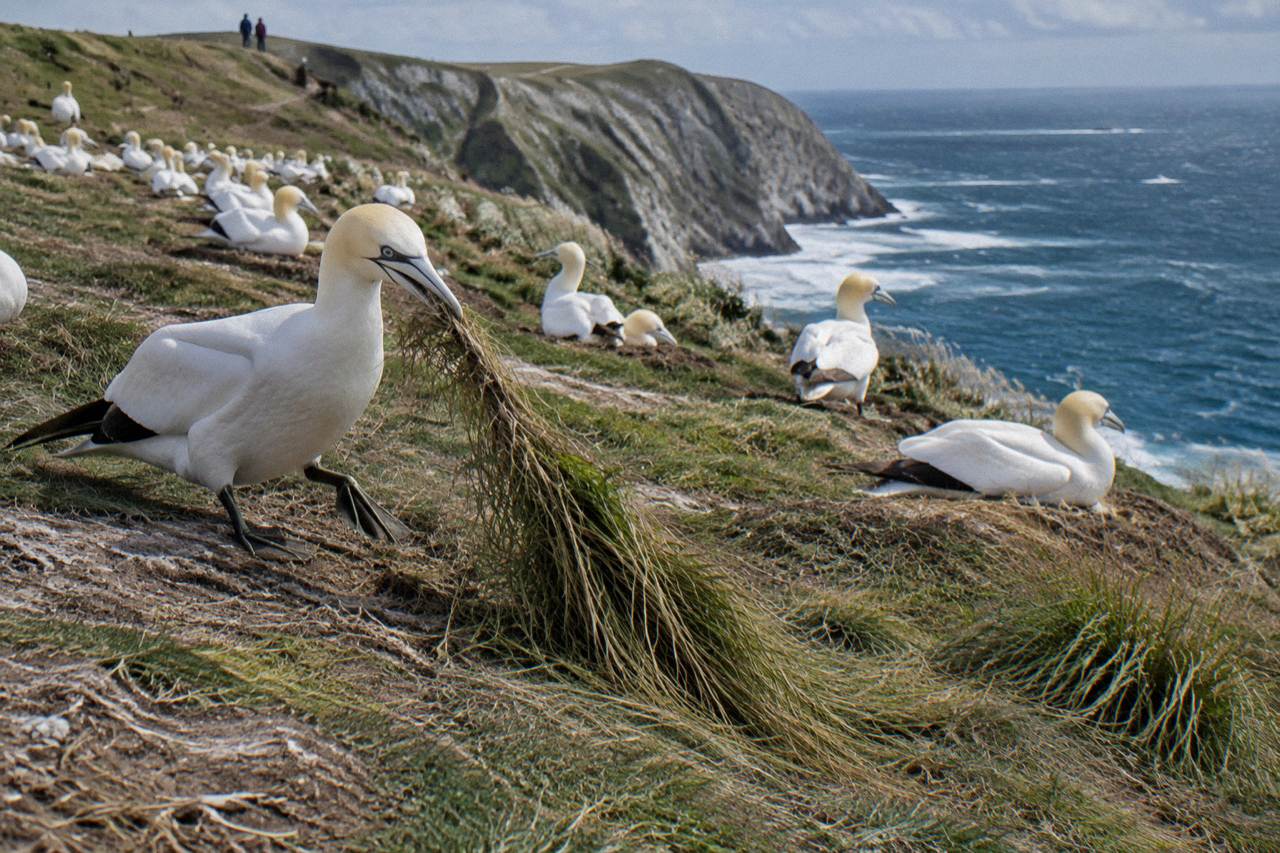
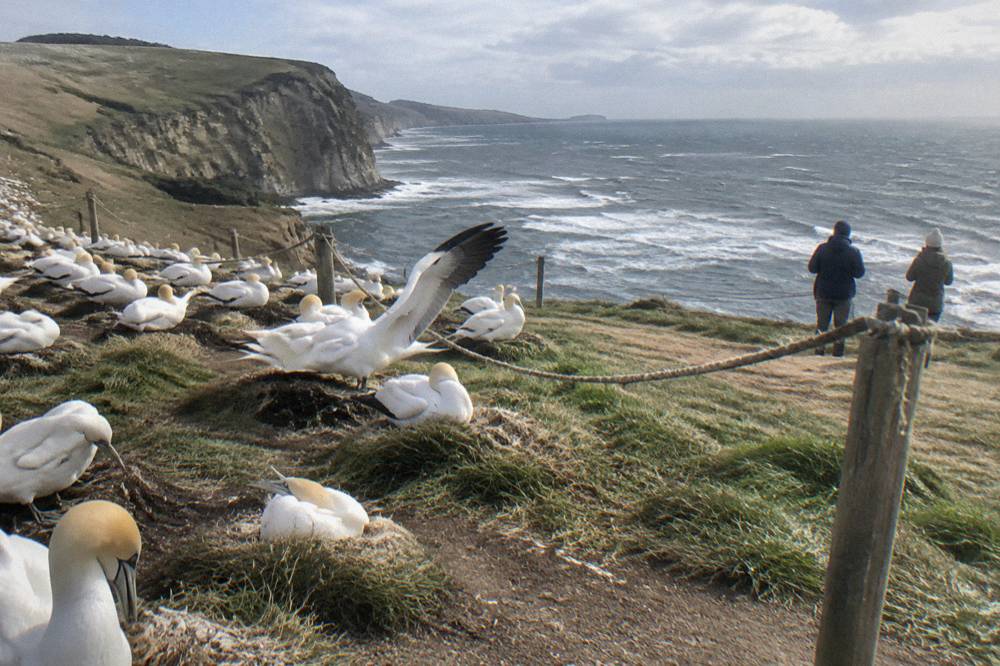
The distance splits into two natural stages. The first 7.5 km from Clifton, at a spot called Scotmans Point, takes you to Black Reef, where gannets nest on the rock stacks close to the water. From there, a steep, rough and muddy climb of about 1 km leads off the beach and up to the second colony on the plateau above. DOC names the Plateau colony as the best place to view nesting gannets, and it sits on private land, which is why the guided overland tours can reach it by vehicle while walkers have to earn it on foot.
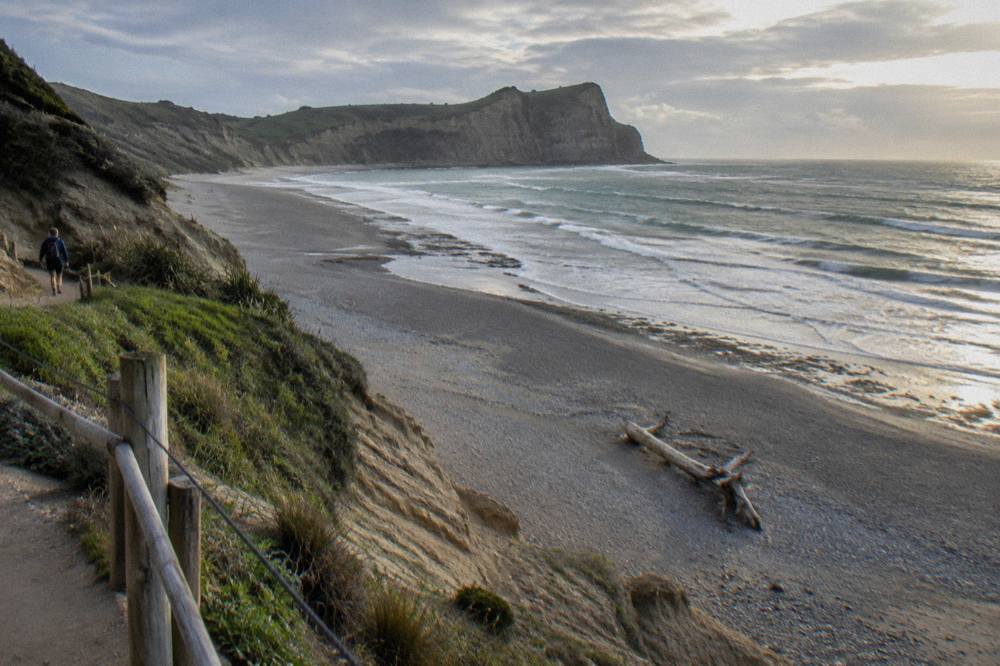
Timing the walk is not just about fitness, it is about the tide. The beach is possible only around low tide, high tides and big seas block the beach, and you must leave the Cape no later than 1.5 hours after low tide. Check the tide table before going, every time. The Cape Kidnappers Tide Times guide covers how to read the tables for this coast. The walk itself is tide-governed: it is only an option around low tide, and walkers need to leave the Cape no later than 1.5 hours after low water. The overland 4WD tours are not bound by the tide.
If five hours on shingle sounds like more than you signed up for, the guided overland tours reach the same plateau colony in a fraction of the time, travelling by 4WD above the cliff tops rather than beneath them.
How Far Is Each Stage Of The Cape Kidnappers Walk?
The full walk from Clifton to the Plateau colony and back is about 19 km, and it is only possible around low tide, leaving the Cape no later than 1.5 hours after low water. DOC allows at least 5 hours for the full circuit at a comfortable pace.
Breaking the walk into stages helps you decide how far to commit. Nothing forces you to go all the way. Walk the beach only around low tide; the overland 4WD tours are not tide-governed. The Black Reef turnaround is 7.5 km each way from Clifton, a 15 km round walk on the beach, still a serious outing at Expert grade, without the plateau scramble.
| Stage | Distance each way | Terrain | Notes |
|---|---|---|---|
| Clifton (Scotmans Point) to Black Reef | 7.5 km | Flat beach, shingle and sand | First gannet nesting site, close-up views possible |
| Black Reef to Plateau colony | about 1 km | Steep, rough, muddy climb | Track closed July to the week before Labour Weekend |
| Total return walk | 19 km | Beach plus climb | DOC grade: Expert, allow at least 5 hours |
Pace matters more than people expect. Beach shingle is slower underfoot than a formed track, and DOC's 5 hour figure is for a comfortable return walk, not a race. Parties with children, or anyone stopping for photography, should allow more than DOC's minimum 5 hours for the full route, with the tide deadline working backwards from the turnaround point. The Cape Kidnappers Walk guide goes deeper on route-finding and what to expect underfoot.
There is a DOC rest shelter with toilets a short way up the track from the beach end, but no drinking water, so carry everything you need. Water, food, sturdy footwear, sun protection and a wind and waterproof jacket are the Department of Conservation's own checklist items, along with warm layers for the sea breeze, gloves, a head torch and a communication device. The area is also susceptible to tsunami: if a siren or alert sounds, move to higher ground immediately.
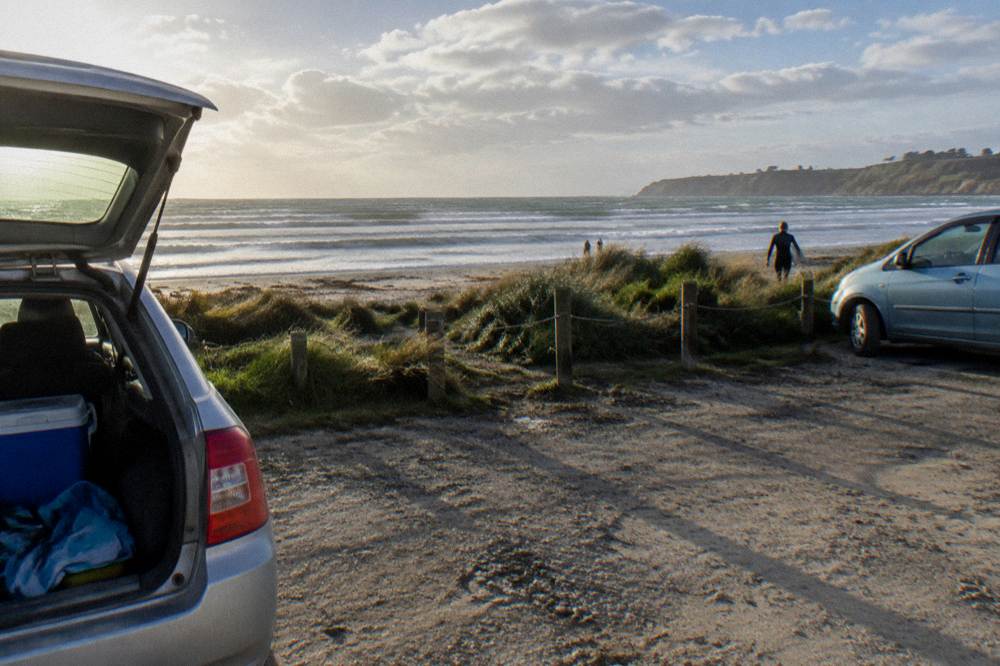
One recent change matters to walkers and bike riders planning the start of the route. Clifton Motor Camp closed on 20 February 2026 after a geotechnical assessment found unstable land above it, and it was permanently closed in July 2026. In August 2026 Hastings District Council voted to close a section of Clifton Road to vehicles at the former campground. Pedestrian access to Clifton Beach and the walking route stays open, but check the current access situation before you drive out.
How Long Does The Overland Gannet Tour Take By Comparison?
The standard overland tours run about 3 hours total, door to colony and back, and the private 4-hour tours run about 4 hours. The cruise shore excursions also run about 4 hours, with the four-hour itinerary including roughly 25 minutes of coach travel each way from Napier. None of the overland tours are governed by the tides.
This is the practical answer for most visitors. The 3-hour tour that meets at the operator's base at 396 Clifton Road, Te Awanga, runs from $56.23 per person and is rated 4.9 across 1,052 reviews, the deepest review pool of any tour to the colony. It includes coffee or tea, travels by air-conditioned minivan across the working farm, and is not for cruise passengers. Hotel pickup can be added at booking as an optional extra, otherwise you meet at the base, about a 25 minute drive from Napier.
- Standard Overland Gannet Tours$55
- Cruise Shore Excursions$93
- Private And Sunrise Tours$604 per group
The 3-Hour Tour, Lowest Price runs from $55.00 per person and carries a 4.8 rating across 378 reviews, but it has no hotel pickup, so you drive to 396 Clifton Road in Te Awanga. Walking is not required if you do not want it, and a jacket is advised; a twin 3-hour tour at $56.23 per person instead offers hotel pickup as an optional add-on at booking. Between the two 3-hour options, the price gap is about a dollar, so the real choice is whether you drive to Clifton Road yourself or add hotel pickup to 3-Hour Tour, Meet at Base when booking.
At the other end of the scale, the private 4-hour tour runs from $704.30 for a group of up to four, with 45 minutes at the colony per the itinerary, coffee or tea, and no rating shown alongside its 11 reviews. The operator says the plateau is flat ground with bench seats, that walking there is safe and easy, and that everything can be seen from the vehicle without getting out. A guest only needs to be able to get on and off the vehicle unaided. There are no toilets on the tour itself; the last ones are at the base, which has good bathroom facilities and a large off-road car park with room for several motorhomes.
Why Does The Cape Kidnappers Walk Take So Long?
The walk takes 5 hours or more because it is a there-and-back beach route with no shortcut: 19 km return over shingle, plus a steep 1 km climb, governed entirely by the tide. There is no road access to the colony, so walkers cannot shorten the distance, only the turnaround point.
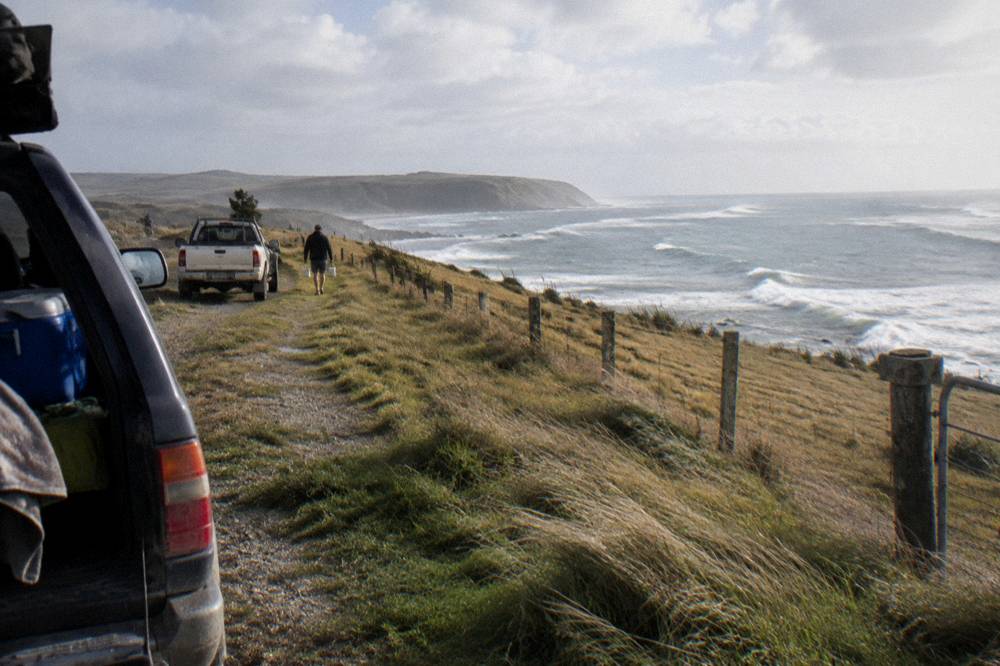
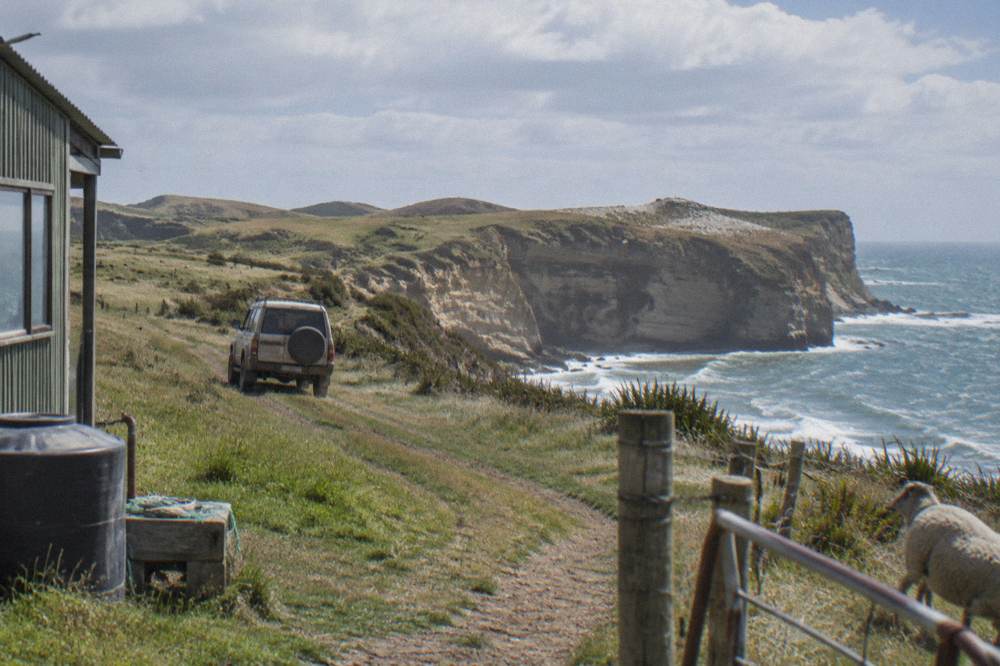
The geology explains the design of the route. The colony sits at the end of the Cape Kidnappers headland, beyond the farm station the 4WD overland tours cross, and the walking route follows the foreshore, practical only around low tide. Cape Kidnappers Station is a working farm of roughly 2,500 hectares with a predator-proof fenced conservation area, and the overland tours cross it by permission of the landowner. Walkers must keep to the track through private land where it applies, and vehicles may not leave the beach into the reserve.
Underfoot conditions do the rest. Shingle beaches give less back with every step than a formed trail, and the Department of Conservation's Expert grading reflects both the effort and the consequences of getting it wrong: high tides and big seas block the beach, and the cliffs along about 7 km of the route are subject to significant landslide risk. DOC reports three serious injury landslide events in the past 50 years and large landslides every year. A landslide seriously injured two tourists in January 2019, and another large landslide in February 2020 closed the beach before the track was reopened. DOC says the status of the track can change at any time, so check the safety alert on its page before setting out, and follow the signage at Clifton.
The tide clock is the hidden time cost. Because you can only walk near low tide and must leave the Cape no later than 1.5 hours after it, your walking window is fixed by nature, not by your schedule. A slow party can find itself rushing the last kilometres, which is exactly what an Expert-graded beach beneath landslide-prone cliffs does not want. For more on the timing rules, the Cape Kidnappers Walk Vs Overland Tour comparison sets the two ways of seeing the colony side by side.
When Is The Best Time Of Year To Attempt The Walk?
DOC says the best viewing at Cape Kidnappers is early November to late February, and the track from the beach to the Plateau colony is closed from July to the week before Labour Weekend each year. The guided overland tours run from 1 August to 30 April, including Christmas Day.
The closure is about the birds. The track to the plateau shuts each winter to limit disturbance to returning adults, which start arriving at the cape from around July for courtship and nest building. That means a winter walk, quite apart from shorter days and rougher seas, cannot reach the colony most people come to see. Plan the walk for the Austral spring and summer and the calendar works with you.
The birds themselves are the reason the timing matters so much. DOC puts the colony at 6,500 pairs, which it calls the largest and most accessible mainland colony in the world, and gannets have nested at the cape since the 1870s. Australasian gannets lay a single egg, both parents incubate it on their webbed feet, and pairs stay together over many seasons. Their wingspan is about 1.8 m, and fledglings eventually make a Tasman Sea crossing of about 2,800 km to Australia, typically returning in their third year. Other birds around the cape include white-fronted terns, variable oystercatchers, reef herons, Caspian terns and little blue penguins nesting along the shore.
Season also changes the walk itself. Summer brings longer daylight, which widens the low-tide windows you can safely use, but also stronger sun: hats, sunscreen and extra water are not optional on 19 km of open beach. Spring and autumn can be quieter on the track but colder in the sea breeze, and a water and windproof jacket stays on the checklist all year.
Is There A Faster Way To See The Gannets?
Yes: the overland tours reach the Plateau colony in about 3 hours total, against at least 5 hours of walking, and they are not governed by the tides because they travel above the cliff tops. Two tide-dependent alternatives also exist from Clifton: a tractor ride and a self-guided fat-bike ride, both run by other operators.
The bike option takes 3.5 to 4 hours in total from 475 Clifton Road, needs at least intermediate fitness, and supplies bike, helmet, spare tube, pump and map, with a short walk to the plateau colony at the end. Gannet Bikes, as it is known, suits riders who want the journey under their own power but without doing it all on foot.
DOC's own framing is worth knowing: it treats beach transport as a high-risk operation and describes the overland route across private farmland as a lower-risk option. For a full comparison of the two tour families, the gannet colony tours overview lays out every option with prices and durations.
For cruise passengers the arithmetic is different again. Cruise ships visit Napier from October to April, and the shore excursions run about 4 hours, meeting at 100 Marine Parade opposite the Napier Museum, about 200 m from where the cruise shuttle drops at the i-SITE. Passengers cannot walk out of the port, a shuttle runs to the i-SITE and the National Aquarium, and taxis cannot enter, so the meeting point placement matters. The 3-hour overland tours are not for cruise passengers; the shore excursions are, and departure time is set per ship. Check your ship's all-aboard time against the 4 hour length. The Napier shore excursion guide covers that decision in detail.
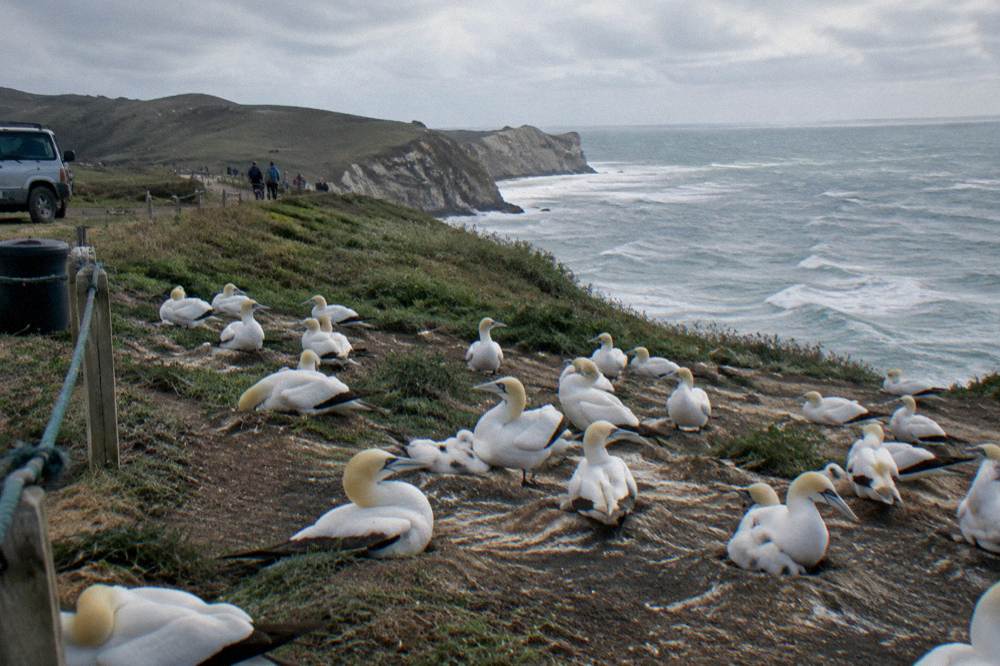
However you get there, the payoff is the same: flat ground, bench seats, and gannets nesting at close range on the plateau, weather permitting. A visit to Napier Gannet Tour pairs naturally with the town's Art Deco quarter if you are building a full day around it.
What Rules Apply At The Colony Itself?
Keep behind the barriers or at least five metres from nesting gannets, no dogs or horses, no motorbikes or vehicles off the beach into the reserve, no fires or camping, and drones on conservation land need a DOC permit. Nesting birds dislike loud noises and fast movement.
These apply to walkers and tour guests alike, and they exist because the colony is a wildlife sanctuary and a DOC reserve. The five metre rule is the one people break by accident: gannets nest right up to the viewing areas, and a phone-camera step forward can put you inside the buffer. Loud noise and fast movement stress nesting birds, so the etiquette is quiet voices, slow movement and no drones without a permit, which DOC administers.
Dogs are not allowed on the tours either, for the same sanctuary reason. On the walk, the rules follow the reserve status: nothing with wheels leaves the beach into the reserve, nobody lights fires or camps, and everyone keeps to the track through the private land sections. These are the conditions the landowner and DOC have set for access, and continued access depends on them being kept.
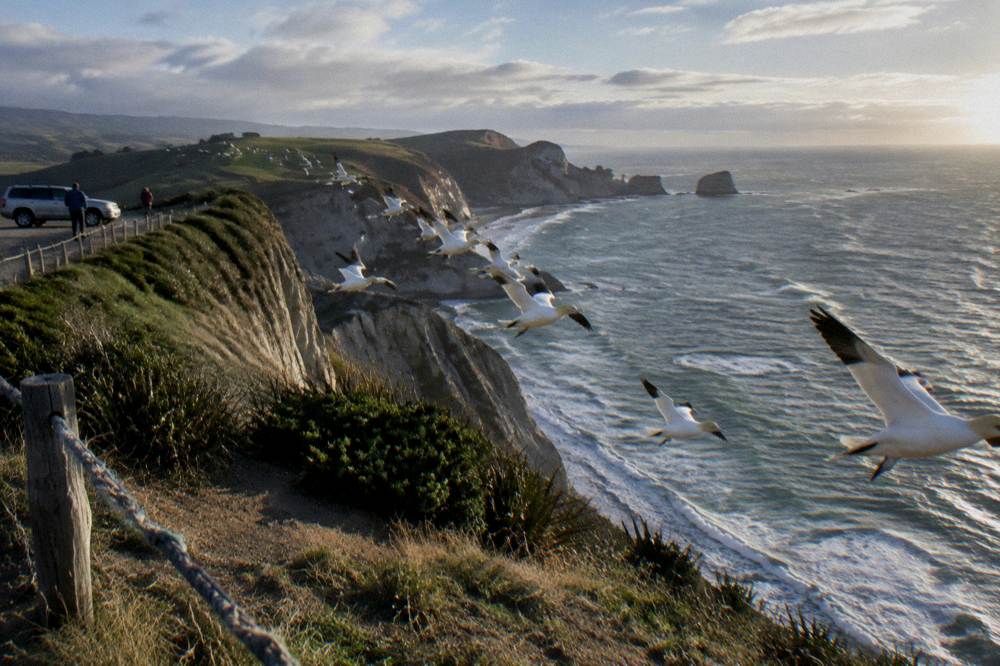
The practical summary for anyone still deciding. The walk is 19 km return, Expert grade, at least 5 hours, tide-bound, and free apart from your own time and gear. The overland tour is about 3 hours, from $56.23 per person on the most-reviewed option, 4.9 across 1,052 reviews, with free cancellation up to 24 hours before start. Same birds, same plateau, a fraction of the hours.
Common Questions About The Cape Kidnappers Walk
How Long Is The Cape Kidnappers Walk?
The walk is 19 km return from Clifton, and DOC advises allowing at least 5 hours for a comfortable return trip. It includes 7.5 km of beach to Black Reef each way and a steep, rough, muddy climb of about 1 km to the Plateau colony, and it is possible only around low tide.
Can You Shorten The Cape Kidnappers Walk?
Yes. Turning around at Black Reef makes it a 15 km flat beach round trip and still gives close-up views of nesting gannets on the reef, without the 1 km climb to the plateau.
Is The Cape Kidnappers Walk Hard?
DOC grades it Expert. The distance, the shingle underfoot, the tide window and about 7 km of cliffs subject to significant landslide risk all add to the difficulty. Check the safety alert on the DOC page and the signage at Clifton before you go.
How Long Does The Guided Gannet Tour Take Instead?
The standard overland tours run about 3 hours total; the private 4-hour tour and the cruise shore excursions run about 4 hours. The overland tours travel above the cliff tops and are not governed by the tides.
When Is The Cape Kidnappers Walk Closed?
The track from the beach to the Plateau colony is closed from July to the week before Labour Weekend each year to limit disturbance to returning birds. Best viewing is early November to late February.
Can You Walk To The Gannet Colony At Any Tide?
No. The beach is possible only around low tide, high tides and big seas block the beach, and you must leave the Cape no later than 1.5 hours after low tide. Check the tide table before going.