Australasian Gannet: What You Will See At The Colony
The Australasian gannet is the bird that put Cape Kidnappers on the map. DOC puts the colony at 6,500 pairs, the largest and most accessible mainland gannetry in the world, and the overland tours reach it across private farmland without the tide-dependent beach walk.
Short answer
The Australasian gannet, or takapu, is a large white seabird with a wingspan of about 1.8 m that nests in dense colonies. DOC puts the Cape Kidnappers colony at 6,500 pairs, the largest and most accessible mainland colony in the world, and tours run there from 1 August to 30 April.
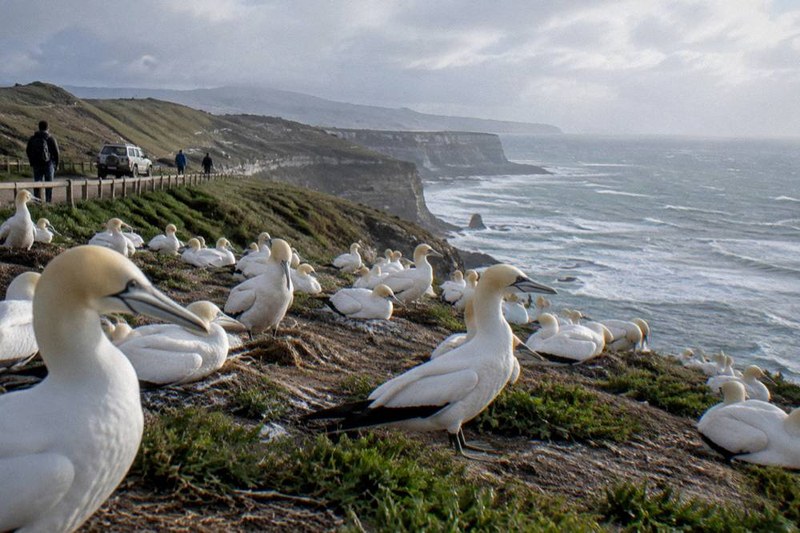
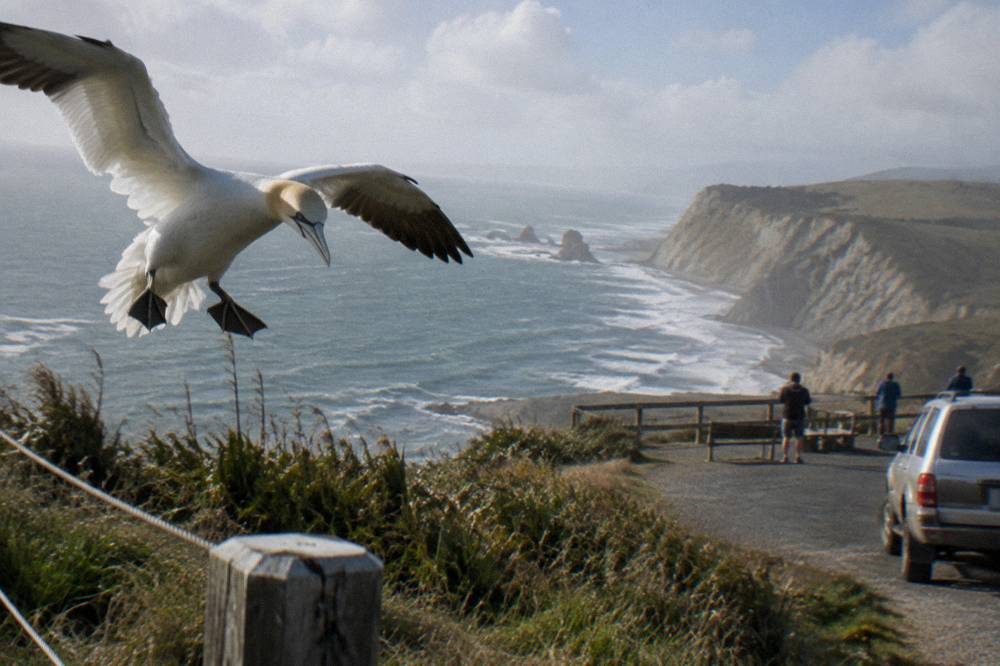
The Australasian gannet, known to Maori as takapu, is one of the great sights of New Zealand birdwatching, and Cape Kidnappers holds the largest and most accessible mainland colony in the world. These are big, dramatic seabirds: white with black wingtips, a pale gold wash on the head, and pale blue bills framed by black stripes that look, at close range, like eyeliner. DOC puts the Cape Kidnappers gannet colony at about 6,500 pairs.
DOC puts the Cape Kidnappers colony at 6,500 pairs and calls it the largest and most accessible mainland colony in the world. Gannets have nested at the cape since the 1870s, and the numbers have grown steadily since. For most visitors the practical question is not whether the birds are worth the trip, it is how to get close to them, and that is where this guide starts. If you are wondering where else the birds nest around the country, the guide to seeing gannets in New Zealand maps out the other colonies and the best months to visit.
What Is An Australasian Gannet?
An Australasian gannet is a large white seabird with a wingspan of about 1.8 m that breeds in dense colonies on coastal cliffs, feeding by plunging into the sea at speed. Pairs stay together over many seasons.
They are unmistakable in flight: long pointed wings, a torpedo-shaped body, and a gliding style that covers ground with almost no flapping. When a gannet hunts, it pulls its wings back and drops, hitting the water in a plunge that sends a visible splash a long way off. Around Cape Kidnappers you may see strings of them working the water below the cliffs, often in small groups that dive one after another onto a shoal of fish.
The breeding plumage is what you will photograph at the colony: crisp white bodies, black trailing edges on the wings, and that golden crown. Gannetry is the name for a group of nesting gannets.
A few reference numbers help size the bird up before you arrive:
| Feature | Australasian gannet |
|---|---|
| Wingspan | About 1.8 m |
| Lifespan | 25 to 40 years |
| Eggs per pair | One |
| Incubation | Both parents, on the webbed feet |
| Young birds' first flight | Across the Tasman Sea to Australia |
| Return to the colony | Typically in their third year |
The single egg is the detail that surprises most people. A pair raises at most one chick per season, incubating the egg not on a nest of warm feathers but on the webbed feet of the parents, taking turns. Everything about the species is built around that one careful annual investment, which is why the colonies are so loud, so territorial and so tightly packed: every square metre of cliff-top space matters.
Where Can You See Australasian Gannets At Cape Kidnappers?
Cape Kidnappers, 21 km south of Napier, holds the colony DOC puts at 6,500 pairs. Two nesting sites can be viewed close up, Black Reef and the Plateau, and DOC names the Plateau colony, on private land, as the best place to view nesting gannets. Being that close to nesting gannets leads many visitors to wonder about safety, and the guide to whether gannets attack people covers gannet behaviour, DOC rules, and the Napier tours that keep you at a safe distance.
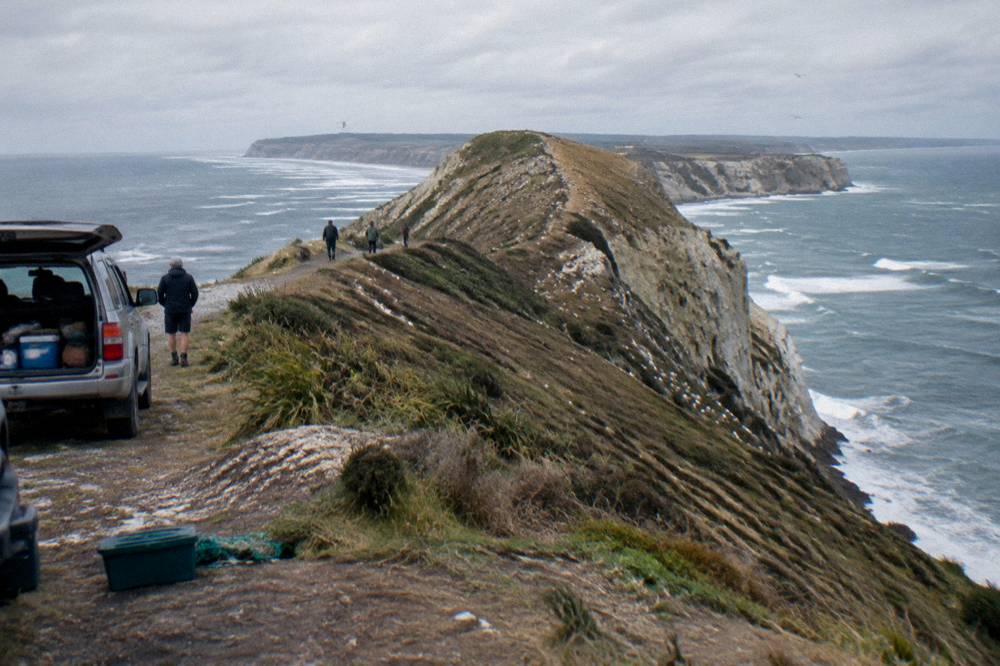
The cape is really a set of colonies rather than one. Black Reef is the first nesting site along the shoreline from Clifton, 7.5 km from the beach start, with birds on the stacks and the cliff edges. The Plateau colony sits on the flat ground above the cliffs, and it is here that the overland tours bring visitors, on private farmland reached by 4WD track rather than by the beach.
- Standard Overland Gannet Tours$55
- Cruise Shore Excursions$93
- Private And Sunrise Tours$604 per group
There are three broad ways to see the birds. The overland tours run by Gannet Safaris Overland cross a working farm of roughly 2,500 hectares and a predator-proof fenced conservation area to a privately owned nature reserve above the cliffs, ending at the Plateau colony. The beach walk from Clifton is a 19 km return Expert-grade route possible only around low tide. And two independent operators run alternatives: a tide-dependent tractor-trailer ride along the beach from Clifton, whose current status you should check on its own site, and a self-guided fat-bike ride of 3.5 to 4 hours from 475 Clifton Road that suits at least intermediate fitness.
For most travellers the overland tour is the practical choice, and there are two 3-hour versions to compare. The 3-Hour Tour, Meet at Base runs from $56.23 per person, rated 4.9 across 1,052 reviews, meeting at 396 Clifton Road in Te Awanga, with hotel pickup available as an optional add-on at booking. The 3-Hour Tour, Lowest Price runs from $55.00 per person, rated 4.8 across 378 reviews, and meets at 396 Clifton Road in Te Awanga. Between those two, one is the most reviewed tour at the cape and the other is the cheaper of the two by just over a dollar, a comparison worth making on price and on whether your accommodation sits far from the meeting point.
Cruise passengers should note the split: the two standard 3-hour tours are not for cruise passengers. Only the shore excursions are, including the 4-Hour Shore Excursion from $95.42 per person, which meets at 100 Marine Parade opposite the Napier Museum, about 200 m from where the cruise shuttle drops at the Napier i-SITE, and includes 45 minutes at the colony per its itinerary.
How Many Gannets Are At Cape Kidnappers?
DOC puts the Cape Kidnappers colony at 6,500 pairs and calls it the largest and most accessible mainland colony in the world. Gannets have nested at the cape since the 1870s, and DOC reports that numbers have increased to that figure over the decades since.
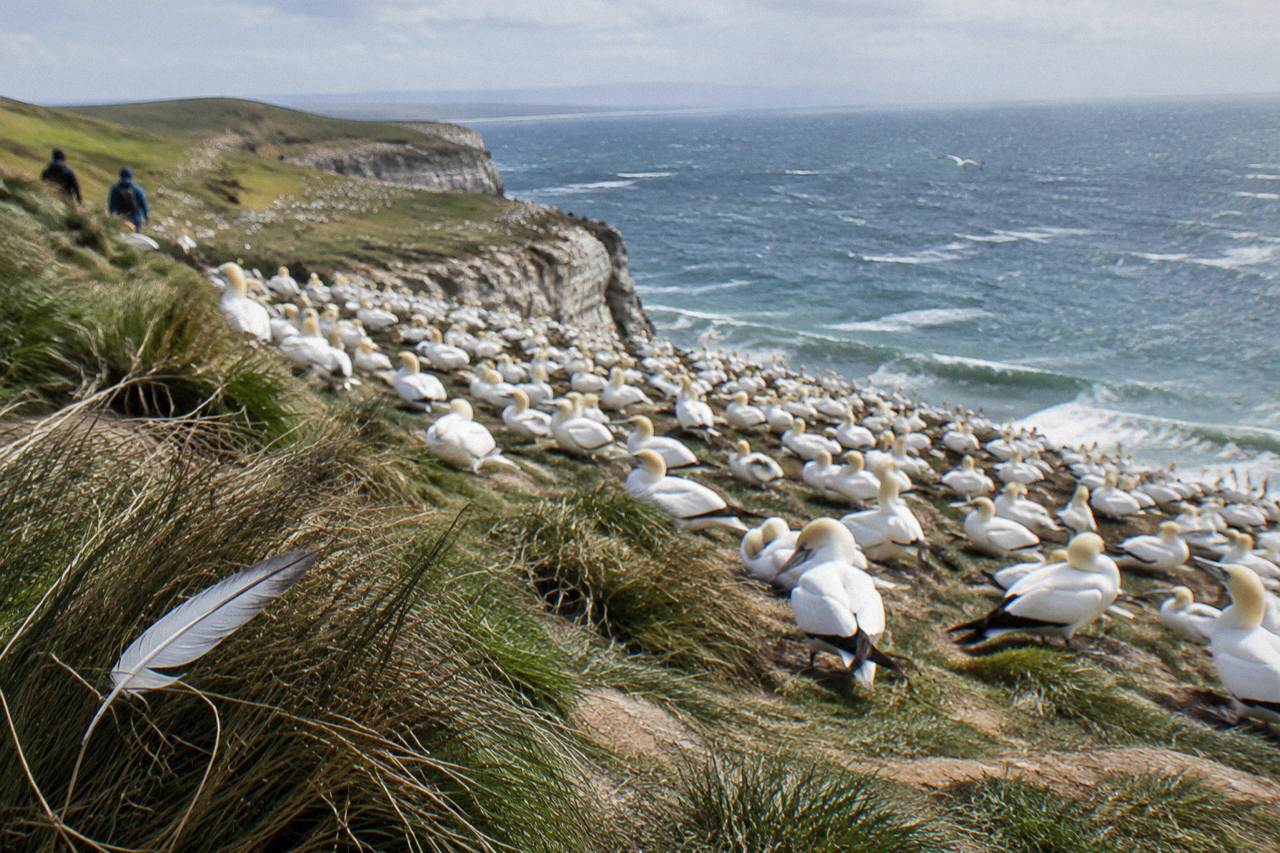
Six and a half thousand pairs is a number that is hard to picture until you are standing at the edge of the Plateau. The birds are spaced barely a wingspan apart across the nesting ground, and each pair defends its small patch with jabbing bills and loud displays. On a busy summer day the colony runs at full volume: a continuous harsh calling, the clatter of arrivals and departures, and the traffic of birds circling in to land exactly on their own nest spot among thousands of near-identical neighbours.
It is worth being precise about what the count means. Those adolescents are easy to pick out and are often the most approachable-looking birds on the cliff, standing quietly among the arguing breeders.
When Is The Best Time To See Gannets At Cape Kidnappers?
Adults return to the Cape Kidnappers colony from around July, and DOC names early November to late February as the best viewing window. Adults return to the cape from around July for courtship and nest building, and tours run from 1 August to 30 April. If you're still deciding which month to visit, the month-by-month guide to the gannet chick season at Cape Kidnappers matches each stage of the season to what you'll actually see on the nests.
The season builds in a reliable pattern. Adults begin returning from around July and reoccupy the colony for courtship and nest building, re-establishing pair bonds and patch boundaries. Adults return to the colony from around July, and DOC names early November to late February as the best months to visit. The best viewing window runs from early November to late February.
| Period | What is happening at the colony |
|---|---|
| From around July | Adults return for courtship and nest building |
| Early November to late February | Best viewing, per DOC |
| Through midsummer | Chicks on the nests, heavy adult traffic |
| Late summer | Fledglings depart across the Tasman |
| 1 August to 30 April | Tour season, including Christmas Day |
One access note sits alongside the calendar: the DOC track from the beach to the Plateau colony is closed from July to the week before Labour Weekend each year to limit disturbance to returning birds. The overland tours are unaffected, as they cross private farmland rather than the beach track, but independent walkers planning the beach route should check the DOC Cape Kidnappers page and its safety alert before setting out, because the status of the track can change at any time.
For photographers, the light argument favours the ends of the day, and there is a tour built around that: a 3-hour Private Sunrise Tour, per group of up to 4 from $636.15, which includes a gourmet breakfast of pastries, fresh fruit and yoghurt, plunger coffee and juice at the colony. A pickup-included version runs from $604.00 per group.
What Do Australasian Gannets Do At The Colony?
Gannets perform constant, visible behaviour at the colony: pairs greet each other with bill-fencing and bowing displays, defend their nest patch, incubate a single egg on their webbed feet, and make fishing flights that end in high-speed plunges into the sea below the cliffs.
The greeting display may be the one you watch longest. It looks affectionate and it is also functional, a re-confirmation of the pair bond and of the nest site after a separation of hours or days. Because pairs stay together over many seasons and return to the same spot, the whole colony is a grid of long-term neighbours arguing over fence lines.
Nesting itself is minimal but territorial. The egg is incubated by both parents in turn, resting on the webbed feet rather than in an insulating nest cup, which makes the birds visibly careful about standing up and settling down. The fledgling's first flight is extraordinary: out over the Tasman to Australia, about 2,800 km, unaccompanied, with a return expected two to three years later, typically in the third year, to the colony where it was raised.
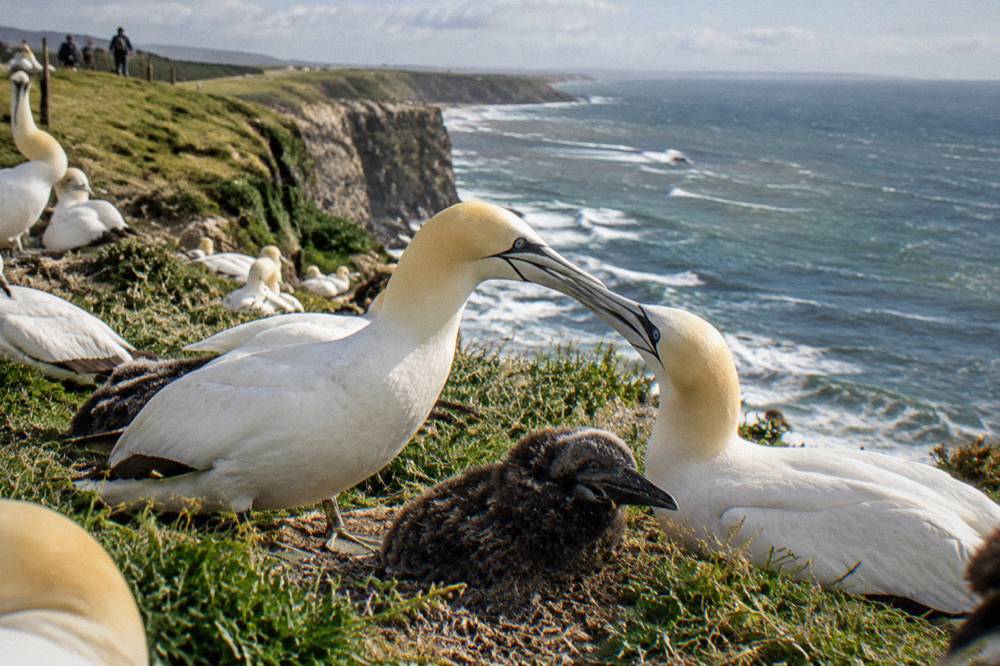
Between the displays and the fishing flights, the colony's air traffic never stops. Departing birds drop off the cliff edge with a half-folded wing, arriving birds brake into the wind with feet lowered and land in a controlled stall onto an exact spot. Watching a returning gannet thread its way into a packed colony is one of the best free shows at the cape, and it repeats all day in summer.
Do Australasian Gannets Mate For Life?
Yes, effectively. Australasian gannet pairs stay together over many seasons, reuniting at the same nest site each year, and both parents share incubation and chick care.
The pair bond is the backbone of colony life. Pairs stay together over many seasons. Division of labour is close to even: both parents incubate, both feed the chick, and both defend the territory against neighbours and against wandering non-breeders.
Courtship begins well before laying. Returning birds rebuild their nest mounds, present material to each other, and go through the bowing and fencing rituals that synchronise the pair. More on the species' breeding biology, including the Tasman crossing of the young birds, is collected in the NZ Birds Online species account.
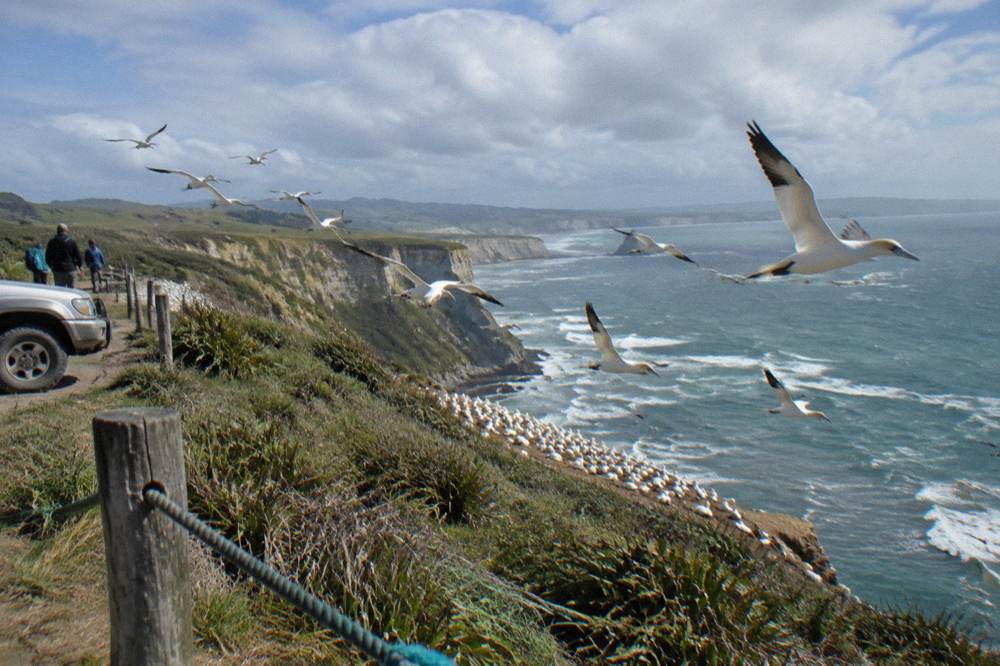
For a visitor, the practical payoff of all this pair fidelity is predictability. The behaviour you hope to see, greetings, nest relief, chick feeding, fencing disputes, is happening continuously across thousands of pairs through the peak months, so you do not need luck, you need viewing time. That is an argument for a tour that gives you unhurried minutes at the colony rather than a drive-by.
How Close Can You Get To The Gannets At Cape Kidnappers?
Very close, from behind barriers. DOC's rule is to stay behind barriers or at least five metres from nesting gannets. Nesting birds dislike loud noises and fast movement.
The five metre rule is not just politeness, it is what keeps a colony of 6,500 pairs workable. Gannets on nests will threaten and strike at anything that comes within reach of the bill, and a flushed bird leaves its egg or chick exposed.
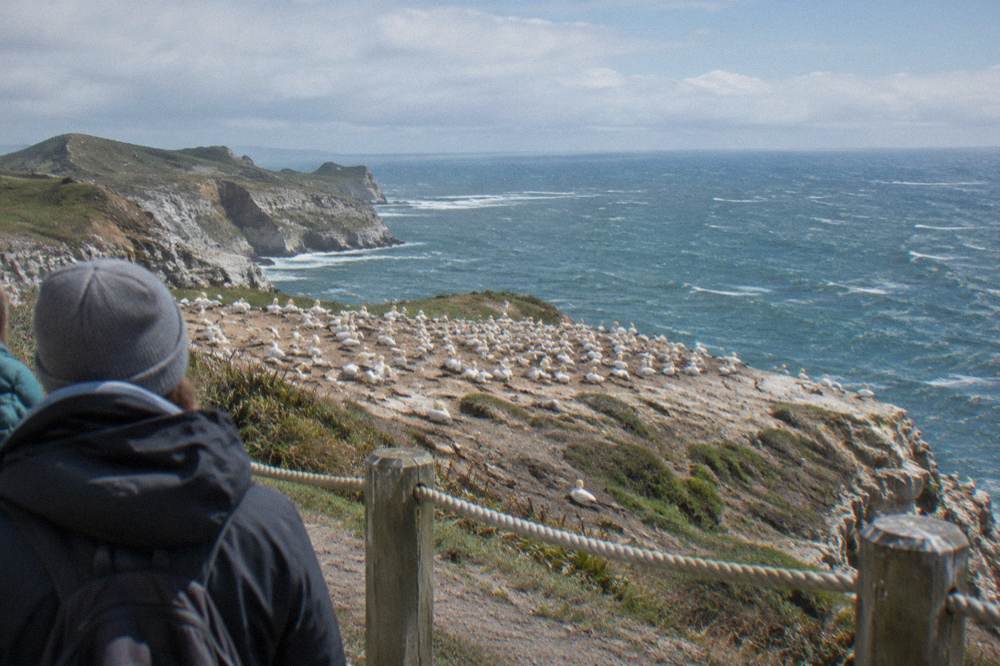
A few reserve rules matter alongside the distance rule. Dogs and horses are not allowed, motorbikes and vehicles may not leave the beach into the reserve, and there are no fires or camping. Drones on conservation land need a DOC permit, so leave the quadcopter at the hotel unless you have arranged one. The operator's tours additionally do not allow dogs, as the route crosses a wildlife sanctuary and a DOC reserve, and there are no toilets on the tour itself: the last bathrooms are at the operator's base at 396 Clifton Road, which has good facilities and a large off-road car park with room for several motorhomes.
The overland tours have a further advantage for anyone with mobility limits. The operator describes the plateau as flat ground with bench seats, says walking there is safe and easy, and notes that everything can also be seen from the vehicle without getting out. A guest needs to be able to get on and off the vehicle unaided, but little or no walking is required, which the 3-Hour Tour, Lowest Price lists plainly: walking is not required if you do not want to, and a jacket is advised. That is a different proposition from the 19 km beach walk, graded Expert, which DOC says needs at least 5 hours for a comfortable return and is possible only around low tide, with high tides and big seas blocking the beach. Leave the Cape no later than 1.5 hours after low tide, and check the tide table before going.
How Do You Get To The Cape Kidnappers Gannet Colony From Napier?
The operator's base at 396 Clifton Road, Te Awanga is about a 25 minute drive from Napier, the same from Hastings and Havelock North, and the beach walk starts at Clifton, 21 km south of Napier. Cruise passengers meet shore excursions at 100 Marine Parade beside the Napier i-SITE.
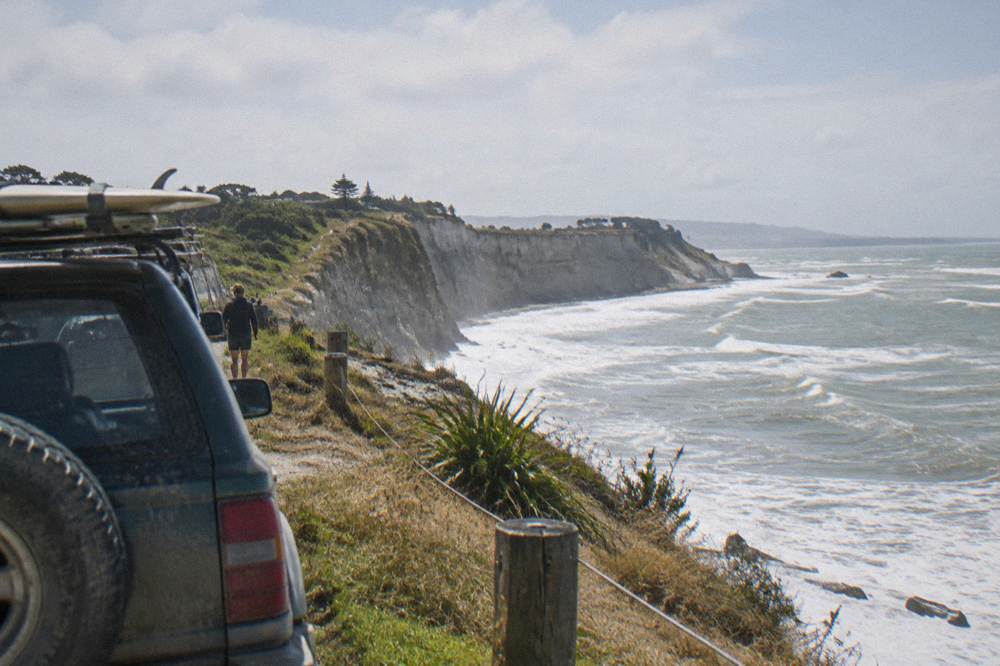
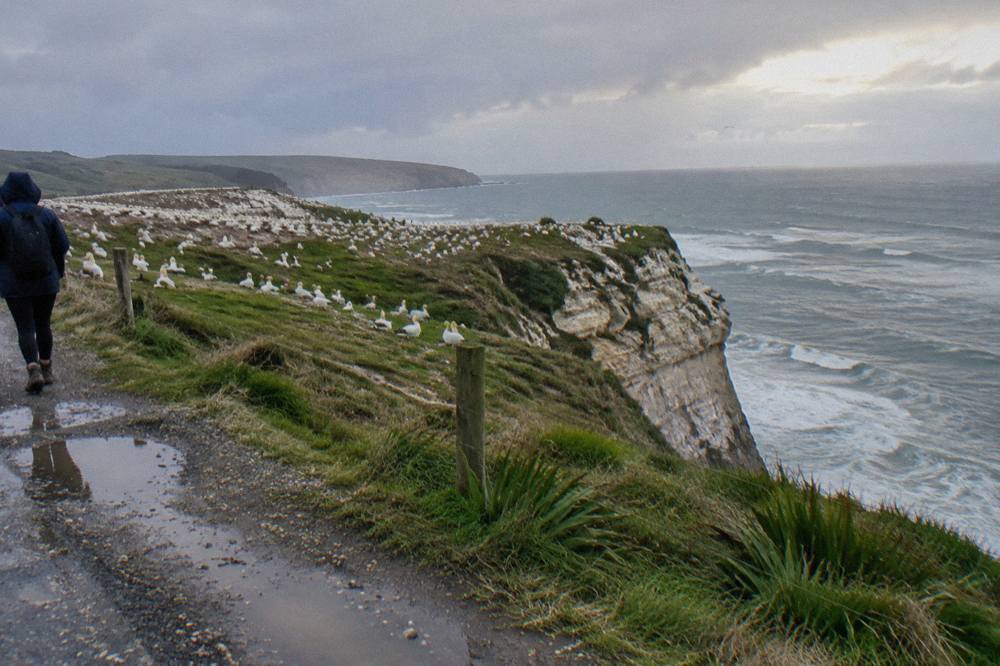
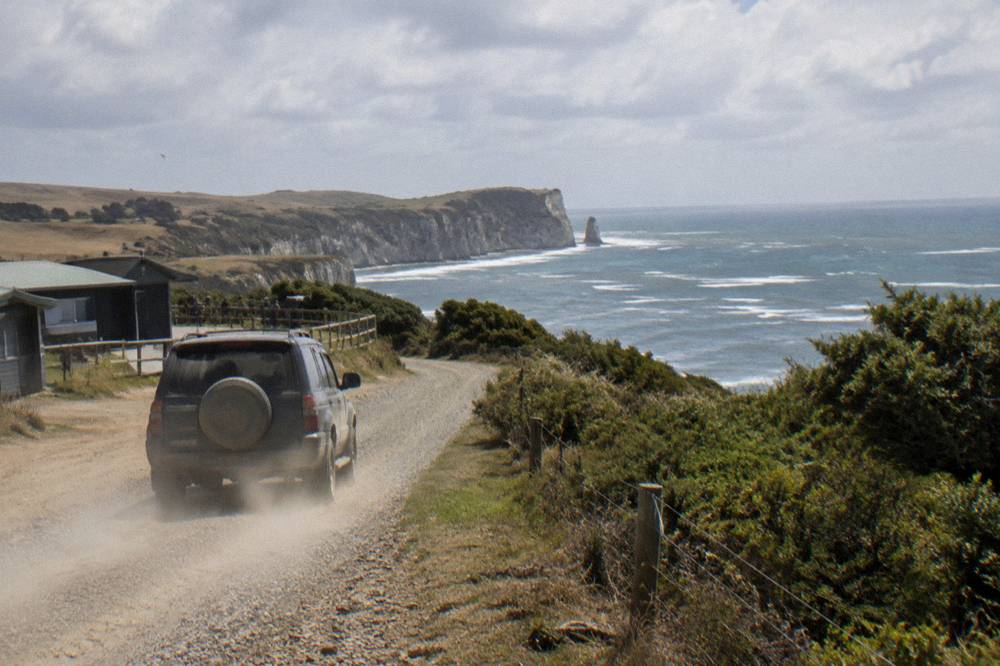
Driving yourself to the overland tours is straightforward: Clifton Road runs south from Te Awanga along the coast, and the base sits at number 396 with parking for cars and motorhomes. The tour itself does the rest, climbing from the base across farmland to the reserve above the cliffs, a route the operator says is not governed by the tides because it travels above the cliff tops. That single fact is the strongest practical argument for the overland option: no tide table, no Expert-grade walk, no cliff-hazard assessment, just a 4WD ride across a working farm and native bush.
Cruise passengers have their own logistics. Ships visit Napier from October to April, passengers can walk down the gangway onto the wharf but cannot walk out of the port, and a shuttle runs to two stops, the Napier i-SITE at 100 Marine Parade and the National Aquarium. Taxis cannot enter the port. The $93 4WD shore excursion meets at the pink-flag area by the Sound Shell next to the i-SITE, on the free ship shuttle route; the $95.42 excursion meets at 100 Marine Parade opposite Napier Museum, about 200 m from the shuttle drop. On some short port days the operator collects directly from the port, with departure times set per ship. Check your ship's all-aboard time against the tour's 4 hour length before booking. The tour from $95.42 per person includes 45 minutes at the colony per its itinerary and free cancellation up to 24 hours before start.
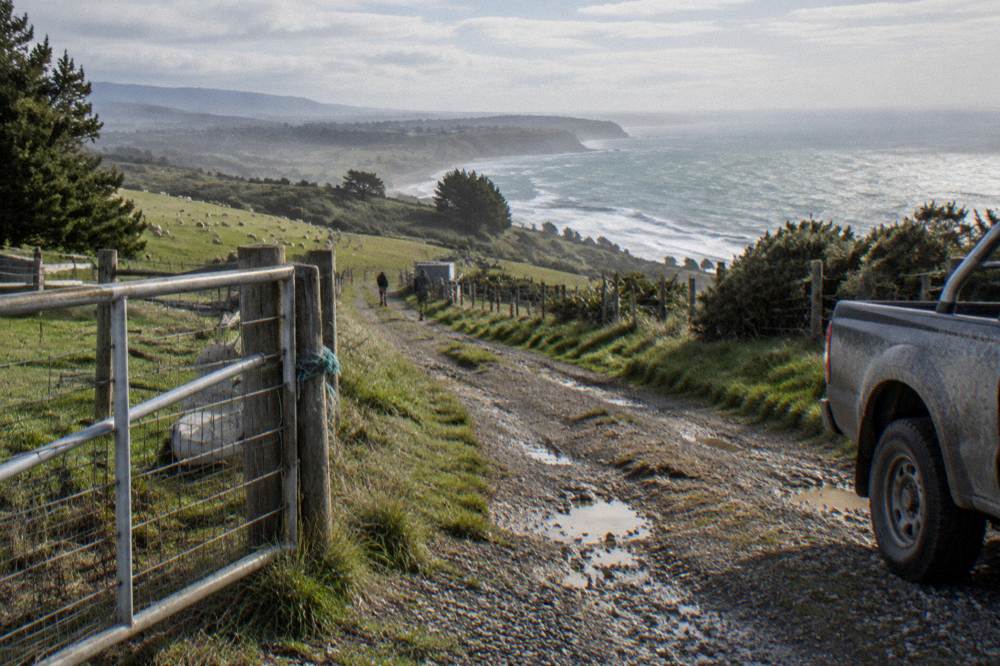
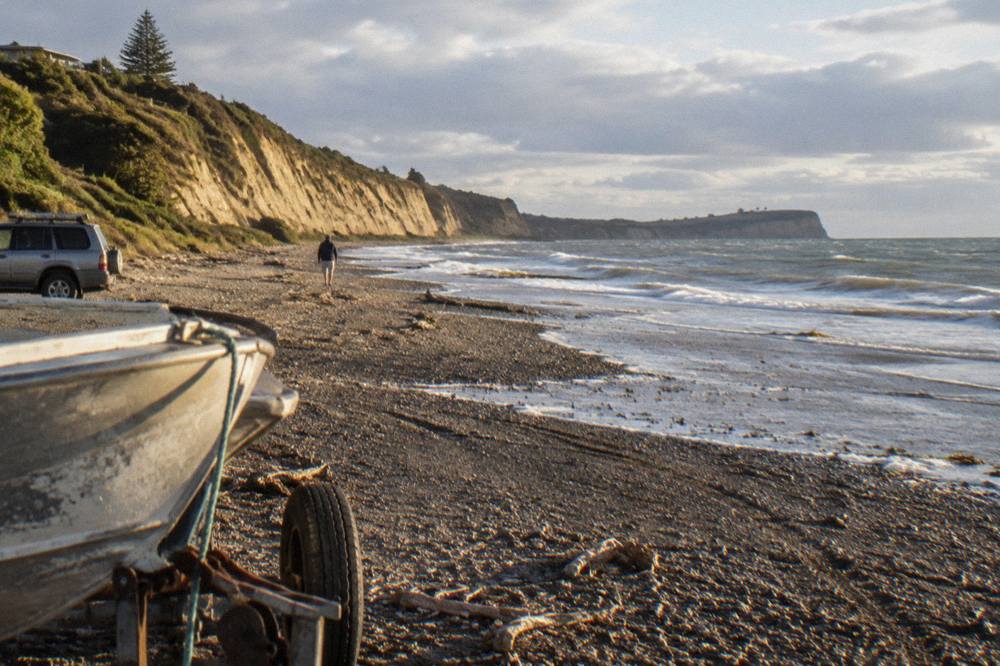
Independent walkers and riders should know one recent change at Clifton. Clifton Motor Camp was closed on 20 February 2026 after a geotechnical assessment found unstable land above it, permanently closed in July 2026, and in August 2026 Hastings District Council voted to close a section of Clifton Road at the former campground to vehicles. Pedestrian access to Clifton Beach and the Cape Kidnappers walking route stays open. This matters to walkers and bike riders only; any effect on the operator base is unconfirmed, so check when booking. About 7 km of the beach lies under cliffs subject to significant landslide, and DOC reports three serious injury landslide events in the past 50 years, with large landslides every year, so the safety alert on the DOC page and the signage at the beach are part of the walk, not an afterthought.
Which Gannet Tour Should You Book From Napier?
For most visitors the choice is between the two 3-hour overland tours, from $55.00 and $56.23 per person, decided mainly by whether you want the optional pickup add-on or the Lowest Price tour meeting at the base, and private versions from $604.00 to $704.30 per group of up to 4. Cruise passengers book one of the two shore excursions instead.
The two shared 3-hour tours are close in every dimension that matters. The 3-Hour Tour, Meet at Base runs from $56.23 per person, is rated 4.9 across 1,052 reviews, includes coffee or tea and travel by air-conditioned minivan; hotel pickup is an optional add-on chosen at booking, otherwise you meet at 396 Clifton Road. The 3-Hour Tour, Lowest Price runs from $55.00 per person, is rated 4.8 across 378 reviews, and includes light refreshments and comfortable air-conditioned transport, with guests meeting at the base in Te Awanga rather than being collected. The two tours with 15 or more reviews are priced at $55.00 vs $56.23 per person, and both carry free cancellation up to 24 hours before start.
| Option | Basis | From | Duration | Pickup |
|---|---|---|---|---|
| 3-Hour Tour, Meet at Base | Per person | $56.23 | 3 hours approx. | Optional add-on at booking |
| 3-Hour Tour, Lowest Price | Per person | $55.00 | 3 hours | Not included |
| 4-Hour Shore Excursion, 45-Minute Stop | Per person | $95.42 | 4 hours, 45 minutes at the colony | Central Napier meeting point |
| Private 4-Hour Tour | Per group, up to 4 | $704.30 | 4 hours, 45 minutes at the colony | Check the booking page |
| 3-Hour Sunrise Tour | Per group, up to 4 | $636.15 | 3 hours | Meet at base |
Private options are priced per group, so they should not be compared with per-person fares without saying so. The Private 4-Hour Tour runs from $704.30 per group of up to 4 with 45 minutes at the colony per its itinerary and coffee or tea included; a pickup-included private 4-hour version runs from $688.00 per group. And for a full Hawke's Bay day that pairs the birds with wine country, a Private 7.5-Hour Winery Combo runs from $1,214.00 per group of up to 2, with pickup from your accommodation at about 8:30 am and return by 4:00 pm in a luxury Range Rover.
If your decision is really about the day as a whole rather than the fare, the planning pages on this site go deeper: the gannet season month by month, the fitness and walking question, and what the colony visit is worth against its cost are covered in the Cape Kidnappers gannet season guide, the tour fitness guide, and Is The Cape Kidnappers Gannet Tour Worth It.
What Else Lives At Cape Kidnappers Besides Gannets?
Cape Kidnappers also hosts white-fronted terns, variable oystercatchers, reef herons and Caspian terns, and little blue penguins nest around the cape. The reserve sits inside a working farm of roughly 2,500 hectares with a predator-proof fenced conservation area protecting the breeding birds.
The gannets dominate, but a slower look around the cliff tops and shoreline adds a supporting cast. Terns work the water in flocks, oystercatchers pick along the reef platforms below, and reef herons, grey and hunched, are a good spot for anyone who enjoys the harder birds. Penguins nest around the cape.
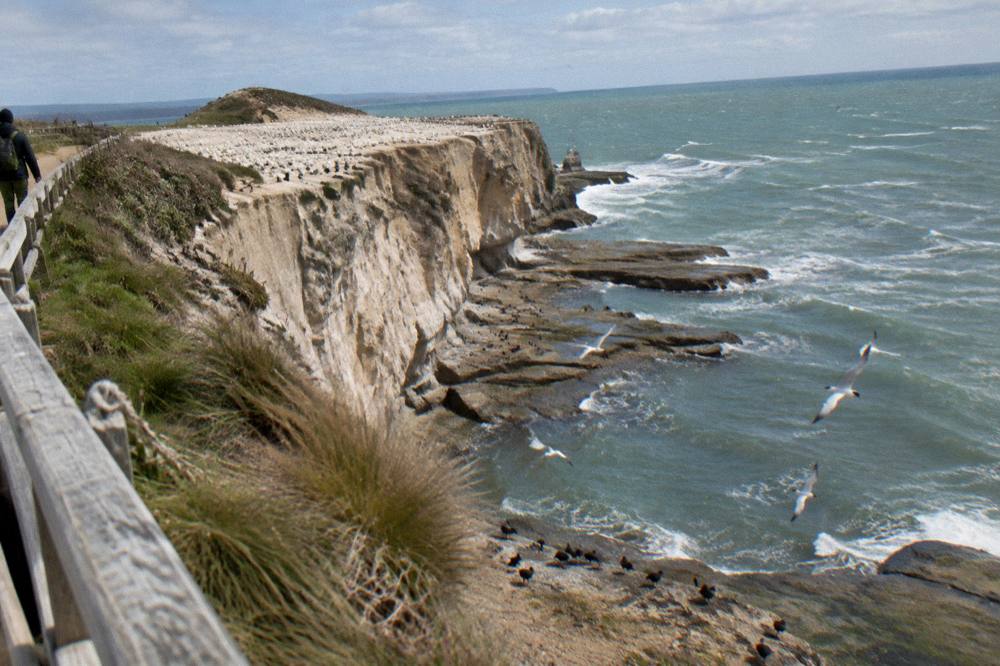
The farmland itself is part of the experience on the overland route. The overland tours reach the reserve by crossing the working farm station, so the drive passes through farmland on the way. Visitors coming from a wider Hawke's Bay trip can build a full day around it, as the Napier day-plan guide sets out.
Before you lock in a date, a quick recap of the field-guide essentials. The Australasian gannet is a 1.8 m wingspan seabird that lays one egg, incubates it on its feet, pairs for many seasons, and lives 25 to 40 years. The colony at Cape Kidnappers holds 6,500 of those pairs on a cliff top you can reach by 4WD across a farm, about 25 minutes from Napier. Whatever month you choose between August and April, the colony is active through the tour season, and Napier Gannet Tour exists to help you pick the right way in. 3-Hour Tour, Meet at Base (from $56.23, rated 4.9 across 1,052 reviews) meets at 396 Clifton Road, with optional hotel pickup chosen at booking.
Common Questions About The Australasian Gannet
What Is An Australasian Gannet?
A large white seabird with black wingtips and a wingspan of about 1.8 m, which nests in dense colonies on coastal cliffs and feeds by plunge-diving into the sea. Adults live 25 to 40 years, and pairs stay together over many seasons.
How Many Gannets Are At Cape Kidnappers?
DOC puts the colony at 6,500 breeding pairs, which it calls the largest and most accessible mainland colony in the world. Gannets have nested at the cape since the 1870s.
When Is The Best Time To See Gannets At Cape Kidnappers?
DOC names early November to late February as the best viewing window. Adults return from around July, tours run 1 August to 30 April, and the beach track to the Plateau colony is closed from July to the week before Labour Weekend each year.
Do Australasian Gannets Mate For Life?
Effectively yes. Pairs stay together over many seasons and return to the same nest site each year, with both parents sharing incubation and chick care. A surviving bird will re-pair if its partner does not return.
How Close Can You Get To The Gannets?
DOC's rule is to stay behind barriers or at least five metres from nesting gannets. The Plateau viewing area puts you in clear sight and sound of the colony without disturbing the birds, which dislike loud noises and fast movement.
Where Do Young Gannets Go When They Leave The Colony?
Fledglings make an unaccompanied Tasman Sea crossing to Australia of about 2,800 km.