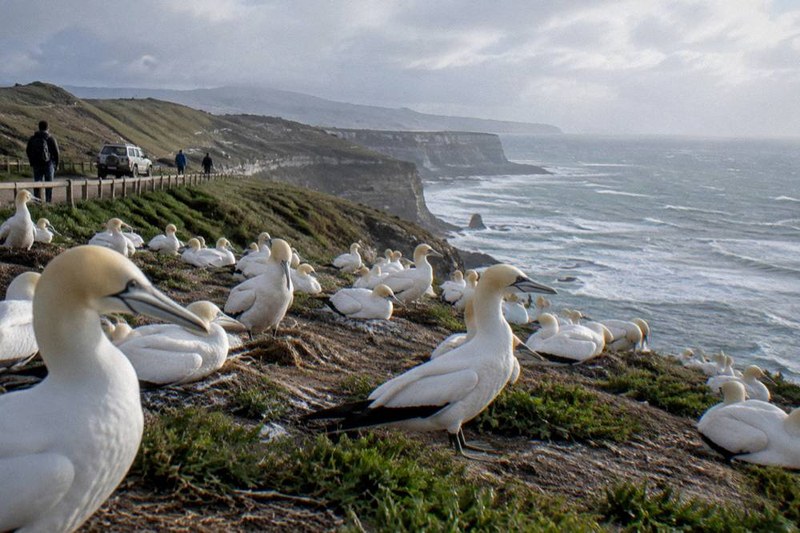
Are There Gannets In New Zealand?
Yes, New Zealand has gannets: the Australasian gannet nests at Cape Kidnappers near Napier, the largest and most accessible mainland colony in the world. Here is where, when and how to see them.
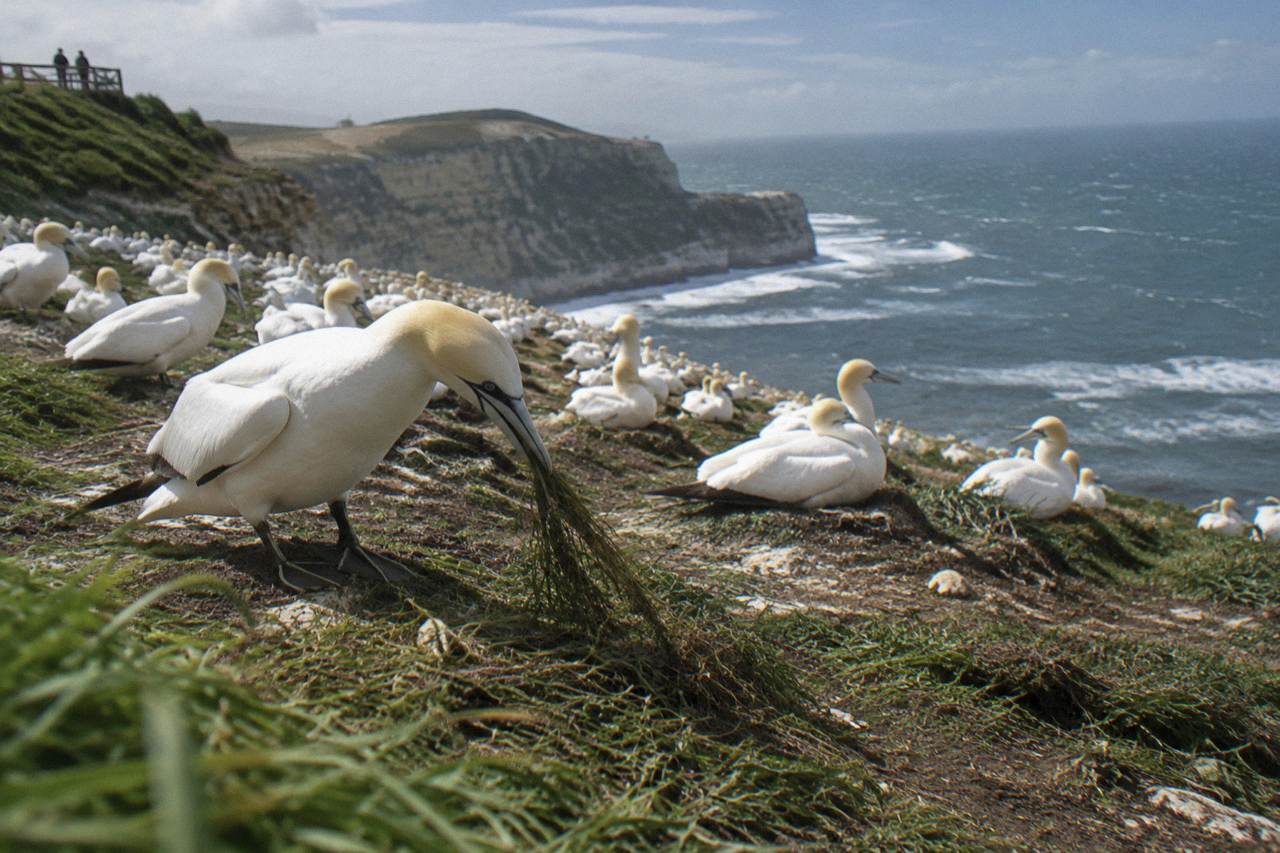
Yes. New Zealand is home to the Australasian gannet, known to Maori as takapu, a large white seabird with a wingspan of about 1.8 metres that nests in crowded colonies on coastal cliffs. The birds have nested at Cape Kidnappers on the Hawke's Bay coast since the 1870s, and DOC puts the colony there at 6,500 pairs, calling it the largest and most accessible mainland gannet colony in the world. If you're wondering how these colony birds pair up and raise their chicks, the guide to gannet pairs at Cape Kidnappers explains how the couples bond and which Napier tours get you close.
That single stretch of coast, about 25 minutes' drive south of Napier, is the reason this site exists. A reader can stand on a grassy plateau above the Pacific with thousands of nesting birds a few metres away, watching the sky fill with adults returning from fishing trips, without hiking for hours or taking a boat. Few places in the world offer that combination of scale and ease of access, and it is what draws visitors from Napier and from cruise ships calling between October and April.
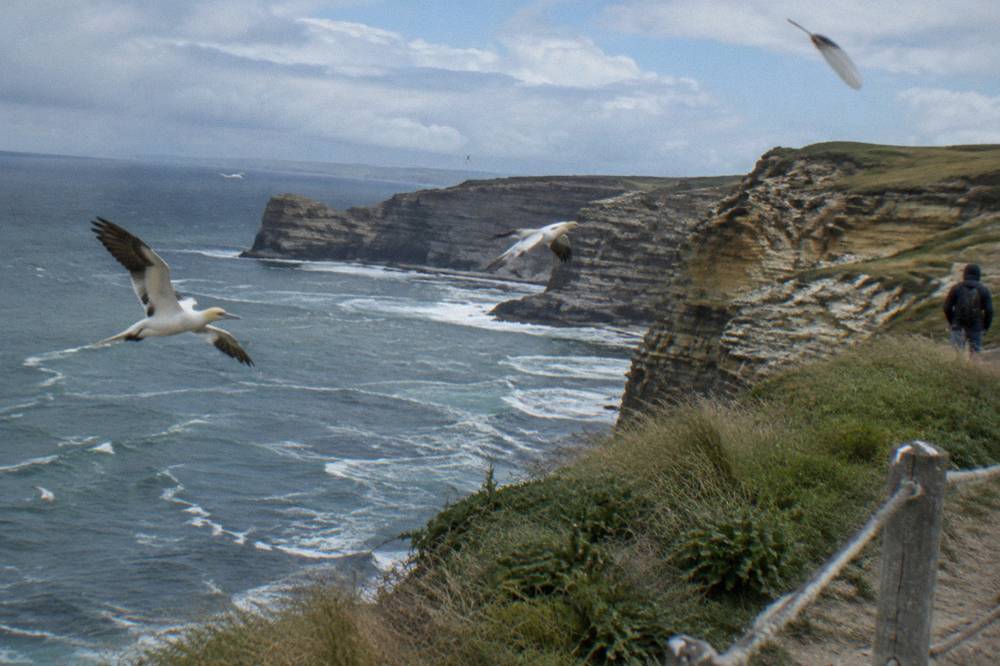
The gannets themselves are spectacular even before you count them. Australasian gannets are plunge divers: they fold their wings and hit the water at speed after fish, and at the colony you can watch courtship displays, nest building and pair-bonding rituals at close range. Pairs stay together over many seasons, and both parents incubate a single egg, resting it on their webbed feet rather than in a built nest the way many birds do. A group of gannets nesting together is called a colony, or a gannetry.
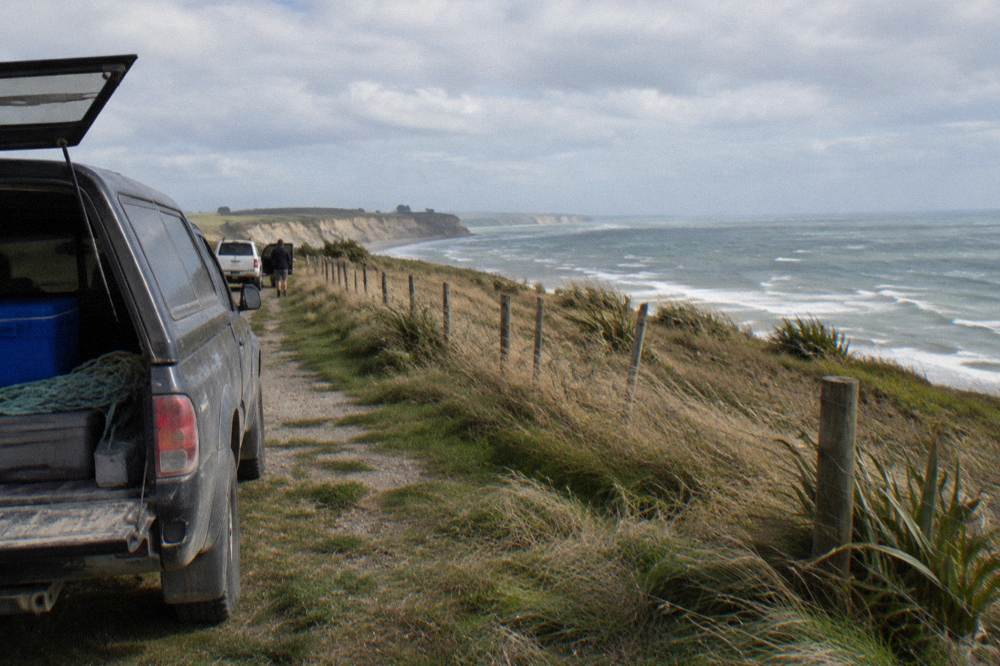
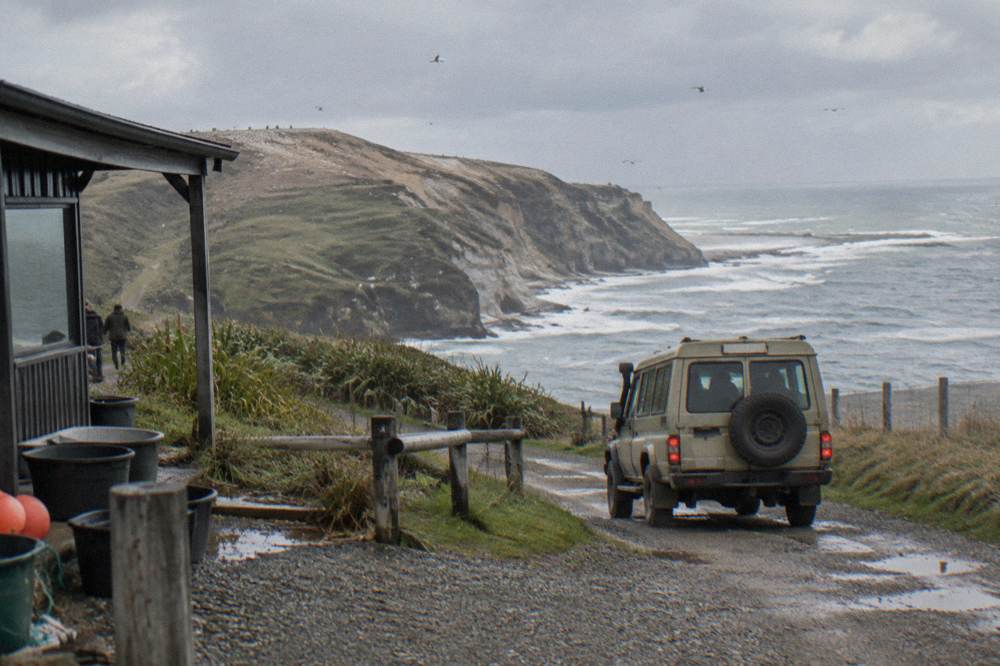
DOC describes the Cape Kidnappers birds as the largest and most accessible mainland colony in the world, and that accessibility is the practical point for a traveller. Some of the world's other great ganneries sit on offshore islands or remote stacks. This one sits above the cliffs of a working farm about 2,500 hectares in size, reached by a 4WD tour vehicle across private farmland, and the birds can be viewed from flat ground with bench seats.
The standard way in is the 3-hour overland tour, which starts at 396 Clifton Road in Te Awanga and costs from $56.23 per person, rated 4.9 across 1,052 reviews. A second 3-hour version from the same operator, rated 4.8 across 378 reviews at from $55 per person, includes light refreshments but no hotel pickup or drop-off: guests meet at the operator base at 396 Clifton Road, Te Awanga, about 25 minutes from Napier. For travellers who want the vehicle to themselves, a private 4-hour tour for a group of up to 4 runs from $704.30 per group. All three are described in detail in the Cape Kidnappers gannet colony tours guide.
- Standard Overland Gannet Tours$55
- Cruise Shore Excursions$93
- Private And Sunrise Tours$604 per group
Where Is The Largest Gannet Colony In New Zealand?
Cape Kidnappers, on the Hawke's Bay coast 21 km south of Napier and 18 km east of Hastings, holds the country's largest mainland gannet colony. DOC puts it at 6,500 pairs and calls it the largest and most accessible mainland colony in the world. The nesting sites sit on and above the cliffs of a privately owned nature reserve reached across a working farm. For the full story behind that claim and practical directions from Napier, the guide to the largest gannet colony in the world covers everything a first-time visitor needs.
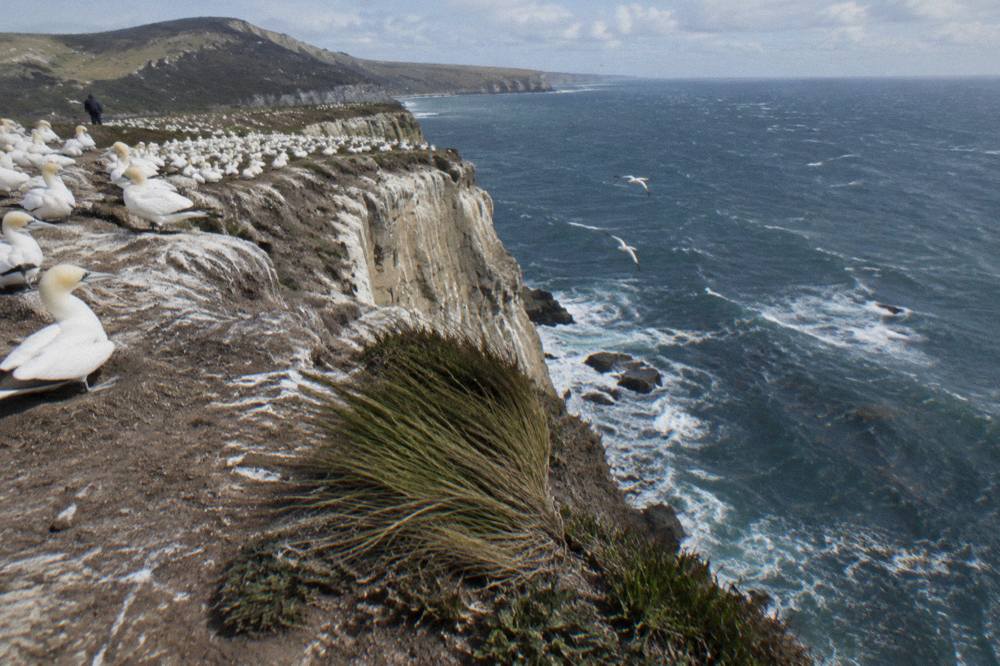
There are in fact several nesting sites at the cape rather than one. Black Reef, 7.5 km along the beach from Clifton, is the first, and a steep, rough, muddy climb of about 1 km leads on to the second. DOC says the best place to view nesting gannets is the Plateau colony, which sits on private land, and close-up views are possible at the Plateau and Black Reef colonies. The overland tours reach the plateau by vehicle, so the birds a tour visitor sees are the ones DOC itself points to as the best viewing.
The colony's history helps explain its size. Gannets have nested at the cape since the 1870s, and numbers have grown steadily since then to the roughly 6,500 pairs DOC counts today. The farm is still a working farm, and the drive up crosses paddocks and patches of native bush, which is part of what makes the visit feel different from a zoo or a scripted attraction.
For travellers basing themselves in Napier, the practical geography is friendly. The operator's base at Te Awanga is about a 25 minute drive from Napier, and the same from Hastings and Havelock North. Cruise passengers get their own arrangement: the shore excursion versions of the tour meet at 100 Marine Parade in Napier, opposite the museum and about 200 m from where the port shuttle drops at the i-SITE, and on some ship days the operator collects passengers directly from the port because of short port times.
When Is The Best Time To See Gannets At Cape Kidnappers?
Tours run from 1 August to 30 April each year, including Christmas Day. DOC puts the best viewing window from early November to late February. Adults return to the cape from around July for courtship and nest building, and the season winds down through autumn.
The calendar matters more here than at many wildlife attractions because gannets are migratory in their early years and seasonal in their breeding. A visit in November through February delivers courtship, incubation and chicks, all at close range. A visit in September or October shows adults rebuilding nests and renewing pair bonds, with fewer birds but plenty of activity. By late March and April the colony is thinning out as the breeding cycle ends, and the tours pause entirely over the winter months from May to the end of July.
The birds' life story explains the rhythm. Young gannets leave the colony and make a Tasman Sea crossing to Australia of about 2,800 km, returning two to three years later, typically in their third year, to the colony where they were raised. The colony is seasonal: tours run from 1 August to 30 April, and DOC points to early November to late February as the best viewing time. Lifespan figures like that also explain how a colony can grow steadily for well over a century.
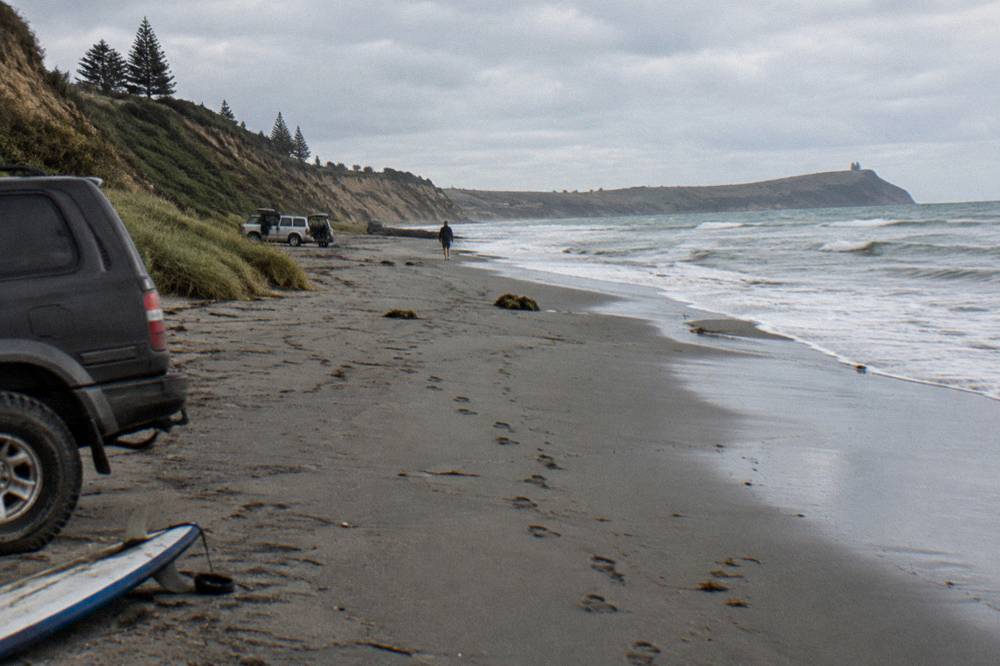
Weather plays a role in planning but does not govern the tours the way it governs the beach walk. The operator says the overland tours are not governed by the tides because they travel above the cliff tops, so a tour runs regardless of whether the tide is in or out. The Cape Kidnappers weather guide covers what to expect by season, and the what to wear guide covers the layers.
| Timing | What you see at the colony |
|---|---|
| July and early August | Adults returning for courtship and nest building; tours resume 1 August |
| Season Opens in August | Nest building and pair bonding; egg laying under way |
| Early November to late February | Peak viewing: early Nov to late Feb, per DOC |
| March to 30 April | Season winding down, tours still running |
How Close Can You Get To The Gannets?
Very close, and safely. The overland tours deliver visitors to a plateau of flat ground with bench seats beside the colony, and the operator says everything can also be seen from the vehicle without getting out. Little or no walking is required; a guest only needs to be able to get on and off the vehicle unaided. Visitors must keep behind barriers or at least five metres from nesting gannets.
That five metre rule comes from DOC and applies to everyone on the reserve, whether they arrived by tour vehicle, by bicycle or on foot. Nesting birds dislike loud noises and fast movement, so calm, slow behaviour near the colony keeps the birds settled and the views good. Within those limits the experience is remarkably intimate: gannets carry on with greetings, squabbling over nest material and feeding chicks largely indifferent to their audience, and a camera with even a modest zoom lens fills the frame. The Cape Kidnappers gannet photography guide goes into detail for photographers. If you're wondering whether birds this big ever pose a threat to people standing so close, the article on gannet aggression and visitor safety at Cape Kidnappers gives a straight answer.
A few reserve rules keep the experience consistent. Dogs and horses are not allowed, nor motorbikes or vehicles off the beach into the reserve, and there are no fires or camping. Drones on conservation land need a DOC permit, so leave the drone at the hotel unless you have arranged one. There are no toilets on the tour itself; the last toilets are at the operator's base, which has good bathroom facilities, so plan around that before departure. Tea, coffee and a biscuit are served at the colony on the overland tours.
The walking question deserves a clear answer because it puts many people off wildlife tours. At the plateau, the ground is flat and the operator describes walking there as safe and easy, but it is optional. This makes the tour a realistic option for travellers who cannot manage a hike, and the Cape Kidnappers tour fitness guide addresses exactly this concern. It is a different story on the DOC beach walk below, which is 19 km return, graded Expert, and requires at least 5 hours and careful tide planning; the two ways of reaching the birds are compared in the Cape Kidnappers walk versus overland tour guide.
The beach walk also carries a real hazard the tour does not: about 7 km of that beach lies under cliffs subject to significant landslide and rockfall. A landslide seriously injured two tourists in January 2019, and a further large landslide in February 2020 closed the beach before the track reopened. DOC says the status of the track can change at any time and to check the safety alert on its page before walking. The overland route crosses private farmland above the cliffs, and DOC describes that route as the lower-risk option.
Can You See The Gannets On A Day Trip From Napier?
Yes, comfortably. The standard overland tour runs 3 hours in total, starting from the operator's base at 396 Clifton Road, Te Awanga, about a 25 minute drive from Napier. A same-day version with hotel pickup and drop-off included also runs 3 hours, and cruise passengers have a dedicated 4-hour shore excursion from a meeting point on Marine Parade.
The pickup question is where the two 3-hour options differ, and it is worth choosing deliberately. The meet-at-base version costs from $56.23 per person and carries a 4.9 rating across 1,052 reviews, the largest review pool of any tour covered on this site. The lowest-price 3-hour tour, from $55 per person and rated 4.8 across 378 reviews, meets at 396 Clifton Road, Te Awanga; the $56.23 tour offers hotel pickup as an optional extra at booking. Neither price is large, and of the two most-reviewed tours the $55 version is the cheaper per-person option while the $56.23 version is the dearer one; both figures are per person, and both tours run 3 hours.
Cruise passengers should book the shore excursion, not the standard tour, because the standard 3-hour tours are not designed for cruise schedules. The dedicated shore excursion runs 4 hours with 45 minutes at the colony per its itinerary and meets at 100 Marine Parade, opposite the Napier museum, about 200 m from where the cruise shuttle drops at the i-SITE. Because ships cannot be walked out of and taxis cannot enter the port, the shuttle-and-meeting-point arrangement is the practical route ashore; passengers should check the ship's all-aboard time against the tour's 4-hour length before booking. The details are laid out in the Napier shore excursion gannets guide.
Travellers with more time, or a special occasion, can also take the colony privately. The private 4-hour tour runs from $704.30 per group for up to 4 people, with 45 minutes at the colony per its itinerary and coffee or tea included. Note the basis: that is a per-group price, not per person, so it should never be compared directly with the per-person fares above. A private 7.5-hour version combining the gannets with Hawke's Bay wineries runs from $1,214.00 per group for up to 2, with pickup about 8:30 am and return by 4:00 pm, travelling in a luxury Range Rover.
| Tour option | Price basis | From | Duration | Pickup |
|---|---|---|---|---|
| 3-Hour Tour, Meet at Base | per person | $56.23 | 3 hours | Optional add-on at booking |
| 3-Hour Tour, Lowest Price | per person | $55.00 | 3 hours | Not included |
| Private 4-Hour Tour | per group (up to 4) | $704.30 | 4 hours | Check the booking page |
| 4-Hour Shore Excursion, 45-Minute Stop | per person | $95.42 | 4 hours | Central Napier meeting point |
What Other Seabirds Are At Cape Kidnappers?
Gannets dominate, but they are not alone. Other birds at the cape include white-fronted terns, variable oystercatchers, reef herons and Caspian terns, and little blue penguins nest around the cape. For most visitors the gannet colony is the headline, but the cliffs and shoreline on the drive up add a supporting cast worth watching for.
Terns and oystercatchers work the shoreline below the cliffs, and reef herons are a quieter presence among the rocks. Little blue penguins, the world's smallest penguins, nest around the cape, though they are more often encountered as a sighting from the water or a dusk appearance than from the plateau. None of these species is the reason to book a tour, but they turn the drive and the colony stop into a broader seabird outing than the marketing suggests.
The gannets themselves supply most of the drama. Their plunge diving is one of the great sights in New Zealand birdwatching: a bird touring above a school of fish folds into a dive and hits the water in a spray of foam, then surfaces and takes off again. At the colony the sky traffic is continuous during the breeding season, with adults arriving and departing in lines low over the water. Young birds leaving the colony make a Tasman Sea crossing to Australia of about 2,800 km and typically return in their third year to breed at the colony where they hatched.
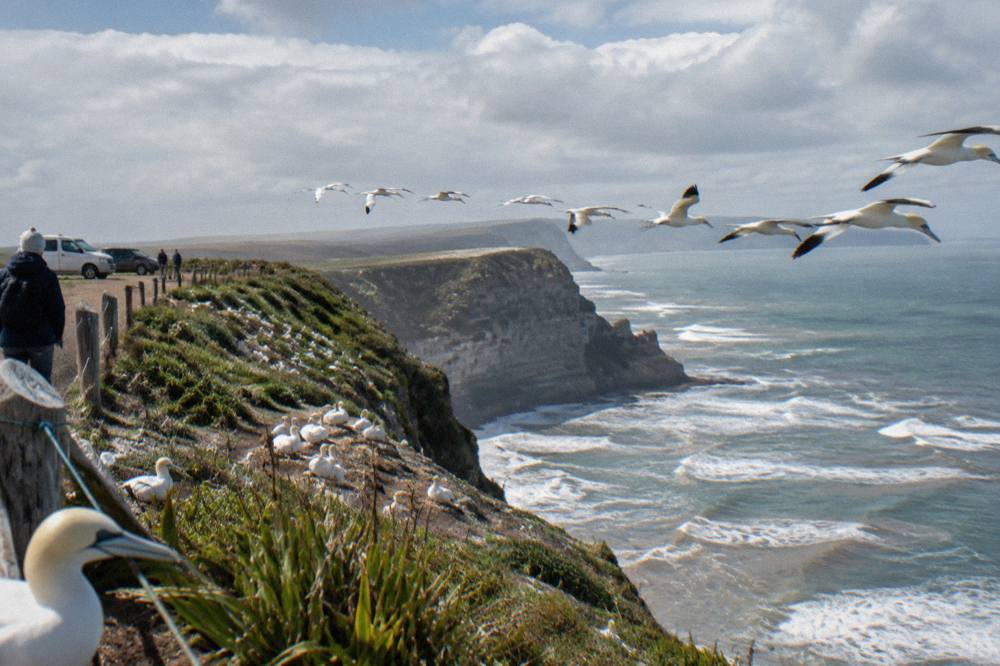
Visitors who fall for the species can read more in the Australasian gannet guide and the gannets of Hawke's Bay guide. For a side-by-side look, the Cape Kidnappers versus Muriwai comparison page covers the differences in detail.
What Does A Gannet Tour Actually Include?
The standard 3-hour tour includes transport by an air-conditioned minivan across the farm to the colony, coffee or tea and beverages. The 3-Hour Tour, Lowest Price meets at 396 Clifton Road, Te Awanga, with air-conditioned transport, light refreshments and no walking required; hotel pickup is not included. Both carry free cancellation up to 24 hours before the start, and they are rated 4.8 and 4.9 by large review pools.
Reading the inclusions carefully avoids surprises. The meet-at-base version starts at 396 Clifton Road, Te Awanga, and states coffee and/or tea and beverages; the base has a large off-road car park with room for several motorhomes, which matters for campervan travellers. The 3-Hour Tour, Lowest Price meets at 396 Clifton Road, Te Awanga, includes light refreshments, does not require walking, and advises a jacket. The meet-at-base 3-hour tour allows service animals and pushchairs, though it is not wheelchair accessible; travellers with access needs can check the specifics in the wheelchair accessibility guide.
Families often ask about children. The standard tour accepts most travellers and runs as a sociable, scheduled group experience rather than a private one. The gannet tour with kids guide covers ages, attention spans and what the plateau is like with children in tow. Budgeting is covered separately in the gannet tour price guide, which compares all the per-person and per-group options in one place.
Cancellation is straightforward and worth knowing before you commit. Free cancellation applies up to 24 hours before the tour start, which covers the common cruise-passenger worry of an itinerary change. For anyone still weighing whether the experience justifies the fare, the is the gannet tour worth it guide works through the value question with real figures.
The site behind this article, Napier Gannet Tour, exists because the answer to the opening question is such an easy yes: the birds are here, in extraordinary numbers, within a short drive of a city that cruise ships call at from October to April. Whether you arrive on a ship for four hours or base yourself in Hawke's Bay for a week, the colony is the region's single most distinctive wildlife experience, and the tour that reaches it requires almost no walking at all.
Common Questions About Gannets In New Zealand
Are There Gannets In New Zealand?
Yes. The Australasian gannet, or takapu, nests in New Zealand, and the largest and most accessible mainland colony sits at Cape Kidnappers on the Hawke's Bay coast, DOC puts it at 6,500 pairs. Overland tours from Te Awanga reach a plateau right beside the nesting birds.
Where Is The Best Place To See Gannets In New Zealand?
Cape Kidnappers near Napier is the standout. DOC calls it the largest and most accessible mainland gannet colony in the world, and a 3-hour overland tour takes visitors across a working farm to a flat plateau beside the colony, with little or no walking required.
When Can You See Gannets At Cape Kidnappers?
Tours run from 1 August to 30 April each year. DOC says the best viewing is early November to late February, when nesting and chicks make the colony busiest. Adults return from around July for courtship and nest building.
How Close Do The Tours Get To The Birds?
The overland tours finish on flat ground with bench seats beside the Plateau colony, and everything can be seen from the vehicle without getting out. Visitors must keep behind barriers or at least five metres from nesting gannets.
Can You See The Gannets From A Cruise Ship Visit To Napier?
Yes. A dedicated 4-hour shore excursion meets at 100 Marine Parade, about 200 m from where the cruise shuttle drops at the i-SITE, and spends 45 minutes at the colony per its itinerary. The standard 3-hour tours are not for cruise passengers.
Can You Walk To The Colony Instead Of Taking A Tour?
You can, but it is serious: the beach walk from Clifton is 19 km return, graded Expert, and DOC says to allow at least 5 hours. The walk is possible only around low tide, high tides and big seas block the beach, and you must leave the Cape no later than 1.5 hours after low tide. Check the tide table before going and check DOC's safety alert, since parts of the beach lie under cliffs subject to landslide.