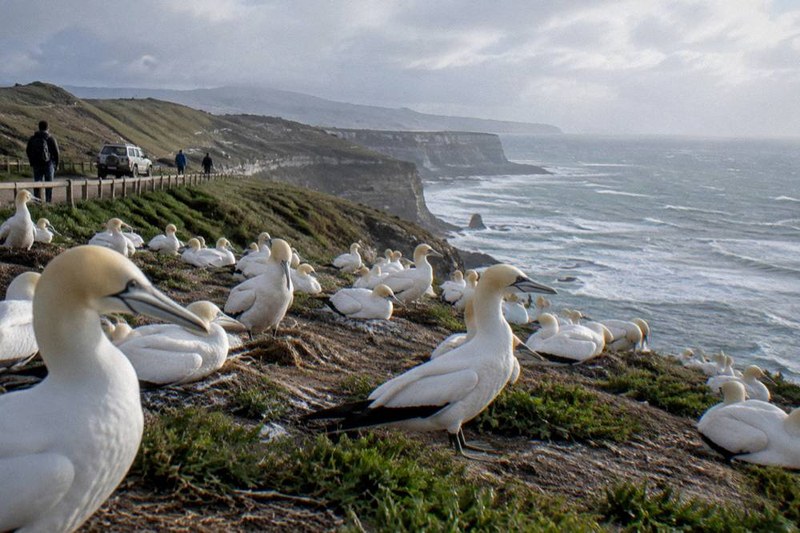
Gannet Safari At Cape Kidnappers: What Happens On The Day
A gannet safari is a 4WD ride across a working farm to a clifftop nature reserve above Cape Kidnappers, home to one of the world's largest mainland gannet colonies. Here is how the options compare and what the day looks like.
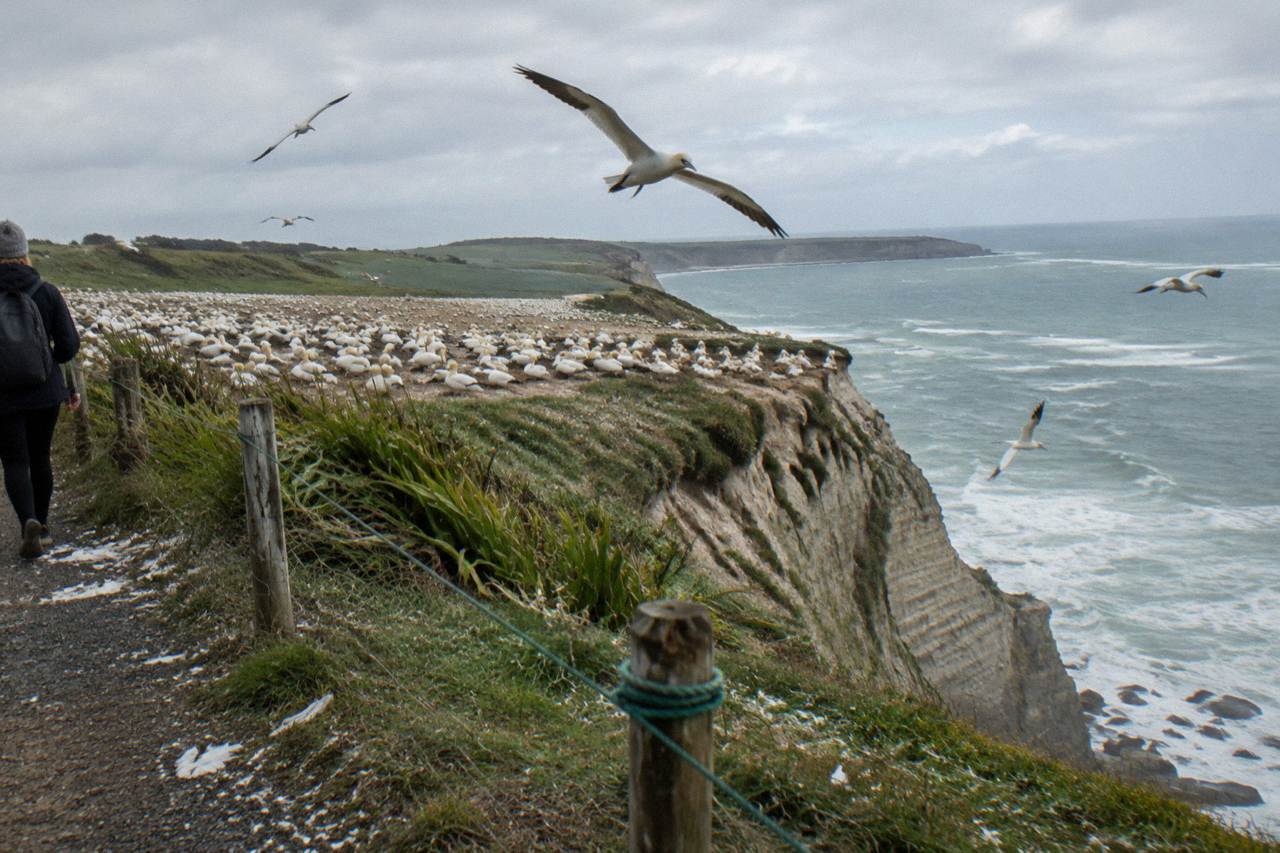
The overland gannet safari at Cape Kidnappers is a 4WD ride across a working farm to a privately owned nature reserve on the clifftops, where Australasian gannets nest in numbers DOC puts at 6,500 pairs. The operator, Gannet Safaris Overland, runs the tours from a base at 396 Clifton Road, Te Awanga, about a 25 minute drive from Napier, Hastings or Havelock North. The season runs 1 August to 30 April, including Christmas Day, and best viewing is early November to late February. For help weighing the overland safari against other ways to see the colony, the guide to seeing Hawke's Bay gannets up close covers prices, seasons and how to choose.
What makes the format unusual is the access. The best viewing colony, the Plateau, sits on private land inside Cape Kidnappers Station, a working farm of roughly 2,500 hectares with a predator-proof fenced conservation area. Walkers reach the cape along a 19 km return beach route graded Expert, tide-dependent and exposed to cliffs with a landslide history. The safari takes the high road instead: a vehicle track above the cliff tops, which the operator says means the tours are not governed by the tides. The full background on the walking route is in the Cape Kidnappers walk guide.
What Is A Gannet Safari At Cape Kidnappers?
A gannet safari is a guided 4WD vehicle tour that crosses private farmland and native bush to a clifftop gannet colony at Cape Kidnappers, in Hawke's Bay. Unlike the beach walk, the vehicle route runs above the cliff tops, so departures do not depend on the tide. Tours last about 3 or 4 hours depending on the option, run from 1 August to 30 April, and finish with time beside the colony itself. To compare this overland option with the beach walk and other routes to the colony, the guide to reaching the Cape Kidnappers gannets sets out each approach with start points and times.
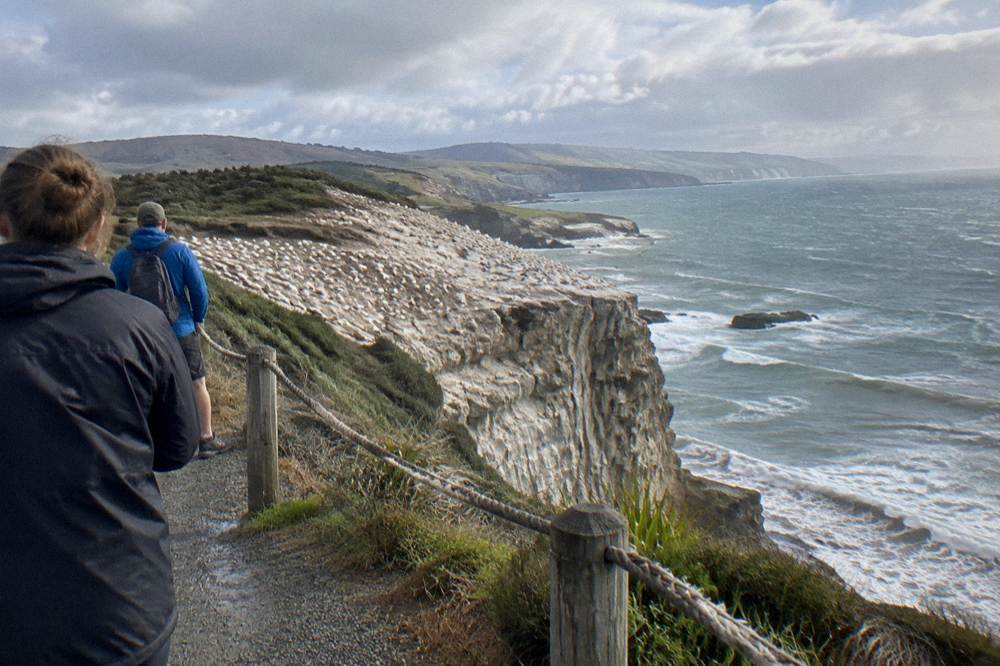
The name covers a family of tours rather than a single product. All of them are run by one operator, Gannet Safaris Overland, but the versions differ in duration, start point, pickup, price basis and who they suit. The standard tour is about 3 hours. Two 4-hour shore excursions are built around cruise ship days in Napier. A set of private versions, including sunrise departures and a full-day winery combination, are priced per group rather than per person.
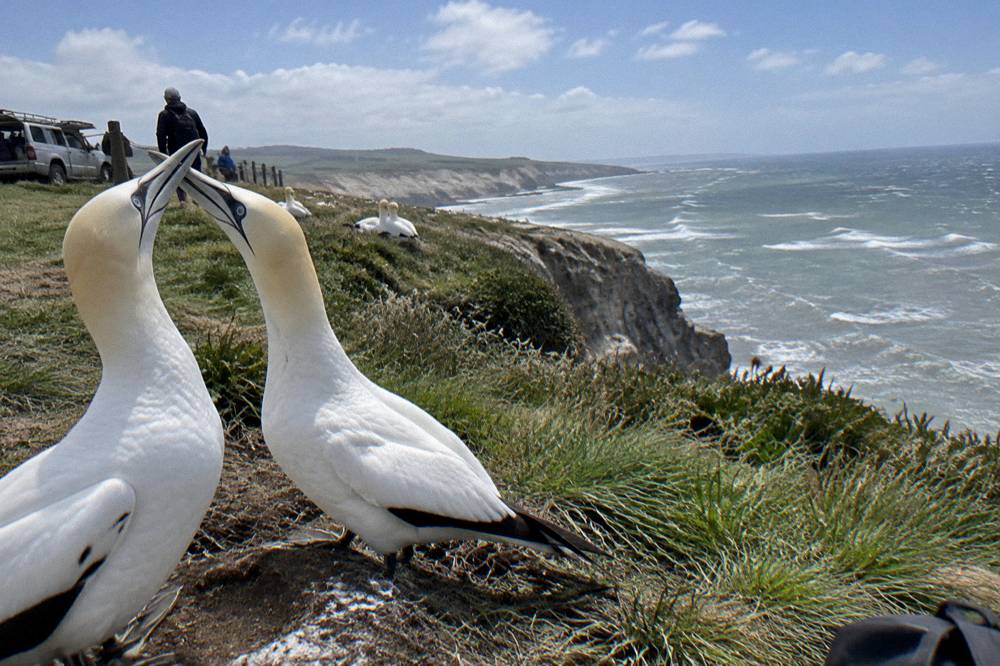
The birds are the reason people book. Australasian gannets, takapu, have nested at the cape since the 1870s, and DOC calls it the largest and most accessible mainland colony in the world. Adults return from around July for courtship and nest building, and the birds are present through the tour season. With a wingspan of about 1.8 m, nesting pairs just metres away, and the Pacific below the cliffs, the plateau is the kind of wildlife stop that justifies the drive out of Napier on its own. The wider natural history, including the young birds' 2,800 km Tasman Sea crossing to Australia, is covered in the Australasian gannet guide.
- Standard Overland Gannet Tours$55
- Cruise Shore Excursions$93
- Private And Sunrise Tours$604 per group
A point worth knowing before you compare options: the safari and the beach walk are different experiences of the same cape. The walk is free, expert-graded, tide-bound and takes at least 5 hours return. The safari costs money, needs almost no walking, and delivers you to the plateau by vehicle. That trade, time and effort against price, is the frame for the decision, and it is laid out side by side in walk versus overland tour.
| Comparison | Overland gannet safari | Beach walk to the colony |
|---|---|---|
| Distance or route | Vehicle track across private farmland above the cliffs | 19 km return along the beach from Clifton, graded Expert |
| Time needed | About 3 hours for the standard tour | At least 5 hours for a comfortable return walk |
| Tide dependence | Not governed by the tides, per the operator | Possible only around low tide; leave the Cape no later than 1.5 hours after low tide |
| Fitness required | Little or none; flat plateau with bench seats | Expert grading; a steep, rough, muddy climb of about 1 km to the second colony |
| Cost | From $55.00 or $56.23 per person on the standard tours | Free |
| Best colony access | Plateau colony on private land, by vehicle | Black Reef at 7.5 km; the plateau track from the beach closes July to the week before Labour Weekend |
However you decide to reach the colony, the guide to filling a day or weekend around Napier shows how the tour fits into a wider Hawke's Bay itinerary.
Which Gannet Safari Options Run From Napier And Hawke's Bay?
Nine booking options cover five kinds of trip: the standard 3-hour tour (two booking options, from $56.23 and $55 per person), the cruise shore excursion (two booking options, from $95.42 and $93), plus private 4-hour, sunrise and winery-combo tours priced per group. The two standard per-person tours carry the review history: 4.9 across 1,052 reviews and 4.8 across 378 reviews respectively.
The per-person choice comes down to two standard tours. The meet-at-base version, the 3-Hour Tour at Cape Kidnappers, starts at the operator's Clifton Road base and costs from $56.23 per person, rated 4.9 across 1,052 reviews, the most reviewed tour of the set. The from $55.00 per person option, rated 4.8 across 378 reviews, meets at the base in Te Awanga; the other 3-hour tour, from $56.23, offers hotel pickup as an optional add-on, which matters if you are staying in Napier without a car. Between those two, the $55 tour that meets at the base is the cheaper headline price and $56.23 is the dearest of the two, a difference small enough that the pickup question should decide it, not the fare.
Private versions are priced per group, up to four people unless stated, and should not be compared directly with per-person fares. The private 4-hour tour runs from $704.30 per group with 45 minutes at the colony per the itinerary. A private 4-hour version with pickup runs from $688 per group. Sunrise departures appear as "Private Sunrise" tours, from $636.15 per group meeting at the base, or from $604 per group with pickup included. The biggest option is a private 7.5-hour winery combination from $1,214 per group for up to two, picking up around 8:30 am and back by 4:00 pm in a luxury Range Rover.
| Option | Duration | Start point | Pickup | Price basis | Price from | Rating |
|---|---|---|---|---|---|---|
| 3-Hour Tour, Meet at Base | 3 hours (approx.) | 396 Clifton Road, Te Awanga | Optional add-on at booking | Per person | $56.23 | 4.9, 1,052 reviews |
| 3-Hour Tour, Lowest Price | 3 hours | 396 Clifton Rd, Te Awanga | Not included | Per person | $55.00 | 4.8, 378 reviews |
| 4-Hour Shore Excursion, 45-Minute Stop | 4 hours (approx.) | 100 Marine Parade, Napier | Central Napier meeting point | Per person | $95.42 | 4.9 from 10 reviews |
| 4WD Safari Vehicle, 4 Hours | 4 hours return from Napier | 100 Marine Parade, Napier | Central Napier meeting point | Per person | $93.00 | New listing |
| Private 4-Hour Tour | 4 hours (approx.), 45 min at colony | Check the booking page | Check the booking page | Per group, up to 4 | $704.30 | 5.0 from 11 reviews |
| 3-Hour Sunrise Tour | 3 hours (approx.) | 396 Clifton Road, Te Awanga | Meet at base | Per group, up to 4 | $636.15 | 3 reviews |
| Private 7.5-Hour Winery Combo | 7.5 hours | Your accommodation | Included | Per group, up to 2 | $1,214.00 | New listing |
Every tour on this list carries free cancellation up to 24 hours before start. That is a useful buffer for a nature tour in a coastal climate where operators can cancel or reschedule for weather.
What Actually Happens On A Gannet Safari Day?
You check in at the Clifton Road base, board an air-conditioned vehicle, ride across the working farm and native bush to the clifftop reserve, spend time at the flat plateau colony with bench seats and tea or coffee, then ride back the same way. The whole loop takes about 3 hours on the standard tour, with no toilets beyond the base and almost no walking required.
The day starts at 396 Clifton Road, Te Awanga, unless you have booked a pickup-included or private version. The base has good bathroom facilities and a large off-road car park with room for several motorhomes, so self-drivers and campervan travellers are well catered for. Use the bathrooms: there are no toilets on the tour itself, and the base is the last chance. The drive from Napier, Hastings or Havelock North takes about 25 minutes.
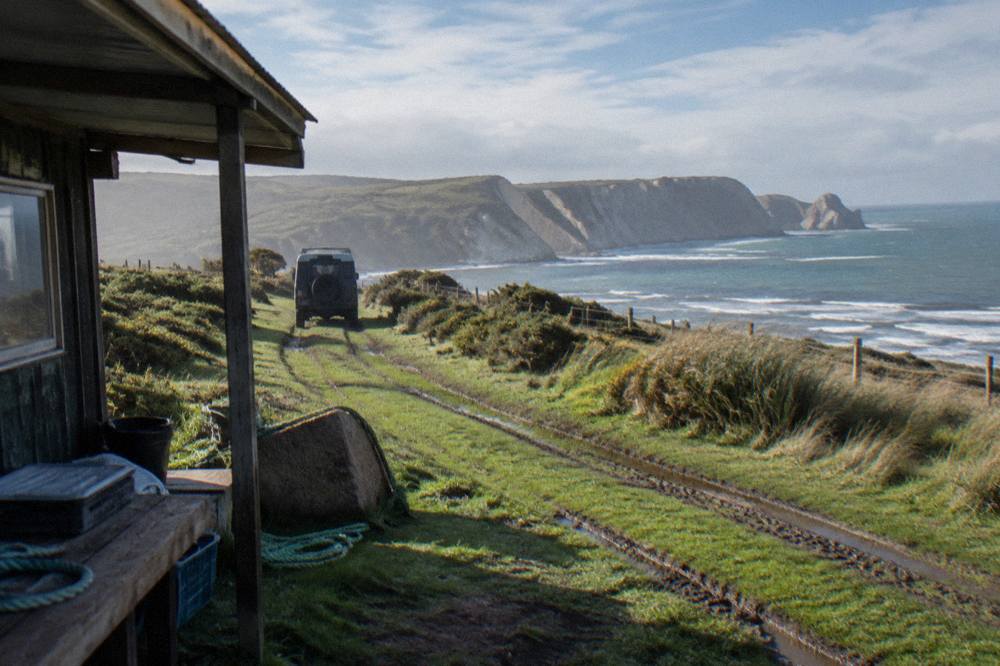
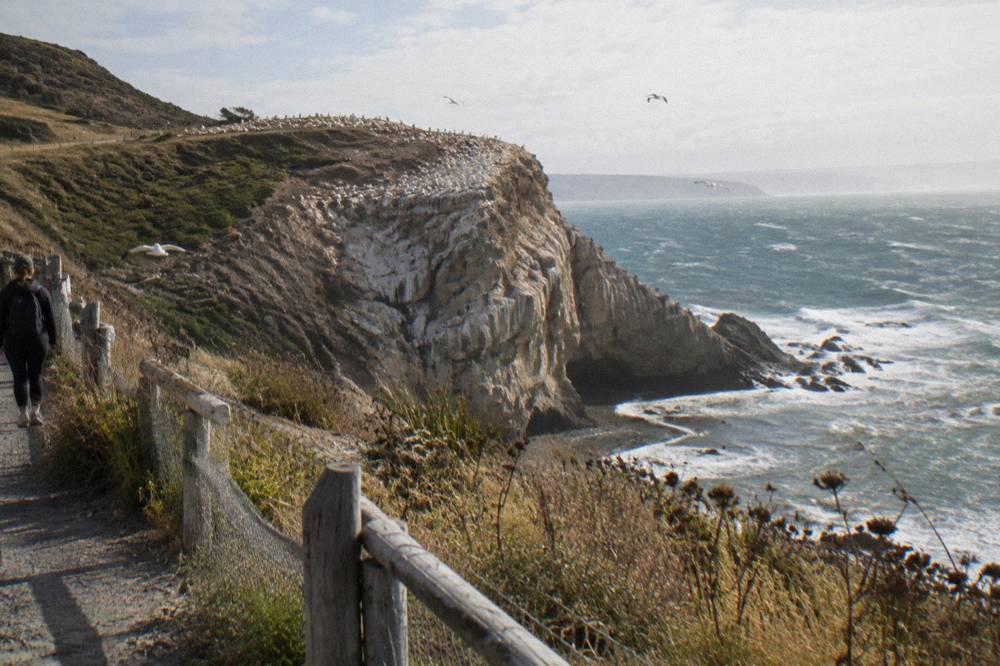
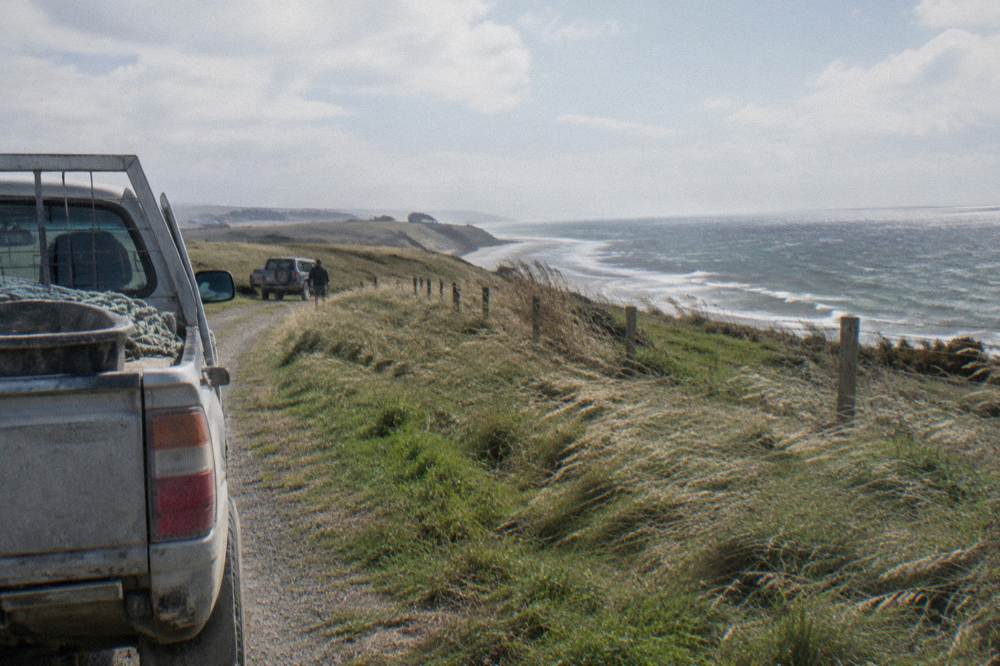
From the base the vehicle climbs onto the station. The route crosses roughly 2,500 hectares of working farmland and patches of native bush, climbing gradually to a privately owned nature reserve above the cliffs. Guides narrate the farm and the birdlife on the way; the track itself is part of the experience, since this is land the public cannot access any other way. Because the route runs above the cliff tops rather than along the beach, the operator says tides do not govern the schedule, unlike the walk below.
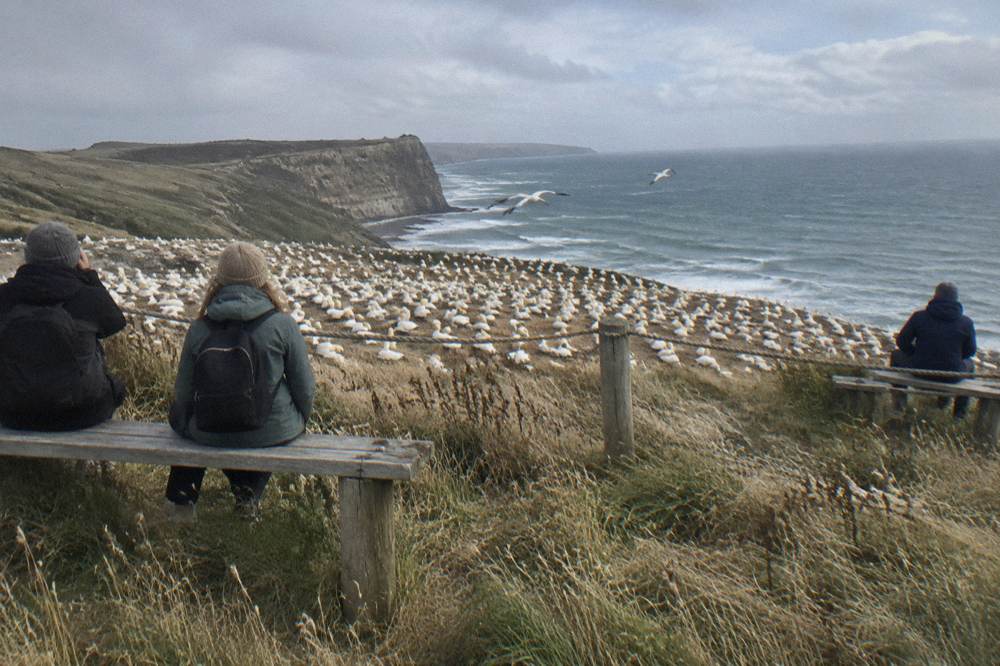
At the top, the plateau is flat ground with bench seats, and the operator describes walking there as safe and easy. This is the detail that surprises people: everything can also be seen from the vehicle without getting out, and little or no walking is required. A guest does need to be able to get on and off the vehicle unaided. Tea, coffee and a biscuit are served at the colony. Gannets nest and court metres away, and the rule everywhere at the reserve is to keep behind barriers or at least five metres from nesting birds. Nesting birds dislike loud noises and fast movement, and dogs are not allowed anywhere on the reserve.
The ride back retraces the farm track. Budget the full 3 hours for the standard tour from arrival at the base to return, longer if you are being picked up, and plan nothing tight immediately after in case the day runs long.
| Stage of the day | What happens | What to allow |
|---|---|---|
| Arrive at the base | Check in at 396 Clifton Road; use the bathrooms, the last ones before the colony; park in the off-road car park | Arrive with time to spare; about a 25 minute drive from Napier |
| Farm ride out | 4WD track across working farmland and native bush, with guide commentary | Part of the 3-hour total |
| At the plateau | Flat ground with bench seats beside the colony; tea, coffee and a biscuit served; stay behind barriers or at least five metres from nesting birds | The core of the visit; no toilets at the top |
| Ride back | Same farm track to the base, or drop-off if pickup was included | Full tour runs about 3 hours |
How Much Time Do You Get With The Gannets?
A specific colony time is stated for only two tours: the 4-hour shore excursion and the private 4-hour tour each include 45 minutes at the colony per the itinerary. The standard 3-hour tours do not publish a colony stop figure; the 3-hour block covers the whole experience, farm ride, colony visit and return. Treat colony minutes as itinerary details, not guarantees of time on any given day.
That asymmetry matters when you compare. The shore excursion's 4 hours include roughly 25 minutes each way by coach from Napier, plus the farm ride, plus the stated 45-minute colony stop. The standard tour's 3 hours are spent almost entirely closer to the colony itself, since you have already driven yourself to the base at Clifton.
For most independent travellers the meet-at-base 3-hour tour is the one to price first. It is the most reviewed option at 4.9 across 1,052 reviews, from $56.23 per person, with free cancellation up to 24 hours before start. Hotel pickup can be added at booking if you would rather not drive.
Weather can reshape any day at the cape. Seasonal timing is worth a thought as well: adults return from around July, and DOC's best-viewing window is early November to late February, which the gannet season guide covers in detail.
Can Cruise Passengers Do A Gannet Safari From Napier?
Yes, but only through the two shore excursion options, both about 4 hours and both meeting at 100 Marine Parade, Napier, priced from $95.42 and from $93.00 per person. The standard 3-hour tours are not built for cruise passengers. The port shuttle drops at the Napier i-SITE, roughly 200 m from the meeting point, and departure times are set per ship.
Passengers can walk down the gangway onto the wharf but cannot walk out of the port; a shuttle runs to two stops, the Napier i-SITE at 100 Marine Parade and the National Aquarium of New Zealand. Taxis cannot enter the port, so the shuttle is the way out, and the return shuttle leaves from the i-SITE. The shore excursion meeting point, the pink-flag area in front of the Sound Shell stage next to the i-SITE, sits about 200 m from that shuttle drop. The rest of the planning pages sit on Napier Gannet Tour.
Timing discipline is the whole game on a ship day. The tour runs about 4 hours, and the planning step is to check your ship's all-aboard time against that length before booking. On some ship days the operator collects passengers directly from the port because of short port times, and departure time is set per ship, so the meeting arrangements on any given day can differ from the standard Marine Parade point. Coffee or tea is included, and the excursion is capped at 40 travellers.
The second cruise option is a 4WD safari vehicle version, also 4 hours return from Napier and also priced from $93.00 per person, with the same Marine Parade start. It has too few reviews for a rating to mean anything yet, as does the $95.42 excursion, so decide between them on the vehicle and the itinerary wording rather than review scores. The full port logistics are laid out in the Napier shore excursion guide.
Do You Drive To Clifton, Or Is Pickup Included?
The base at 396 Clifton Road, Te Awanga is about a 25 minute drive from Napier, Hastings or Havelock North. Hotel pickup and drop-off comes with three private tours, from $604 per group; on the $56.23 standard 3-hour tour it is an optional extra at booking. On the standard meet-at-base tour, hotel pickup is an optional add-on chosen at booking.
If you have a rental car or a campervan, driving is simple and the base's off-road parking takes motorhomes. If you do not, the meeting-at-the-base tour from $55.00 per person, rated 4.8 across 378 reviews, keeps things simple: you gather at 396 Clifton Road, Te Awanga, about 25 minutes from Napier, with light refreshments and comfortable air-conditioned transport once aboard. The listing for that one also notes that walking is not required if you do not want it, and advises a jacket, which is sound advice for any clifftop in Hawke's Bay regardless of how you arrive.
A jacket deserves its own sentence. The what to wear guide has the full kit list; the short version is layers and a windproof outer layer, and skip the sandals.
How Fit Do You Need To Be, And Who Can Come?
Almost no fitness is needed: the plateau is flat ground with bench seats, everything can be seen from the vehicle, and on the $55 tour walking is not required if you do not want it. The one physical requirement the operator names is being able to get on and off the vehicle unaided. Tours are not wheelchair accessible; pushchairs are, and service animals are allowed on the tours that state an access policy.
That makes the safari the practical choice for travellers who could not contemplate the 19 km expert-graded beach walk, including many older visitors and families with young children. The standard tour and the shore excursion are both shared-bus experiences at the colony rather than private audiences with the birds. Travellers who want the colony without a crowd should look at the private 4-hour tour, from $704.30 per group for up to four, private to your group, with 45 minutes at the colony per the itinerary.
Families weighing the decision can dig into the specifics in the gannet tour with kids guide, and the fitness and access questions, including the wheelchair and pushchair detail per option, are worked through in the tour fitness guide. The general rule from the listings: most travellers can participate.
What Should You Bring, And When Should You Go?
Bring layers, a windproof jacket, sunscreen and a hat, and use the bathrooms at the base before departure, since there are no toilets on the tour. Go between early November and late February for the best viewing per DOC, though tours run 1 August to 30 April, with adults returning to the cape from around July for courtship and nest building. Binoculars are optional; the birds are close.
The sun in New Zealand is fiercer than the temperature suggests, and the plateau offers no shade. A camera with a moderate zoom does more work than binoculars here because the nesting birds sit within clear view of the bench seats. Photography angles and the light at different times of day are covered in the gannet photography guide, and the sunrise tours exist precisely for that early light: the $604 per group option includes pickup, while the $636.15 per group option serves a gourmet breakfast with plunger coffee and juice.
| Item | Why | Notes |
|---|---|---|
| Windproof jacket | The plateau is exposed to cool sea breezes even in summer | One listing advises a jacket outright |
| Layers and warm top | Conditions change fast on the clifftop | Covered in the what-to-wear guide |
| Sunscreen and hat | No shade on the plateau; New Zealand sun is strong year-round | DOC lists both for the cape |
| Camera with moderate zoom | Nesting birds sit within clear view of the bench seats | More useful than binoculars here |
| Toilets strategy | None on the tour; last bathrooms are at the base | Go before boarding |
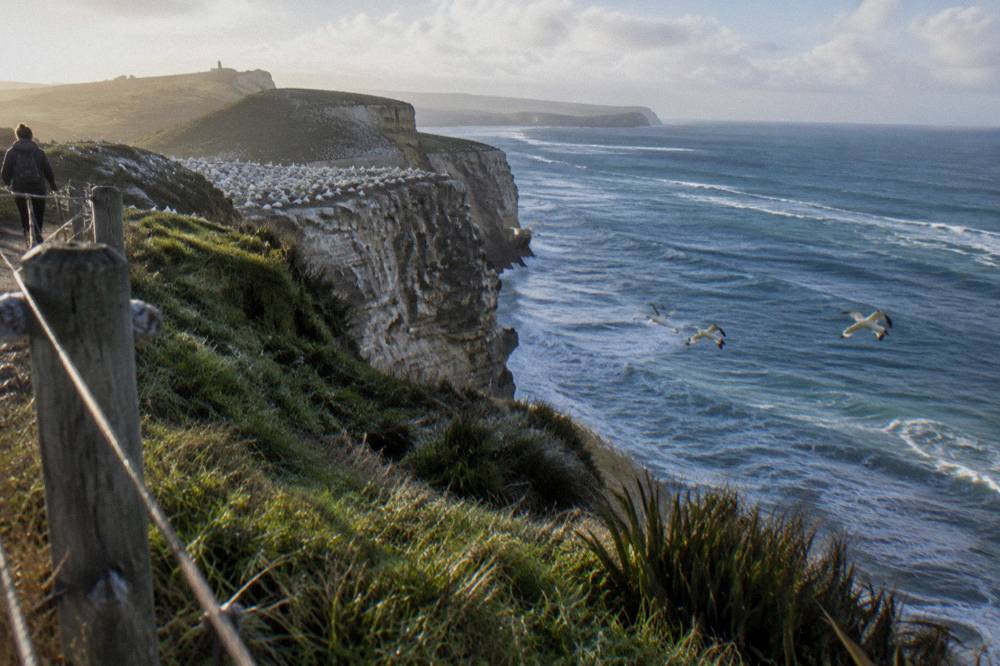
Timing within the season changes what you see, and the version is that no operator can promise a bird count or a chick stage on a given day. What is documented: adults return from around July, the track from the beach to the plateau colony is closed from July to the week before Labour Weekend each year to limit disturbance to returning birds (a closure that affects walkers, not the overland route across private farmland), and DOC's best-viewing window is early November to late February. The chick timing question is worth reading before you pin your dates.
Is A Gannet Safari Worth It Compared With The Alternatives?
For most visitors, yes: the standard tour puts you metres from one of the world's largest mainland gannet colonies for from $56.23 per person in about 3 hours, with no tide calculations, no 5-hour walk and no landslide-exposed beach. The walk is free but expert-graded and tide-bound; the safari trades money for access, safety margin and time. Private and winery-combo versions suit travellers who want the day built around them.
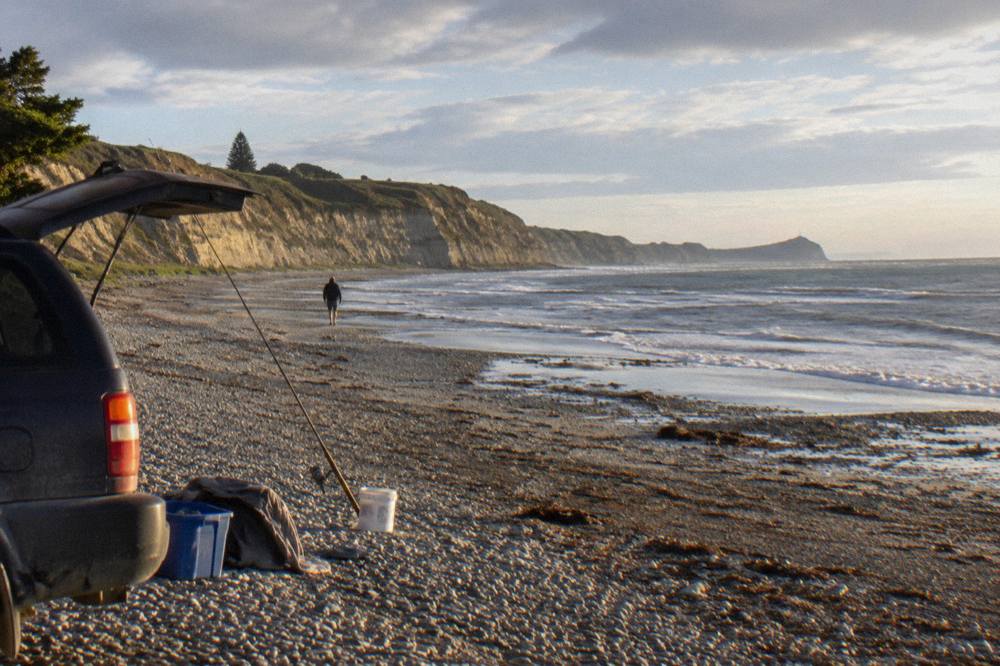
The comparison the site gets asked about most is price against walking, and the arithmetic is in how much the gannet tour costs compared with walking. The short answer: the walk costs nothing and demands a full low-tide window, expert fitness and a clear understanding that about 7 km of the beach sits under cliffs subject to significant landslide hazard, with a landslide that seriously injured two tourists in January 2019 and another large landslide in February 2020. The safari costs from $56.23 per person and removes all of those variables.
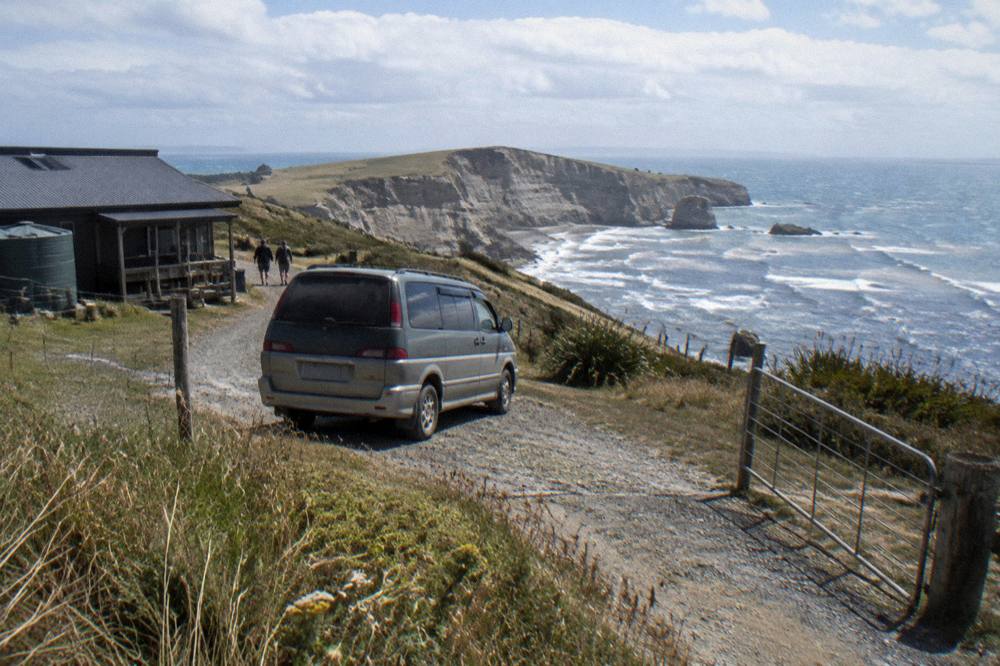
Beyond the overland tours, two other operators work the cape in different formats, both covered in their own pages here: a tide-dependent tractor-trailer ride along the beach from Clifton, and a self-guided fat-bike ride of 3.5 to 4 hours from 475 Clifton Road needing at least intermediate fitness. Neither is priced here; check their own sites for current status and fares. DOC treats beach transport as a high-risk operation and describes the overland route across private farmland as a lower-risk option, which is the clearest official framing of the trade you are making when you choose how to reach the birds.
Whatever you settle on, book with the season and the shuttle logistics in mind rather than the calendar alone: tours run 1 August to 30 April, cruise calls run October to April, and the free-cancellation window on every option is 24 hours before start. If you are still weighing the overall value question, is the Cape Kidnappers gannet tour worth it works through it end to end.
Common Questions About A Gannet Safari At Cape Kidnappers
What Is A Gannet Safari At Cape Kidnappers?
A guided 4WD vehicle tour across a working farm and native bush to a privately owned clifftop nature reserve above Cape Kidnappers, where Australasian gannets nest. DOC puts the colony at 6,500 pairs and calls it the largest and most accessible mainland colony in the world. The standard tour runs about 3 hours; the route runs above the cliff tops and is not governed by the tides.
How Much Does A Gannet Safari Cost?
The standard 3-hour tour meeting at the base costs from $56.23 per person, rated 4.9 across 1,052 reviews. The 3-hour version that meets at the base costs from $55.00 per person, rated 4.8 across 378 reviews. Cruise shore excursions run from $93.00 and from $95.42 per person, and private versions are priced per group, from $604 to $1,214 depending on format.
Can Cruise Passengers Do A Gannet Safari In Napier?
Yes, through the two shore excursion options, both about 4 hours and both meeting at 100 Marine Parade, opposite the Napier Museum and about 200 m from where the port shuttle drops at the i-SITE. Departure times are set per ship, and on some ship days the operator collects directly from the port. Check your ship's all-aboard time against the 4-hour length before booking.
How Long Does The Gannet Safari Take?
About 3 hours for the standard tours and about 4 hours for the shore excursions and private tours, from the listed start points. A colony time of 45 minutes is stated for the 4-hour shore excursion and the private 4-hour tour only; the standard tours do not publish a colony stop figure. Allow 25 minutes each way to drive yourself to the base at Te Awanga.
Is Much Walking Involved On A Gannet Safari?
No. The plateau is flat ground with bench seats, the operator says everything can be seen from the vehicle without getting out, and walking is not required. The only stated physical requirement is being able to get on and off the vehicle unaided. Tours are not wheelchair accessible; pushchairs are.
When Is The Best Time Of Year For A Gannet Safari?
Tours run 1 August to 30 April. Adults return to the cape from around July for courtship and nest building, and DOC names early November to late February as the best viewing window. No operator can promise a bird count or a chick stage on any particular day, so treat the season as the guide rather than a daily guarantee.