Where Is The Largest Colony Of Gannets? Cape Kidnappers, Hawke's Bay
DOC calls Cape Kidnappers the largest and most accessible mainland gannet colony in the world at 6,500 pairs. Here is what that means, and how to see it from Napier.
Australasian gannets have nested at Cape Kidnappers since the 1870s, and their numbers have climbed to 6,500 pairs. That figure, from the Department of Conservation, is what makes this headland south of Napier the answer to a question birders ask all over the world: where can you stand on a mainland shore and look straight into a gannetry of this size? DOC describes Cape Kidnappers as the largest and most accessible mainland colony in the world, and the qualifiers matter. DOC puts the Cape Kidnappers colony at 6,500 pairs. It is the largest one you can actually drive to. For anyone planning a visit around the nesting season, the guide to seeing gannets in New Zealand covers the best times, tracks and viewpoints for a closer look.
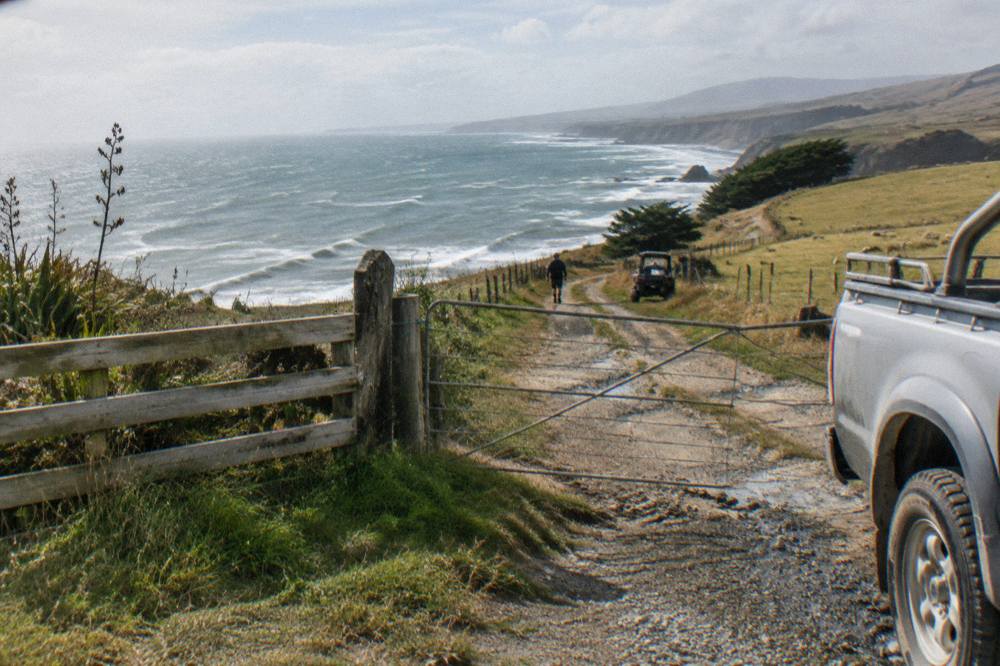
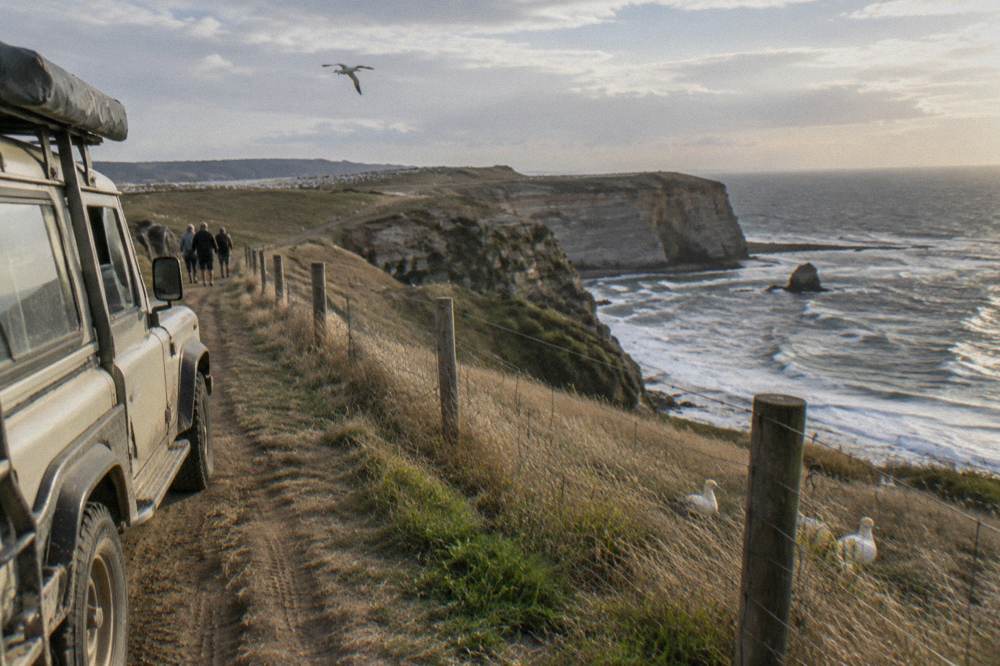
That accessibility is the whole reason this site exists. A working farm of roughly 2,500 hectares sits between the public road and the clifftops, and the overland tours cross it by 4WD track to a privately owned nature reserve above the cliffs. This article sets out what DOC's claim means, how big the colony really is, how it compares with other gannetries, and which of the tours from Napier puts you in front of the birds with the least fuss.
The largest mainland colony of Australasian gannets in the world sits at Cape Kidnappers, a headland about 25 minutes' drive from Napier on New Zealand's east coast. DOC puts the colony at 6,500 pairs, nested on the clifftops of a privately owned nature reserve reached across a working farm. The reserve sits within Hawke's Bay, 21 km south of Napier and 18 km east of Hastings. The guide to gannet pairs at Cape Kidnappers covers how the birds nest at the colony and which Napier tours visit it.
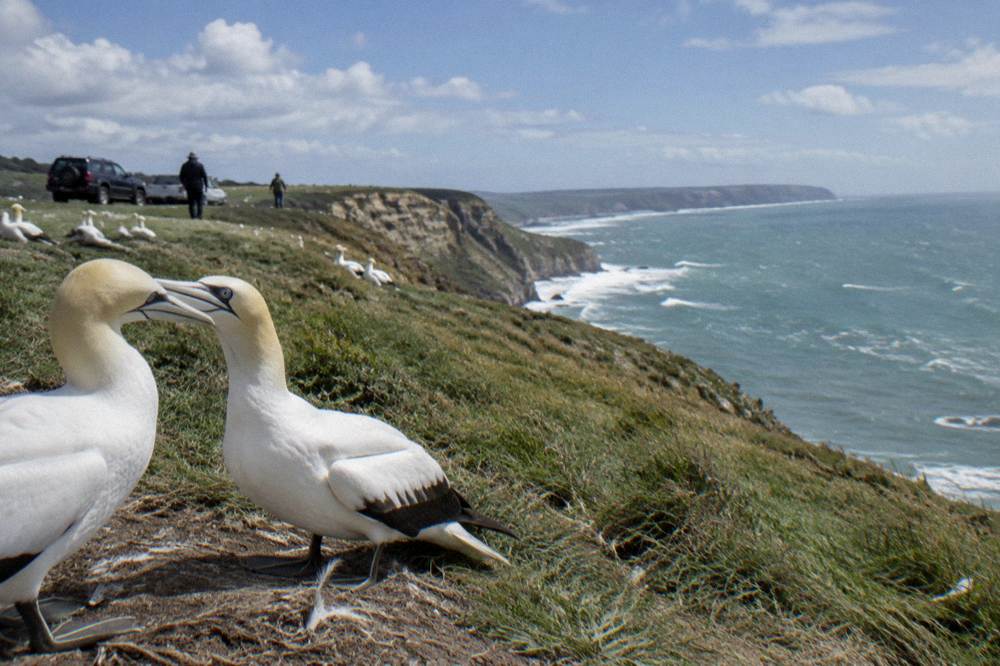
Cape Kidnappers, known to Maori as Te Kauwae-a-Maui, is a dramatic finger of land thrusting into the Pacific between the settled plains of Hawke's Bay and the open sea. The gannets did not always gather here in these numbers. Gannets have nested at the cape since the 1870s, and DOC now puts the colony at 6,500 pairs. Today the birds spread across several nesting sites: Black Reef, the first colony reached from the beach end, and the Plateau colony on private land above the cliffs, which DOC calls the best place to view nesting gannets.
What makes the Cape Kidnappers answer unusual is that it is a mainland colony at all. New Zealand and Australia together hold nearly the whole global population of Australasian gannets, spread across island colonies and a very short list of mainland sites. A mainland gannetry this size, with vehicle access across private farmland to a viewpoint metres from the nests, is rare enough that DOC frames it in superlatives.
The practical upshot for a traveller is simple. You do not need a boat, a helicopter or a long tramp to see a gannetry of world significance. You need a seat on one of the overland tours, and Napier, the Art Deco port city at the centre of Hawke's Bay, is the natural base.
Why Does DOC Say Largest Mainland Colony, Not Largest Overall?
DOC's exact wording is that Cape Kidnappers is the largest and most accessible mainland colony of gannets in the world, at 6,500 pairs. The word mainland is the hinge: several island colonies in New Zealand and Australian waters hold more birds, so Cape Kidnappers is not claimed as the largest gannetry overall. DOC puts the colony at 6,500 pairs.
The distinction is worth pausing on, because careless versions of the claim circulate widely. Gannets are seabirds that nest in dense, noisy colonies, usually on islands, and the biggest Australasian colonies sit on remote offshore islands where the birds are safe from introduced predators. Those islands can hold far more birds, and no mainland site competes with them on raw numbers. What Cape Kidnappers offers instead is a combination no island can match: 6,500 pairs, a stable and growing population, and a viewpoint you can reach in a vehicle across farmland, without a boat crossing or a permit expedition.
- Standard Overland Gannet Tours$55
- Cruise Shore Excursions$93
- Private And Sunrise Tours$604 per group
The word accessible carries weight too. DOC is not only talking about the 4WD tours. The colony can also be approached along the beach from Clifton, a 19 km return walk DOC grades as Expert and possible only around low tide, with high tides and big seas blocking the beach outright. Walkers must leave the Cape no later than 1.5 hours after low tide and check the tide table before going. The overland tours, by contrast, travel above the cliff tops across private land, and the operator says they are not governed by the tides at all. Two very different levels of accessibility, one colony.
There is a conservation story inside the numbers as well. The headland is a wildlife sanctuary and a DOC reserve, with rules that protect the birds: keep behind barriers or at least five metres from nesting gannets, no dogs or horses, no camping or fires, and a DOC permit required for drones on conservation land. Nesting birds dislike loud noises and fast movement, which is why the track from the beach to the plateau colony is closed from July to the week before Labour Weekend each year to limit disturbance to returning birds. Gannets have nested at the cape since the 1870s, and the colony now stands at 6,500 pairs.
If you want the full picture of the bird itself, its 1.8 metre wingspan, its single egg incubated on webbed feet, and the 2,800 km Tasman crossing its fledglings make, the Australasian gannet guide goes deeper than this page needs to.
How Many Gannets Actually Nest At Cape Kidnappers?
DOC puts the Cape Kidnappers colony at 6,500 pairs, a count of breeding pairs rather than a tally of every bird that visits the cape. Adults return from around July for courtship and nest building, and numbers build through spring and summer.
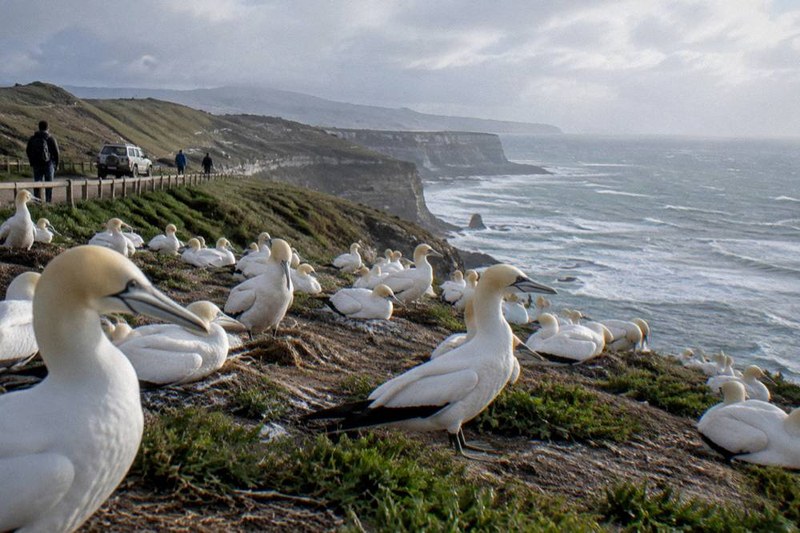
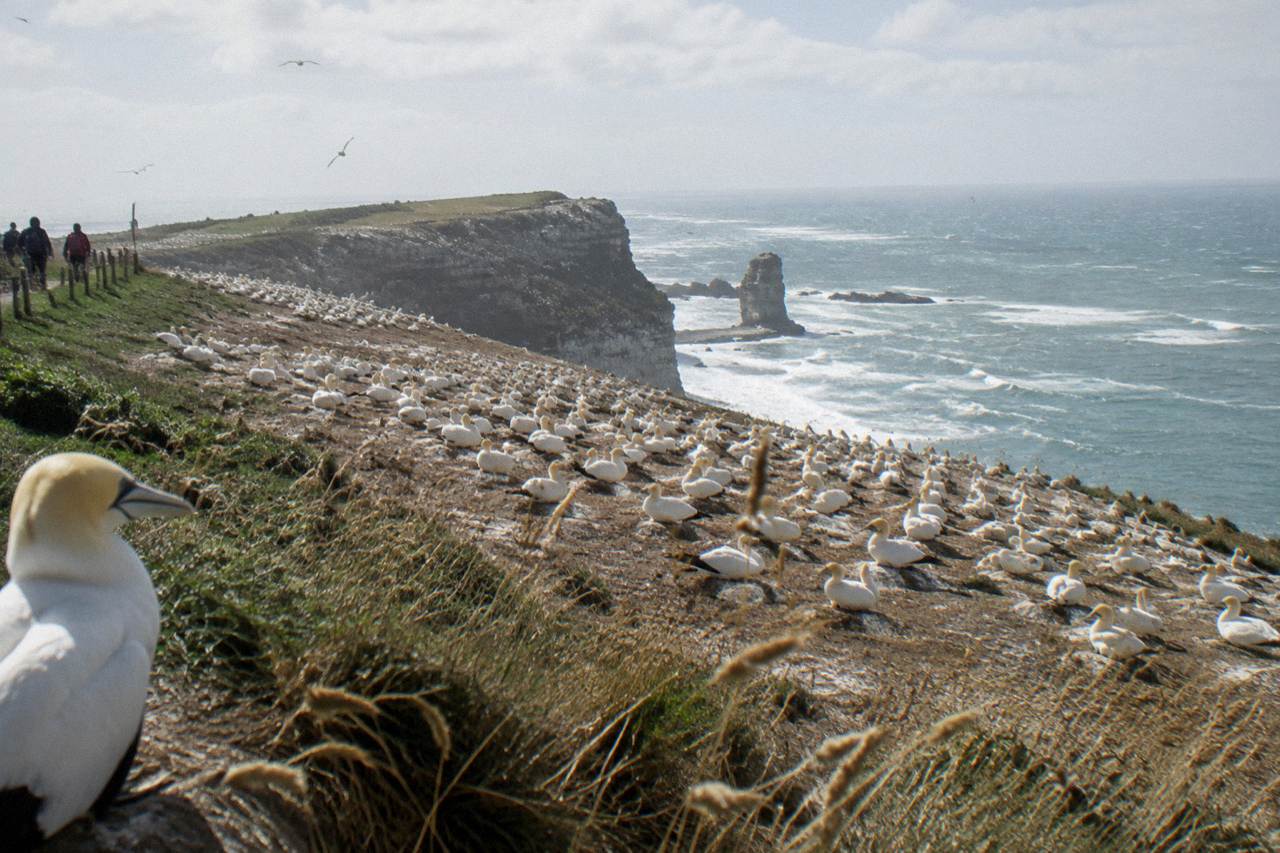
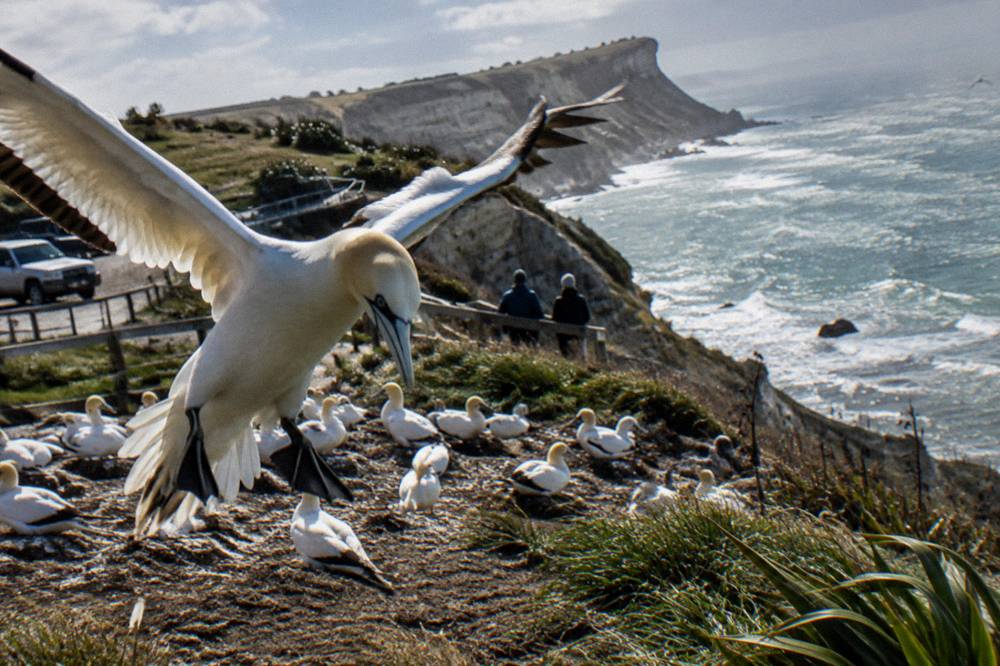
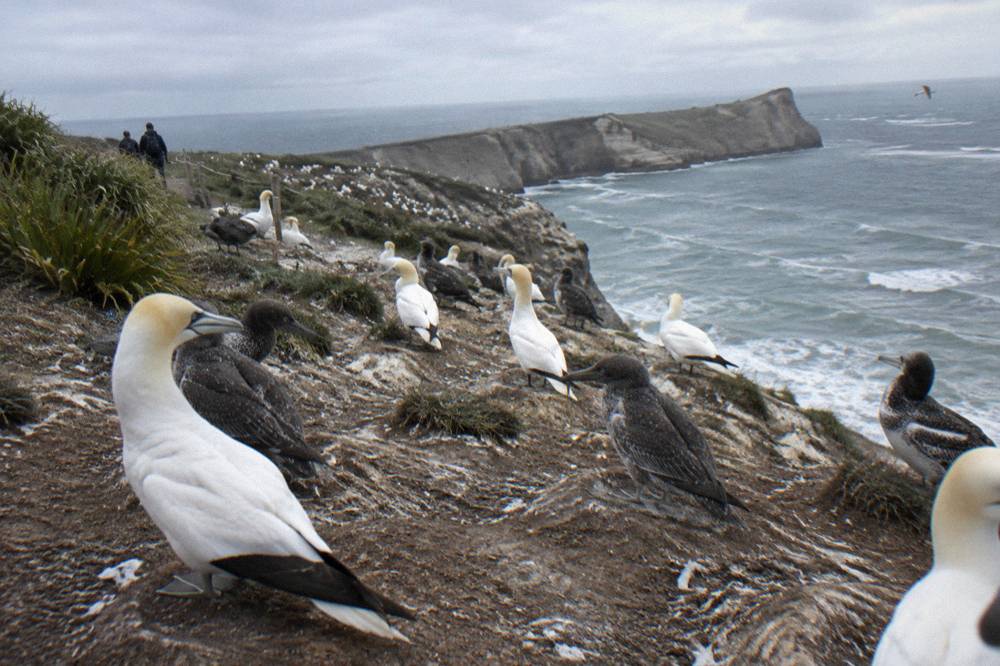
A gannetry of this size is not one uniform mass. The birds nest in distinct groups: Black Reef, 7.5 km from Clifton at the beach end of the reserve, is the first nesting site, and a steep, rough, muddy climb of about 1 km leads on from there to the second colony. The Plateau colony, on private land reached by the overland tours, is the one DOC names as the best place to view nesting gannets, and it is where close-up viewing happens. In high season the plateau is a solid carpet of birds: pairs renovating nests, greeting each other with fencing bill displays, and trading incubation shifts.
The biology keeps the colony loud and busy. Gannets lay a single egg, and both parents incubate it, resting the egg on their webbed feet rather than in a deep nest cup. Pairs stay together over many seasons, returning to the same tiny territory year after year. A group of gannets nesting together is called a colony, or a gannetry, and at Cape Kidnappers the density is the spectacle: birds packed shoulder to shoulder as far as the cliff edge, with the sea below and a constant traffic of arrivals and departures overhead.
Gannets are long-lived birds, with a lifespan of 25 to 40 years, and their young do something remarkable. DOC puts the Cape Kidnappers colony at 6,500 pairs of Australasian gannets. The cape is also home to other birds worth watching for: white-fronted terns, variable oystercatchers, reef herons, Caspian terns, and little blue penguins nesting around the headland.
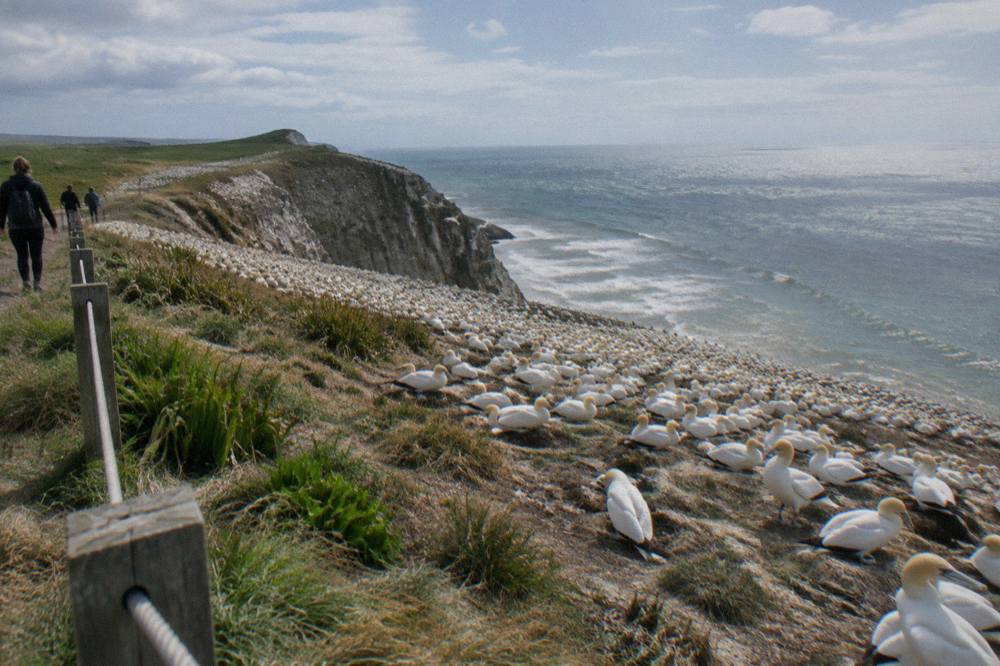
The count is not a promise of what any single visit will show. Colony activity changes across the season, weather can move birds around, and operators describe what is typical rather than guaranteeing a sight on a given day. What 6,500 pairs can deliver is scale: this is one of the great wildlife gatherings of the New Zealand coastline, and much of it can be seen from a bench seat.
How Do You Get To The Largest Mainland Colony From Napier?
The colony is reached from two directions. The overland tours start at the operator's base at 396 Clifton Road, Te Awanga, about a 25 minute drive from Napier, and cross private farmland by 4WD to the plateau. Alternatively, walkers start at Clifton, 21 km south of Napier, and walk the beach, 19 km return, possible only around low tide.
For most visitors the 25 minute drive from Napier is the start of the day. The same drive time applies from Hastings and Havelock North, which puts the colony within easy reach of anywhere in Hawke's Bay. The base at Clifton has a large off-road car park with room for several motorhomes, and good bathroom facilities, which matters because there are no toilets on the tour itself: the last toilets are at the base. Tea, coffee and a biscuit are served at the colony on the overland tours.
Cruise passengers have a different path. Ships visit Napier from October to April, and passengers cannot walk out of the port; a shuttle runs to two stops, the Napier i-SITE at 100 Marine Parade and the National Aquarium of New Zealand. The shore excursion version of the gannet tour meets at the pink-flag area in front of the Sound Shell stage next to the i-SITE, and departure time is set per ship. On some ship days the operator collects passengers directly from the port because of short port times. The standard 3 hour tours are not for cruise passengers; the shore excursion versions are, and their 4 hour length needs checking against the ship's all-aboard time.
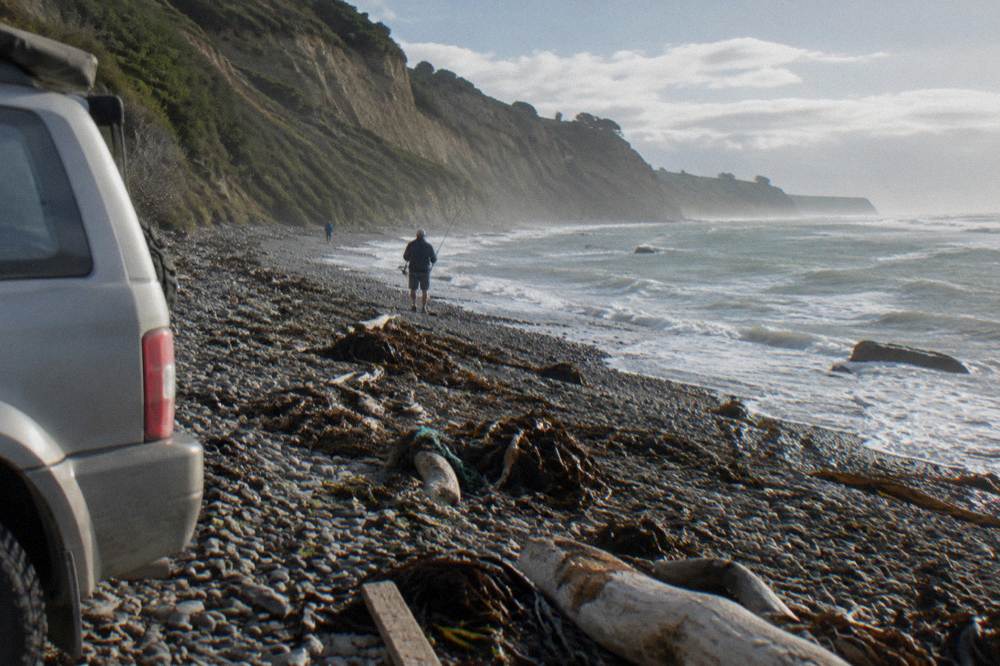
The walk, for the record, is a serious undertaking rather than a stroll. About 7 km of the beach lies under these cliffs. A landslide seriously injured two tourists in January 2019, another large landslide in February 2020 closed the beach for a time, and DOC reports three serious injury landslide events in the past 50 years, with large landslides occurring every year. The status of the track can change at any time, so check the safety alert on DOC's page and the signage at Clifton before setting out. Walkers should carry sturdy footwear, food and water, sun protection, extra clothing for cool sea breezes, a water and windproof jacket, gloves, a head torch and a communication device.
The choice between driving and walking is really a choice about risk and time, and the Cape Kidnappers walk guide covers the beach route in full detail for the minority who want it.
Which Cape Kidnappers Gannet Tour Should You Choose?
The 3-Hour Tour meeting at the base runs from $56.23 per person, rated 4.9 across 1,052 reviews, the largest review pool of any tour covered here. A meet-at-base tour runs from $55.00 per person at 4.8 across 378 reviews. A private 4-hour version runs from $704.30 per group of up to 4, with 45 minutes at the colony per the itinerary.
The per-person choice comes down to how you want to start the day. The 3-Hour Tour, meet at base, is the most reviewed option: 4.9 across 1,052 reviews, from $56.23 per person, roughly 3 hours total, meeting at 396 Clifton Road in Te Awanga. Hotel pickup is an optional add-on chosen at booking; otherwise you drive yourself to the base. Transport is by air-conditioned minivan across the farm, with coffee and tea included. It is not wheelchair accessible, though pushchairs are, and service animals are allowed.
The lowest-priced 3-hour option keeps things simple. From $55.00 per person, rated 4.8 across 378 reviews, it meets you at 396 Clifton Road, Te Awanga, about 25 minutes from Napier, so you drive yourself and handle parking. Light refreshments are included. Walking is optional, and a jacket is recommended.
The private versions change the economics rather than the route. Per person that works out differently for a group of four than for a couple, and it should never be compared directly with the per-person prices without saying so. What the group price buys is the vehicle to yourselves and a 4 hour window rather than 3.
Cruise passengers should book the shore excursion versions rather than either 3 hour tour. The 4-Hour Shore Excursion runs from $95.42 per person, meets at 100 Marine Parade opposite the Napier Museum and about 200 m from where the cruise shuttle drops at the i-SITE, and spends 45 minutes at the colony per the itinerary. A 4WD safari vehicle version runs from $93.00 per person, 4 hours return from Napier with roughly 25 minutes each way by coach. Both are built around ship schedules; the standard 3 hour tours are not.
| Tour | Price (from) | Duration | Starts | Reviews |
|---|---|---|---|---|
| 3-Hour Tour, Meet at Base | $56.23 per person | 3 hours | 396 Clifton Road, Te Awanga | 4.9, 1,052 reviews |
| 3-Hour Tour, Lowest Price | $55.00 per person | 3 hours | 396 Clifton Road, Te Awanga | 4.8, 378 reviews |
| Private 4-Hour Tour | $704.30 per group (up to 4) | 4 hours, 45 min at colony | Check the booking page | 11 reviews |
| 4-Hour Shore Excursion, 45-Minute Stop | $95.42 per person | 4 hours, 45 min at colony | 100 Marine Parade, Napier | 10 reviews |
Every tour in the table carries free cancellation up to 24 hours before start. A fuller side-by-side, including the sunrise and winery combo options, sits in the Cape Kidnappers gannet colony tours guide.
When Is The Best Time To See The Colony?
Tours run from 1 August to 30 April, including Christmas Day, and DOC says the best viewing is early November to late February. The Department of Conservation puts the best viewing window for the colony from early November to late February.
The shape of the season follows the birds. From around July the adults start returning to the same territories they held the year before, renovating nests and re-bonding with their partners. DOC names early November to late February as the best viewing window for the Cape Kidnappers gannet colony.
The tour season is slightly wider than the peak viewing window, from 1 August to 30 April, which means an early spring visit still sees a working colony, just a sparser one. Weather in Hawke's Bay is generally settled over summer, but sea breezes cool the clifftops, and the tour that meets at the base advises bringing a jacket year-round; the Cape Kidnappers weather guide has the practical detail.
One closure affects timing if you plan to walk rather than ride. The track from the beach to the plateau colony is closed from July to the week before Labour Weekend each year, to limit disturbance to the returning birds. The overland tours are unaffected because they cross private farmland on a different route, but a winter walker cannot reach the plateau on foot even at the right tide. Plan around that window if the walk is part of your trip.
Can You See The Largest Colony Without Taking A Tour?
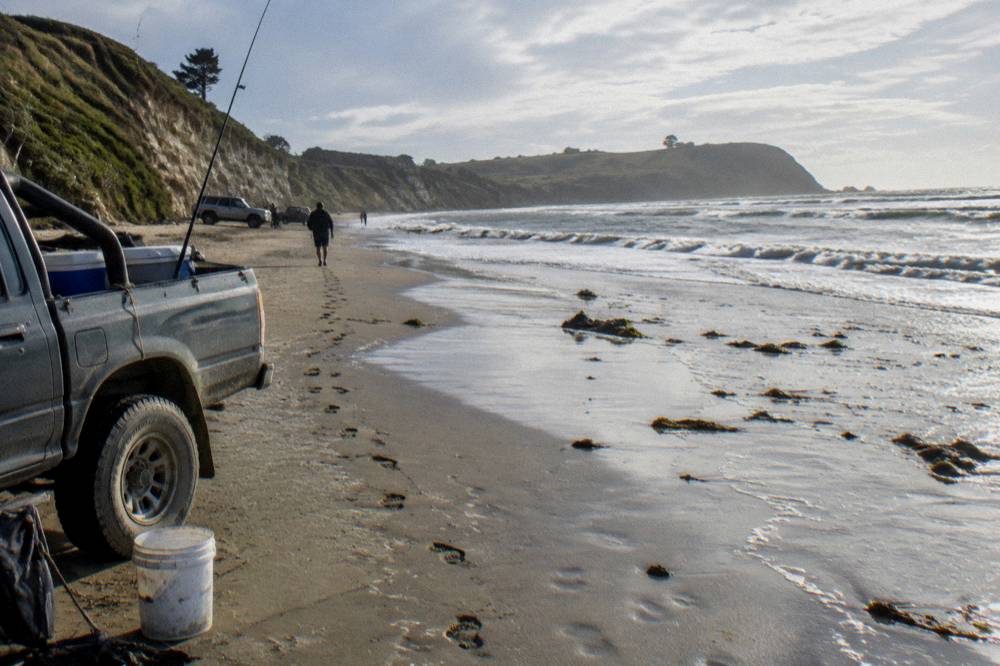
Yes, but only by the Expert-graded beach walk: 19 km return from Clifton, possible only around low tide, with at least 5 hours needed. High tides and big seas block the beach, and you must leave the Cape no later than 1.5 hours after low tide. The Plateau colony viewpoint that the tours reach is on private land, and the walking track to it is closed part of the year.
Beyond the distance and the tide window, about 7 km of the beach runs beneath cliffs prone to landslides, and the council and DOC both warn that conditions can change; check the tide table before going, check the signage at Clifton, and check DOC's safety alert for current status. Recent access changes matter here too. Clifton Motor Camp closed on 20 February 2026 after a geotechnical assessment found unstable land above it and closed permanently in July 2026, and in August 2026 the council voted to close a section of Clifton Road at the former campground to vehicles. Pedestrian access to Clifton Beach and the walking route stays open. This affects walkers and bike riders, not the overland tours, whose base at 396 Clifton Road is separate.
Two other operators offer middle-ground options. Gannet Bikes runs a self-guided fat-bike ride from 475 Clifton Road, 3.5 to 4 hours in total, needing at least intermediate fitness, with bike, helmet, spare tube, pump and map supplied and a short walk to the plateau colony at the end. Gannet Beach Adventures has run a tide-dependent tractor-trailer ride along the beach from Clifton; its status is unconfirmed, so check its own site for whether and when it runs. Neither is a tour covered by the prices in this article, and DOC treats beach transport as a high-risk operation while describing the overland route across private farmland as a lower-risk option.
For most visitors comparing colonies, the tour versus walk decision is really a risk decision, and the Cape Kidnappers walk versus overland tour comparison works through it line by line.
How Does Cape Kidnappers Compare With Other Gannet Colonies?
Against other mainland colonies, DOC's figure for Cape Kidnappers is 6,500 pairs.
The comparison is not about numbers but about the experience: at an island colony you view from a boat or a viewing deck after a crossing, while at Cape Kidnappers you ride across a working farm and step out onto a plateau bench metres from the nests. That close-up plateau experience raises practical questions for travellers with mobility needs, and the guide to wheelchair access on the Cape Kidnappers gannet tour covers the terrain, boarding the vehicle, and what to ask before booking.
The global picture helps frame the claim. Australasian gannets breed almost entirely in New Zealand and Australian waters, and the species' biggest gatherings are on remote islands. The colony's growth since the 1870s is a conservation success built on landholder cooperation and reserve status.
For a visitor deciding between colonies, the practical test is what you give up. If seeing the largest mainland gannetry in the world, from a seat, with tea at the colony, sounds like the right day, then Cape Kidnappers from Napier is the answer, and Napier Gannet Tour exists to help you book exactly that. If your trip never reaches Hawke's Bay, an island colony closer to your route may serve, at the cost of access and viewing distance.
Is Seeing The Largest Colony Worth The Trip From Napier?
For most travellers with a day in Napier or anywhere in Hawke's Bay, yes: a 3 hour tour buys you a viewpoint DOC itself calls the best place to view nesting gannets, at 6,500 pairs, with no tide calculations and no Expert-graded walk. At from $55.00 to $56.23 per person for the standard versions, it is one of the more affordable world-class wildlife experiences in New Zealand.
The case rests on proportion. This is not a small colony with good marketing; DOC puts the colony at 6,500 pairs, with bench seats on flat ground and, the operator says, little or no walking required. A guest needs only to be able to get on and off the vehicle unaided, and everything can also be seen from the vehicle without getting out. Set that against the beach walk's 5 hours, tide window and landslide-exposed cliffs, and the tour earns its price for anyone who is not set on the tramp.
Combine it and the value improves further. Napier's Art Deco quarter, the wineries of the Hawke's Bay plains and Te Mata Peak are all within the same day's loop, and the Meet at Base gannet tour leaves most of the day for them, with hotel pickup available as an optional add-on at booking. The operator also runs one longer combo: a private 7.5-hour gannet and winery day from $1,214.00 per group of up to 2, with pickup about 8:30 am and return by 4:00 pm in a Range Rover, for travellers who want gannets, wine and Te Mata Peak in one booking.
Common Questions About The Largest Gannet Colony
Where Is The Largest Colony Of Gannets?
DOC names Cape Kidnappers in Hawke's Bay, as the largest and most accessible mainland colony of gannets in the world, at 6,500 pairs. The headland sits 21 km south of Napier, and the overland tours reach the plateau colony from a base at Clifton, about 25 minutes' drive away.
Is Cape Kidnappers The Largest Gannet Colony In The World Overall?
No, and DOC does not claim that. Several island colonies in New Zealand and Australian waters hold more birds. Cape Kidnappers is the largest mainland colony, the biggest gannetry you can reach from a continental shoreline rather than an island.
How Many Gannets Are At Cape Kidnappers?
DOC puts the colony at 6,500 breeding pairs. The birds have nested at the cape since the 1870s and the population has grown since.
Can You Visit The Cape Kidnappers Colony Without A Tour?
Yes, by the beach walk from Clifton: 19 km return, graded Expert by DOC, possible only around low tide, needing at least 5 hours. High tides and big seas block the beach, and you must leave the Cape no later than 1.5 hours after low tide. Check the tide table and DOC's safety alert before going.
When Is The Best Time Of Year To See The Gannets?
Tours run from 1 August to 30 April. DOC says the best viewing is early November to late February, when the colony is at full density. Adults return from around July for courtship and nest building.
Which Tour Should Cruise Passengers Book?
Only the shore excursion versions are built for cruise passengers; the standard 3 hour tours are not. The 4-Hour Shore Excursion runs from $95.42 per person and meets at 100 Marine Parade, about 200 m from where the cruise shuttle drops at the Napier i-SITE.